
When talking about generic anticoagulant, a class of prescription drugs that thin the blood to prevent clots. Also called blood thinner, a generic anticoagulant covers older agents like warfarin, a vitamin K antagonist that has been used for decades and newer direct oral anticoagulants, a group of drugs that directly inhibit clotting factors such as factor Xa or thrombin. The term also ties into the coagulation cascade, the series of reactions that turn liquid blood into a clot. Understanding how these pieces fit together helps you make safer choices, whether you’re switching meds or just curious about how your prescription works.
Warfarin is the classic example of a generic anticoagulant, but it comes with a monitoring routine called INR testing. INR, or International Normalized Ratio, measures how long your blood takes to clot compared to a standard. A stable INR keeps you in the therapeutic window—usually between 2.0 and 3.0 for most conditions. If the INR drifts too high, bleeding risk spikes; too low, and clots can form. Because warfarin is metabolized by the liver and affected by diet, especially leafy greens, patients often need to adjust their vitamin K intake and watch for drug interactions. The underlying coagulation cascade is slowed by warfarin’s interference with vitamin K‑dependent clotting factors II, VII, IX, and X.
Direct oral anticoagulants (DOACs) like apixaban, rivaroxaban, dabigatran, and edoxaban simplify the picture. They don’t require routine INR checks and have fewer food restrictions. Each DOAC targets a specific step—apixaban and rivaroxaban block factor Xa, while dabigatran inhibits thrombin (factor IIa). Dosing is generally fixed, but kidney function matters a lot. Since many DOACs are cleared by the kidneys, reduced renal clearance can raise drug levels and increase bleeding risk. When a patient has chronic kidney disease, doctors often adjust the dose or stick with warfarin, which can be monitored more closely with INR.
Reversal agents add another layer of safety. If a bleeding emergency occurs, vitamin K can reverse warfarin’s effect, while specific antidotes—idarucizumab for dabigatran and andexanet alfa for factor Xa inhibitors—can quickly neutralize DOACs. Knowing which antidote matches which drug is crucial for emergency care. These reversal tools tie back to the broader coagulation cascade, letting clinicians restore clotting ability when needed without waiting for the drug to wear off naturally.
Choosing the right generic anticoagulant depends on lifestyle, other meds, and health conditions. If you travel a lot, a DOAC’s no‑monitoring convenience might win. If you have variable kidney function or need tighter control, warfarin’s test‑and‑adjust approach could be safer. Discussing your diet, alcohol use, and any over‑the‑counter supplements with your provider ensures you avoid hidden interactions that could tip the balance toward bleeding or clotting.
Below you’ll find a curated set of articles that break down each medication, compare costs, explain side‑effects, and guide you through the practical steps of buying cheap generics online. Whether you’re looking for a deep dive into warfarin dosing, a side‑by‑side DOAC comparison, or tips on navigating online pharmacies, the posts ahead give you the facts you need to stay informed and confident about your blood‑thinning therapy.

Learn how to safely buy cheap generic warfarin online in the UK, compare prices, verify reputable pharmacies, and manage dosage with INR monitoring.
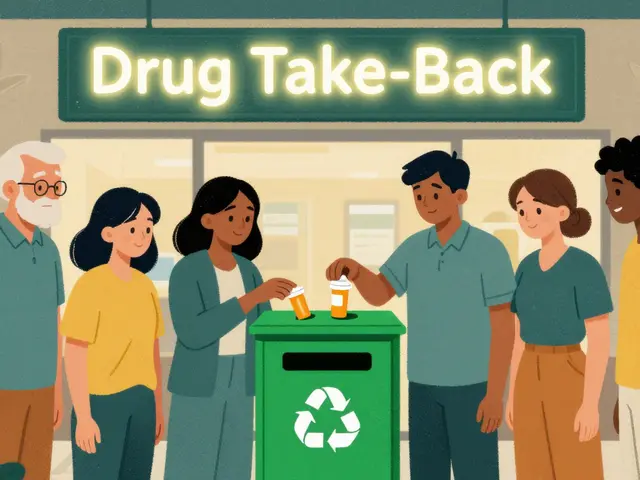
Learn how drug take-back programs safely dispose of unused medications through permanent drop boxes, mail-back envelopes, and nationwide events. Find out what you can and can’t dispose of, and how to locate the nearest collection site.
Learn how to manage salt intake while taking ramipril to lower blood pressure, reduce side effects, and protect your heart and kidneys. Practical diet tips, hidden sodium sources, and what to avoid.

Cold sores and pimples look alike but are caused by completely different things. Learn how to tell them apart, what treatments actually work, and how to avoid making common mistakes that make things worse.
Prescription assistance programs from drug manufacturers help millions afford costly medications. Learn how copay cards and PAPs work, who qualifies, what you can save, and the hidden rules that could block your help.

If you're trying to expand your family, natural supplements like myo-inositol, CoQ10, and DHEA might give you that extra edge. This article digs deep into how these supplements may help, dosage tips, and the science behind their popularity. You'll find relatable, concrete insights for both women and men. Plus, learn how these options stack up against popular fertility drugs and discover practical tips that you can use right now.