
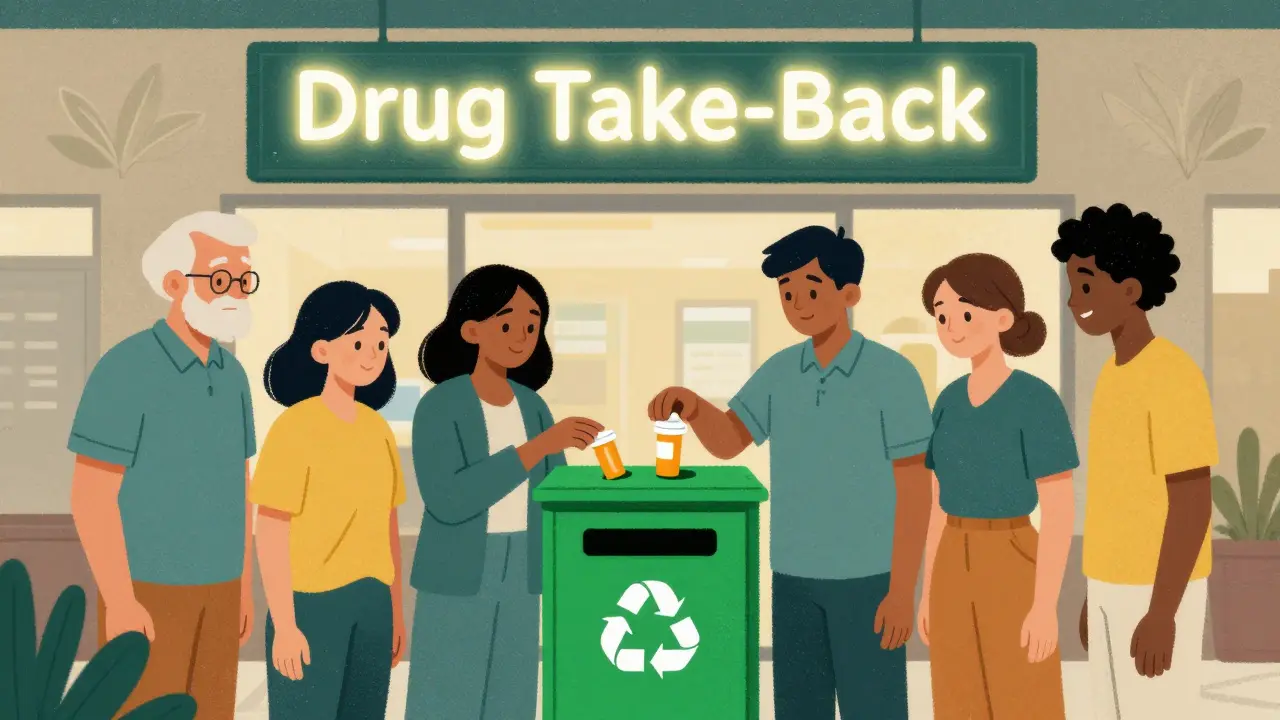
Every year, millions of unused or expired medications sit in bathroom cabinets, kitchen drawers, and medicine chests across the country. Many people don’t know what to do with them-so they flush them down the toilet, toss them in the trash, or just leave them there. But those habits aren’t just unsafe; they’re harmful to the environment and can lead to accidental poisonings or drug misuse. The good news? There’s a simple, safe, and free way to get rid of them: drug take-back programs.
What Are Drug Take-Back Programs?
Drug take-back programs are organized efforts to collect unused, expired, or unwanted medications from homes and dispose of them safely. These programs aren’t new-they’ve been around since the early 2010s-but they’ve grown fast. Thanks to the Secure and Responsible Drug Disposal Act of 2010, the DEA gained the power to set up permanent drop-off locations and organize nationwide collection events. Today, there are more than 16,500 permanent collection sites across the U.S., including pharmacies, hospitals, and police stations. And twice a year, in April and October, the DEA runs its National Prescription Drug Take Back Day, with thousands of temporary collection points popping up in communities everywhere.These programs exist because the problem is real. Over 100,000 Americans die each year from drug overdoses, and a big part of that comes from people accessing unused prescription drugs-often from family members’ medicine cabinets. Teens, in particular, are at risk. Studies show that nearly half of teens who misuse prescription opioids get them from a relative’s stash. Take-back programs help cut off that supply before it starts.
How Do They Work?
There are three main ways to use a drug take-back program: permanent drop boxes, mail-back envelopes, and one-day collection events.Permanent drop boxes are the most reliable option. You’ll find them in pharmacies like Walgreens, CVS, and Rite Aid, as well as in police stations and some hospitals. These are locked, secure bins where you can drop off medications anytime. No appointment needed. No questions asked. Just walk in, hand over your old pills, and leave. Walgreens alone has over 1,600 of these boxes across 49 states, and they’ve collected more than 2.4 million pounds of medication since 2016.
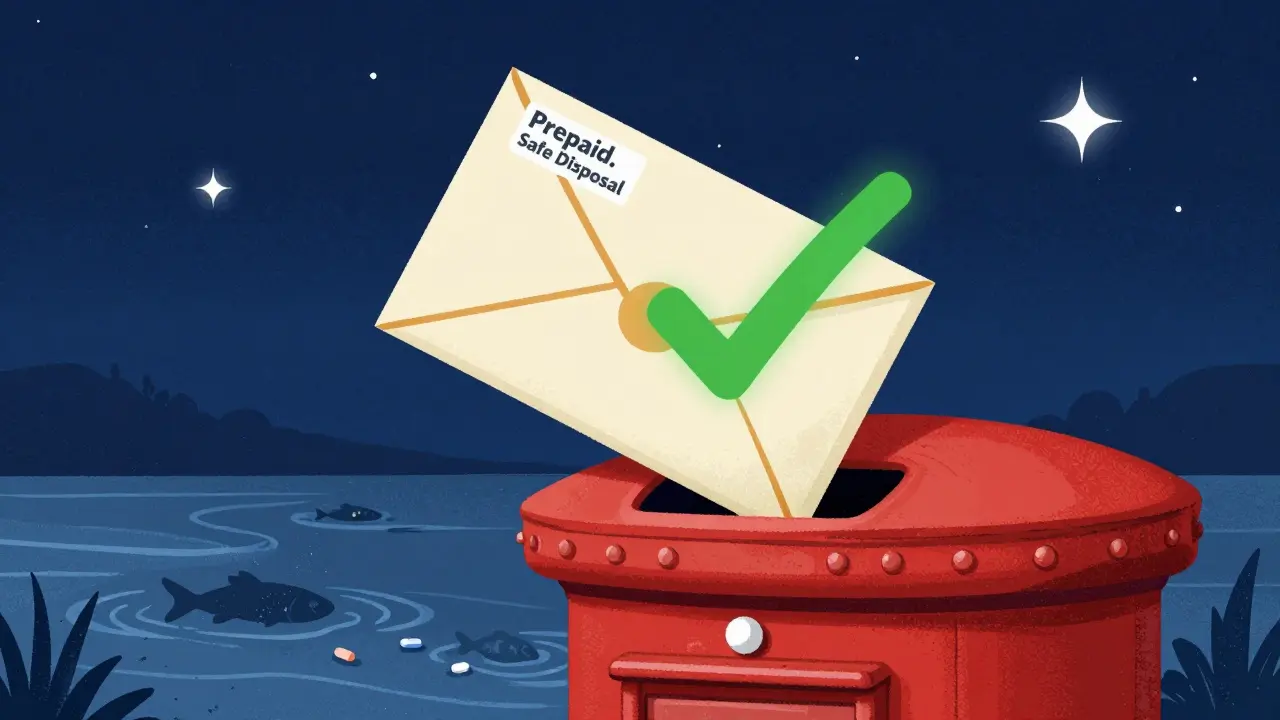
Mail-back programs are great if you live far from a drop-off site. You order a prepaid envelope-sometimes for free from your local health department or pharmacy-and put your meds inside. Seal it, drop it in the mailbox, and it gets shipped to a special facility for destruction. The EPA and FDA say this is one of the safest ways to dispose of meds, especially if you can’t get to a physical location.
Take-back events happen twice a year, organized by the DEA and local law enforcement. They’re usually held at community centers, fire stations, or parking lots. On those days, you can bring your meds in person and hand them to a volunteer or officer. While convenient, these events have a downside: some people avoid them because they’re afraid of police involvement. Studies show participation drops by 32% when law enforcement runs the event alone. That’s why pharmacy-based drop boxes are becoming the preferred option-they’re less intimidating and always open.
What Can You Drop Off?
Not everything goes in the take-back bin. Here’s what’s accepted:- Prescription pills and liquids
- Over-the-counter medications
- Pain patches (like fentanyl or nitroglycerin)
- Topical ointments and creams
- Vitamins and supplements
- Pet medications
And here’s what you shouldn’t bring:
- Asthma inhalers or aerosol cans
- Thermometers (especially mercury ones)
- Hydrogen peroxide
- Iodine-based meds
- Alcohol or illegal drugs
If you’re unsure, check the DEA’s website or call your local drop-off location. Most places list accepted items clearly on their signs or websites.
How to Prepare Your Medications
Before you drop off your meds, do a quick prep to protect your privacy and make the process smoother:- Keep pills in their original bottles if you can. It helps staff identify them.
- If the bottle is empty or missing, put the meds in a sealed plastic bag.
- Scratch out or cover your name, address, and prescription number with a permanent marker. Don’t throw away the bottle with your info still visible.
- Don’t mix different meds in one container. Keep them separate so they’re easier to sort.
Some places will even give you free bags or labels to help with this. Just ask.
Why Not Just Flush or Trash Them?
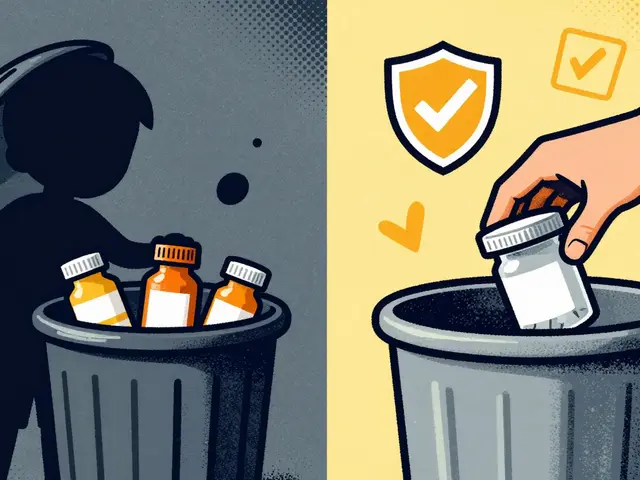
It’s tempting. You think, “It’s just one pill.” But flushing meds sends chemicals into water systems. The EPA estimates that pharmaceutical pollution is now found in 80% of U.S. rivers and streams. These substances don’t break down easily. Fish, frogs, and even drinking water can be affected.Throwing them in the trash isn’t much better. Trash haulers don’t sort meds. They end up in landfills, where rainwater can leach them into groundwater. And if someone digs through the trash-like a child, a pet, or someone struggling with addiction-they could find and use them.
The FDA says take-back programs are the only recommended method for most medications. Only about 15 specific drugs-mostly powerful opioids-are safe to flush, and you can find that list on the FDA’s website. For everything else, take-back is the way to go.
What If There’s No Drop-Off Near You?
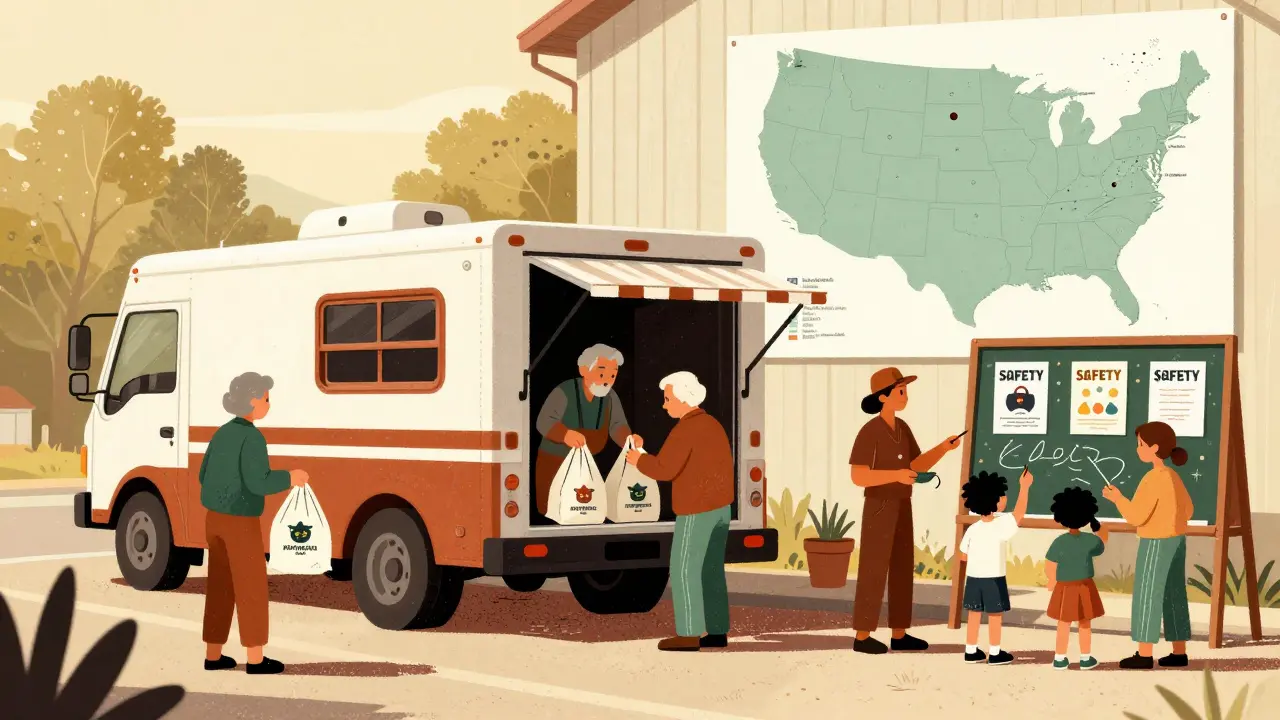
If you live in a rural area, you might be one of the 37% of Americans who don’t live within five miles of a permanent collection site. That’s a real problem. Rural communities have only 42% of the drop-off density of urban areas. And only 28% of people even know year-round options exist.But there are solutions. Some places use mobile collection units-trucks that drive to community centers, churches, or senior centers. Broward County, Florida, started this and saw participation jump 73%. If your town doesn’t have one, ask your local pharmacist, city council, or public health office to start one.
As a last resort, the FDA gives clear instructions for at-home disposal: take pills out of their containers, crush them or dissolve them in water, mix them with something gross like coffee grounds or kitty litter, seal them in a plastic bag, and throw them in the trash. This makes them unappealing and harder to misuse. But again-this is not ideal. It’s a backup plan.
Who Runs These Programs?
The DEA sets the rules, but local partners make them happen. Pharmacies handle the bulk of permanent drop-offs. Police departments run events. Nonprofits and state health agencies fund mail-back programs. And companies like Stericycle and Waste Management handle the actual destruction-always through high-temperature incineration, which is the only method approved to fully destroy drugs without harming the environment.Pharmacies are the fastest-growing part of the network. Walgreens, CVS, and Rite Aid have invested millions in these programs because they know it builds trust. People see them as responsible, caring businesses-not just sellers of medicine.
What’s Next for Drug Take-Back Programs?
The future is moving toward permanent, accessible, and affordable solutions. The DEA’s “Every Day is Take Back Day” campaign has already pushed the number of year-round sites up from 5,000 in 2020 to over 16,500 in 2025. That’s a 210% increase in just seven years.There’s also new legislation on the table. A bill called H.R. 4278, proposed in 2023, would require Medicare Part D plans to pay for mail-back envelopes. That could help 48 million seniors who can’t easily get to a drop-off point. If it passes, access will improve dramatically.
But funding is still a challenge. Nearly 60% of local programs say money is their biggest hurdle. Running a drop box costs $1,200 to $2,500 upfront, plus ongoing maintenance. Temporary events cost $350 per site-but they happen twice a year, so the cost adds up. The best long-term fix? Integrating take-back systems into existing healthcare networks. That could cut costs by 35% and make services more reliable.
How to Find a Drop-Off Near You
It’s easy. Go to the DEA’s official website: www.dea.gov/takeback. Use their searchable map to find the closest permanent drop box or upcoming event. You can filter by zip code, state, or type of location.Or call your local pharmacy. Most have signs in the window or info on their website. If you’re in the UK, check with your local NHS pharmacy-they offer similar services under the NHS Disposal of Medicines scheme.
Don’t wait for the next Take Back Day. Permanent drop boxes are open every day. You don’t need to be a patient. You don’t need an ID. You just need to care enough to do the right thing.
Why This Matters
This isn’t just about cleaning out your medicine cabinet. It’s about protecting your kids, your neighbors, your community. Every pill you drop off is one less chance for someone to misuse it. Every envelope you mail is one less chemical polluting our rivers. Every time you choose a take-back program over the trash or toilet, you’re helping prevent overdose, protect the environment, and save lives.It’s simple. It’s free. And it works.
Nancy Kou
December 20, 2025 AT 20:48Finally someone talks about this like it matters. I cleared out my mom’s cabinet last month and dropped off 17 bottles of expired painkillers at the CVS down the street. No questions asked. No judgment. Just a bin and a thank you. It felt good.
Alex Curran
December 22, 2025 AT 15:44Did you know the DEA’s destruction process uses incineration at over 1000°C to ensure complete molecular breakdown? Most people don’t realize that landfills and water systems aren’t just ‘contaminated’-they’re bioaccumulating endocrine disruptors from pharmaceutical runoff. This isn’t just about safety-it’s environmental toxicology 101.
William Storrs
December 24, 2025 AT 13:06Love this. If you’ve been putting off cleaning out your medicine cabinet, do it today. One less pill in the wrong hands could mean one less overdose. You don’t need a hero complex to be a hero. Just drop it off.
Hussien SLeiman
December 26, 2025 AT 12:46Oh great, another feel-good public service announcement from the pharmaceutical-industrial complex. Let me guess-next they’ll tell us to recycle our empty opioid bottles with the same enthusiasm they used to push them in the first place. These programs are a Band-Aid on a hemorrhage. The real problem is overprescribing, not disposal. But hey, let’s all feel virtuous while the doctors keep writing scripts like they’re giving out candy.
Dorine Anthony
December 27, 2025 AT 22:34I live in rural Ohio. There’s a drop box at the Walgreens 45 minutes away. I’ve used it twice. The lady who runs it always smiles and says ‘thank you for keeping your community safe.’ That’s the kind of human connection we need more of.
mark shortus
December 28, 2025 AT 23:24OKAY SO I JUST FOUND OUT THAT MY DAD’S OLD FENTANYL PATCHES WERE IN HIS DRAWER FOR 8 YEARS AND I DIDN’T EVEN KNOW IT. I AM SO GLAD I READ THIS. I JUST TOOK THEM TO THE POLICE STATION. I’M CRYING. I’M SO RELIEVED. THIS IS THE MOST IMPORTANT THING I’VE DONE THIS YEAR.
James Stearns
December 30, 2025 AT 12:05While the logistical framework of pharmaceutical take-back initiatives is commendable, one must interrogate the underlying structural failures of the American healthcare apparatus that necessitate such interventions in the first place. The commodification of pain management, the deregulation of opioid prescribing, and the absence of longitudinal patient monitoring represent systemic derelictions of duty that cannot be remediated by discrete drop-boxes.
Nina Stacey
December 30, 2025 AT 22:03My grandma is 82 and she doesn’t use the internet so I printed out the DEA map and took her to the pharmacy. She didn’t even know this was a thing. She said she thought flushing was fine because ‘it’s medicine, not trash.’ I’m glad I found this. We need to talk to older people more.
Sajith Shams
December 31, 2025 AT 18:37You all are missing the point. The DEA doesn’t care about your pills. They care about controlling the narrative. They let the pharmaceutical companies flood neighborhoods with opioids then act like heroes when they collect the leftovers. This is a PR stunt. The real criminals are still writing prescriptions. You’re just cleaning up their mess and calling it virtue.
Kevin Motta Top
January 2, 2026 AT 13:34My cousin in Australia uses the NHS mail-back system. Free, no ID, just drop the envelope in any mailbox. Why can’t we have that here? It’s 2025.
Andrew Kelly
January 3, 2026 AT 02:39So now we’re supposed to trust the same corporations that got us into this mess to handle our meds? Walgreens, CVS-they made billions off oxycodone. Now they’re the good guys? I don’t buy it. This is corporate greenwashing with a side of paternalism.
Chris Clark
January 4, 2026 AT 09:35Just dropped off my grandpa’s meds at the VA pharmacy. They had a little sign that said ‘Your community thanks you.’ I cried a little. Not because it’s sad-but because it’s so simple. And we don’t do simple enough anymore.
anthony funes gomez
January 5, 2026 AT 06:21The ontological dissonance between individual responsibility and institutional negligence is palpable in the discourse surrounding pharmaceutical disposal. One is exhorted to act as an ethical agent-yet the structural architecture of pharmaceutical distribution remains unaltered. The take-back program, while phenomenologically efficacious, functions as a symbolic catharsis rather than a systemic corrective. The real pathology lies not in the cabinet-but in the prescription pad.
Marsha Jentzsch
January 7, 2026 AT 02:07What if someone steals the meds from the drop box? What if they’re not destroyed properly? What if the incinerator leaks toxins? You think they’re telling you the whole truth? I read a blog once that said the DEA just ships everything to China now. And the pills end up back on the street. I’m not dropping mine off. I’m keeping them. At least I know where they are.
Ryan van Leent
January 8, 2026 AT 10:31Why should I care? I didn’t abuse them. I didn’t sell them. I just didn’t throw them out. You people act like I’m a criminal for having medicine in my house. It’s not my fault the doctors overprescribed. Stop shaming me.