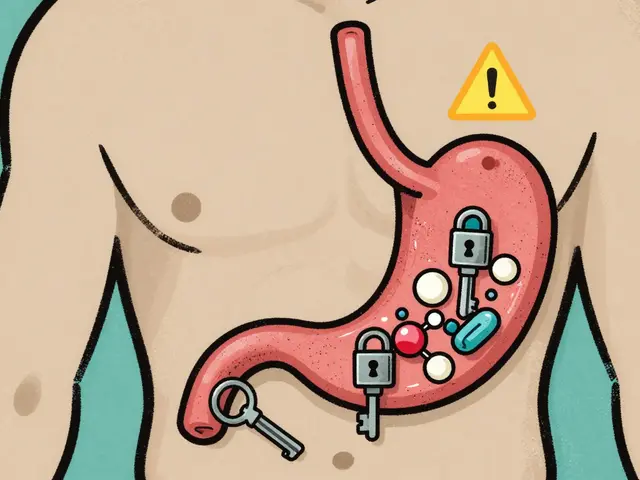
Medication Side-Effect Timing Explorer
Pick a drug class to see its risk-over-time curve and the window when side effects are most likely.
Risk is highest right after starting and falls quickly — stay vigilant during the first few days.
Imagine taking a new blood pressure pill and feeling perfectly fine for three months. Then, suddenly, your face swells up. Is it the drug? Or is it something else entirely? This is where understanding time-to-onset patterns becomes critical. It’s not just about knowing that a side effect exists; it’s about knowing *when* to expect it. If you know that ACE inhibitors can cause angioedema weeks or even months later, that sudden swelling makes much more sense than if you expected it within hours.
Time-to-onset (TTO) analysis looks at the gap between starting a medication and when an adverse reaction appears. For decades, doctors relied on gut feeling or simple timelines. But modern pharmacovigilance uses statistical models, specifically the Weibull distribution, to map these risks with precision. This isn't abstract math for researchers; it's a practical tool that helps clinicians distinguish between a drug-induced issue and your underlying disease getting worse.
Why Timing Matters More Than You Think
The core value of TTO analysis lies in causality. Just because you feel bad while taking a pill doesn't mean the pill caused it. However, if the timing matches known patterns for that specific drug class, the likelihood of a connection jumps significantly. The World Health Organization Uppsala Monitoring Centre formalized these guidelines in the early 2000s, establishing that temporal relationships are a cornerstone of safety monitoring.
Most adverse drug reactions follow what statisticians call an "early failure" pattern. In technical terms, this means the shape parameter (β) of the risk curve is less than 1. According to a 2014 study by Jean-Louis Montastruc, 78% of analyzed reactions showed this β < 1 pattern. In plain English, this means the highest risk of experiencing a side effect is usually right after you start the medication. As time goes on, the daily risk drops. Knowing this helps you stay vigilant during the first few weeks rather than assuming you're "safe" after a month.
How Different Drug Classes Behave
Not all medications behave the same way. Some hit hard and fast; others creep up slowly. Here’s how some common classes stack up based on recent data:
- Antibiotics (e.g., Ciprofloxacin): These tend to have the shortest onset times. For peripheral neuralgia, the median time to onset is just 2 days. Women experience this faster than men, with a median of 2 days compared to 4 days for men.
- ACE Inhibitors (e.g., Lisinopril): These are tricky. While histamine-mediated angioedema happens within hours, bradykinin-mediated angioedema can appear anywhere from the first week to six months later. This delayed window often leads to misdiagnosis.
- Statins (e.g., Atorvastatin): Muscle pain is a common complaint, but the timing is controversial. A 2021 JACC crossover trial found no significant difference in symptom onset between statins and placebos. Many patients reported symptoms improving within 3 days of stopping the pill, regardless of whether they were actually taking the active drug, suggesting a strong nocebo effect.
- Antiepileptics (e.g., Pregabalin, Gabapentin): These show a slower onset. Pregabalin has a median TTO of 19 days for dizziness, while gabapentin takes about 31 days. Most users report feeling dizzy or fatigued within the first two weeks.
- Immune Modulators (e.g., Natalizumab): These can have very long lag times. Natalizumab-induced peripheral neuralgia has a median TTO of over 140 days, making it easy to miss the connection if you aren't looking for it.
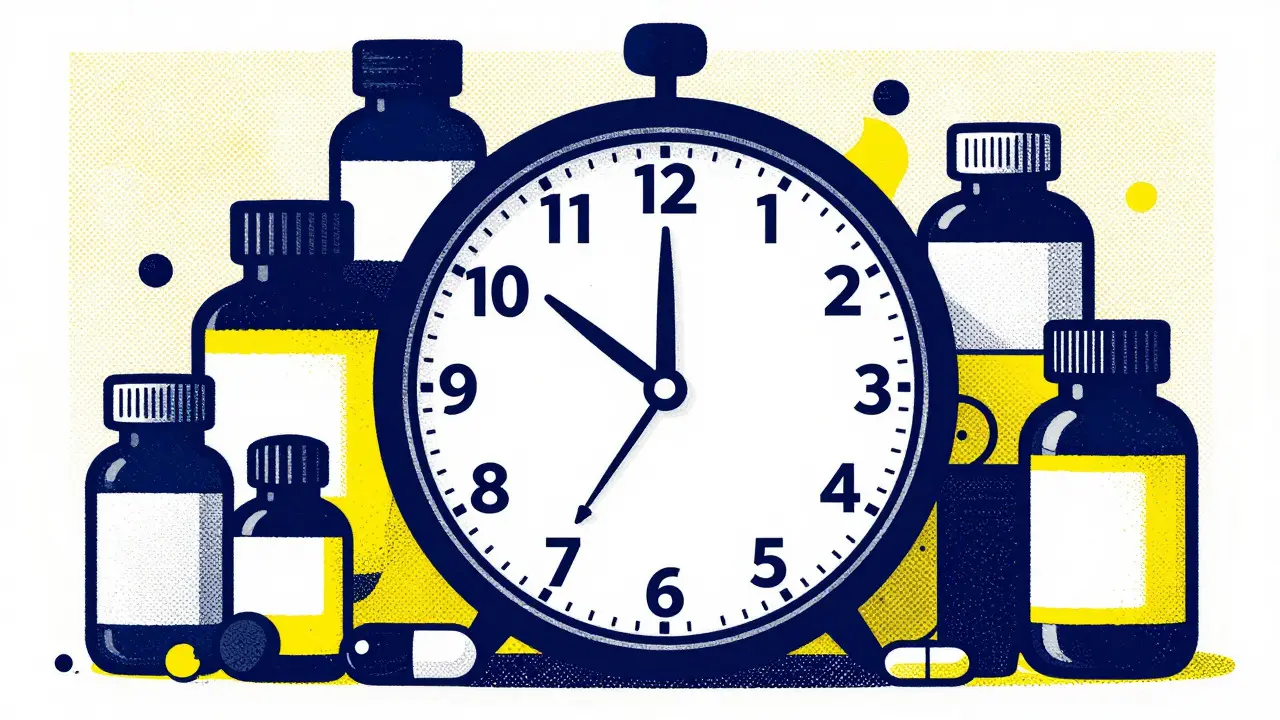
Decoding the Weibull Distribution
You might see the term "Weibull distribution" in medical literature and wonder why a statistical model matters to you. Think of it as a risk curve. The shape of this curve tells you when you are most vulnerable.
| Drug Class / Example | Common Side Effect | Median Time-to-Onset | Risk Pattern (β) |
|---|---|---|---|
| Fluoroquinolones (Ciprofloxacin) | Peripheral Neuralgia | 2 days | Early Failure (β = 0.43) |
| ACE Inhibitors (Lisinopril) | Angioedema | Variable (Weeks to Months) | Bimodal/Complex |
| Statin Therapy | Myalgia (Muscle Pain) | Days to Weeks | Placebo-Comparable |
| Antiepileptics (Pregabalin) | Dizziness/Fatigue | 19 days | Early Failure (β < 1.0) |
| Interferons (Beta-1a) | Peripheral Neuralgia | 526.5 days | Slow Onset (β = 0.75) |
If β is less than 1, the risk is highest at the start. If β is greater than 1, the risk increases over time (like cumulative damage). If β equals 1, the risk is constant every day. Understanding which bucket your medication falls into helps you know when to be most alert.
The Role of Individual Factors
Statistics give you the average, but biology gives you the exception. Sex-specific differences are becoming a major focus in TTO research. As mentioned earlier, women experienced ciprofloxacin-induced neuralgia faster than men. Why? It could be related to body composition, metabolic rates, or hormonal influences on drug clearance. These nuances matter because a one-size-fits-all timeline can lead to missed diagnoses in certain demographics.
Genetics also play a role. Pharmacogenomics is moving toward personalized TTO predictions. The NIH’s All of Us Research Program is working on incorporating genetic data to predict not just *if* you’ll have a side effect, but *when*. Imagine a future where your prescription label says, "High risk of dizziness between days 15 and 25," based on your DNA profile. That level of precision is on the horizon, driven by machine learning models that analyze chemical structures and patient history simultaneously.
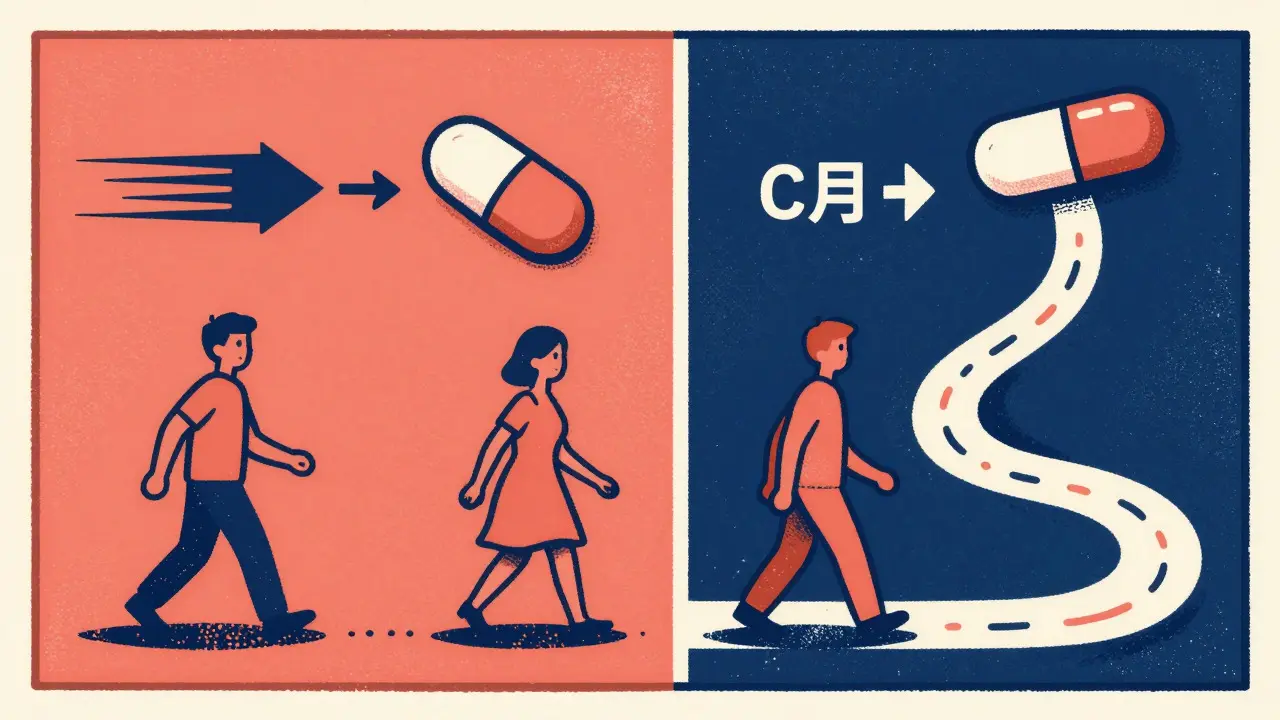
Practical Tips for Patients and Clinicians
So, how do you use this information? If you’re a patient, keep a simple log. Note the date you started the medication and the date any new symptoms appeared. Share this with your doctor. If you’re a clinician, remember that the FDA’s 2021 guidance suggests special scrutiny for events occurring within the first 30 days. Electronic health record systems like Epic now use TTO algorithms to flag potential reactions, improving detection rates by over 20% in some hospitals.
A common pitfall is reporting bias. Studies show that adverse events are 37% less likely to be suspected if they occur after treatment stops. This means if you stop a drug and then develop a symptom, doctors might overlook the link. Always mention recent medications, even discontinued ones, when discussing new symptoms.
Frequently Asked Questions
What is the most common time frame for medication side effects?
For most drugs, the highest risk period is the first few weeks. Statistically, 78% of adverse reactions follow an "early failure" pattern, meaning the risk is highest immediately after initiation and decreases over time. However, specific drugs like ACE inhibitors can have delayed onset up to six months.
Does the time it takes for a side effect to appear prove the drug caused it?
No, timing alone does not prove causality. It increases the probability. Dr. David Healy notes that temporal association is not causation. Other factors like disease progression or other medications must be ruled out. However, matching the onset time to known drug-class patterns strengthens the case for a drug-related event.
Why do some people get side effects faster than others?
Individual variations in metabolism, genetics, sex, and age affect how quickly a drug reaches toxic levels or triggers a reaction. For example, women may experience certain antibiotic side effects faster than men due to physiological differences. Personalized medicine aims to account for these variables using pharmacogenomic data.
What should I do if a side effect appears after I've stopped the medication?
Tell your doctor immediately. There is a known reporting bias where adverse events are less likely to be linked to a drug if it has already been stopped. Keep a record of when you stopped the medication and when the symptom started, as this helps clinicians apply TTO analysis retrospectively.
Are there tools that help predict when side effects will start?
Yes. Electronic health records increasingly use TTO algorithms to flag potential reactions. Additionally, machine learning models are being developed to predict side effect frequencies and timings based on drug chemical structure and patient history. The FDA’s Sentinel Initiative analyzes millions of records to establish baselines for these predictions.