
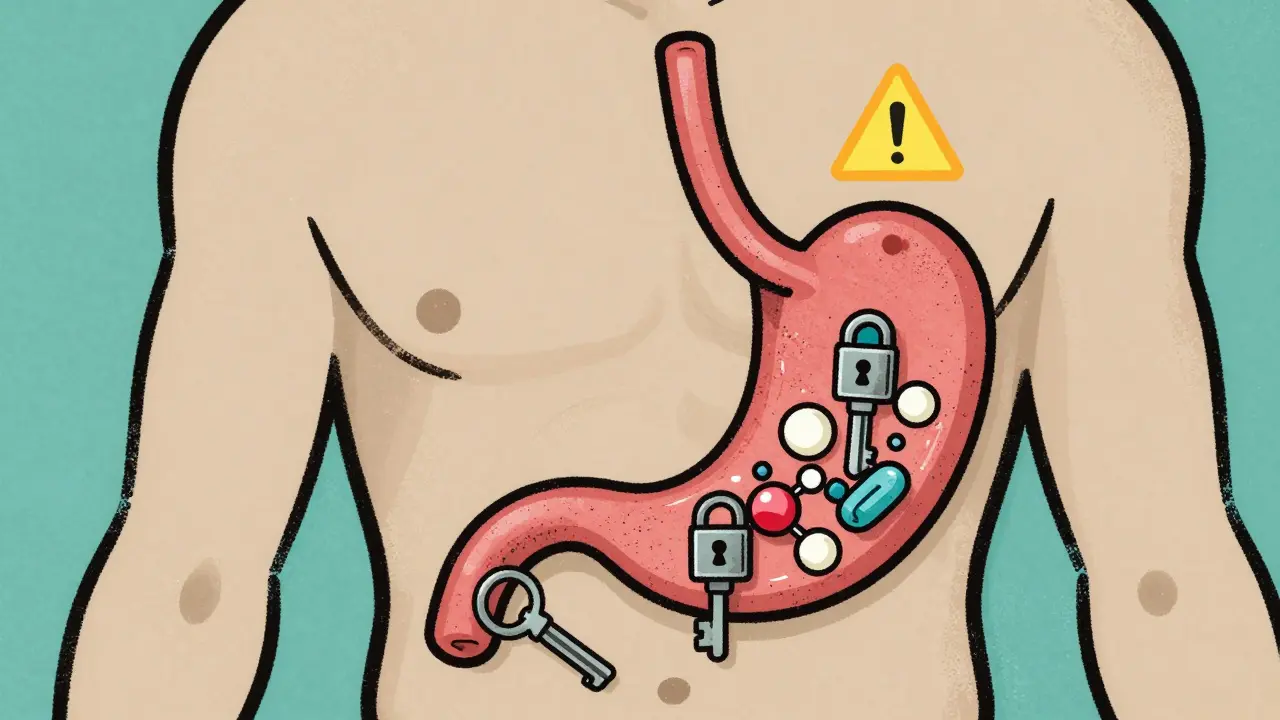
Ever wonder why a pill you swallow doesn’t just go straight to your headache? Or why your doctor asks about your diet when you’re on blood thinners? It’s not magic. It’s chemistry. Medicines don’t work because they’re ‘powerful’-they work because they fit into your body like a key into a lock. And if that key doesn’t fit right, or if another key gets in the way, things can go wrong. Understanding how medicines work isn’t just for doctors. It’s the foundation of using them safely.
How Medicines Actually Work
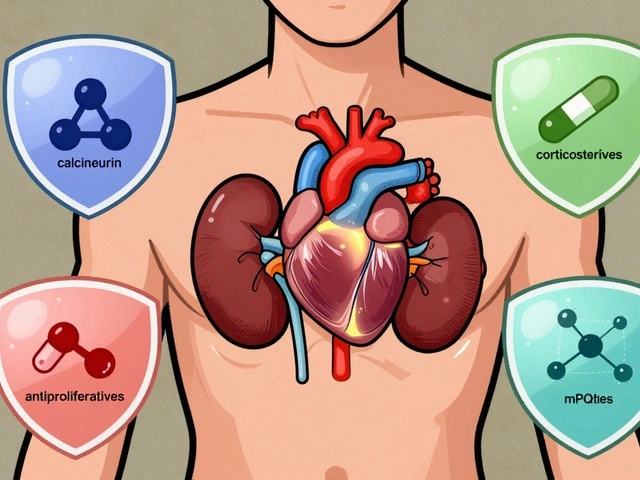
Every medicine you take is a chemical compound. That’s it. No mystical energy. No ‘healing vibes.’ Just molecules designed to interact with specific targets in your body-usually proteins called receptors or enzymes. This is called the mechanism of action. It’s the exact molecular dance a drug performs to create its effect.
Take aspirin. It doesn’t just ‘kill pain.’ It sticks to an enzyme called COX-1 and blocks it permanently. That enzyme makes prostaglandins, chemicals that cause inflammation and pain. No prostaglandins? Less pain. That’s it. Simple. But if you take aspirin and have a stomach ulcer, that same blocking action can make bleeding worse. Why? Because COX-1 also protects your stomach lining. That’s the trade-off.
Some drugs, like SSRIs (fluoxetine, sertraline), work by stopping the reabsorption of serotonin in the brain. Think of it like putting a cork in a recycling tube. Serotonin stays around longer, helping lift mood. But if you suddenly stop taking it, the tube gets clogged again-hence withdrawal symptoms like dizziness or brain zaps. Understanding this helps you avoid quitting cold turkey.
Not all drugs go to the brain. Some act right where they land. Laxatives? They work in the gut. Antacids? They neutralize acid in your stomach. No bloodstream needed. Others, like antibiotics, travel through your blood to kill bacteria. Penicillin doesn’t ‘attack’ germs-it stops them from building their cell walls. The bacteria literally fall apart. But it only works on bacteria with walls. That’s why it doesn’t work on viruses.
Why Your Body Matters as Much as the Drug
It’s not just about the drug. It’s about what your body does to the drug. This is called pharmacokinetics. Four big things happen:
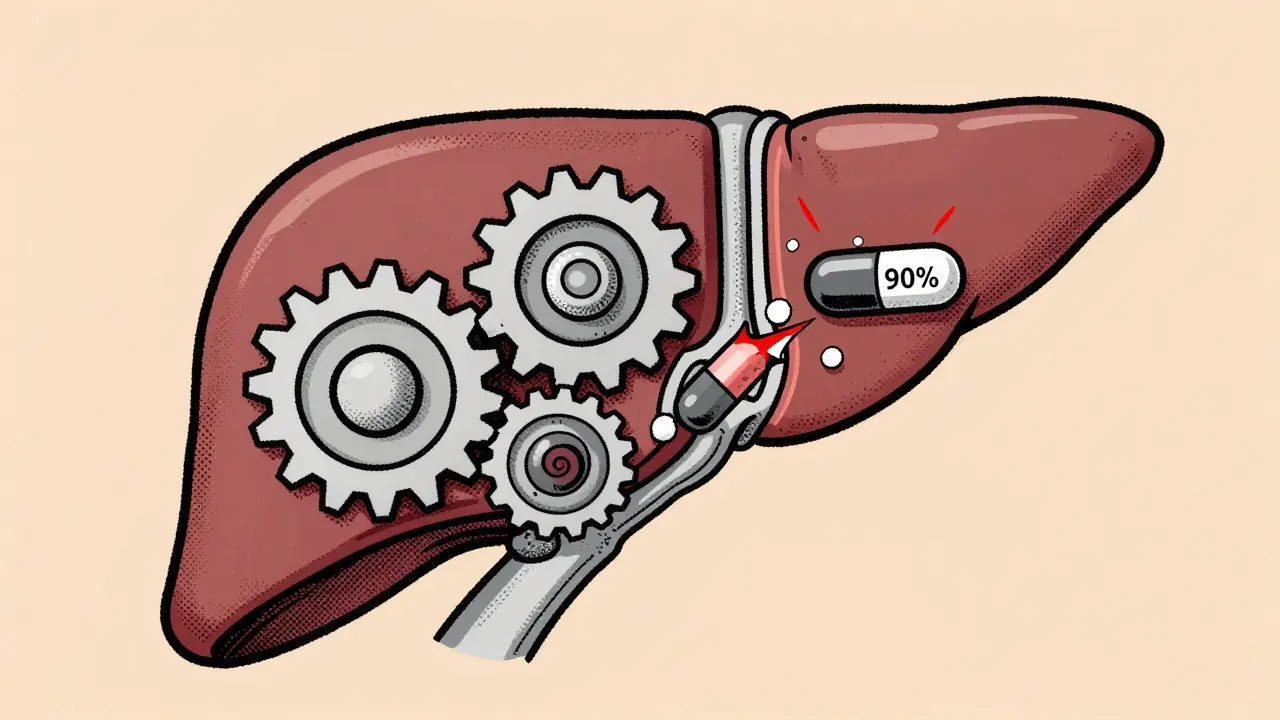
- Absorption: Where does the drug enter? Pills go through your gut. Some get absorbed quickly; others, like propranolol, lose up to 90% of their dose on the way to your bloodstream because your liver breaks them down first. That’s called the first-pass effect.
- Distribution: Once in your blood, 95-98% of many drugs bind to proteins. They’re stuck. Only the 2-5% that’s free can do anything. If another drug comes along and kicks it off those proteins-like sulfonamides do with warfarin-the free drug level spikes. That’s when bleeding risk jumps.
- Metabolism: Your liver, mostly, breaks drugs down. Some people have genes that make this happen faster or slower. If you metabolize warfarin slowly, even a normal dose can be too much.
- Excretion: Kidneys flush out the leftovers. If your kidneys are weak, drugs build up. That’s why older adults often need lower doses.
And then there’s the blood-brain barrier. It’s a wall. Most drugs can’t cross it. That’s good-it keeps toxins out. But for Parkinson’s, you need levodopa to get into the brain. So scientists added carbidopa to help it slip through. Without that combo? No help.
When Medications Are Safe to Use
Safety isn’t about avoiding side effects entirely. It’s about managing risk. Here’s what makes a medication safe to use:
- Matching the drug to the right person. Trastuzumab (Herceptin) only works if your breast cancer has too much HER2 protein. Screen first. Give it only if the target is there. That’s precision. It cuts side effects and boosts success.
- Knowing the narrow window. Lithium treats bipolar disorder, but the difference between a helpful dose and a toxic one is tiny. Blood levels must stay between 0.6 and 1.2 mmol/L. Too low? No effect. Too high? Seizures, kidney damage, coma. Regular blood tests aren’t optional-they’re life-saving.
- Understanding interactions. Warfarin users need to watch vitamin K. Green veggies like kale or spinach have 200-800 mcg per serving. If you suddenly eat a salad every day, your blood thins less. If you stop eating them, you risk bleeding. It’s not about being perfect-it’s about being consistent.
- Respecting the timeline. Antibiotics don’t work instantly. If you stop after 3 days because you feel better, you’re not cured. You’re just killing the weak bugs. The strong ones survive and multiply. That’s how resistant strains form.
One of the biggest safety mistakes? Mixing medications without knowing how they interact. MAO inhibitors (used for depression) can cause deadly spikes in blood pressure if you eat aged cheese, red wine, or cured meats. Tyramine in those foods isn’t dangerous on its own-but with MAOIs, it builds up fast. One ounce of blue cheese can have 1-5 mg of tyramine. Enough to trigger a crisis.
Why Understanding the Mechanism Saves Lives
Patients who understand how their drug works are better at spotting danger. A 2023 survey by the American Cancer Society found that 78% of people on trastuzumab who knew it targeted HER2 were able to recognize early signs of heart damage-like unusual fatigue or swelling-compared to only 29% who didn’t know the mechanism.
On Reddit, warfarin users shared how learning about vitamin K helped them manage their diet. One person wrote: ‘I used to panic every time I ate spinach. Now I know: keep it steady, not zero. My INR is stable.’
Statins? They block HMG-CoA reductase, an enzyme that makes cholesterol. But they can also cause muscle pain. Patients who knew this were 3.2 times more likely to report early muscle pain, before it turned into rhabdomyolysis-a rare but deadly muscle breakdown. That’s not luck. That’s knowledge.
The FDA now requires drugmakers to clearly explain mechanism of action. Why? Because drugs with well-understood mechanisms have 34% fewer safety label changes after approval. That means fewer surprises, fewer recalls, fewer hospital visits.
The Future: Safer Medicines Through Better Science
By 2025, the FDA plans to roll out 15 new biomarker-based monitoring tools. For example, with EGFR cancer drugs, a skin rash isn’t just a side effect-it’s a sign the drug is working. More rash? Often means better response. Doctors can adjust dose based on that, not just guess.
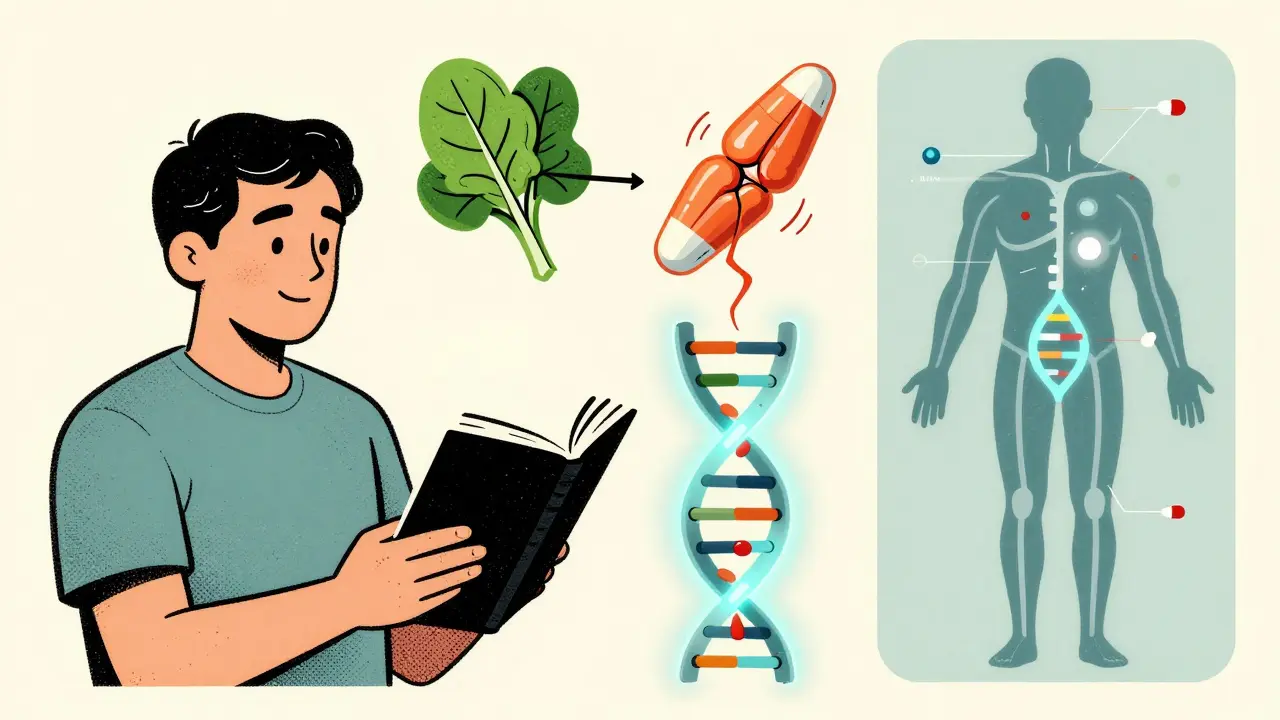
The NIH’s All of Us program is collecting DNA from a million people to see how genes affect drug response. Already, 28% of adverse reactions are linked to genetic differences. One person might need half a dose. Another might need double. That’s the future: personalized dosing based on your biology.
By 2028, we might see ‘digital twins’-virtual models of your body that simulate how a drug will act in you before you even take it. Early tests at Mayo Clinic show this could cut adverse events by 40-60%.
But right now? Half of all prescribed drugs still lack a full mechanism of action. That’s why 1.3 million people in the U.S. end up in emergency rooms every year from medication problems. Not because they’re careless. Because no one told them how it worked.
What You Can Do Today
- Ask your pharmacist: ‘How does this drug work in my body?’ Don’t settle for ‘it treats your condition.’ Ask for the mechanism.
- Use simple analogies: ‘SSRIs are like putting a cork in the serotonin recycling tube.’
- Keep a log: Note changes in diet, sleep, or other meds. A sudden change in veggies? A new antibiotic? That could be why your INR spiked.
- Never stop a drug without talking to your doctor-even if you feel fine. Withdrawal isn’t always obvious.
- Know your blood levels if you’re on lithium, warfarin, or certain epilepsy drugs. Test regularly.
Safety isn’t about never making a mistake. It’s about knowing what to watch for. And that starts with understanding how your medicine works-not just what it’s for.
Marissa Staples
March 23, 2026 AT 13:42It’s wild how something so simple-molecules fitting together like puzzle pieces-can save lives or wreck them. I used to think meds were just magic bullets. Now I get it: it’s all about context. Your body isn’t a blank slate. It’s a crowded subway at rush hour, and every drug is someone trying to get on board.
That’s why consistency matters more than perfection. Not ‘never eat spinach’-but ‘don’t suddenly start eating a whole garden.’
Knowledge isn’t power. It’s safety.
Korn Deno
March 24, 2026 AT 10:04SSRIs are like putting a cork in a recycling tube. That’s the best analogy I’ve ever heard. I’ve been on sertraline for 8 years and never thought about it like that. Suddenly it makes sense why I got those brain zaps when I missed a dose. No drama. Just chemistry.
Pat Fur
March 26, 2026 AT 05:02My grandma took warfarin for 12 years. She ate kale every damn day. No panic. No dieting. Just steady. She’d say, ‘If I’m gonna die, let it be from old age, not a salad.’
Turns out, she was smarter than half the doctors.
Consistency over control.
Anil Arekar
March 26, 2026 AT 09:25The precision of modern pharmacology is nothing short of remarkable. The fact that we can now match drugs to genetic markers, predict metabolic rates, and even simulate drug behavior through digital twins represents a paradigm shift in therapeutic safety.
It is imperative that healthcare systems prioritize patient education in this domain, as the complexity of pharmacokinetics cannot be left solely to clinicians.
Knowledge empowers autonomy.
Natasha Rodríguez Lara
March 26, 2026 AT 19:49I love how this post breaks it down without dumbing it down. I’m a nurse, and I’ve seen so many patients stop their meds because they ‘felt fine.’
One guy quit his statin after three days because his legs felt ‘weird.’ Turned out he had early muscle pain. If he’d known about HMG-CoA reductase, he might’ve called his doc instead of Googling ‘statin death.’
Thanks for the clarity.
Caroline Bonner
March 28, 2026 AT 03:44Okay, I need to say this out loud because I’ve been thinking about this for weeks: the fact that your liver can destroy 90% of a drug before it even gets to your bloodstream is insane. And then, on top of that, your genes decide whether you’re a fast or slow metabolizer? And then your kidneys? And then your gut? And then your blood proteins? And then the blood-brain barrier? It’s like your body is a maze with traps and secret doors and half the time, you don’t even know which path you’re on.
And yet, we just swallow a pill and expect it to work? Like it’s a vending machine?
I’m not even mad. I’m just… impressed. And a little terrified.
Linda Foster
March 28, 2026 AT 07:15While the mechanistic understanding of pharmaceuticals is commendable, one must not overlook the systemic barriers to patient education. Socioeconomic disparities, language accessibility, and healthcare literacy remain significant obstacles to the dissemination of such vital knowledge.
It is not sufficient to inform individuals if the infrastructure to support comprehension is absent.
Rama Rish
March 29, 2026 AT 03:52warfrin and veges? i just eat what i want. my doc says keep it same. no big deal. i dont stress.
rebecca klady
March 30, 2026 AT 21:48I used to think the ‘brain zaps’ were just stress. Then I read about serotonin reuptake and realized… oh. That’s why I felt like my head was short-circuiting when I skipped a day.
Thanks for explaining it like I’m not a doctor.
Namrata Goyal
April 1, 2026 AT 09:12They make it sound like drugs are this elegant science. Nah. Most of them are just lucky guesses with better marketing. Half the time, we don’t even know how they work. And now they want us to trust a ‘digital twin’? Like we’re gonna let a computer simulate our body? LOL. I’ll stick with my grandma’s herbal tea.
Alex Arcilla
April 2, 2026 AT 09:19So let me get this straight… if I eat blue cheese and I’m on an MAOI, I could die? But if I just skip the cheese, I’m fine? That’s it? No fancy test? No bloodwork? Just… don’t eat cheese?
Man. Medicine is wild. We’re basically playing Russian roulette with our lunch.
Brandon Shatley
April 3, 2026 AT 18:17my sister is on lithium and she gets her blood tested every month. i didnt know it was that close to toxic. like, one number off and boom. that’s crazy. i always thought it was just ‘mood stabilizer’ like magic. now i get it. she’s lucky she has a good doc.
Blessing Ogboso
April 3, 2026 AT 20:48As a nurse in Lagos, I’ve seen patients stop antivirals because they ‘felt better’ after three days. I’ve seen mothers skip insulin because they couldn’t afford the test strips. This post? It’s not just for Americans. It’s for every person who swallows a pill and hopes for the best.
Understanding mechanism isn’t luxury. It’s survival.
Thank you for writing this. I’m sharing it with my clinic. No one should die because no one explained how the key fits the lock.