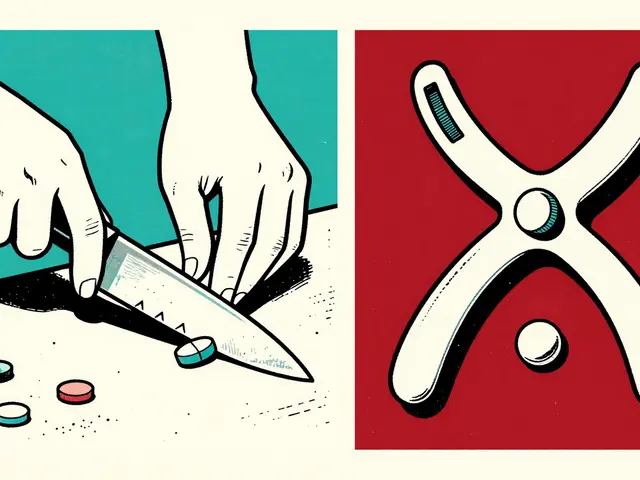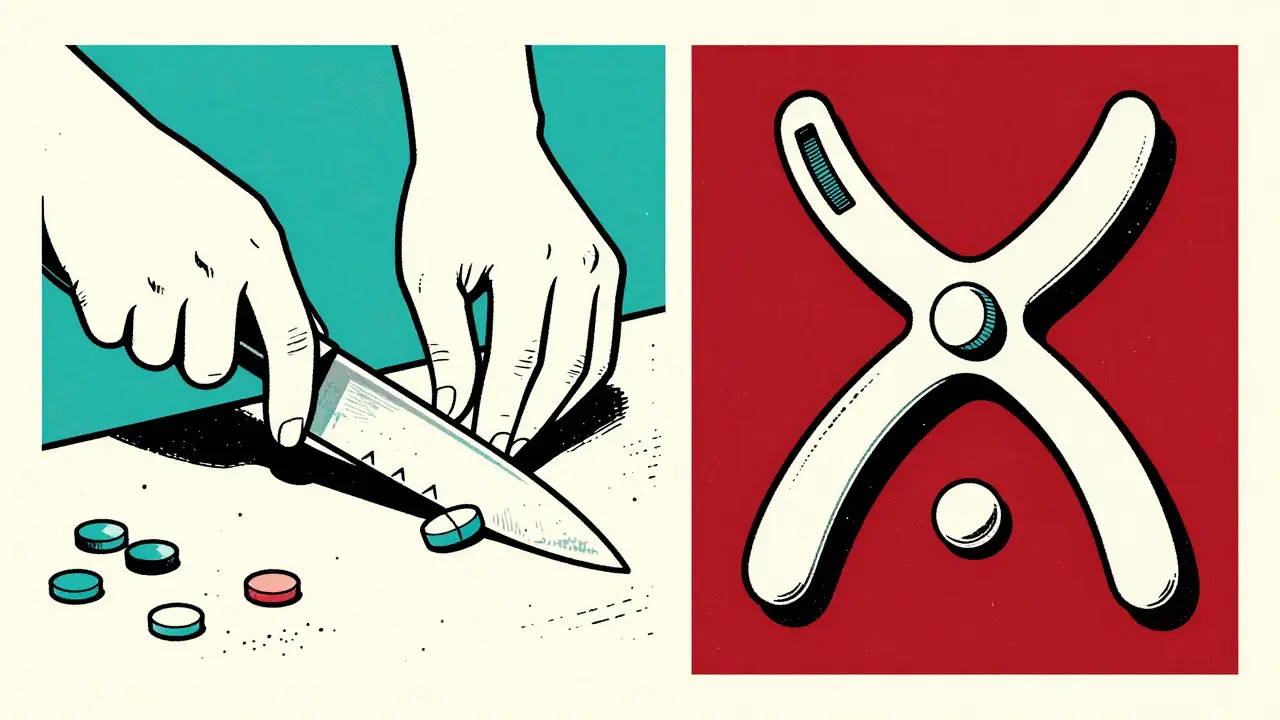
If you've ever used a kitchen knife to split a tablet or a heavy spoon to crush a pill, you might have unintentionally created a health risk. It seems like a simple task, but without the right approach, you can easily introduce bacteria or mix remnants of different drugs. More importantly, not every pill is designed to be broken. Doing so with the wrong medication can cause a dangerous "dose dump," where the entire dose hits your system at once instead of releasing slowly over several hours.
The Golden Rule: Know Which Pills to Never Break
Before you even touch a splitter, you need to know if the medication is actually splittable. Enteric-coated is a specialized coating designed to protect the stomach from the drug or protect the drug from stomach acid, ensuring it dissolves in the intestines. If you crush an enteric-coated pill, you destroy this barrier, which can lead to severe stomach irritation or make the drug ineffective. Similarly, sustained-release or extended-release tablets are engineered to leak medication slowly. Breaking these disrupts the chemical timing, which the FDA warns can lead to toxicity or treatment failure.
A good rule of thumb? Look for a "score mark"-that indented line across the center of the tablet. While not every scored pill is safe to split, most non-scored pills are definitely not. If you aren't sure, check your medication guide or call your pharmacist. According to the Institute for Safe Medication Practices (ISMP), blanket orders to crush or split all medications are dangerous and have historically led to fatal errors.
Stopping Cross-Contamination in Your Setup
Cross-contamination happens when residue from a previous medication mixes with a new one. This is a huge problem if you are managing multiple prescriptions or helping a family member. The most common mistake is using one splitter for five different medications without cleaning it in between. This creates a cocktail of chemical residues that can alter the efficacy of your drugs.
To keep your process sterile, follow these steps:
- Wash your hands first: Always start with soap and water. If you are in a high-risk environment, surgical gloves are preferred.
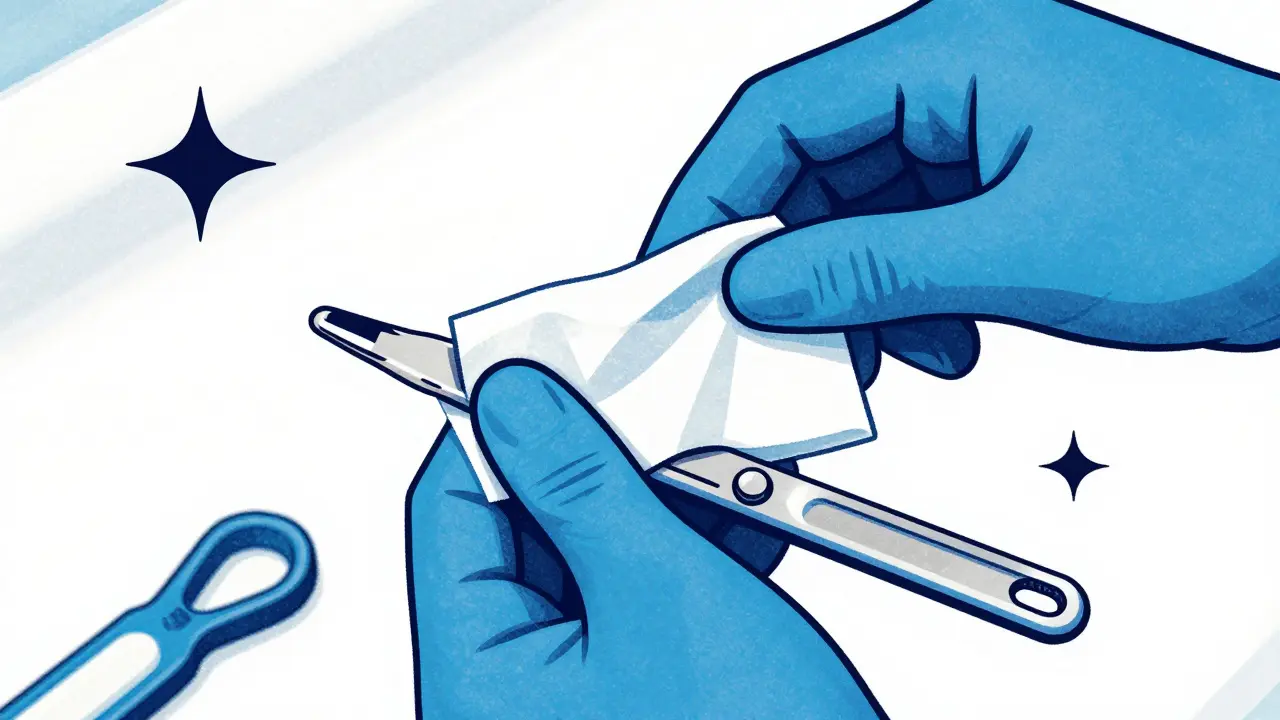
- Sanitize the surface: Use 70% isopropyl alcohol wipes to clean the area where you'll be working.
- Dedicated Equipment: The safest way to avoid contamination is to have a dedicated splitter for each person or each high-risk medication. Case studies from senior living facilities show that resident-specific splitters can reduce medication errors by over 30%.
- Clean Between Uses: If you must share a device, scrub it thoroughly between different medications. Unfortunately, many caregivers overlook this, but it is the only way to prevent a dangerous mix of active ingredients.
Choosing the Right Tools for the Job
Forget the scissors or knives. Using improvised tools doesn't just risk contamination; it risks the dose. A 2021 study showed that dedicated splitters provide over 92% dose accuracy, while scissors often leave you with uneven halves, meaning you might get 60% of a dose one day and 40% the next.
| Method | Contamination Risk | Dose Accuracy | Best For... |
|---|---|---|---|
| V-Shaped Splitters | Low (if cleaned) | High (90%+) | Scored, immediate-release tablets |
| Closed-System Crushers | Very Low | High | Hazardous drugs / Liquids |
| Improvised (Knife/Spoon) | High | Low (<65%) | Nothing (Avoid) |
For those dealing with hazardous drugs (like certain chemotherapy agents), an open-air crush is a nightmare. These drugs can aerosolize, meaning you breathe in the medication powder. A Silent Knight style crusher is the gold standard here because it keeps the medication sealed within a container, trapping 99.8% of particulate matter and protecting the user from exposure.
The Step-by-Step Safety Protocol
To ensure your medication remains pure and the dose is correct, follow this precise workflow:
- Verify: Confirm the pill is not extended-release or enteric-coated.
- Prepare: Disinfect your workspace and your hands.
- Align: Place the tablet in the V-shaped holder of the splitter. Ensure the score mark is perfectly centered with the blade. If the pill is crooked, the split will be uneven.
- Execute: Press the blade down firmly in one smooth motion. Avoid "sawing" or pressing slowly, which can cause the pill to crumble.
- Store or Use: Administer the split portion immediately. The FDA explicitly warns against splitting your entire monthly supply at once. Pre-splitting tablets exposes the interior of the pill to air and moisture, which can cause the drug to degrade before you actually take it.
- Clean: Wipe down the blade and holder with alcohol before storing the device.
Common Pitfalls and How to Fix Them
Many people struggle with alignment, especially with tiny tablets. If you find the pill slipping, look for newer models with visual alignment guides. Another common issue is the "crumble effect," where a pill shatters into several pieces instead of two clean halves. If this happens, do not guess the dose. Discard the shattered piece and consult your pharmacist about whether a liquid version of the medication is available.
There's also the risk of chemical degradation. Some medications are light-sensitive. If you split a pill and leave it on a sunny counter for an hour, the potency could drop. Always split immediately before consumption to maintain the medication's chemical integrity.
Can I use a pill crusher for any medication?
No. You should never crush medications that are labeled as "extended-release," "sustained-release," or "enteric-coated." Crushing these can cause the entire dose to be released into your bloodstream at once, which can be toxic or lead to a severe overdose. Always check the packaging or ask a pharmacist first.
Is it safe to split my pills for the whole month at once?
Generally, no. The FDA recommends splitting pills only right before you take them. Once a pill is split, the inner core is exposed to humidity, oxygen, and light, which can break down the active ingredients and make the medication less effective over time.
How do I clean my pill splitter properly?
Use a 70% isopropyl alcohol wipe to clean the blade and the V-shaped holding area. This removes chemical residues and bacteria. Avoid using harsh soaps that might leave a scent or residue that could react with the medication.
What should I do if my pill shatters during splitting?
If the pill shatters into uneven fragments, do not attempt to guess the dose. Taking too much or too little of a medication can be dangerous. Discard the fragments and contact your healthcare provider to see if the medication comes in a different strength or a liquid form.
Why is a V-shaped splitter better than a knife?
V-shaped splitters hold the pill securely in place, ensuring the blade hits the exact center of the score mark. Knives often cause the pill to slide, resulting in uneven doses (e.g., 70% vs 30%) and an increased risk of the user cutting themselves.
Next Steps for Better Medication Safety
If you are a caregiver or managing complex meds, your next step should be an audit of your equipment. If you're using a single splitter for multiple people, invest in individual devices today. If you are taking a medication that requires crushing but you're worried about the mess or fumes, look into closed-system crushing devices.
For those using telehealth, be cautious. Many people start splitting pills based on a quick online consultation without a physical check of the pill's formulation. Always send a photo of your medication and the packaging to your provider to confirm that the specific brand you have is safe to split.