
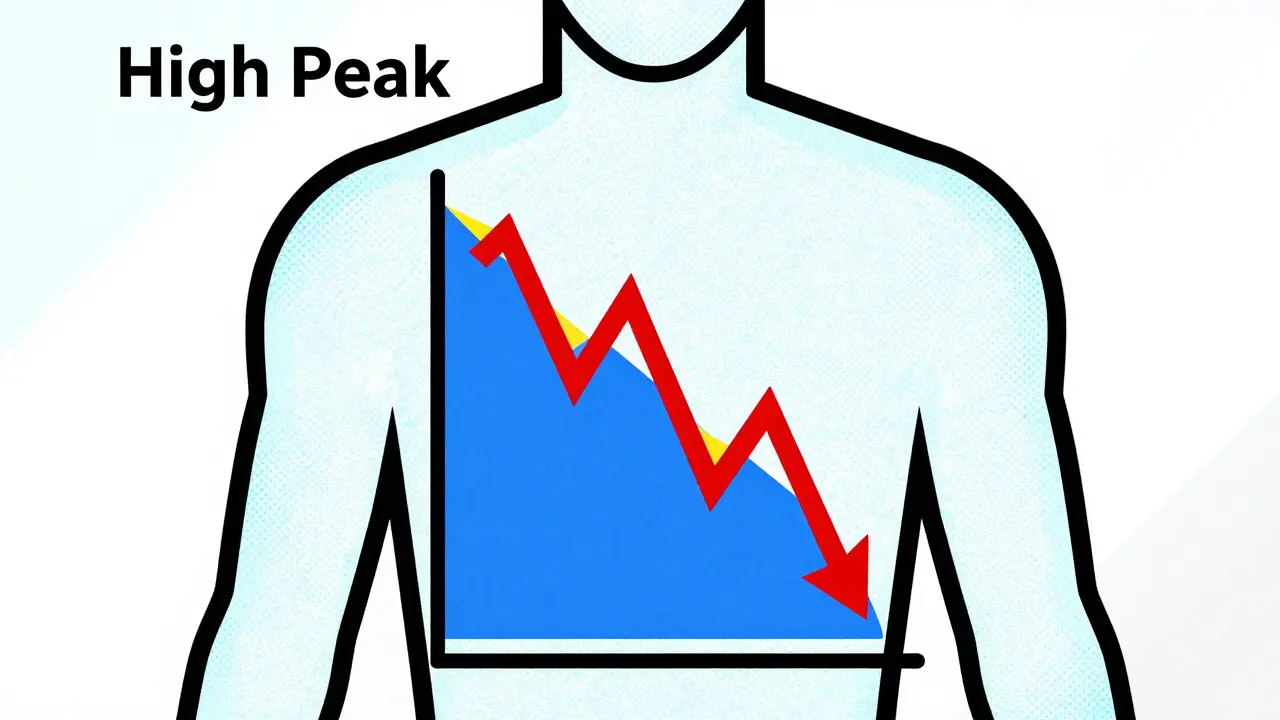
Dose Splitting Simulator
Configuration
Plasma Concentration Curve
Peak Concentration
--
Higher peaks correlate with increased side effects.Estimated Side Effect Risk
--
Based on peak reduction relative to single dose.You take your morning pill, and an hour later you feel nauseous, dizzy, or just generally unwell. It’s a frustrating cycle that leads many people to question whether their medication is right for them. But before you stop taking it, there is a simple pharmacological strategy that might solve the problem without changing the drug itself: splitting doses. This isn’t about cutting pills in half with a knife (though that can be part of it); it’s about how we manage the timing and amount of medicine entering your body to keep those annoying side effects at bay.
The core idea here is straightforward. When you swallow a standard dose of medication, your blood levels of that drug rise quickly, hit a high point called the "peak," and then gradually fall. For many drugs, this sharp spike in concentration is exactly what causes unpleasant side effects. By spreading the same total daily amount into smaller, more frequent doses, you flatten that curve. You avoid the dangerous or uncomfortable highs while still maintaining enough medication in your system to do its job. This approach, often referred to as lowering peaks to reduce side effects, relies on basic principles of pharmacokinetics-the study of how the body absorbs, distributes, and eliminates drugs.
Understanding Peak Plasma Concentrations
To understand why dose splitting works, you first need to visualize what happens inside your body after you take a pill. Imagine drinking a large glass of water all at once versus sipping it slowly over an hour. The sudden influx overwhelms your thirst mechanism briefly, whereas the slow sip keeps you hydrated steadily. Drugs work similarly. When you take an immediate-release tablet, your digestive system breaks it down rapidly, sending a surge of active ingredients into your bloodstream. This creates a peak plasma concentration, which is the highest level of a drug in the blood after administration.
For some medications, this peak is necessary for effectiveness. For others, it’s the culprit behind adverse reactions. If a drug has a narrow window between being effective and causing harm-known as a therapeutic index, defined as the ratio between the toxic dose and the therapeutic dose of a drug-managing that peak becomes critical. Drugs like warfarin or digoxin have very narrow therapeutic indices. A small spike in concentration can push you from "treated" to "toxic." In contrast, drugs with wider indices, like acetaminophen, offer more room for error. By splitting the dose, you essentially lower the maximum height of that wave, keeping you within the safe, effective zone for longer periods.
This concept is particularly relevant for medications where side effects are "concentration-dependent." This means the severity of the side effect directly correlates with how much drug is in your blood at any given moment. Nausea from antidepressants, dizziness from blood pressure meds, or jitteriness from stimulants are classic examples. Research published in the Journal of Managed Care & Pharmacy highlights that reducing these peaks can significantly improve patient adherence, as people are less likely to quit a treatment if they don’t feel sick every time they take it.
Dose Splitting vs. Tablet Splitting: A Critical Distinction
Here is where things get tricky, and where many patients make costly mistakes. We need to clearly separate two different concepts that sound identical but have opposite outcomes:
- Dose Splitting (The Strategy): This involves administering the same total daily dose in smaller, more frequent administrations. For example, instead of taking 1000mg of metformin twice a day, you take 500mg four times a day. This is a deliberate clinical decision to smooth out blood levels.
- Tablet Splitting (The Physical Act): This is physically cutting a single pill into pieces, usually to save money or because a lower dose isn’t available. While this can sometimes support dose splitting, it carries significant risks if done incorrectly or on the wrong type of medication.
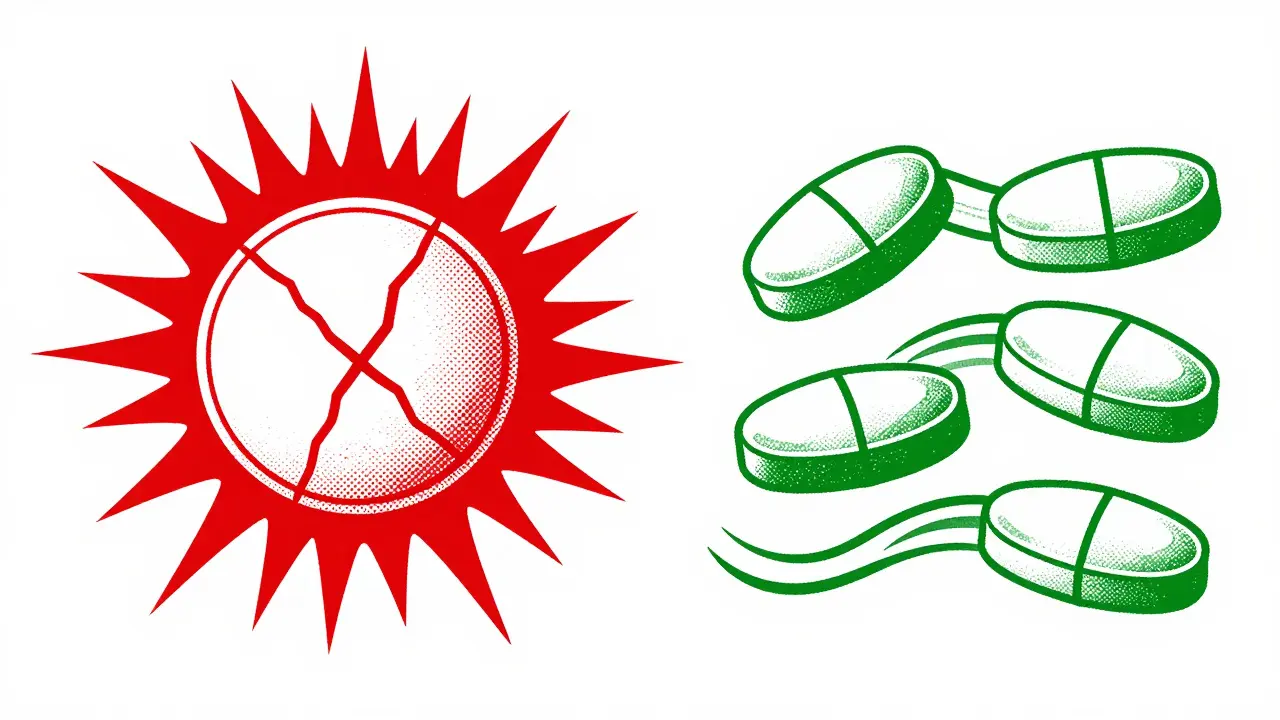
Many people assume that cutting a pill in half automatically lowers the peak concentration. Often, it does not. In fact, for certain formulations, cutting a pill can actually increase the peak concentration and worsen side effects. Why? Because some pills are engineered to release medication slowly over hours or days. These include extended-release (ER), sustained-release (SR), and controlled-release (CR) tablets. They contain special coatings or matrices that dissolve gradually. If you cut one of these, you destroy that mechanism. The entire day’s worth of medication dumps into your stomach at once, creating a massive, potentially dangerous spike in blood levels.
Enteric-coated tablets present another danger. These are designed to survive the acid in your stomach and dissolve only in the intestines, protecting either the drug from stomach acid or your stomach lining from the drug. Cutting an enteric-coated aspirin or omeprazole tablet exposes the core to stomach acid immediately. According to the Australian Prescriber, this can increase the initial rate of dissolution by 30-50%, leading to unpredictable and often harmful clinical consequences. So, while the goal of reducing side effects is noble, blindly splitting tablets can backfire spectacularly.
When Does Dose Splitting Actually Help?
Not every medication benefits from this strategy. Success depends heavily on the drug’s half-life, which is the time required for the concentration of a substance to decrease by half. Medications with short half-lives (less than 6 hours) tend to fluctuate wildly in the bloodstream. Taking them once a day leaves you with high peaks and low troughs, where the drug might wear off before the next dose. Splitting these doses helps maintain a steadier level, reducing both side effects and gaps in coverage.
Consider immediate-release antihypertensives like lisinopril. Some patients experience a dry cough or dizziness when their blood pressure drops too quickly after a large dose. By splitting the total daily dose-for instance, taking 10mg twice daily instead of 20mg once daily-you can reduce peak concentrations by approximately 25% while still maintaining 24-hour blood pressure control. This smoother profile often translates to fewer side effects and better tolerance.
Another common scenario involves gastrointestinal issues. Metformin, a first-line treatment for type 2 diabetes, frequently causes diarrhea and stomach upset, especially when started at higher doses. A Reddit user shared a success story in a pharmacy forum, noting that switching from 1000mg twice daily to 500mg four times daily reduced their diarrhea incidence from 60% to just 15% of doses. By introducing smaller amounts of the drug more frequently, the gut adapts better, and the peak irritation is minimized. This is a practical application of dose splitting that improves quality of life without sacrificing glycemic control.
| Characteristic | Suitable for Dose Splitting | Unsuitable / High Risk |
|---|---|---|
| Half-Life | Short (<6 hours) | Very Long (>24 hours) or Narrow Therapeutic Index |
| Formulation | Immediate Release (IR) | Extended Release (ER), Sustained Release (SR), Enteric-Coated |
| Therapeutic Index | Wide (>10, e.g., Acetaminophen) | Narrow (<2, e.g., Warfarin, Digoxin) |
| Side Effect Profile | Concentration-dependent (nausea, dizziness) | Idiosyncratic or unrelated to peak levels |
| Examples | Metformin IR, Lisinopril IR, Levothyroxine | Felodipine SR, Tramadol CR, Cyclosporine |
The Risks of Inappropriate Implementation
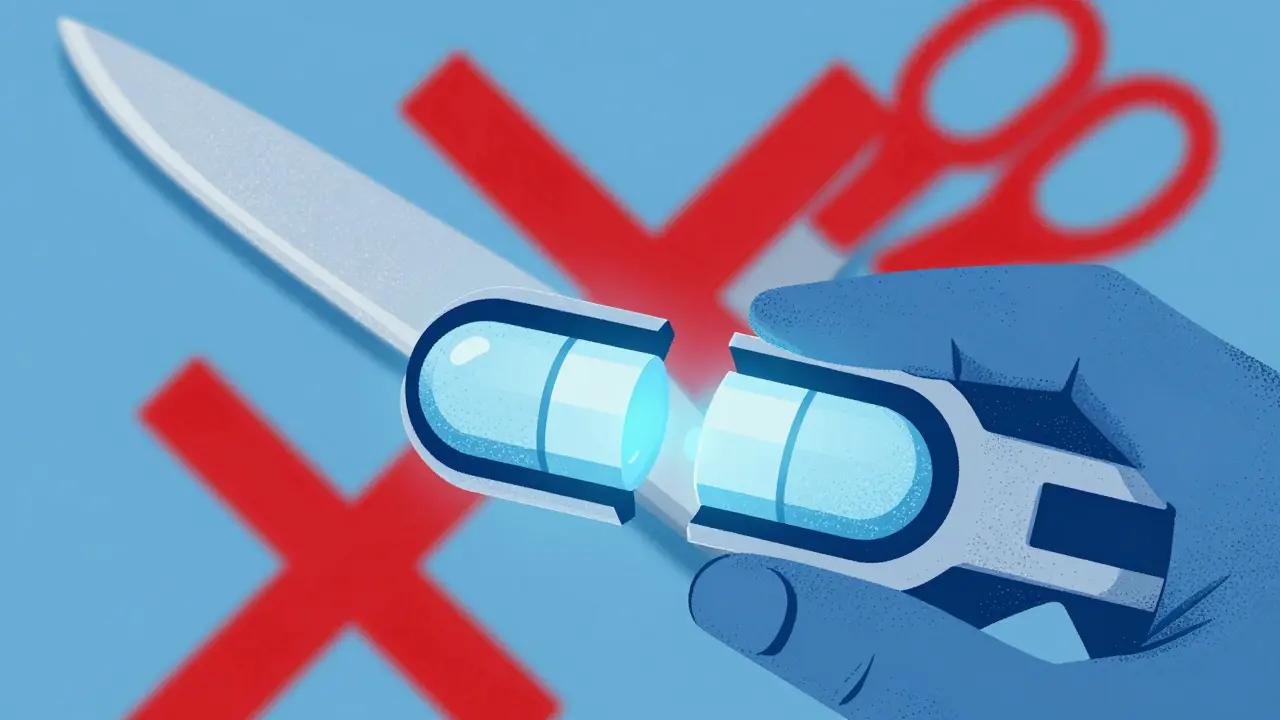
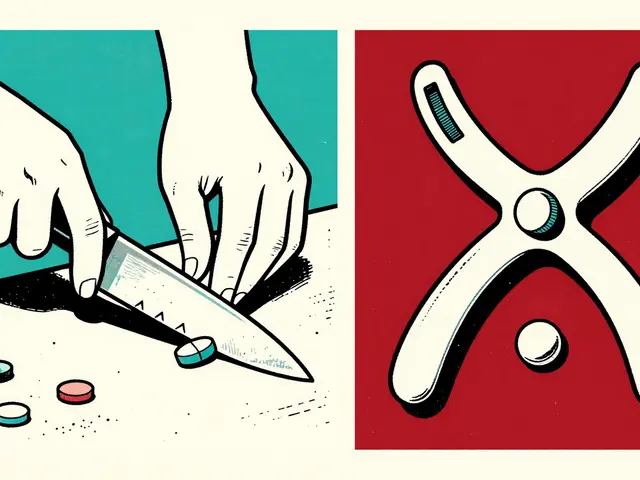
While the theory is sound, the practice requires precision. One of the biggest risks comes from inaccurate splitting. If you try to cut a tablet with a kitchen knife or scissors, you’re likely to end up with uneven pieces. Studies show that without proper training, 65% of patients produce splits with more than 15% dose variation. This inconsistency is dangerous for drugs with narrow therapeutic windows. For example, if you’re taking warfarin to prevent blood clots, a 20% under-dose could lead to a stroke, while a 20% over-dose could cause internal bleeding. The FDA documents thousands of adverse events related to inappropriate tablet splitting, with anticoagulants and antihypertensives being among the most common culprits.
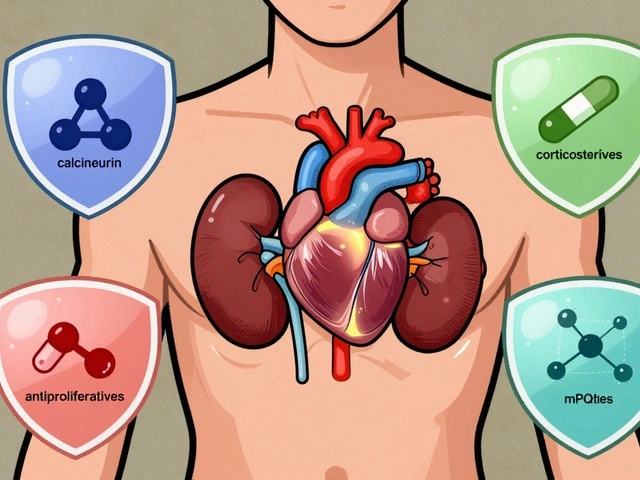
Even with scored tablets-those with a pre-cut line designed for splitting-there is variability. Unscored tablets can show dose content ranging from 80% to 120% of the labeled amount when split. This unpredictability makes dose splitting risky for immunosuppressants, antiarrhythmics, and chemotherapy agents, where precise dosing is non-negotiable. The American Society of Health-System Pharmacists (ASHP) explicitly contraindicates splitting for these classes regardless of formulation.
There is also the issue of stability. Once a tablet is split, the exposed surface area increases, making the drug more susceptible to moisture, light, and air. This can degrade the medication faster than intended. Guidelines recommend storing split tablets in their original containers and using them within one week to ensure potency. Ignoring this can mean you’re taking a weaker dose than prescribed, leading to treatment failure rather than side effect reduction.
Practical Steps for Safe Dose Management
If you and your doctor decide that dose splitting is the right move for you, follow these steps to minimize risk:
- Consult Your Healthcare Provider First: Never assume a pill can be split. Ask specifically about the drug’s half-life, therapeutic index, and formulation. Is it immediate-release? Does it have a wide therapeutic window?
- Use a Dedicated Pill Splitter: Forget the butter knife. A good mechanical pill splitter reduces dose variability from 25% down to 5-8%. This small investment pays off in safety and accuracy.
- Check for Score Lines: Only split tablets that have a visible score line. Even then, verify with your pharmacist that the specific brand allows it. Some manufacturers test for uniformity; others do not.
- Start Low and Go Slow: If you’re splitting to reduce side effects, start with the smallest possible split and monitor your symptoms. Keep a log of when you take the medication and when side effects occur. This data helps your doctor adjust the regimen effectively.
- Monitor Closely: For high-risk medications, expect follow-up testing. If you’re splitting blood pressure meds, check your BP at home. If you’re on thyroid medication, schedule TSH tests sooner than usual. Catching issues early prevents emergencies.
Remember, the goal is to improve your quality of life, not to gamble with your health. If side effects persist despite dose splitting, it may be time to discuss alternative medications with different pharmacokinetic profiles. Sometimes, switching from an immediate-release to a true extended-release formulation is a safer bet than trying to hack the system with a pill cutter.
Economic Considerations and Future Trends
Beyond side effects, cost is a major driver for dose splitting. With prescription drug prices rising steadily, many patients turn to splitting high-dose generics to afford their medication. GoodRx reports that splitting 80mg atorvastatin tablets instead of buying 40mg versions can save patients hundreds of dollars annually. However, this economic benefit must be weighed against the potential costs of adverse events. Inappropriate splitting can lead to hospitalizations that far exceed any savings on the pharmacy bill.
The pharmaceutical industry is responding to this demand. Companies are increasingly developing lower-dose formulations specifically to eliminate the need for splitting. Pfizer, for example, introduced lower-strength rivaroxaban tablets to reduce inappropriate splitting attempts by nearly 80%. Regulatory bodies like the FDA are also tightening guidelines, proposing mandatory content uniformity testing for all scored tablets. These changes aim to protect patients while acknowledging the reality that many rely on splitting to manage both side effects and expenses.
In the meantime, the best approach remains collaboration. Work with your pharmacist to identify which of your medications are safe candidates. Use the right tools. Monitor your response. And always prioritize safety over convenience. By understanding how your body processes medication, you can take control of your treatment plan and enjoy the benefits of your drugs without the burden of unnecessary side effects.
Can I split any pill to reduce side effects?
No, you cannot split any pill. Extended-release (ER), sustained-release (SR), and enteric-coated tablets should never be split, as doing so destroys their protective mechanisms and can cause dangerous spikes in drug concentration. Always check with your pharmacist or doctor before splitting any medication.
What is the difference between dose splitting and tablet splitting?
Dose splitting is a clinical strategy of taking smaller amounts of medication more frequently to smooth out blood levels. Tablet splitting is the physical act of cutting a pill. While tablet splitting can support dose splitting, it is risky if done on the wrong type of medication or without proper tools.
How does dose splitting reduce side effects?
Dose splitting lowers the peak plasma concentration of a drug in your bloodstream. Many side effects are concentration-dependent, meaning they occur when drug levels get too high too quickly. By spreading the dose out, you avoid these sharp peaks, reducing symptoms like nausea, dizziness, or jitteriness.
Is it safe to split pills with a knife?
It is not recommended. Using a knife or scissors results in uneven splits, with dose variations often exceeding 15%. This inconsistency can be dangerous, especially for drugs with narrow therapeutic indices. Use a dedicated mechanical pill splitter to ensure accuracy and safety.
Which medications are best suited for dose splitting?
Medications with short half-lives (less than 6 hours), wide therapeutic indices, and immediate-release formulations are generally best suited for dose splitting. Examples include certain antihypertensives like lisinopril and diabetes medications like metformin, provided they are not extended-release versions.
Gilbert Bankual
July 9, 2026 AT 11:09Great info. Splitting doses really helps with side effects. Just check with your doc first.
Sarah Boomgaard
July 10, 2026 AT 04:18You people are so naive to think splitting a pill is some magic trick. It is not about the pill, it is about your weak mind failing to handle the truth of existence. You want comfort? Take nothing. That is the only pure state. The rest is just chemical slavery disguised as health advice. Stop trying to hack your biology and start accepting your fate. It is simple really. Why do you complicate life with these little tricks when death is inevitable anyway?
Ashley Loera
July 10, 2026 AT 23:39OMG this is so important!! I cut my pills once and felt sick for days!!! u guys need to listen up!!! extended release pills are NOT meant to be cut!!! its dangerous!!! i saw a video on tiktok about it and now im scared!!! dont be stupid like me!!!
Dawn Renee
July 12, 2026 AT 06:29One must consider the deeper implications of such pharmaceutical manipulation. Is it merely coincidence that big pharma promotes higher frequency dosing schedules? Perhaps there is a hidden agenda to keep patients dependent on multiple daily interactions rather than single convenient solutions. The enteric coating issue mentioned here seems almost too convenient a warning to prevent people from saving money. One wonders if the real goal is control over the patient's daily routine through medication timing. It is unsettling how much we trust these labels without questioning the source. We should look closer at who benefits from our confusion regarding tablet splitting versus dose splitting. The narrative feels carefully constructed to maintain status quo compliance.
Divya Prakash
July 13, 2026 AT 03:19It is quite amusing to observe the general populace struggling to comprehend basic pharmacokinetic principles which have been established for decades. The distinction between immediate-release and extended-release formulations is elementary knowledge for anyone with even a rudimentary understanding of medicinal chemistry, yet here we are, explaining it to those who clearly lack the intellectual fortitude to grasp such nuances. One might suggest that the average reader would benefit more from a foundational education in science before attempting to self-medicate or manipulate dosage forms based on internet articles written by laypeople. The notion that one can simply 'split' a complex matrix tablet without destroying its controlled-release mechanism is not only incorrect but dangerously simplistic, reflecting a broader societal decline in critical thinking skills and respect for scientific rigor.
Mohit Patil
July 13, 2026 AT 05:13they dont want you to know this because it saves money why do you think they make expensive brands when generics exist its all a scam the government is hiding the truth about drug absorption rates read between the lines they want us sick and paying them stop trusting the doctors they are paid off by pharma companies split your pills and see what happens no one will tell you this but it works
Chandan Sharma
July 14, 2026 AT 19:31The elucidation of peak plasma concentration dynamics presented herein is most illuminating, particularly regarding the therapeutic index constraints inherent in narrow-spectrum agents. It is imperative that we distinguish between the mechanical act of bisecting a tablet and the strategic temporal distribution of active pharmaceutical ingredients. The former, when applied to sustained-release matrices, constitutes a catastrophic failure of formulation integrity, whereas the latter represents a sophisticated application of pharmacokinetic optimization. One must appreciate the elegance of flattening the concentration-time curve to mitigate adverse events while maintaining efficacy within the desired therapeutic window. Such nuanced understanding elevates the practitioner above the mere administrator of pills.
Katie Dixon
July 16, 2026 AT 12:50Honey, let me tell you something. This article is spot on! But honestly, why are we even talking about foreign drugs when American medicine is the best? Our FDA regulations ensure safety unlike those places overseas. Splitting doses is smart, yes, but make sure you buy American made. Trust your gut and trust your country. Don't let those globalists confuse you with their weird international guidelines. Keep it simple, keep it safe, keep it patriotic. Love this tip though, very helpful for us strong independent Americans!
Anna Bartle
July 17, 2026 AT 15:52This is such a helpful guide!! I love how clear it is about the difference between dose splitting and tablet splitting. Please always consult your pharmacist before making changes! They are experts and can help you find the safest way to manage your meds. Stay healthy everyone!! You got this!!