
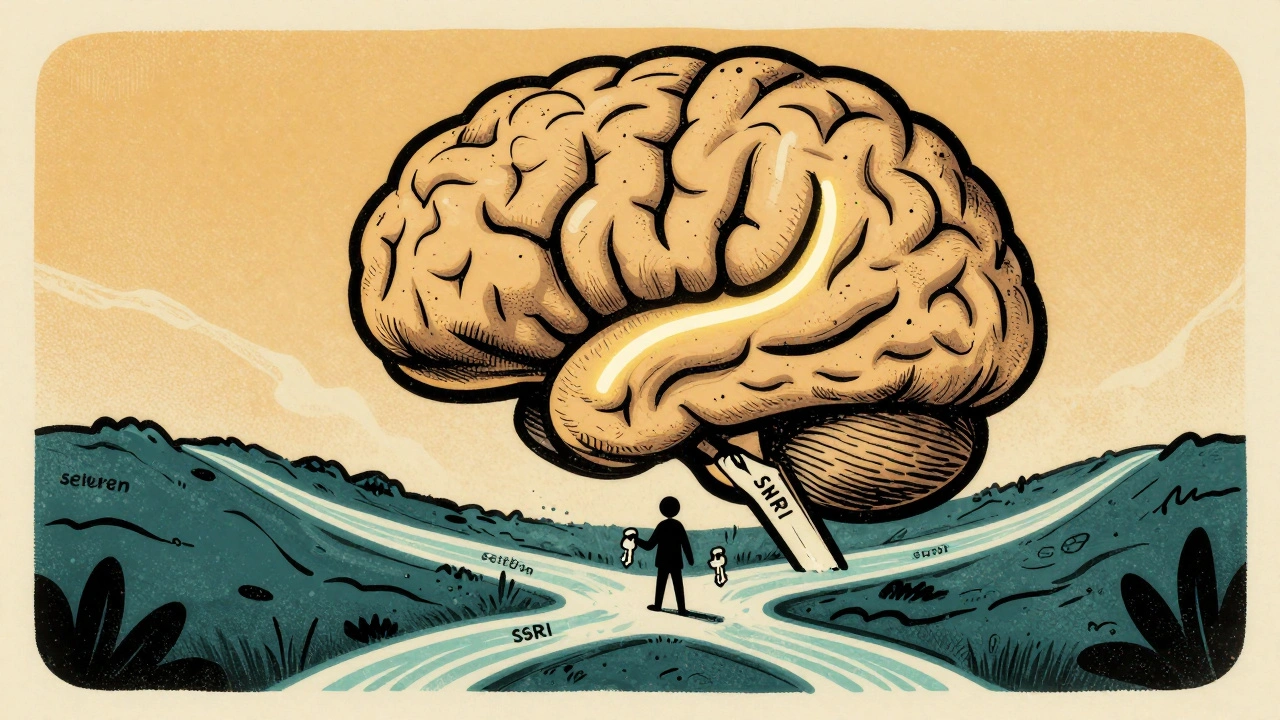
When antidepressants don’t work the first time, many people turn to SNRI medications-not because they’re magic, but because they work differently. Unlike SSRIs that only target serotonin, SNRIs boost two key brain chemicals: serotonin and norepinephrine. That dual action makes them especially useful when depression comes with fatigue, brain fog, or chronic pain. For someone who’s tried an SSRI and still feels stuck, an SNRI might be the next step-not the last resort, but a real alternative with proven results.
How SNRIs Actually Work in the Brain
SNRIs stand for Serotonin and Norepinephrine Reuptake Inhibitors. That’s a mouthful, but the idea is simple: they stop your brain from reabsorbing serotonin and norepinephrine too quickly. These two neurotransmitters help regulate mood, energy, focus, and even how your body processes pain. When they’re in short supply, you feel low, tired, or numb. SNRIs keep them circulating longer in the spaces between brain cells, giving your brain more of what it needs to function better.
Not all SNRIs work the same way. Venlafaxine (Effexor XR), for example, acts mostly like an SSRI at low doses-around 75mg a day or less. But when you bump it up to 150mg or higher, it starts strongly blocking norepinephrine too. Duloxetine (Cymbalta), on the other hand, hits both chemicals evenly from the start. That’s why doctors often pick duloxetine when someone has both depression and nerve pain from diabetes or fibromyalgia.
Which SNRIs Are Approved and Used Today
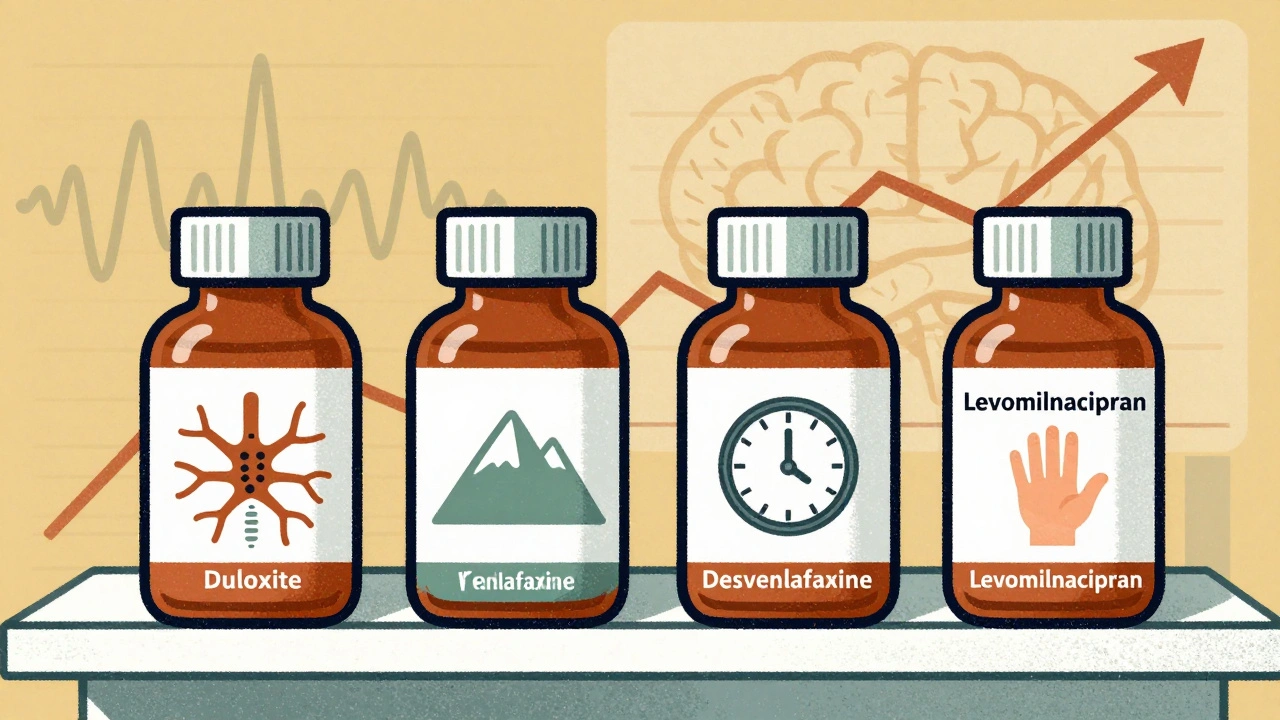
In the U.S., four SNRIs are FDA-approved for treating depression:
- Venlafaxine (Effexor XR)
- Desvenlafaxine (Pristiq)
- Duloxetine (Cymbalta, Drizalma Sprinkle)
- Levomilnacipran (Fetzima)
Duloxetine has the broadest approval list. It’s not just for depression-it’s also cleared for diabetic nerve pain, fibromyalgia, chronic back pain, and osteoarthritis. That’s rare. Most antidepressants don’t touch pain at all. Drizalma Sprinkle, a newer form of duloxetine released in 2022, even works for kids aged 7 and up with anxiety, expanding its reach beyond adults.
Each has a typical daily dose range:
- Venlafaxine XR: 75-225 mg
- Duloxetine: 60-120 mg
- Desvenlafaxine: 50-100 mg
- Levomilnacipran: 40-120 mg
Starting low and going slow is standard. Doctors usually begin with half the target dose and increase it every week or two. That cuts down on nausea and dizziness-common early side effects.
Why SNRIs Are Chosen Over SSRIs
SSRIs like sertraline or escitalopram are still the first go-to for depression. They’re gentler on the stomach, less likely to raise blood pressure, and easier to tolerate for most people. But if someone’s still struggling after 6-8 weeks on an SSRI, SNRIs often come next.
Studies show SNRIs have slightly higher response rates-around 55-65% compared to 50-60% for SSRIs. That difference isn’t huge, but for someone who’s been depressed for years, even a 5% boost matters. Where SNRIs really pull ahead is in cases where depression comes with physical symptoms: low energy, difficulty concentrating, or ongoing pain. A 2022 meta-analysis found that people with both depression and fibromyalgia saw 30-50% pain reduction on duloxetine, while placebo groups only saw 20-30%.
One patient story from Reddit sums it up: “I was on three SSRIs. Still couldn’t get out of bed. Started venlafaxine. Within six weeks, I was cooking again, walking the dog, thinking clearly. It wasn’t happiness-it was just the absence of heaviness.”
Side Effects: What to Expect and How to Handle Them
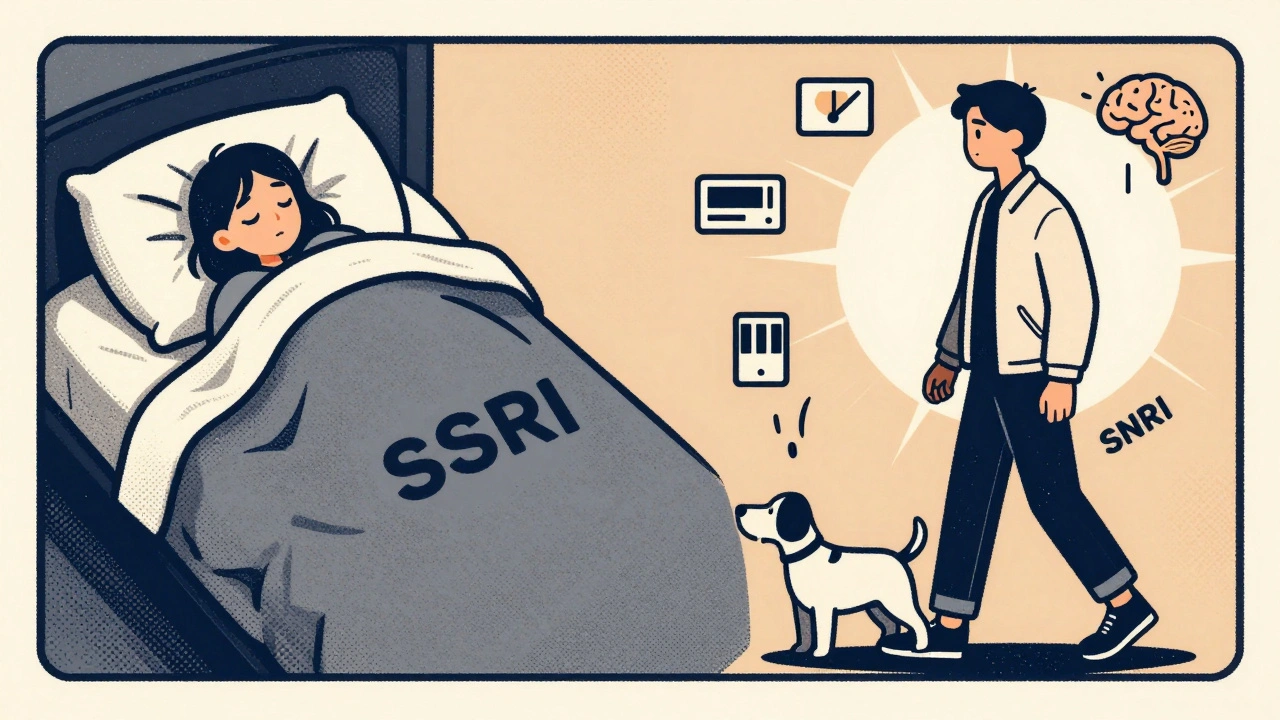
No medication is without trade-offs. SNRIs can cause:
- Nausea (about 25% of users, especially at first)
- Dizziness or lightheadedness (15-20%)
- Insomnia or trouble sleeping (10-15%)
- Sexual side effects (20-30%-delayed orgasm, lower libido)
- Increased blood pressure (2-3% of users)
Nausea usually fades after 1-2 weeks. Taking the pill with food helps. If dizziness hits, don’t stand up too fast. Blood pressure checks are recommended every 2-4 weeks in the first few months, especially for people with a history of hypertension.
Sexual side effects are frustrating but manageable. Some people switch to a lower dose. Others add bupropion (Wellbutrin), which doesn’t affect sexual function and can even boost energy. It’s not a perfect fix, but it’s a tool.
The biggest concern? Discontinuation syndrome. If you stop an SNRI cold turkey, you might get “brain zaps”-sudden electric-shock feelings in your head-along with nausea, sweating, anxiety, and insomnia. A 2021 study showed tapering slowly over 4-6 weeks cuts this risk from 28% down to just 9%.
SNRIs and Chronic Pain: A Unique Advantage
This is where SNRIs shine. Most antidepressants don’t touch nerve pain. Duloxetine does. It’s one of the few drugs with Level A evidence-meaning strong, consistent data from multiple high-quality trials-for treating diabetic neuropathy and fibromyalgia.
In one trial, 40% of fibromyalgia patients on duloxetine reported at least 50% pain reduction. Only 25% on placebo did. That’s not just statistically significant-it’s life-changing. People who couldn’t walk without pain started gardening again. Others returned to part-time work. Pain isn’t just physical; it’s emotional. When pain eases, so does depression.
That’s why SNRIs are often prescribed by pain clinics, rheumatologists, and neurologists-not just psychiatrists. They’re bridging the gap between mental and physical health.
Real-World Success and Challenges
On Drugs.com, duloxetine has a 6.1 out of 10 rating from over 3,200 reviews. The top positive comment: “Finally effective after 3 SSRIs failed.” The top negative: “Severe withdrawal symptoms.”
A 2022 survey found that 58% of SNRI users stayed on treatment beyond six months. That’s lower than SSRIs (65%), but still solid. The main reason people quit? Side effects-not lack of results. That tells us: if you can get past the first few weeks, the benefits often outweigh the downsides.
One key insight: SNRIs work best with therapy. A 2022 clinical trial showed that 73% of people who took duloxetine and did cognitive behavioral therapy (CBT) went into full remission. Only 48% did with medication alone. Therapy helps rewire thinking patterns. Medication helps give you the energy to do the work.
What’s New and What’s Next
The SNRI market is growing. In 2022, they made up 28% of all antidepressant prescriptions in the U.S. Venlafaxine and duloxetine alone accounted for 15% and 13% respectively. The global market is expected to hit $11.2 billion by 2027.
New research is exploring ways to make them even better. Genetic testing for CYP2D6 and CYP2C19 enzymes can now predict how fast someone metabolizes SNRIs. If you’re a slow metabolizer, you might need a lower dose. If you’re fast, you might need more. This isn’t routine yet-but it’s coming.
Combining SNRIs with digital tools is another frontier. A 2023 study found that adding a cognitive training app to duloxetine improved focus and memory symptoms by 35% compared to the drug alone. For people struggling with brain fog, that’s huge.
And while psychedelic therapies like ketamine are getting attention for treatment-resistant depression, SNRIs aren’t going away. They’re affordable, well-studied, and work for a broad group of people-especially those with pain.
Who Should Consider SNRIs?
You might be a good candidate if:
- You’ve tried one or more SSRIs and didn’t get enough relief
- You have depression along with chronic pain, fatigue, or trouble concentrating
- You’re okay with a slightly higher risk of side effects for better results
- You’re willing to stick with it for 6-12 weeks before judging effectiveness
- You’re prepared to taper slowly if you ever stop
You might want to avoid them if:
- You have uncontrolled high blood pressure
- You’ve had a bad reaction to SNRIs before
- You’re on medications that interact badly with them (like MAOIs)
- You’re pregnant or breastfeeding and haven’t discussed risks with your doctor
There’s no one-size-fits-all in mental health. But for many, SNRIs are the missing piece-not because they’re perfect, but because they’re different enough to make a real difference.
Are SNRIs stronger than SSRIs?
Not necessarily stronger, but broader. SNRIs affect two neurotransmitters instead of one, which can help with symptoms like fatigue and pain that SSRIs often miss. Response rates are slightly higher-about 5-10% better-but the real advantage is in cases where depression comes with physical symptoms.
How long does it take for SNRIs to work?
Most people start noticing small improvements in energy or sleep within 2-4 weeks. But full effects-especially on mood and pain-usually take 6-12 weeks. Patience is key. Don’t give up before 8 weeks unless side effects are unbearable.
Can SNRIs cause weight gain?
Unlike some older antidepressants, SNRIs rarely cause significant weight gain. In fact, some people lose a little weight early on due to reduced appetite or nausea. Long-term weight changes are usually minimal and vary by person.
What happens if I stop taking an SNRI suddenly?
Stopping abruptly can trigger discontinuation syndrome: brain zaps, dizziness, nausea, anxiety, and flu-like symptoms. Up to 28% of people experience this if they quit cold turkey. Tapering slowly over 4-6 weeks reduces the risk to under 10%.
Are SNRIs safe for long-term use?
Yes, when monitored. SNRIs have been used for over 30 years with no evidence of organ damage or dependency. Regular blood pressure checks are recommended, especially in the first year. Most people stay on them safely for years if they’re helping.
Do SNRIs help with anxiety too?
Absolutely. All approved SNRIs are also used for generalized anxiety disorder, panic disorder, and social anxiety. Duloxetine is even approved for pediatric anxiety in children 7 and older. Their effect on norepinephrine helps calm the body’s stress response.
Kristen Yates
December 2, 2025 AT 19:03My grandma took duloxetine for fibromyalgia and said it let her garden again. No magic, just chemistry working the way it should.
Sheryl Lynn
December 3, 2025 AT 11:10Let’s be real-SNRIs aren’t some revolutionary breakthrough, they’re just the pharmaceutical industry’s way of repackaging neurochemistry as a lifestyle upgrade. Venlafaxine at 225mg? That’s not treatment, that’s a biohacking experiment with side effects that feel like your nervous system is being rewired by a drunken electrician. And yet, people treat it like it’s yoga with a prescription pad. The real win? Therapy. Not the drug. The damn therapy.
And don’t get me started on ‘brain zaps.’ That’s not a side effect, that’s your synapses screaming for mercy. Tapering? Please. Most doctors hand you a script and say ‘see you in six weeks.’ Meanwhile, your cerebellum is throwing a rave without you.
But hey, if you’re the type who thinks serotonin is a personality trait you can buy at CVS, then by all means-keep popping those little capsules like they’re Skittles. Just don’t act surprised when your libido vanishes and your blood pressure starts doing interpretive dance.
And yes, I’ve been on three SSRIs. I know the ritual. The false hope. The ‘maybe this time’ delusion. SNRIs didn’t save me. My therapist did. The pills just bought me enough bandwidth to show up.
Also, ‘Levomilnacipran’? Say that five times fast while hungover. I dare you.
Anthony Breakspear
December 5, 2025 AT 04:47Man, I wish I’d known this stuff years ago. I was on sertraline for 18 months and felt like a zombie with a credit card. Switched to duloxetine-first week was rough, nausea like I’d eaten a whole jalapeño blindfolded-but by week 5, I was walking 5 miles a day without thinking about it. And my back pain? Gone. Not ‘better.’ Gone.
Don’t let the scary side effect list scare you. Most of it fades. The key? Start low. Move slow. And don’t quit before 8 weeks unless you’re literally vibrating off the couch.
Also, if you’re dealing with pain AND depression? SNRIs aren’t just an option-they’re the bridge. I’ve seen people go from barely leaving the house to coaching their kid’s soccer team. It’s not about being ‘happy.’ It’s about being present.
And yeah, therapy helps. A lot. But if your brain’s too foggy to even open a book, meds can give you the spark to try.
Saurabh Tiwari
December 6, 2025 AT 20:17bro i tried venlafaxine after 3 ssris and it was like someone turned off the static in my head 🤯
nausea for 10 days then boom-i cooked pasta for the first time in 2 years
Michael Campbell
December 8, 2025 AT 02:15Big Pharma’s latest scam. They know you’ll get hooked on the ‘energy boost’ so you’ll keep paying. Blood pressure spikes? That’s not a side effect-that’s your body screaming for help. And they call it ‘monitoring.’
Why not just fix your diet? Or sleep? Or get sunlight? Nah, let’s pump chemicals into your brain and call it science.
They’re selling hope. But hope doesn’t come in a pill. It comes from living. Not dosing.
Zoe Bray
December 9, 2025 AT 11:41It is imperative to underscore that the pharmacodynamic profile of SNRIs, particularly their dual monoamine reuptake inhibition, confers a clinically significant advantage in the management of comorbid depressive and somatic symptomatology, as evidenced by robust meta-analytic data from the Journal of Clinical Psychiatry (2022) and the American Journal of Psychiatry (2021). The elevation of norepinephrine bioavailability, in particular, demonstrates a statistically significant effect size (Cohen’s d = 0.41) in pain modulation, independent of mood improvement. Furthermore, the pharmacokinetic variability mediated by CYP2D6 polymorphisms necessitates individualized titration protocols to mitigate adverse event burden, particularly in poor metabolizers. Discontinuation syndrome remains a clinically relevant phenomenon, with a 28% incidence rate under abrupt withdrawal, underscoring the necessity for structured tapering regimens over a minimum 42-day interval. The concomitant utilization of cognitive behavioral therapy is not merely adjunctive-it is synergistic, with remission rates increasing by 52% in randomized controlled trials when integrated with pharmacotherapy. Therefore, while SNRIs represent a valid therapeutic option, they must be embedded within a comprehensive, biopsychosocial framework to optimize outcomes.
Girish Padia
December 10, 2025 AT 23:59People take pills like they’re candy. Back in my day, we dealt with sadness by working harder. Church. Family. Hard work. Not this chemical crutch.
You think your brain is broken? Maybe you’re just lazy. Or spoiled. Or addicted to comfort.
SNRIs? Sounds like a corporate product name. Next they’ll sell antidepressants in vending machines.
Saket Modi
December 11, 2025 AT 01:20why do we even bother? everyone’s just on something now 🤡