
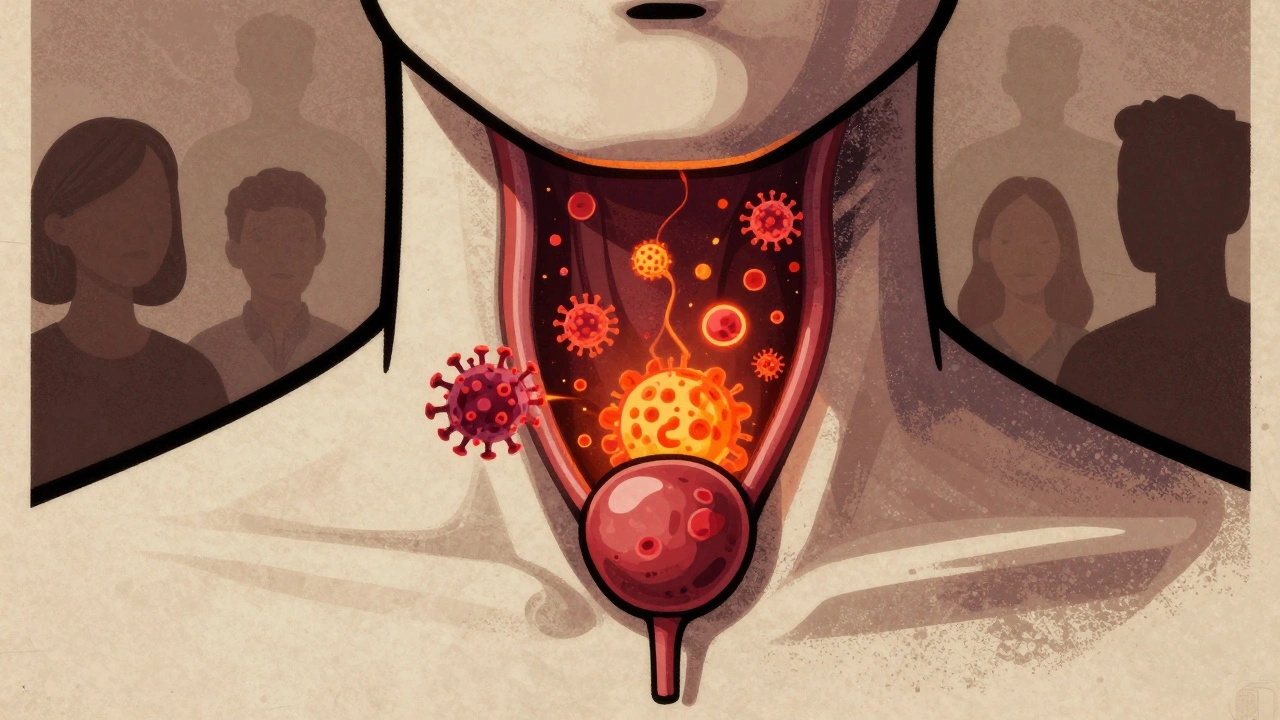
HPV Is Causing More Throat and Anal Cancers Than Ever Before
Most people think of cervical cancer when they hear "HPV." But today, HPV is causing more throat and anal cancers in the U.S. than cervical cancer - especially in men. Every year, over 47,000 new cases of HPV-related cancers are diagnosed in America. Of those, about 15,200 are oropharyngeal (throat) cancers, and 4,300 are anal cancers. That’s more than cervical cancer cases in men, and it’s climbing fast.
HPV doesn’t just cause one kind of cancer. It’s linked to six types: cervical, vaginal, vulvar, penile, anal, and throat. The most dangerous strains are HPV 16 and 18. HPV 16 alone is behind 85% of throat cancers and 70% of cervical cancers. And here’s the twist: these cancers don’t show up overnight. They grow slowly over years, even decades, from a common virus most people never even know they had.
Why Are Throat and Anal Cancers Rising?
Throat cancer linked to HPV has surged since the 1990s. In men, it’s now the most common HPV-related cancer. Why? Because the virus spreads through oral sex - and more people are engaging in it. Unlike cervical cancer, which dropped thanks to Pap smears, there’s no routine screening for throat or anal cancer. That means many cases aren’t caught until they’re advanced.
Men are hit harder. From 2001 to 2017, HPV-related cancer rates in men rose by 2.36% each year. For throat cancer specifically, it jumped 2.71% annually. Meanwhile, cervical cancer rates in women have dropped by nearly half since the 1970s thanks to screening. But that progress is uneven. Non-Hispanic White men have the highest rates of throat cancer from HPV. And the risk keeps climbing with age - most cases are diagnosed between 55 and 70.
Anal cancer is also growing, especially among men who have sex with men and people with weakened immune systems. But it’s rising even in the general population. The CDC reports that 91% of anal cancers are caused by HPV. Yet few people know this. Many still think it’s only a "sexually transmitted disease" issue - not a cancer risk.
How HPV Turns Into Cancer
HPV is everywhere. About 80% of sexually active people will get it at some point. Most infections clear on their own within two years. But in about 1 in 10 people, the virus sticks around. That’s when trouble starts.
High-risk HPV types like 16 and 18 produce proteins - E6 and E7 - that sabotage the body’s natural cancer defenses. These proteins shut down tumor-suppressing genes, letting cells grow out of control. Over time, this leads to abnormal cell changes. In the cervix, we can spot these changes early with a Pap test. In the throat or anus? No such test exists. That’s why prevention, not detection, is the only reliable shield.
Think of it like a slow leak in a pipe. You don’t see the water damage until the ceiling collapses. By then, it’s too late. HPV-related cancers follow the same pattern: silent for years, then suddenly life-changing.
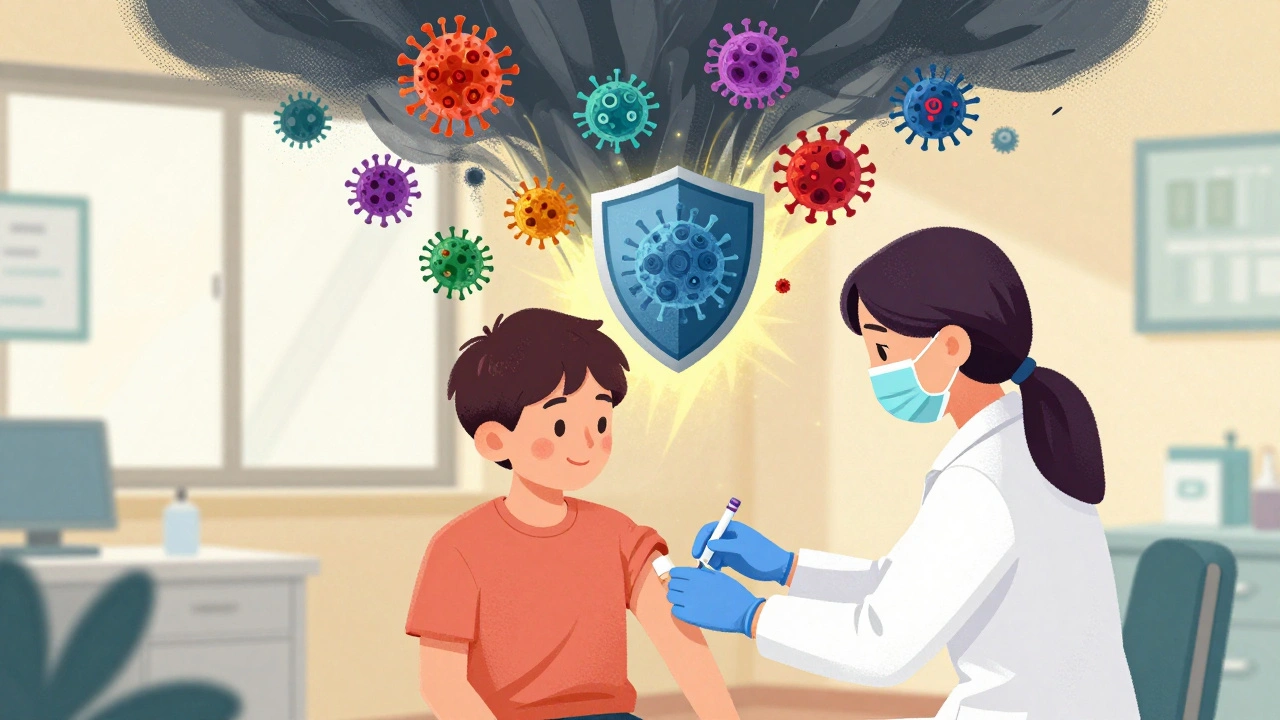
The Only Real Defense: Vaccination
The HPV vaccine is one of the most effective cancer-prevention tools we have. Gardasil-9 protects against nine strains of HPV, including 16 and 18. It prevents 90% of HPV-related cancers. That means it can stop throat, anal, cervical, and other cancers before they start.
The CDC recommends the vaccine for all kids at age 11 or 12. Two doses, six months apart, give strong protection. If you start after age 15, you need three doses. But it’s not too late for older teens and young adults - vaccination is still effective up to age 26. For adults 27 to 45, talk to your doctor. It might still help, especially if you haven’t been exposed to many HPV types.
Yet only 64.7% of U.S. teens have completed the full series. That’s not good enough. If we hit 80% vaccination coverage, we could prevent 21,000 HPV cancers every year. That’s more than the entire population of a small city.
Some parents worry the vaccine encourages early sex. But studies show no link. Kids who get the HPV vaccine don’t start having sex earlier. Others fear side effects. The vaccine has been given to over 300 million people worldwide. The most common side effect? A sore arm. Serious reactions are rarer than being struck by lightning.
Screening Only Works for Cervical Cancer
If you have a cervix, you need screening. The U.S. Preventive Services Task Force recommends primary HPV testing every five years for people aged 25 to 65. You can also do co-testing (HPV and Pap) every five years or Pap alone every three years. These tests catch abnormal cells before they turn into cancer.
But there’s no approved screening for throat or anal cancer. No swab. No scan. No blood test. That’s why vaccination is your only real protection. Without it, you’re relying on luck - hoping your immune system clears the virus before it causes damage.
Some clinics offer anal Pap tests for high-risk groups, like people with HIV or men who have sex with men. But it’s not standard, and it’s not widely available. Even then, it’s not as reliable as cervical screening. For most people, the only way to avoid anal cancer from HPV is to get vaccinated before exposure.
The Hidden Cost of HPV Cancer
Surviving an HPV-related cancer isn’t just about living. It’s about living with consequences.
Throat cancer treatment often means surgery, radiation, or both. Many patients lose their ability to swallow normally. Some need feeding tubes for months. Voice changes are permanent. One survivor described $127,000 in out-of-pocket costs - even with insurance. The average cost for oropharyngeal cancer treatment? Nearly $200,000.
Anal cancer treatment can mean permanent bowel changes, incontinence, or the need for a colostomy. Cervical cancer survivors often face fertility loss. One study found 42% of young survivors worried about never having children.
And then there’s stigma. Many patients feel blamed - like they "deserved" this because of their sex life. But HPV is like the common cold. You don’t choose to get it. Most people never know they had it. It’s not a moral failing. It’s a virus.
What’s Being Done - and What’s Not
Some places are getting it right. Rhode Island boosted HPV vaccination rates from 53% to 84% in six years by offering shots at schools. High-grade cervical lesions dropped 22%. That’s proof it works.
But in many areas, doctors still don’t push the vaccine. Only 65% of providers consistently recommend it as strongly as other teen vaccines. Parents hear "it’s optional" or "you can wait." That’s dangerous advice. Every delay increases the chance of exposure.
Meanwhile, the global HPV vaccine market is growing fast - expected to hit $10 billion by 2028. But access isn’t equal. In low-income countries, cervical cancer is still the leading cancer in women. The WHO’s goal is simple: 90% of girls vaccinated by 15, 70% of women screened by 35, and 90% of precancers treated. We’re far from that in many places.
What You Can Do Right Now
- If you’re 11-12, get both doses of the HPV vaccine. It’s the best cancer shield you’ll ever get.
- If you’re 13-26 and haven’t been vaccinated, get the shot now. It’s not too late.
- If you’re 27-45, talk to your doctor. If you’ve had few sexual partners or never been exposed to HPV, it might still help.
- If you have a cervix, get screened every 5 years with HPV testing. Don’t skip it.
- If you’re a parent, don’t wait. Don’t wait for your child to "be ready." Vaccinate at 11 or 12 - before they’re exposed.
- If you’ve had HPV-related cancer, tell others. Break the silence. Stigma kills more than the virus.
HPV-related cancers aren’t inevitable. They’re preventable. But only if we act - now, before the next wave hits.
Is HPV only a women’s health issue?
No. HPV affects everyone. While cervical cancer gets the most attention, HPV causes more throat and anal cancers in men than cervical cancer does in women. Men are now the most affected group overall. Vaccination protects both boys and girls.
Can you get HPV even if you’ve only had one partner?
Yes. HPV is incredibly common. About 80% of sexually active people will get it at some point, even with one partner. It can lie dormant for years. You can’t tell who has it just by looking. That’s why vaccination before exposure is so important.
Does the HPV vaccine cause infertility?
No. There’s no evidence the HPV vaccine causes infertility. In fact, it helps prevent infertility by stopping cervical cancer - a leading cause of hysterectomies in young women. Studies show vaccinated women have the same pregnancy rates as unvaccinated women.
Why isn’t there a screening test for throat cancer like there is for cervical cancer?
The throat is harder to screen. Unlike the cervix, which is easily swabbed, the tonsils and base of the tongue are deep inside the throat. No reliable, low-cost test exists yet. That’s why prevention through vaccination is critical - we can’t wait for early detection.
Can I get the HPV vaccine if I’m over 26?
Yes, but it’s not routinely recommended for everyone over 26. If you’re between 27 and 45 and haven’t been exposed to many HPV types, the vaccine may still offer protection. Talk to your doctor. It’s not a waste - it’s a personal decision based on your history and risk.
Does the HPV vaccine work if I already have HPV?
It can still help. The vaccine protects against nine strains. If you’ve been exposed to one or two, it can still guard you against the others. It won’t cure an existing infection, but it can prevent new ones - and stop future cancers.
Are HPV-related cancers contagious?
No. The cancers themselves aren’t contagious. But HPV, the virus that causes them, is. You can’t catch cancer from someone. But you can catch HPV through skin-to-skin contact during sex. That’s why vaccination stops the virus before it can cause cancer.
Next Steps: Don’t Wait for Symptoms
HPV-related cancers don’t have early warning signs. By the time you feel pain, a lump, or trouble swallowing, it’s often too late. The only time to act is before you’re infected.
Check your vaccination status. If you’re eligible, get the shot. If you’re a parent, schedule it for your child. If you’re a provider, recommend it without hesitation. And if you’ve had one of these cancers - speak up. Your story could save someone else’s life.
Michael Robinson
December 9, 2025 AT 10:51Kathy Haverly
December 10, 2025 AT 00:37Andrea Petrov
December 10, 2025 AT 09:14Suzanne Johnston
December 11, 2025 AT 04:13Graham Abbas
December 12, 2025 AT 15:00Haley P Law
December 13, 2025 AT 11:20Andrea DeWinter
December 15, 2025 AT 03:20Chris Marel
December 16, 2025 AT 18:50Nikhil Pattni
December 18, 2025 AT 14:15Elliot Barrett
December 19, 2025 AT 05:12Tejas Bubane
December 19, 2025 AT 18:52Ajit Kumar Singh
December 19, 2025 AT 21:29