Antibiotic Side Effect Manager
-
🤢Nausea / VomitingStomach upset after taking pill
-
💧Diarrhea / BloatingLoose stools or gas
-
☀️Skin SensitivityBurning in sunlight (Tetracyclines)
-
⬇️Esophageal PainPain when swallowing
-
🦠Fungal InfectionsYeast infection or thrush
-
⚠️Allergic ReactionRash, swelling, breathing trouble
Select a symptom on the left to see how to manage it.
Based on guidance from the CDC and University of Rochester Medical Center.
You’ve been prescribed a round of antibiotics to fight off an infection. You take the first pill, feel a bit better by day two, but then your stomach turns or you break out in a rash. It’s tempting to throw the rest away. Don’t. Stopping early is one of the biggest drivers of antimicrobial resistance, a global health crisis where bacteria evolve to survive treatment. The good news? Most side effects are manageable if you know what to expect and how to handle them.
About 20% of patients experience adverse reactions during therapy. For many, these are mild-like a queasy stomach or loose stools. But without a plan, discomfort leads to skipped doses. This article breaks down exactly how to handle common issues so you can stay on track and get fully well.
Quick Summary / Key Takeaways
- Timing matters: Take most antibiotics at the same time every day to keep drug levels steady in your blood.
- Food is a friend (usually): Taking meds like amoxicillin with food reduces nausea, but check labels for exceptions like tetracycline.
- Hydrate smartly: Drink plenty of water, especially with doxycycline, to prevent esophageal irritation.
- Protect your gut: Unsweetened yogurt or specific probiotics can help maintain healthy bacteria and reduce diarrhea risk.
- Know the red flags: Blood in stool, severe pain, or breathing trouble requires immediate medical attention.
Why Finishing the Course Matters More Than Comfort
It feels counterintuitive. If you feel better, why keep taking medicine that makes you feel worse? The answer lies in how bacterial infections work. Antibiotics kill the weakest bacteria first. The stronger ones hang on. If you stop early, those survivors multiply, creating a superbug that’s harder to treat next time.
The Centers for Disease Control and Prevention (CDC) emphasizes completing prescribed courses as a core part of stewardship. Studies show patients who receive guidance on managing side effects are 47% more likely to finish their meds. That’s not just about personal health; it’s about public safety. Incomplete courses contribute significantly to the rise of resistant strains, costing the US healthcare system billions annually.
Taming Gastrointestinal Distress
Your gut is ground zero for antibiotic side effects. Roughly 15-30% of patients report digestive issues. Here’s how to tackle the big three: nausea, vomiting, and diarrhea.
Nausea and Vomiting
A churning stomach is common. For many antibiotics, like amoxicillin, taking the dose with a small meal helps buffer the stomach acid. However, don’t stuff yourself. A heavy meal can slow absorption too much. Aim for a light, protein-rich snack like Greek yogurt or crackers.
Exception alert: Some drugs, such as tetracycline and its cousin doxycycline, actually need an empty stomach to work best. Food binds to these molecules and renders them less effective. If your doctor prescribed one of these and you’re nauseous, ask them if you can try a different class of antibiotic or use anti-nausea medication alongside it.
Diarrhea and Bloating
Mild diarrhea affects up to 25% of users. It happens because antibiotics don’t distinguish between bad bacteria causing your infection and the good bacteria keeping your gut healthy. To mitigate this:
- Eat bland foods like bananas, rice, applesauce, and toast (the BRAT diet) during flare-ups.
- Stay hydrated. Diarrhea depletes electrolytes quickly.
- Consider probiotics. Clinical trials show that Lactobacillus rhamnosus GG can reduce antibiotic-associated diarrhea by 50%. Take the probiotic at least two hours apart from your antibiotic dose so they don’t cancel each other out.
When to worry: Mild looseness is normal. But if you see blood or mucus, have severe abdominal cramping, or if diarrhea lasts more than 48 hours after finishing the pills, call your doctor immediately. These could be signs of Clostridioides difficile (C. diff), a serious intestinal infection.
Skin Sensitivity and Sun Protection
If you’re on a tetracycline-based antibiotic, your skin becomes hypersensitive to sunlight. This isn’t just a mild sunburn risk; it can lead to painful blistering within minutes of exposure. This condition is called photosensitivity.
Don’t skip the sunscreen. Use a broad-spectrum SPF 30+ that blocks both UVA and UVB rays. Reapply every two hours if you’re outdoors. Wear hats and long sleeves. Even sitting near a window can trigger a reaction, so consider closing blinds during peak sun hours. This side effect usually fades once you finish the course, but prevention is key to avoiding hospital visits for severe burns.

Preventing Esophageal Irritation
Some antibiotics, particularly doxycycline and ciprofloxacin, are caustic to the lining of the esophagus if they get stuck on the way down. This can cause ulcers and intense pain when swallowing.
To prevent this:
- Swallow the pill with at least 8 ounces (240 ml) of water.
- Stay upright for at least 30 minutes after taking the dose. Do not lie down right before bed.
- Take it with breakfast rather than dinner if possible, so gravity has all day to help move it through.
Fungal Infections: Yeast and Thrush
Antibiotics wipe out bacteria, which normally keep yeast populations in check. Without bacterial competition, yeast can overgrow. This leads to vaginal yeast infections in women and oral thrush (white patches in the mouth) in anyone.
Yeast infections occur in 18-25% of antibiotic courses. While antifungal creams are available over the counter, prevention is easier. Eating unsweetened yogurt with live cultures daily during your treatment can help maintain a balanced microbiome. If you develop symptoms, treat them promptly to avoid secondary complications.
Allergic Reactions: Spotting the Danger Signs
True allergic reactions are rare, affecting only 1-10% of patients, but they can be life-threatening. Unlike a mild rash, an allergy involves your immune system attacking the drug.
Seek emergency care if you experience:
- Hives (raised, itchy welts)
- Wheezing or difficulty breathing
- Tightness in the throat or swelling of the lips/tongue
- Dizziness or fainting
If you suspect an allergy, stop the medication and call 911 or go to the ER. Tell your doctor immediately so they can note it in your records. Never take that specific antibiotic again unless directed by an allergist.
The "4 Ts" Framework for Success
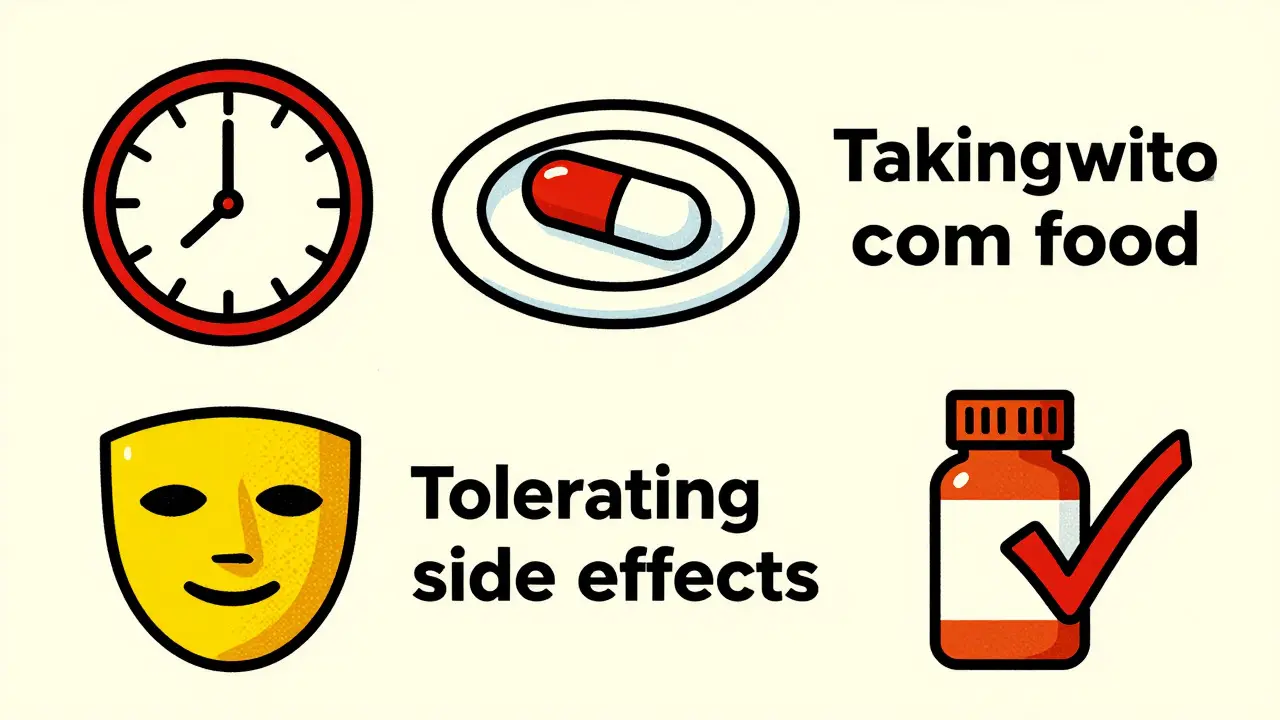
The University of Rochester Medical Center recommends a simple mnemonic to stay organized:
- Timing: Set alarms. Consistency keeps drug levels therapeutic.
- Taking with food: Know which meds need food and which don’t. Check the label or ask your pharmacist.
- Tolerating: Understand that mild side effects are normal. Anticipatory guidance reduces anxiety and dropout rates by 35%.
- Treatment completion: Finish every pill, even if you feel 100% better on day three.
Comparison of Common Antibiotic Side Effects
| Antibiotic Class | Most Common Side Effect | Management Strategy | Food Interaction |
|---|---|---|---|
| Penicillins (e.g., Amoxicillin) | Nausea, Diarrhea | Take with food; Probiotics | Can take with food |
| Tetracyclines (e.g., Doxycycline) | Photosensitivity, Esophageal irritation | Sunscreen; Water + Upright posture | Empty stomach preferred |
| Macrolides (e.g., Azithromycin) | Stomach cramps, Nausea | Small meals; Hydration | Can take with food |
| Fluoroquinolones (e.g., Cipro) | Tendon pain, CNS effects | Rest; Avoid strenuous exercise | Avoid dairy/calcium supplements |
Frequently Asked Questions
Can I take probiotics at the same time as my antibiotic?
No, you should space them out. Antibiotics kill bacteria indiscriminately, including the good bacteria in probiotics. Take your probiotic supplement at least 2 to 3 hours before or after your antibiotic dose to ensure the beneficial bacteria survive and reach your gut.
Is it safe to drink alcohol while on antibiotics?
For most common antibiotics like amoxicillin, moderate alcohol consumption is generally safe but may worsen side effects like dizziness or nausea. However, some antibiotics like metronidazole and tinidazole cause severe reactions (vomiting, flushing, rapid heartbeat) when mixed with alcohol. Always check your specific prescription instructions or ask your pharmacist.
What should I do if I miss a dose?
Take the missed dose as soon as you remember, unless it’s almost time for your next scheduled dose. In that case, skip the missed dose and resume your regular schedule. Never double up on doses to make up for a missed one, as this increases the risk of side effects.
How long does antibiotic-induced diarrhea last?
Mild diarrhea often resolves within a few days of finishing the antibiotic course as your gut flora recovers. If it persists beyond 48 hours after stopping treatment, or if it is accompanied by fever or blood, contact your healthcare provider to rule out C. diff infection.
Can antibiotics cause fatigue?
Yes, fatigue is a reported side effect for some antibiotics, partly due to the body fighting the infection and partly as a direct drug effect. Rest is important. If fatigue is extreme or accompanied by muscle weakness, consult your doctor to rule out other causes.