
Echinacea & Immunosuppressant Interaction Checker
Echinacea Safety Checker
This tool checks if echinacea is safe to take with your immunosuppressant medication. Based on current medical guidelines, echinacea can interfere with immunosuppressants used for transplants and autoimmune conditions.
Every year, hundreds of thousands of people take echinacea to boost their immune system. It’s sold in every drugstore, health food shop, and online marketplace. But if you’re on immunosuppressants-whether after a transplant, for lupus, rheumatoid arthritis, or another autoimmune condition-taking echinacea could be dangerous. And most people have no idea.
How Echinacea Actually Works
Echinacea isn’t just another herbal tea. It’s a complex plant with active compounds like alkamides, polysaccharides, and caffeic acid derivatives. These substances trigger immune cells-neutrophils, macrophages, natural killer cells-to become more active. In the short term, that might mean fewer colds or faster healing. That’s why people take it.
But here’s the twist: after eight weeks or more of daily use, studies show echinacea can start to suppress the immune system instead. This dual effect isn’t just theoretical. It’s documented in peer-reviewed journals like Pharmacognosy Reviews and confirmed by the American Academy of Family Physicians. The same plant that wakes up your immune system can eventually tire it out.
What Are Immunosuppressants?
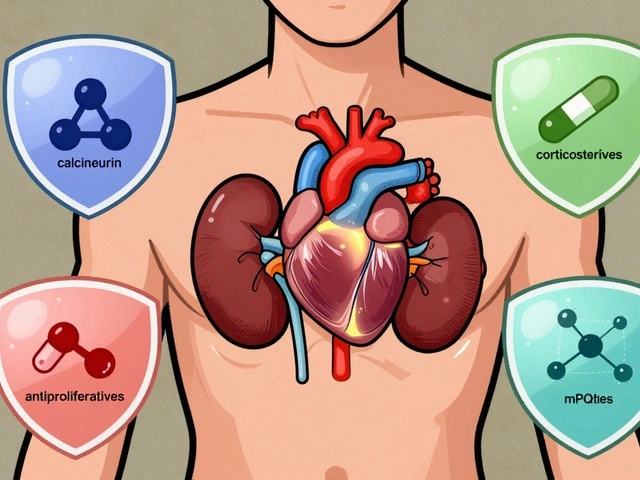
Immunosuppressants are powerful drugs designed to calm down the immune system. They’re used after organ transplants to stop rejection. They’re also prescribed for autoimmune diseases like multiple sclerosis, Crohn’s disease, and psoriasis. Common ones include:
- Cyclosporine
- Tacrolimus
- Azathioprine
- Mycophenolate mofetil
- Methotrexate
- Corticosteroids like prednisone
These drugs work by targeting specific immune pathways. They’re not optional. If you stop them-or if they’re weakened-you risk organ rejection, disease flare-ups, or even death.
The Conflict: Boosting vs. Blocking
Echinacea and immunosuppressants are on opposite sides of the same battlefield. Echinacea tells your immune system: attack. Immunosuppressants say: stand down.
When you take echinacea while on immunosuppressants, you’re essentially sending mixed signals. Your body doesn’t know whether to fight or relax. The result? The drugs may not work as well.
The Memorial Sloan Kettering Cancer Center has documented real cases:
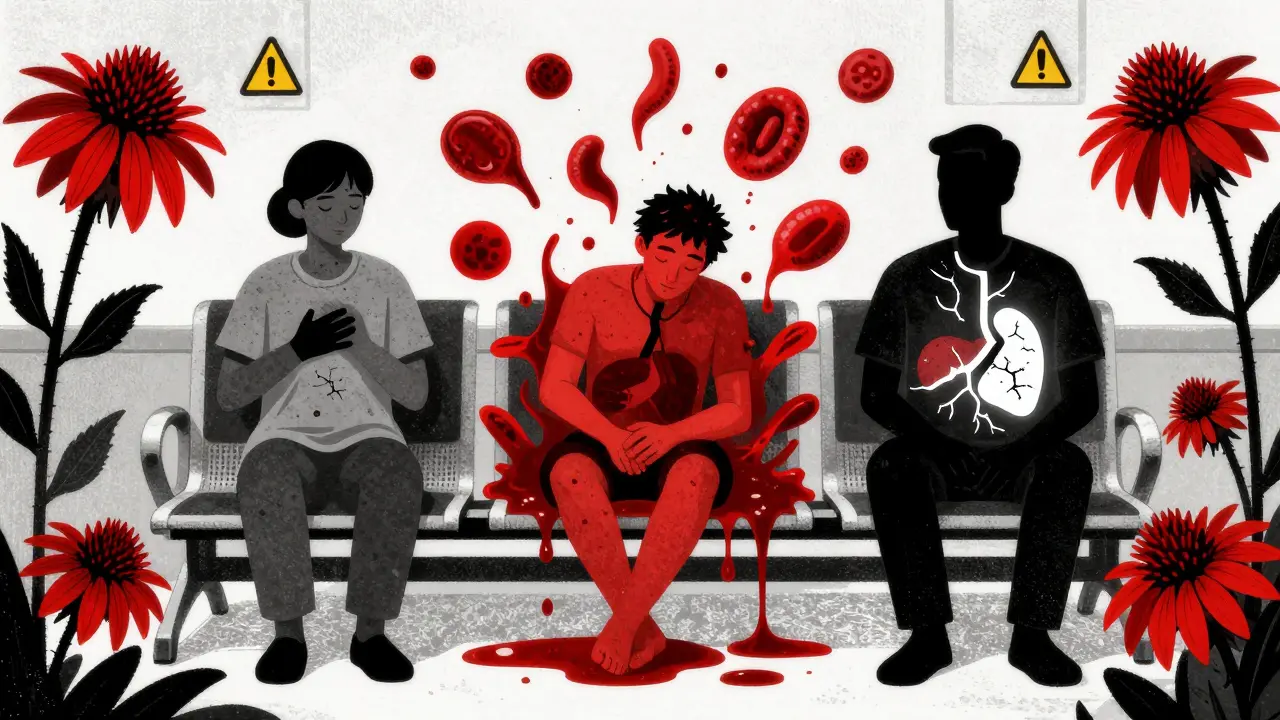
- A 55-year-old man with pemphigus vulgaris had a severe flare-up after starting echinacea while on immunosuppressants. His condition only stabilized after he stopped the supplement.
- A 32-year-old man developed a rare, life-threatening blood disorder called thrombotic thrombocytopenic purpura after taking echinacea for a cold.
These aren’t rare accidents. They’re predictable outcomes of a known interaction.
What the Experts Say
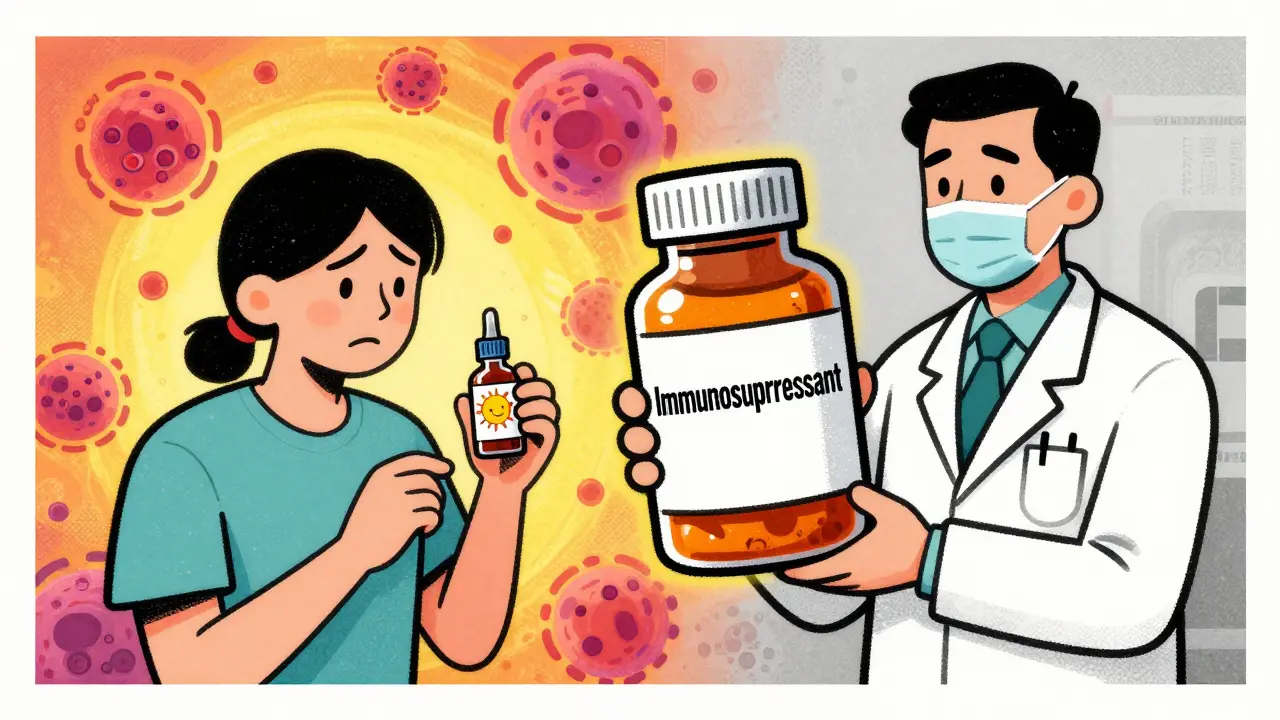
The American Society of Health-System Pharmacists classifies this interaction as moderate-meaning it’s not just a theoretical concern. They recommend avoiding echinacea entirely if you’re on immunosuppressants.
The American Society of Transplantation went further: in 2020, they issued a formal guideline saying all solid organ transplant recipients should avoid echinacea. Why? Because even a small drop in drug effectiveness can lead to graft rejection.
A 2022 survey of transplant centers found that 87% now follow this rule. And the American College of Rheumatology advises the same for patients with autoimmune diseases. Ninety-two percent of rheumatologists surveyed agreed: echinacea is too risky.
Real-World Evidence: What Patients Are Experiencing
A 2021 study in Mayo Clinic Proceedings surveyed 512 transplant patients. One in three had taken echinacea after their transplant. Twelve percent reported complications they believed were linked to the supplement.
Online patient forums tell a similar story. An analysis of 147 posts from transplant communities found 23 cases where people suspected echinacea caused problems. Seventeen needed higher doses of their immunosuppressants. Six had acute rejection episodes.
Here’s the scary part: none of these cases were officially confirmed as echinacea-related by doctors. Why? Because most patients never told their providers they were taking it.
Why This Isn’t Like Other Herbs
Not all supplements interact this way. Ginger reduces inflammation but doesn’t directly stimulate immune cells. Milk thistle affects liver enzymes but doesn’t touch immune activity. Turmeric? It’s generally safe.
Echinacea is different. It directly activates the same immune pathways that immunosuppressants are trying to block. It’s like turning up the volume on a speaker while someone’s trying to mute it.
The European Medicines Agency says the risk of interaction cannot be excluded. The U.S. FDA issued warning letters to three supplement companies in 2023 for failing to mention this risk on their labels.
What You Should Do
If you’re on immunosuppressants:
- Stop taking echinacea-even if you think it’s "natural" or "safe."
- Tell your doctor about every supplement, herb, or vitamin you take. Don’t assume they’ll ask.
- Check labels. Many echinacea products don’t list interaction risks. That’s not because they’re harmless-it’s because they’re not regulated like drugs.
- Ask for alternatives. If you want immune support, talk to your provider. There are safer options.
There’s no such thing as a "low dose" of echinacea that’s safe with immunosuppressants. The mechanism doesn’t work that way. Even small amounts can interfere.
What’s Being Done Now
The National Institutes of Health is running a $2.4 million study (NCT04851234) to measure exactly how echinacea affects tacrolimus levels in kidney transplant patients. Results are expected in mid-2025.
Until then, the safest choice is clear: avoid echinacea completely if you’re taking any immunosuppressant.
Millions of people use echinacea because they believe it helps. But when your life depends on a drug keeping your immune system in check, "helping" isn’t enough. You need certainty. And right now, the only certain thing is this: echinacea and immunosuppressants don’t mix.
If you’re unsure, ask your pharmacist. Or better yet, ask your transplant team or rheumatologist. They’ve seen what happens when people assume herbal is harmless. Don’t become another case study.
Mario Bros
January 11, 2026 AT 00:07Bro, I just started cyclosporine last month and was about to grab some echinacea gummies for my cold 😅 Thanks for the wake-up call-saved me from a hospital trip. 🙏
Michael Marchio
January 11, 2026 AT 01:35It’s astounding how many people still treat herbal supplements like they’re benign candy-this isn’t just a ‘maybe’ risk, it’s a ticking time bomb wrapped in a marketing slogan. The fact that the FDA had to issue warning letters to three companies tells you everything you need to know: the industry doesn’t care if you die, as long as you keep buying. Echinacea doesn’t ‘boost’ immunity-it hijacks it, and when you’re on immunosuppressants, that’s like trying to defuse a bomb while someone keeps yanking wires. The American Society of Transplantation’s 2020 guideline wasn’t a suggestion-it was a lifeline. And yet, 33% of transplant patients still take it? That’s not ignorance, that’s negligence. And no, ‘natural’ doesn’t mean ‘safe’-arsenic is natural too.
Jake Kelly
January 11, 2026 AT 16:33I get it-people want to feel in control of their health, especially when they’re dealing with chronic illness. But this is one of those times where ‘doing something’ actually makes things worse. I’ve seen patients panic and start every supplement under the sun, thinking it’ll help. The truth? Sometimes the best thing you can do is nothing. Stick to what your doctor prescribed. Your body’s already working hard enough.
Ritwik Bose
January 12, 2026 AT 15:49Thank you for this well-researched and vital post. 🙏 As someone from India where herbal remedies are deeply embedded in daily life, I’ve seen many friends and family members assume ‘natural’ equals ‘safe.’ This article is a gentle but firm reminder that biology doesn’t care about tradition-it cares about mechanisms. I will share this with my aunt who takes tacrolimus after her kidney transplant. May peace and clarity guide all who read this.
Paul Bear
January 14, 2026 AT 06:51Let’s be precise: echinacea’s alkamides are TLR4 agonists, which upregulate NF-κB signaling-exactly the pathway that calcineurin inhibitors like tacrolimus and cyclosporine are designed to suppress. This isn’t anecdotal-it’s pharmacokinetic. The CYP3A4 enzyme system is also involved, meaning even subtherapeutic doses can alter drug clearance. The 2022 Mayo study’s 12% complication rate? That’s an undercount. Most patients don’t report supplements because they assume their providers don’t care. They’re wrong. You’re not just risking rejection-you’re undermining the entire therapeutic framework. And yes, this applies to ‘low-dose’ tinctures, teas, and ‘immune support’ blends. There is no safe threshold. Period.
lisa Bajram
January 14, 2026 AT 23:26OMG I just read this and my jaw dropped-I’ve been taking echinacea for YEARS because my grandma swore by it! 😱 I’m on methotrexate for RA and had no idea this could be deadly. Thank you so much for breaking it down like this-now I’m deleting every echinacea product from my cart and calling my rheumatologist tomorrow. You’re a hero, honestly. 💪❤️ Let’s get this message out there before someone loses their transplant!
Jaqueline santos bau
January 16, 2026 AT 02:26Wait-so you’re telling me my ‘immune-boosting’ tea from Whole Foods is actually trying to kill me?? 🤯 I thought I was being so healthy!! I’m crying. I’ve been taking it since my lupus diagnosis. My mom even bought me a whole box for Christmas. Now I feel like a fool. And what if my doctor didn’t know? What if they think I’m lying? I’m so scared right now. 😭
Aurora Memo
January 18, 2026 AT 01:05To the person above-you’re not a fool. You trusted what seemed safe, and that’s human. The real problem is that the supplement industry isn’t required to warn you. This isn’t about blame, it’s about awareness. I’m a nurse, and I’ve seen too many patients in crisis because they didn’t know. Please reach out to your care team. They’ve heard this story before, and they’ll help you. You’re not alone.
Faith Edwards
January 19, 2026 AT 10:25It is, indeed, an egregious oversight that regulatory bodies permit the sale of botanicals with such profound pharmacological interactions without mandatory contraindication labeling. The absence of such disclosures constitutes a systemic failure of consumer protection, particularly when the product is marketed with language implying therapeutic benefit without disclosing its mechanistic antagonism with life-sustaining pharmaceuticals. One cannot reasonably expect the layperson to possess the pharmacological literacy required to discern this risk-thus, the onus lies squarely upon manufacturers and distributors to provide unequivocal, unambiguous warnings. This is not a matter of personal responsibility; it is a matter of institutional accountability.