Imagine buying a bottle of generic ibuprofen. In your local pharmacy in London, it might cost you less than £2. Cross the channel to Switzerland, and that same medication could set you back six times as much. Fly to India, and you might find it for a fraction of what you paid in Europe. This isn't just about shopping habits or currency exchange rates; it is a complex web of regulations, manufacturing practices, and healthcare policies that creates a wildly inconsistent global landscape for generic drugs, which are pharmaceutical products containing the same active ingredients as brand-name drugs but typically sold at lower prices after patent expiration.
You might assume that because these drugs contain the same chemical compound, they should be priced similarly everywhere. But the reality is starkly different. As of 2023, price differentials for identical generic products can exceed 600% between countries. If you are a patient, a healthcare provider, or simply someone interested in why your medicine costs what it does, understanding these disparities is crucial. It explains everything from sudden drug shortages to why your doctor insists on a specific brand despite insurance pushing for a generic alternative.
The Global Patchwork of Generic Usage
The term "generic" implies uniformity, but usage rates tell a story of deep regional divides. The World Health Organization estimates that generics account for 50-90% of total prescription volumes globally. However, this average hides extreme variations. In the United Kingdom, approximately 83% of prescriptions are filled with generics. Germany follows closely at 80%. Contrast this with Switzerland, where only 17% of prescriptions use generics, or Italy and Greece, where the figures hover around 19-20%.
Why such a gap? It largely comes down to policy. Countries like the UK and the Netherlands have mandatory generic substitution laws. When a pharmacist fills a prescription, they are required by law to dispense the cheapest available generic equivalent unless the doctor explicitly forbids it. This system drives rapid adoption. In nations without such mandates, cultural preferences and higher reimbursement rates for brand-name drugs keep utilization low. Physicians in Switzerland, for instance, often prescribe originator products because patients prefer them, and the healthcare system reimburses brands at a higher rate, reducing the financial incentive to switch.
The United States presents another paradox. It leads the world in generic volume, with over 90% of prescriptions filled with generics as of 2023. Yet, Americans still pay some of the highest drug prices in the developed world. While the U.S. has high competition-with 66% of off-patent drugs having two or more manufacturers-the pricing structure remains irrational. High-volume, long-off-patent products sometimes see sudden price spikes despite robust competition, a phenomenon experts describe as market inefficiency rather than supply-driven necessity.
Manufacturing Hubs: India, China, and Quality Concerns
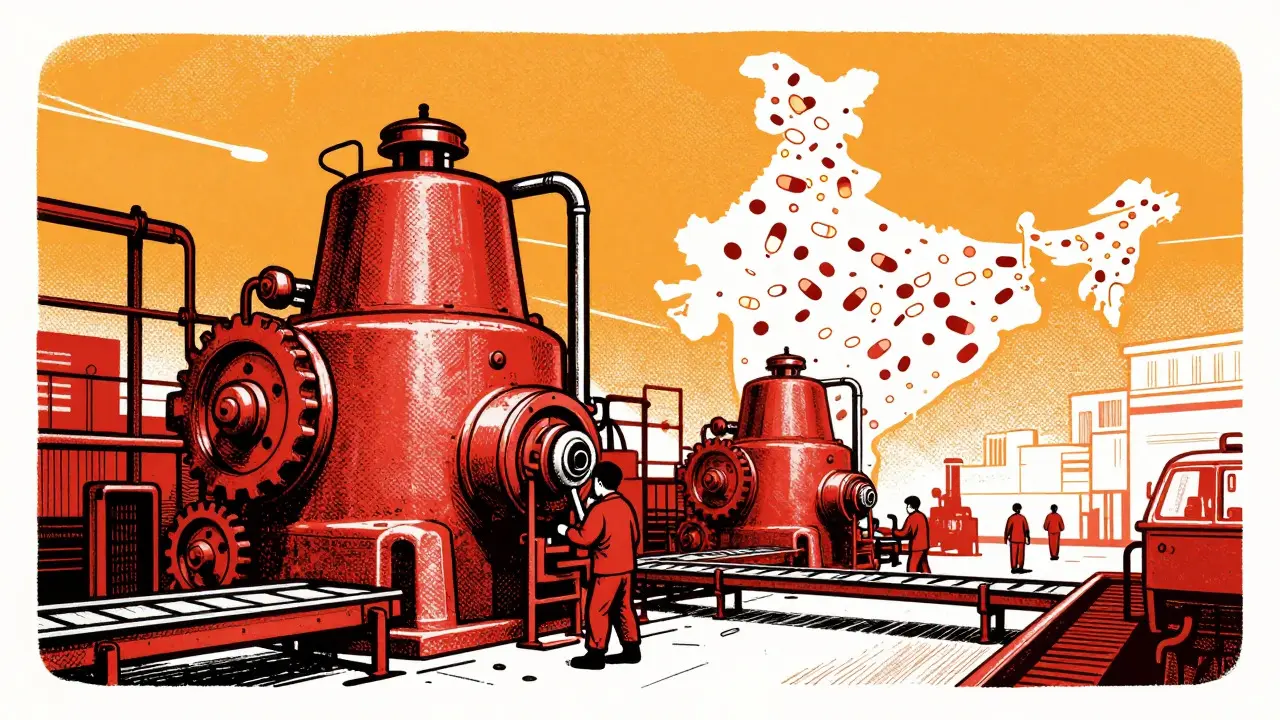
To understand availability, you must look at who makes the drugs. India is often called the "pharmacy of the world." It produces roughly 20% of the global generic drug volume and supplies about 40% of the generics consumed in the United States. With over 750 FDA-approved manufacturing facilities as of 2023, India’s dominance is structural. China is also rising rapidly, growing its number of FDA-approved facilities from 12 in 2010 to 187 in 2023.
However, this manufacturing concentration brings risks. A 2023 study by Ohio State University found that generic drugs manufactured in India were associated with 54% higher rates of severe adverse events-including hospitalization and death-compared to identical products made in the United States. This was particularly true for older drugs where production cost pressures are intense. The issue often stems from quality control protocols. Dr. Ameet Sarpatwari of Harvard Medical School criticized the FDA's practice of pre-announced inspections for foreign facilities, arguing it creates a fundamental oversight gap compared to unannounced inspections of U.S. plants.
This quality variance affects patient trust. On pharmacy forums, users frequently report side effect profiles that differ from previous batches, even when the active ingredient is the same. Excipients (inactive ingredients) and salt forms can vary between manufacturers. A patient traveling from the U.S. to Canada might find their prescription filled with a different formulation, leading to adverse reactions. These subtle differences explain why "generic" does not always mean "identical experience" for every individual.
Regulatory Fragmentation and Market Entry Delays
If manufacturing is the engine, regulation is the steering wheel-and currently, the wheels are turning in different directions. The U.S. Food and Drug Administration requires generics to demonstrate bioequivalence within 80-125% of the reference product’s pharmacokinetic parameters. The European Medicines Agency uses similar standards, but the implementation differs significantly.
In Europe, regulatory fragmentation adds 18-24 months to generic market entry timelines, according to the European Generic and Biosimilar Medicines Association (EGA). Even with centralized EMA review, individual country approvals are often required. This delay effectively extends monopolies for originator brands, keeping prices high longer than necessary. In contrast, the U.S. Hatch-Waxman Act established an abbreviated new drug application (ANDA) pathway that streamlined entry, though recent years have seen bottlenecks due to increased complexity in applications.
The FDA’s Generic Drug User Fee Amendments (GDUFA III) for 2023-2027 allocates $1.2 billion to modernize review processes. This aims to address the 28% increase in complex generics, such as topical creams and inhalers, which present unique bioequivalence challenges. Regulatory experts suggest that harmonizing bioequivalence standards across major markets could reduce development costs by 15-20% and accelerate global entry by up to two years. Until then, companies face a costly game of navigating multiple bureaucratic systems.
| Country/Region | Generic Utilization Rate | Avg. Price vs. UK | Key Regulatory Feature |
|---|---|---|---|
| United Kingdom | 83% | Baseline | Mandatory substitution |
| Switzerland | 17% | ~6x higher | No mandatory substitution |
| United States | >90% | ~2.5x higher | Hatch-Waxman ANDA pathway |
| India | High (Producer) | ~63% lower than EU | Major global manufacturer |
| Germany | 80% | ~1.5x higher | Strict reference pricing |
Biosimilars: The Next Frontier
While small-molecule generics have matured, the next wave of savings lies in biosimilars. These are biological medicines highly similar to already approved biologic reference products. Unlike simple chemical generics, biologics are complex molecules produced in living cells, making exact replication impossible. Hence, the term "similar" rather than "generic."
Biosimilars are projected to reach $60 billion in sales by 2028, up from $15 billion in 2023. They offer average sales prices 50% less than reference brand biologics at launch. However, uptake is slower. Complex regulatory hurdles and interchangeability requirements create friction. Doctors and patients are often hesitant to switch due to perceived safety risks, despite extensive clinical data supporting their efficacy. The U.S. Inflation Reduction Act of 2022 includes provisions to expedite generic and biosimilar review timelines by 30%, aiming to boost adoption.
The challenge here is education and trust. Just as early generic adopters faced skepticism, biosimilars require a shift in mindset. Healthcare systems need to implement clear substitution policies and ensure pharmacists are empowered to switch therapies safely. Without this, the potential cost savings will remain locked away.
Supply Chain Vulnerabilities and Shortages
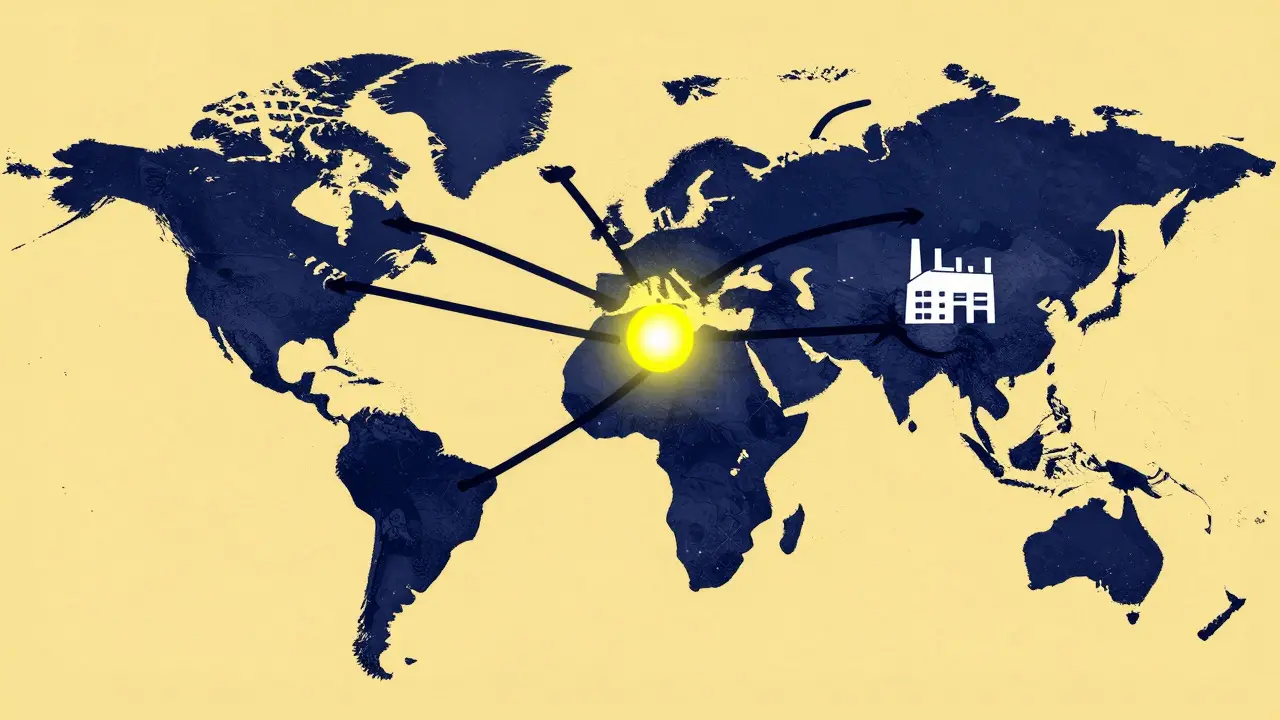
The global reliance on a few manufacturing hubs creates fragility. During the 2020-2022 pandemic, India temporarily restricted exports of 26 generic active pharmaceutical ingredients. This caused shortages of antibiotics, blood pressure medications, and antifungals in 22 countries. The FDA’s Drug Shortage Program documented 147 generic drug shortages in 2023, with 68% attributed to manufacturing quality issues at single-source facilities, primarily in India and China.
Dr. Rena Conti of the University of Chicago argues that excessive price competition in mature generic markets has led to unsustainable margins. Manufacturers cut corners or consolidate, leading to periodic shortages that undermine the very cost savings generics were designed to deliver. Parallel trade, where drugs are bought in low-price countries and resold in high-price ones, emerges as both a cost-saving mechanism and a supply chain complication. It keeps prices competitive but can disrupt local supply if not managed carefully.
What This Means for Patients and Providers
For patients, the key takeaway is awareness. If you travel internationally, do not assume your generic prescription will be seamlessly interchangeable. Different salt forms or excipients may cause reactions. Always carry your original medication when crossing borders, or consult a local pharmacist about compatible alternatives.
For providers, advocating for transparent prescribing practices helps mitigate confusion. Understanding the regulatory landscape allows doctors to anticipate delays in new generic entries or shortages. In regions with high price variability, exploring legal parallel import options or working with health systems to negotiate better contracts can reduce out-of-pocket costs for patients.
As AI-driven formulation optimization promises to reduce generic development timelines from 3-5 years to 18-24 months by 2030, we may see a narrowing of global price disparities. But until regulatory frameworks adapt and quality standards harmonize, the global generic market will remain a patchwork of opportunities and risks.
Why are generic drugs so much cheaper in some countries?
Price differences stem from varying regulatory frameworks, reimbursement policies, and manufacturing costs. Countries with mandatory generic substitution and strict reference pricing, like the UK and Germany, drive down costs through competition. In contrast, nations without these policies, like Switzerland, allow higher brand premiums. Additionally, manufacturing hubs like India benefit from lower labor and operational costs, enabling them to sell generics at a fraction of Western prices.
Are Indian-made generic drugs safe?
Most Indian-made generics meet international standards, but quality concerns persist. A 2023 study linked Indian-manufactured generics to higher rates of severe adverse events compared to U.S.-made equivalents, particularly for older drugs. This is partly due to pre-announced FDA inspections for foreign facilities, which may allow temporary lapses in quality control. Patients should monitor for side effects and discuss any changes with their healthcare provider.
What is the difference between a generic drug and a biosimilar?
Generic drugs are chemically identical copies of brand-name small-molecule drugs. Biosimilars are highly similar versions of complex biologic drugs produced in living cells. Because biologics cannot be exactly replicated, biosimilars undergo rigorous testing to ensure they have no clinically meaningful differences in safety, purity, and potency. Biosimilars are typically used for conditions like cancer, rheumatoid arthritis, and diabetes.
Why do I get different side effects with different generic brands?
While the active ingredient is the same, inactive ingredients (excipients), fillers, and dyes can vary between manufacturers. These differences can affect how the drug dissolves or is absorbed in the body. Some patients are sensitive to specific excipients, leading to varied side effect profiles. If you experience issues with one generic brand, ask your pharmacist about switching to another manufacturer.
How do drug shortages happen in a globalized market?
Shortages often result from manufacturing consolidation and quality failures. When price competition squeezes margins, manufacturers may cut corners or close underperforming plants. Since many generic drugs rely on single-source suppliers, a quality issue at one facility can trigger global shortages. Export restrictions, like those imposed by India during the pandemic, further exacerbate supply chain vulnerabilities.