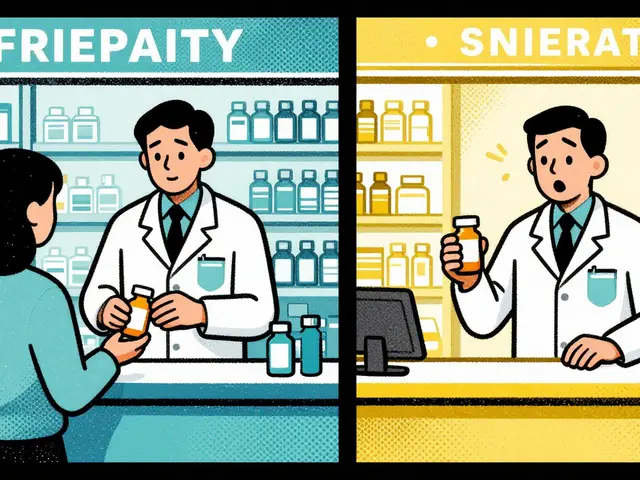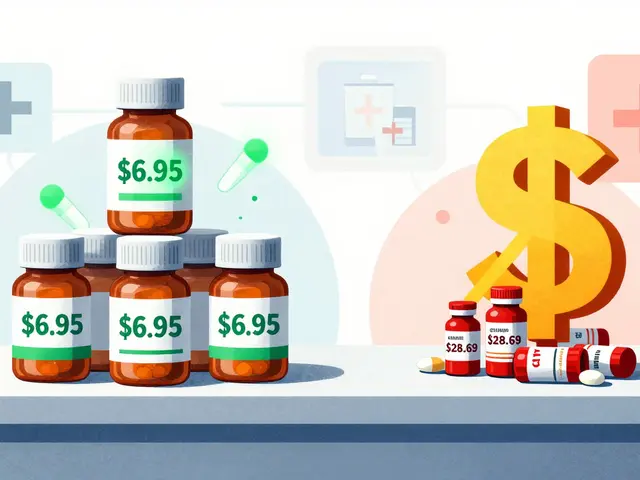
Imagine you are holding two pills. One is the original brand-name medication your patient has taken for years. The other is a generic version that costs a fraction of the price. Both look slightly different-maybe one is blue and round, while the other is white and oval. As a healthcare provider, your instinct might be to ask: "Will this change how my patient feels?" For decades, this question sparked heated debates in clinics and pharmacies alike. Today, however, we have mountains of data to answer it. Clinical outcomes data tells a clear story: for the vast majority of patients, generic drugs deliver the same therapeutic results as their brand-name counterparts.
This isn't just about saving money, though the financial benefits are undeniable. It’s about trust. When you prescribe a generic, you need to know that the science backs you up. The modern framework for approving these medications, established by the Hatch-Waxman Act of 1984, was designed to ensure safety and efficacy without requiring manufacturers to repeat expensive, lengthy clinical trials from scratch. Instead, they prove bioequivalence. But what does that actually mean for the patient sitting across from you?
The Science Behind Bioequivalence
To understand why generics work, you first need to understand how they are approved. The FDA requires generic manufacturers to demonstrate that their product contains the same active ingredient, in the same strength and dosage form, as the reference listed drug (the brand-name version). This is called pharmaceutical equivalence.
But having the same ingredients isn't enough. The body must absorb the drug in the same way. This is where bioequivalence comes in. Generic drugs must deliver between 80% and 125% of the pharmacokinetic parameters of the brand-name drug. Specifically, studies measure the Area Under the Curve (AUC) and the maximum concentration (Cmax). The 90% confidence interval for the ratio of these metrics must fall within that 80-125% range. Why such a wide range? Because human variability is significant. A difference of less than 20% is generally considered clinically irrelevant for most drugs.
| Feature | Brand-Name Drug | Generic Drug |
|---|---|---|
| Approval Pathway | New Drug Application (NDA) | Abbreviated New Drug Application (ANDA) |
| Clinical Trials Required | Extensive Phase I-III trials | Bioequivalence studies only |
| Active Ingredient | Original formulation | Identical to brand |
| Cost to Patient | High | 80-85% lower on average |
For most medications, this standard is more than sufficient. However, there is a special category known as Narrow Therapeutic Index (NTI) drugs. These include medications like warfarin, levothyroxine, and tacrolimus, where small changes in blood levels can lead to serious adverse effects or loss of efficacy. For these drugs, the FDA often applies stricter criteria, such as Scaled Average Bioequivalence (SCABE), ensuring even tighter control over absorption rates. If you are managing a patient on an NTI drug, switching between brands and generics requires closer monitoring, not because the generic is inferior, but because consistency is paramount.
What Real-World Data Shows
Laboratory standards are one thing; real-world performance is another. Fortunately, large-scale observational studies provide robust evidence. A landmark study published in PLOS Medicine in 2019 analyzed outcomes across seven different drug classes, involving over 1.3 million matched patient pairs. The researchers looked at hard endpoints like hospitalizations, emergency department visits, and death.
The results were striking. For cardiovascular drugs like quinapril and amlodipine, generic versions showed comparable, and in some cases even superior, outcomes compared to brand-name products. For example, patients taking generic amlodipine had a hazard ratio of 0.91 for major cardiovascular events compared to those on the brand, suggesting a slight benefit likely due to better adherence driven by lower cost. Similarly, for diabetes management with glipizide, insulin initiation rates due to poor glycemic control were identical between groups (HR 1.01).
Even in complex areas like psychiatry, where patient perception plays a huge role, the data holds up. While some initial analyses suggested slightly higher psychiatric hospitalization rates for patients on generic escitalopram or sertraline, further investigation revealed these differences were confounded by other factors. When comparing authorized generics (brand-name drugs sold under a generic label) to traditional generics, no consistent pattern of harm emerged. The FDA’s own systematic review found no evidence of adverse clinical outcomes from generic switches in cardiovascular, central nervous system, or metabolic drugs.
The Placebo Effect and Patient Perception
If the science is so solid, why do some patients still complain? "It doesn't work as well," they say. Or, "I feel dizzy since I switched." This is where psychology meets pharmacology. The appearance of a pill matters. Inactive ingredients-the fillers, dyes, and binders-can differ between manufacturers. While these do not affect the active drug's performance, they can trigger the nocebo effect (the opposite of placebo). If a patient believes the cheaper pill is "lesser," they may genuinely perceive worse outcomes or side effects.
As providers, you are the bridge here. Education is your most powerful tool. Explaining that the generic has passed rigorous FDA testing can alleviate anxiety. Documenting concerns in the Electronic Health Record (EHR) and following up after a switch can also help. If a patient truly cannot tolerate a specific generic manufacturer’s formulation due to an allergy to an inactive ingredient, you can specify "Dispense as Written" for that individual case. However, for the general population, reassuring them of the drug's equivalence is crucial for maintaining adherence.
Economic Impact and Healthcare Systems
We cannot discuss generics without addressing the elephant in the room: cost. Generic drugs account for approximately 90% of all prescriptions dispensed in the United States, yet they represent only about 23% of total drug spending. According to the Congressional Budget Office, generics saved the U.S. healthcare system $1.68 trillion between 2008 and 2017 alone. In 2021, savings exceeded $377 billion.
This economic efficiency allows healthcare systems to allocate resources more effectively. Lower out-of-pocket costs for patients improve adherence. When a medication is affordable, patients are more likely to take it consistently. Poor adherence is a leading cause of treatment failure, hospital readmissions, and increased long-term costs. By prescribing generics, you are not just treating a condition; you are removing a financial barrier to care. The American College of Physicians explicitly recommends prescribing generics whenever available, citing both therapeutic equivalence and substantial cost savings.
Navigating Complex Generics and Biosimilars
The landscape is evolving. While small-molecule generics (like aspirin or metformin) are straightforward, complex generics present new challenges. These include inhalers, topical creams, and extended-release formulations where proving bioequivalence is technically difficult. The FDA has issued updated guidance for these products, emphasizing the need for comparative clinical studies in some cases to ensure device performance or skin penetration matches the brand.
Furthermore, the rise of biosimilars-biologic medical products highly similar to an already approved biologic-adds another layer. Unlike chemical generics, biologics are large, complex molecules produced in living cells. Biosimilars must demonstrate no clinically meaningful differences in safety, purity, and potency. They are not interchangeable by default in all states and require careful provider education. Understanding the distinction between a simple generic and a biosimilar is essential for modern practice.
Best Practices for Providers
So, how should you approach generics in your daily practice? Here are actionable steps:
- Default to Generics: Unless there is a specific clinical reason not to, prescribe the generic version. Check the FDA Orange Book for therapeutic equivalence ratings. Most generics are rated "A," meaning they are therapeutically equivalent.
- Monitor NTI Drugs Closely: For narrow therapeutic index drugs, consider specifying a particular manufacturer if the patient is stable on it, to avoid unnecessary fluctuations during switches.
- Educate Patients Proactively: Explain what bioequivalence means in simple terms. Address concerns about appearance differences before they become issues.
- Document Switches: Note when a patient switches from brand to generic and schedule a follow-up to assess tolerance and efficacy, particularly for sensitive populations like the elderly or those with multiple comorbidities.
- Stay Updated on Guidance: Keep an eye on FDA updates regarding complex generics and biosimilars, as standards continue to evolve.
The evidence is overwhelming: generic drugs are safe, effective, and essential for sustainable healthcare. By understanding the clinical outcomes data, you can confidently prescribe them, advocate for your patients' financial well-being, and maintain high standards of care. The next time a patient questions their generic prescription, you won't just have a policy to quote-you'll have the science to back it up.
Are generic drugs exactly the same as brand-name drugs?
Generic drugs contain the same active ingredient, strength, dosage form, and route of administration as brand-name drugs. However, they may differ in inactive ingredients (such as colors, flavors, or preservatives), which can affect the pill's appearance or taste but not its therapeutic effect. They are required to meet strict bioequivalence standards to ensure they perform similarly in the body.
Why do some patients feel generic drugs don't work as well?
This phenomenon is often attributed to the nocebo effect, where negative expectations lead to perceived worse outcomes. Additionally, rare sensitivities to inactive ingredients in a specific generic formulation can cause issues. Large-scale clinical studies, however, consistently show no significant difference in efficacy or safety between generics and brand-name drugs for the vast majority of patients.
What are Narrow Therapeutic Index (NTI) drugs?
NTI drugs are medications where small differences in blood concentration can lead to serious therapeutic failure or toxicity. Examples include warfarin, levothyroxine, and phenytoin. For these drugs, clinicians may exercise extra caution when switching between brands and generics, and some jurisdictions allow for stricter substitution rules to ensure consistency.
How does the FDA ensure generic drugs are safe?
The FDA requires generic manufacturers to submit an Abbreviated New Drug Application (ANDA) demonstrating pharmaceutical equivalence and bioequivalence. This involves rigorous testing to show the generic delivers the same amount of active ingredient into the bloodstream over the same period as the brand-name drug. The FDA also inspects manufacturing facilities to ensure quality control standards are met.
Can I request a brand-name drug instead of a generic?
Yes, you can specify "Dispense as Written" on the prescription. However, insurance plans may require prior authorization or charge a higher copay for brand-name drugs when a generic is available. It is important to discuss the reasons for this preference with your provider and pharmacist to ensure it is medically necessary.