
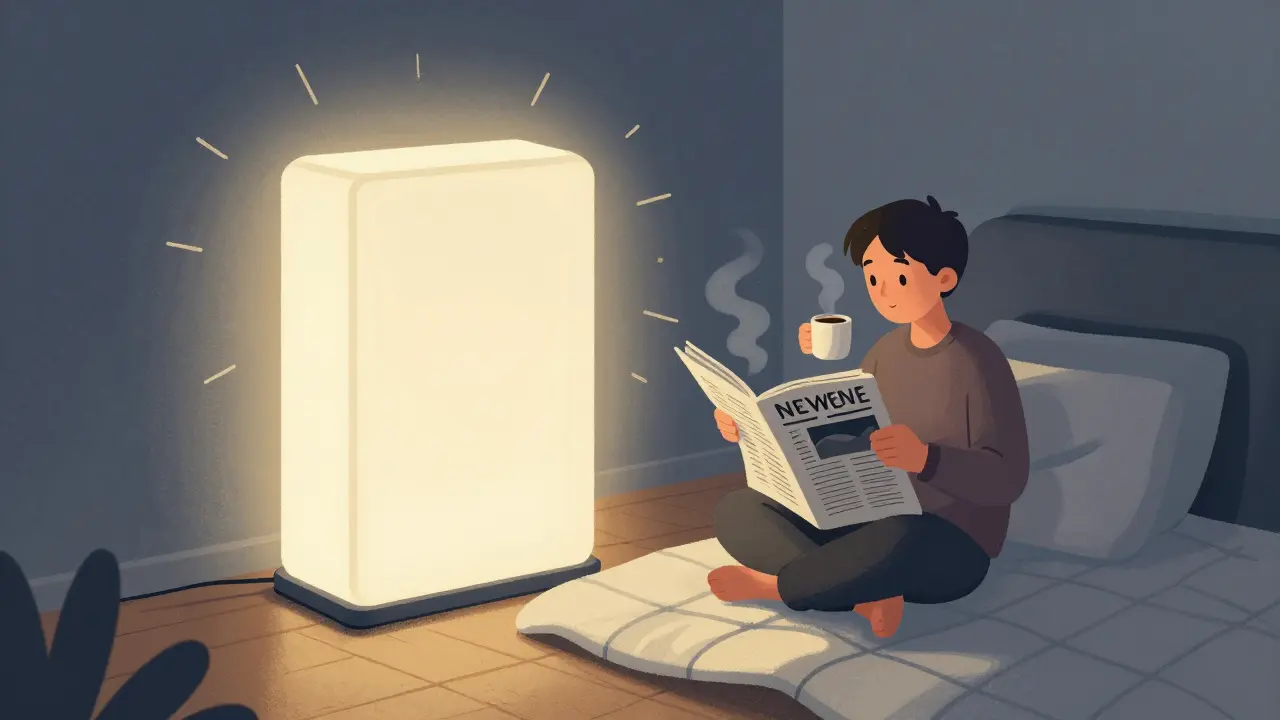
Every year around late October, the days get shorter, the sky stays gray longer, and for millions of people, energy drops, motivation vanishes, and even simple tasks feel impossible. This isn’t just feeling down-it’s seasonal affective disorder, or SAD. It’s real, it’s common, and it’s treatable. In the UK, where winter days can feel like one long twilight, SAD affects about 2-3% of adults, with higher rates in northern regions. For many, the solution isn’t pills or therapy sessions-it’s light.
What Exactly Is Winter Depression?
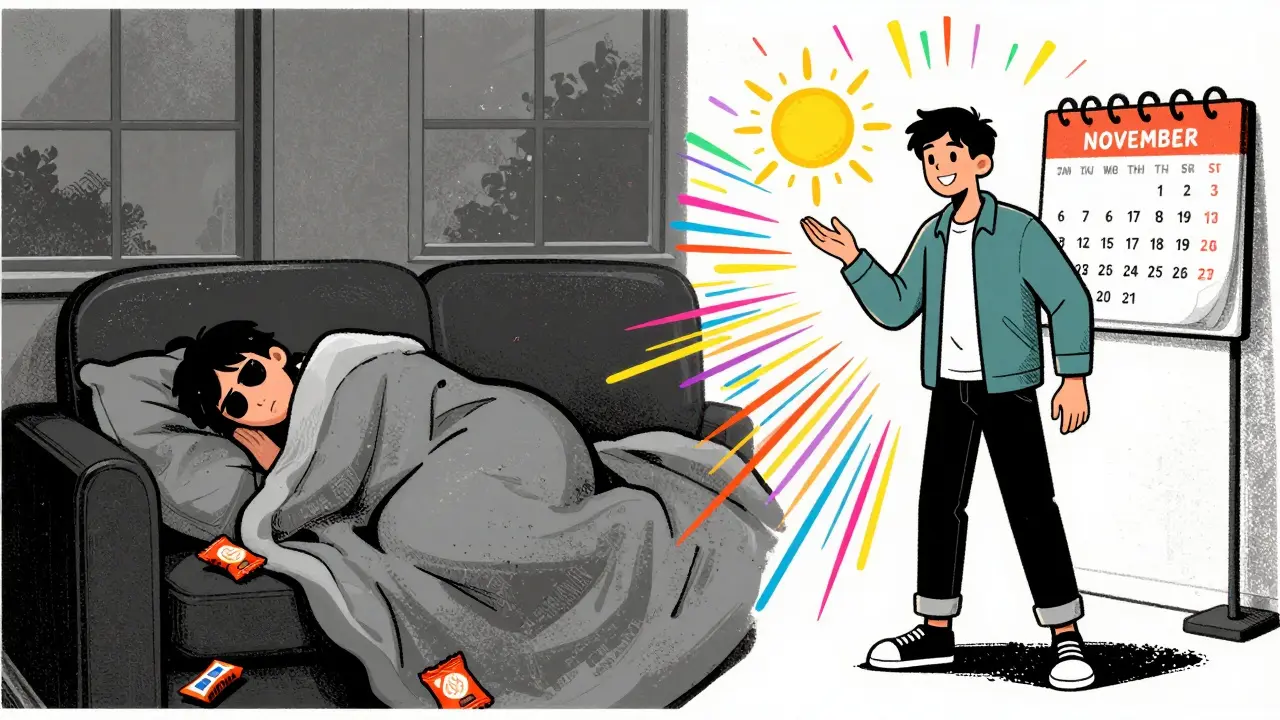
Seasonal affective disorder isn’t just being gloomy in the cold. It’s a clinical form of depression that shows up at the same time every year-usually starting in fall and lasting through winter. People with SAD don’t just dislike the dark; they experience symptoms like extreme fatigue, sleeping too much, craving carbs, gaining weight, and pulling away from friends and family. Some wake up exhausted even after eight hours of sleep. Others feel like they’re moving through molasses all day.
The science behind it is clear: less sunlight disrupts your body’s internal clock-your circadian rhythm. That throws off serotonin, the chemical that affects mood, and boosts melatonin, the hormone that makes you sleepy. When your brain doesn’t get enough natural light, it doesn’t know when to wake up or when to rest. And that’s where light therapy comes in.
How Light Therapy Works
Bright Light Therapy (BLT) is the most studied and recommended treatment for SAD. It’s not just sitting near a lamp. It’s about using a special device that mimics natural sunlight-without the UV rays that can harm your eyes. The standard treatment is 10,000 lux of full-spectrum white light for 30 minutes each morning, right after waking up.
Why morning? Because timing matters. Exposure to bright light early in the day tells your brain it’s time to stop producing melatonin and start producing serotonin. Studies show people who use light therapy before 8 a.m. see remission rates as high as 68%. Those who use it later in the day get far less benefit.
You don’t need to stare at the light. Just sit 16 to 24 inches away, with the box slightly to the side, and go about your morning routine-read, have coffee, check emails. Keep your eyes open. That’s it. No special training. No complicated setup.
What Does the Research Say?
Since the first controlled trial in 1984, light therapy has been proven to work. A 2024 meta-analysis of 850 patients found that 50-60% of people with SAD saw their symptoms improve significantly within one to two weeks. That’s faster than most antidepressants. In head-to-head comparisons, light therapy worked just as well as fluoxetine (Prozac), but with fewer side effects and quicker results.
One study tracked 96 patients over eight weeks. By week two, those using light therapy already felt better than those on medication. By week eight, both groups were similar-but the light therapy group didn’t have nausea, weight gain, or sexual side effects.
Even more surprising? Light therapy works for non-seasonal depression too. The same 2024 study showed a 41% remission rate for people with regular major depression who used light therapy-compared to just 23% in the control group.
Choosing the Right Light Box
Not all light boxes are created equal. The American Psychiatric Association and the Center for Environmental Therapeutics recommend only devices that deliver 10,000 lux at 16-24 inches. Anything less may not be effective. Look for these key features:
- 10,000 lux output (measured at 16 inches)
- UV-filtered (less than 100 lux UV radiation)
- Full-spectrum white light (not blue-only)
- Stable intensity (variations over 10% reduce effectiveness)
Brands like Carex Day-Light Classic Plus and Verilux are widely trusted. Most cost between $100 and $200. Premium models with dawn simulation-gradually brightening like sunrise-run up to $300. Don’t fall for cheap Amazon gadgets. Consumer Reports tested 37% of non-certified boxes and found they didn’t deliver the promised brightness. That’s like buying a fake thermometer for your fever.
Who Should Avoid Light Therapy?
Light therapy is safe for most people-including pregnant women and older adults. But it’s not for everyone.
If you have bipolar disorder, light therapy can trigger mania in 5-10% of cases. That’s why it’s crucial to talk to your doctor before starting. The same goes if you have eye conditions like glaucoma, macular degeneration, or diabetic retinopathy. Even if you’ve never had eye problems, it’s smart to get checked if you’re over 50.
Some people report mild side effects: headaches, eye strain, or feeling jittery. These usually fade after a few days. If they don’t, try moving the box farther away or shortening the session to 20 minutes. You can also try a light visor-a wearable device that lets you move around while getting light. They cost more ($120-$200), but they’re great for people who can’t sit still in the morning.
Real People, Real Results
On Reddit’s r/SAD community, one user wrote: “After five days of using my light box, I felt like I had my energy back. I started cooking again. I called my mom. I didn’t realize how much I’d lost until it came back.”
Another said: “I tried three different boxes over two winters. Nothing worked. Just eye strain and frustration.”
That’s the truth: it works for most-but not all. About 40-60% of people with SAD respond well. The rest need other options: talk therapy, vitamin D supplements, or sometimes medication. But for those who respond? It’s life-changing.
Amazon reviews for top light boxes show 68% of users report “significant improvement” within two weeks. The most common praise? “No medication side effects” and “immediate energy boost.”
What If It Doesn’t Work?
If you’ve tried light therapy for two weeks and feel no difference, don’t give up yet. Make sure you’re doing it right:
- Use it within an hour of waking up
- Keep it at least 16 inches away
- Don’t stare directly at the light
- Use it every day-even weekends
- Keep your eyes open
If you’re still stuck, talk to your doctor. You might need to combine light therapy with cognitive behavioral therapy (CBT), which has also been proven effective for SAD. Some clinics now offer CBT specifically designed for seasonal depression. It helps you change negative thoughts that creep in during winter months.
Or try a dawn simulator. These devices turn on slowly before your alarm, mimicking sunrise. Many users find this easier to stick with than sitting still with a light box.

Is Light Therapy Covered by Insurance?
Right now, only about 18% of U.S. insurance plans cover light boxes. Some, like Aetna, will pay up to $200 if your doctor writes a prescription. In the UK, NHS coverage is rare, but private insurers sometimes cover them under mental health benefits. Most people pay out of pocket. At $100-$200, it’s cheaper than a year’s supply of antidepressants-and it doesn’t come with drowsiness, weight gain, or sexual side effects.
The Future of Light Therapy
The market for light therapy devices is growing fast-projected to hit $1.1 billion by 2028. New tech is emerging: wearable light therapy goggles (like Luminette 3), smart light systems that sync with your phone, and even AI-powered devices that adjust intensity based on your sleep patterns.
The FDA just cleared the first prescription-only light device for treatment-resistant depression. And research is now showing promise for perinatal depression-helping pregnant women manage mood swings without medication.
But the biggest change? Awareness. More doctors are talking about light therapy. More patients are asking for it. And for the first time, the American Psychiatric Association is updating its guidelines in early 2025 to expand its use beyond SAD.
What to Do Next
If you’re struggling with winter blues that won’t lift:
- Track your symptoms for two weeks. Note when you feel worst, how much you sleep, what you eat.
- Try getting more natural light-even 20 minutes outside at lunch helps.
- Consider buying a certified 10,000 lux light box. Look for CET or APA-recommended models.
- Use it every morning, right after waking. Don’t skip days.
- If you don’t feel better in two weeks, talk to your doctor. You might need more help.
Winter doesn’t have to steal your energy. You don’t have to wait for spring to feel like yourself again. Light therapy isn’t magic-but it’s science that works. And for millions of people, it’s the reason they survive the dark months.
Cassie Widders
January 13, 2026 AT 08:20Alex Fortwengler
January 14, 2026 AT 19:56Sonal Guha
January 16, 2026 AT 00:37George Bridges
January 17, 2026 AT 10:53Faith Wright
January 19, 2026 AT 03:26Rebekah Cobbson
January 19, 2026 AT 11:32Audu ikhlas
January 21, 2026 AT 04:31Ben Kono
January 21, 2026 AT 06:05Jose Mecanico
January 21, 2026 AT 18:39Daniel Pate
January 21, 2026 AT 20:47steve ker
January 22, 2026 AT 02:23Darryl Perry
January 22, 2026 AT 20:07Windie Wilson
January 24, 2026 AT 12:59Konika Choudhury
January 26, 2026 AT 10:57Rebekah Cobbson
January 28, 2026 AT 02:13