
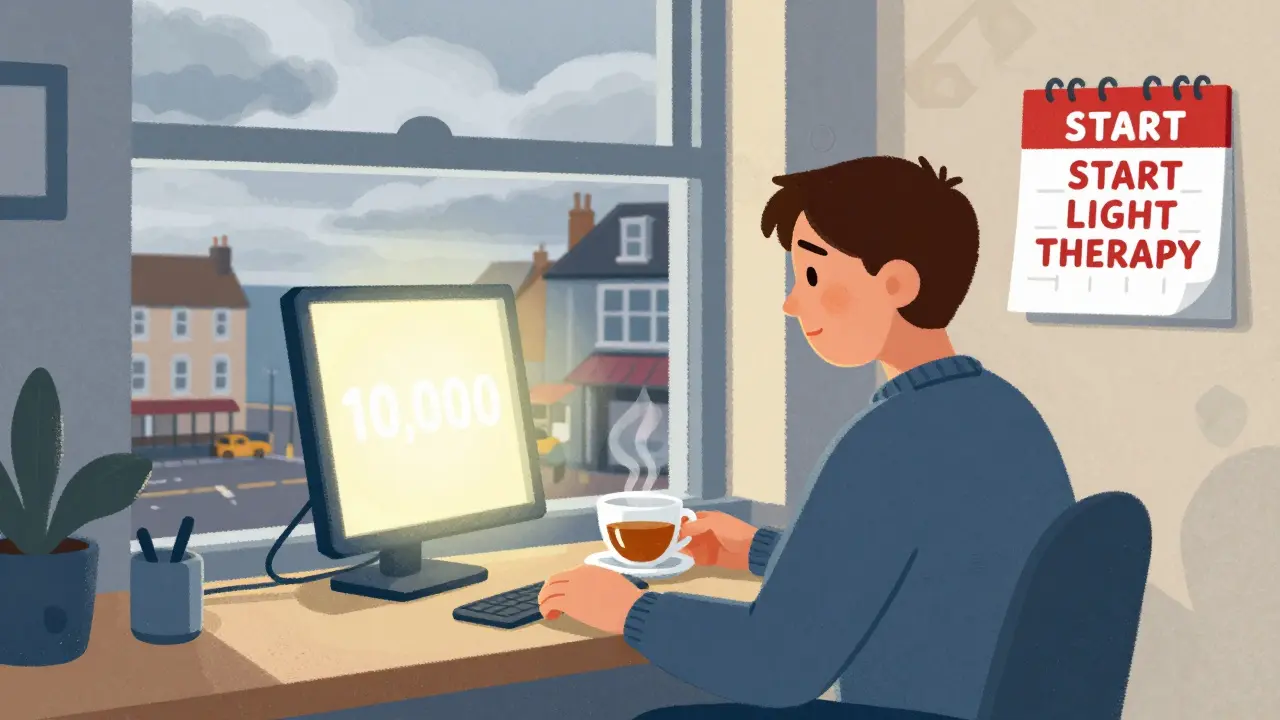
Every year, as the days get shorter and the sky stays gray longer, thousands of people in places like Brighton start feeling off-not just tired, but flat. Their motivation drains. They sleep more, crave carbs, and lose interest in things they used to love. This isn’t laziness. It’s not just "winter blues." It’s seasonal depression, clinically called Seasonal Affective Disorder (a mood disorder with recurring depressive episodes tied to seasonal changes, most often in fall and winter). And the good news? You can stop it before it starts.
Why Seasonal Depression Happens
It’s not just about feeling sad because it’s dark. Seasonal Affective Disorder (a mood disorder with recurring depressive episodes tied to seasonal changes, most often in fall and winter) has real biological roots. When sunlight drops, your body’s internal clock-the circadian rhythm (the 24-hour biological cycle that regulates sleep, hormone release, and mood)-gets thrown off. Your brain makes less serotonin (a neurotransmitter that helps regulate mood, appetite, and sleep), and more melatonin (a hormone that signals sleepiness and increases in darkness). That’s why you feel sluggish, sleepy, and low. It’s not your fault. It’s your biology reacting to the season.
People living farther from the equator, like in the UK, are more likely to experience this. In northern regions, up to 10% of adults have full-blown seasonal depression. And here’s the kicker: symptoms usually start in late September or October, peak in December and January, and fade by March. That means you have a window-weeks-to act before it hits.
Light Therapy: The Most Proven Tool
If you do one thing to prevent seasonal depression, make it light therapy. Not just stepping outside on a cloudy day. Not just turning on a lamp. You need light therapy (a treatment using a 10,000 lux light box to mimic natural sunlight and reset circadian rhythms).
Here’s how it works: a light box (a device emitting 10,000 lux of full-spectrum light with minimal UV radiation) sits on your desk or table. You sit 16 to 24 inches away, eyes open (no need to stare), for 20 to 30 minutes right after waking up. The light hits the back of your eyes, signals your brain to stop producing melatonin, and kickstarts serotonin. Mayo Clinic data shows 70% of users feel better within 1-2 weeks.
Timing matters more than you think. Starting in early September-before symptoms appear-cuts symptom severity by 50-60%. That’s the window. Don’t wait until you’re already dragging. And don’t use it after 3 p.m. Evening light can delay your sleep cycle and make things worse.
Not all boxes are equal. Look for ones that emit 10,000 lux, filter out UV rays (less than 0.1 microwatts per lumen), and use blue light in the 460-480 nm range. That’s the sweet spot for resetting your clock. The Center for Environmental Therapeutics (a research group founded by Dr. Michael Terman at Columbia University focused on circadian interventions) recommends dawn simulators-devices that gradually brighten over 90 minutes like a natural sunrise. These are especially helpful if you struggle to wake up.
Vitamin D: The Missing Piece
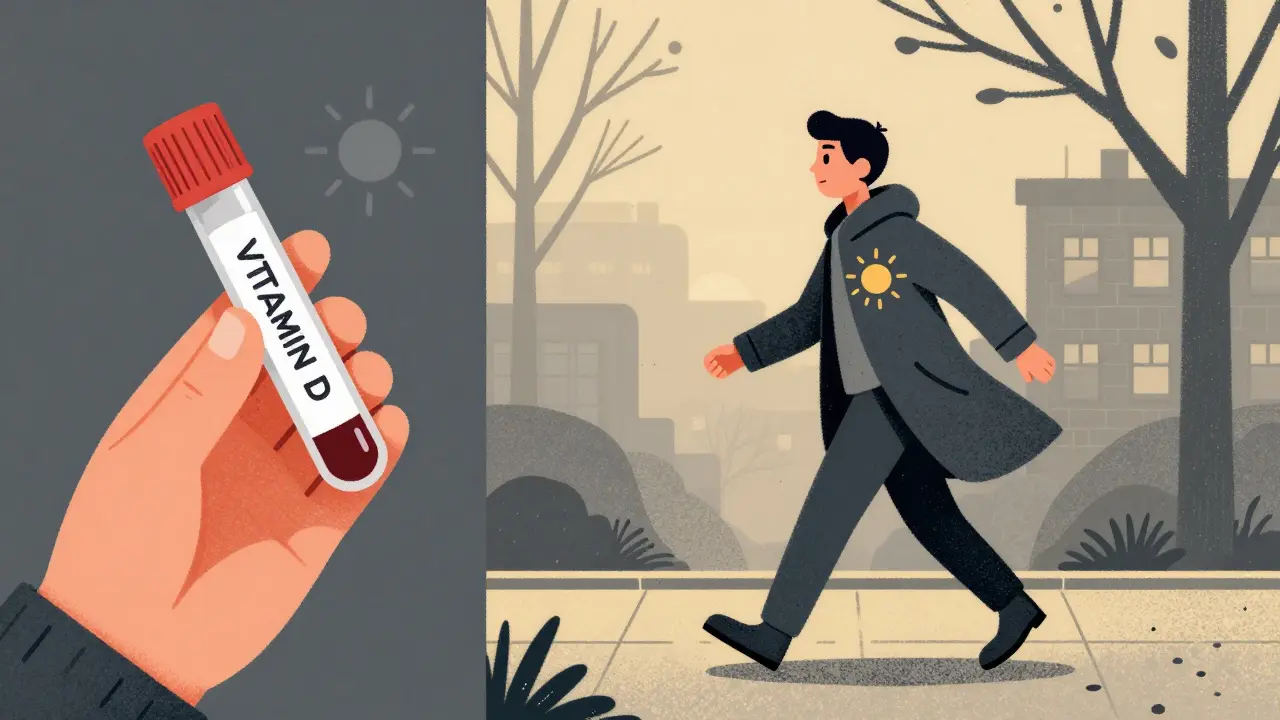
Your body makes vitamin D from sunlight. When sunlight fades, so does your vitamin D. And low levels? They’re linked to depression. A 2020 meta-analysis in the Journal of Affective Disorders found that people with vitamin D levels below 20 ng/mL saw a 15-20% drop in depressive symptoms after taking 800-1,200 IU daily.
But here’s the catch: vitamin D alone doesn’t fix seasonal depression. If your levels are already normal, extra pills won’t help. That’s why testing matters. Cleveland Clinic recommends checking your blood level before supplementing. If you’re under 20 ng/mL, take 5,000 IU daily. If you’re between 20-30 ng/mL, 2,000 IU is enough. Retest after three months.
Food helps too. Fatty fish like salmon, eggs, and fortified foods give you a boost. But you can’t eat your way out of a vitamin D deficit in winter. Supplements are necessary. Pair them with light therapy for better results. Harvard’s Dr. Uma Naidoo also suggests omega-3s-found in walnuts and flaxseed-to support brain chemistry.
Routine: The Silent Hero
Light and vitamins help, but if your schedule is chaotic, you’re still vulnerable. Routine (a consistent daily pattern of sleep, activity, and light exposure that stabilizes circadian rhythms) is the glue that holds prevention together.
Start with sleep. Wake up at the same time every day-even on weekends. Don’t sleep more than 30 minutes past your usual time. Oversleeping throws off your rhythm and makes depression worse. Mayo Clinic says wake-time consistency is more important than bedtime.
Then, get moving. A 30-minute walk outside in the morning-even if it’s gray-helps. If you can’t go out, use your light box while you stretch or sip tea. Exercise boosts serotonin, reduces stress, and improves sleep. You don’t need to run a marathon. A brisk walk counts.
And plan ahead. Seasonal depression makes you want to hide. Fight it by scheduling small pleasures: a coffee with a friend, a movie night, a puzzle, a warm bath. The Cognitive Behavioral Therapy for SAD (a structured therapy that helps patients identify and schedule positive activities to counteract withdrawal) approach, developed by Dr. Kelly Rohan, shows that doing things you enjoy-even when you don’t feel like it-rewires your brain over time.
What Doesn’t Work
Let’s clear up myths.
Just being outside isn’t enough. On a cloudy day in Brighton, you might get 500 lux-less than 1/20th of what a light box delivers. You need the intensity.
Vitamin D pills without light or routine? Not reliable. Studies show it helps only if you’re deficient-and even then, only as part of a bigger plan.
Waiting until you feel bad. Prevention is 10x easier than treatment. If you’ve had SAD before, start in September. Don’t wait for November.
Antidepressants as a first step. While they work, they’re not the first-line prevention. Light, routine, and vitamin D are safer, cheaper, and more effective for most people.
Putting It All Together
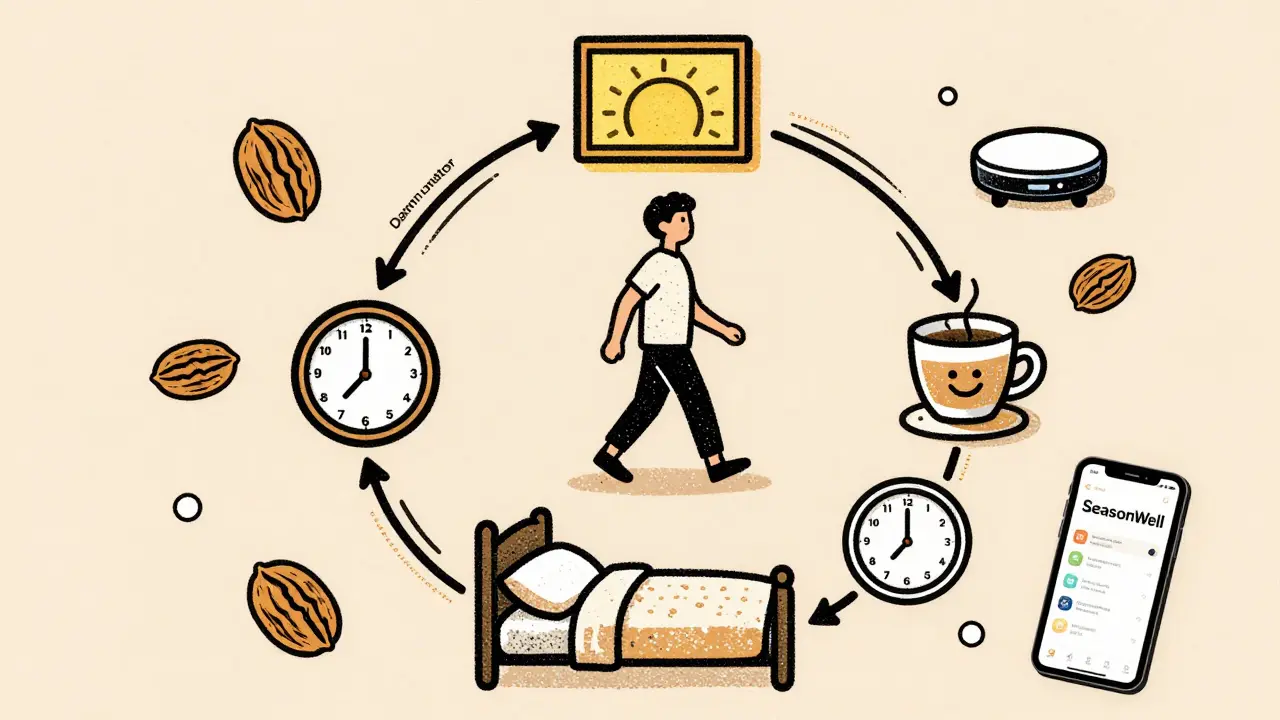
Here’s a simple plan you can start today:
- Buy a light box (a device emitting 10,000 lux of full-spectrum light with minimal UV radiation) (look for 10,000 lux, UV-filtered, 460-480 nm blue light).
- Use it for 20-30 minutes every morning within an hour of waking. Set an alarm.
- Get your vitamin D level tested. If it’s under 30 ng/mL, take 2,000-5,000 IU daily (D3 form).
- Wake up at the same time every day. No exceptions.
- Take a 30-minute walk outside in the morning-or do it near your light box.
- Schedule one small enjoyable activity every day. Even if you don’t feel like it.
Do this for four weeks. If you’ve had seasonal depression before, you’ll likely notice a difference by early October. If you haven’t had it before but live in a high-latitude area like Brighton, this routine still protects you.
What’s New in 2025
The field is evolving. In January 2025, the FDA approved the first digital therapy for SAD prevention: a smartphone app called SeasonWell (a prescription digital therapeutic delivering CBT-SAD protocols through a mobile app). It guides users through behavioral activation and mindfulness exercises. Clinical trials showed 78% adherence-better than most apps.
Also, a new dawn simulator called the Bodyclock Start 10000 (a device that replicates the 90-minute sunrise of early May to ease waking) launched in Q2 2025. It’s designed to mimic the natural light pattern when SAD symptoms naturally fade. It’s pricey, but if you struggle to wake up, it’s worth considering.
And research is getting smarter. A 2025 study found that not everyone responds the same way. Some people’s mood drops sharply with less light; others barely change. That’s why personalized prevention is the future. But for now, the triple approach-light, vitamin D, routine-works for most.
Final Thought
Seasonal depression isn’t something you have to live with. It’s not weakness. It’s biology. And biology can be reset. You don’t need to wait until January to feel better. Start in September. Use light. Take vitamin D. Stick to a schedule. Do it for yourself-not because you should, but because you deserve to feel like yourself all year long.
Can seasonal depression be prevented without medication?
Yes. Light therapy, vitamin D supplementation, and a consistent daily routine are proven, non-medication approaches that prevent or significantly reduce symptoms in most people. Studies show combining all three reduces recurrence by up to 73%, according to preliminary 2024 data from Columbia University’s NIH-funded trial. Medication is usually reserved for severe cases or when these methods don’t work.
How long does it take for light therapy to work?
Most people notice improvement within 1-2 weeks of daily use, especially if they start early in the fall. Some feel better after just a few days. The key is consistency-using it at the same time every day, right after waking. Skipping days delays results.
Is vitamin D enough to prevent seasonal depression?
No. While low vitamin D is linked to depression, studies show supplementation alone has minimal effect unless you’re deficient. Even then, it works best alongside light therapy and routine. A 2024 review in the American Journal of Psychiatry found vitamin D without behavioral or light interventions had inconsistent results.
Do I need a prescription for a light therapy box?
No. Light therapy boxes are available over the counter. But if you have eye conditions (like macular degeneration or glaucoma), talk to your doctor first. Also, avoid cheap, unregulated models-they may not emit the right light intensity or filter UV properly.
What if I live in a place with very little sunlight?
You’re in the highest-risk group. That’s why light therapy is even more critical. In places like northern Scotland or Alaska, public health systems provide free light boxes. In the UK, some GP practices offer them on prescription. If you can’t get outside, use a 10,000 lux box daily and aim for morning sunlight exposure whenever possible-even through a window.
Can children get seasonal depression?
Yes, though it’s less common than in adults. Teens and adolescents are more vulnerable, especially those with a family history of depression. The same prevention methods apply: morning light, consistent sleep, outdoor time, and vitamin D if levels are low. Always consult a pediatrician before starting supplements.

James Roberts
February 20, 2026 AT 06:59Caleb Sciannella
February 21, 2026 AT 16:10Oana Iordachescu
February 21, 2026 AT 21:12Irish Council
February 23, 2026 AT 19:55Jayanta Boruah
February 24, 2026 AT 00:32Hariom Sharma
February 25, 2026 AT 06:46Nina Catherine
February 26, 2026 AT 21:27Taylor Mead
February 27, 2026 AT 02:32Amrit N
February 28, 2026 AT 07:23Courtney Hain
March 1, 2026 AT 16:32Robert Shiu
March 2, 2026 AT 11:47Scott Dunne
March 3, 2026 AT 09:31