
Statin Dosing Calculator
Find Your Best Statin Timing
Select your statin type and daily routine to see the optimal dosing time for maximum effectiveness and adherence.
Your Personal Recommendation
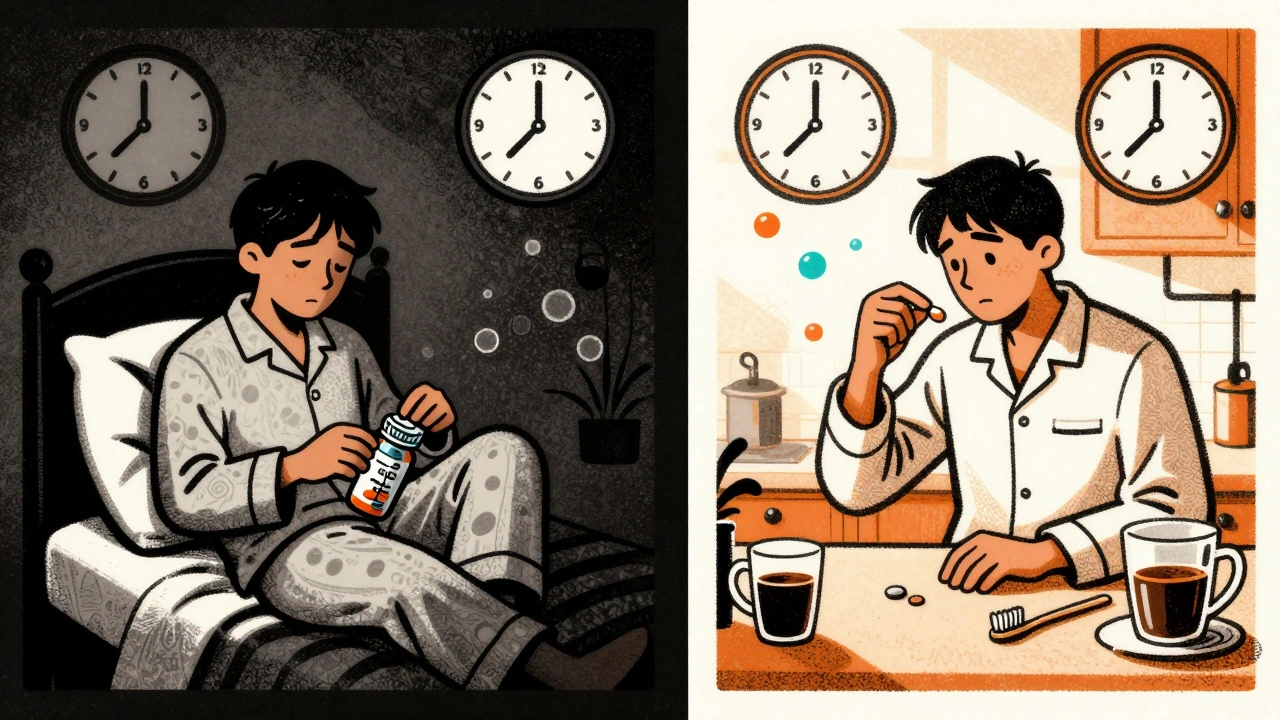
For years, doctors told patients to take their statins at night. The logic was simple: your liver makes most of its cholesterol while you sleep, so hitting it with medication right before bed should work best. But here’s the truth-statin timing isn’t as simple as night or morning anymore. What matters more than the clock is whether you actually take your pill every day.
Why Night Used to Be the Gold Standard
Back in the 1980s, when statins like simvastatin and lovastatin first hit the market, research showed they worked best when taken at night. That’s because your body’s cholesterol-making machinery runs on a cycle. Between midnight and 4 a.m., your liver cranks out the most cholesterol-especially when you’re fasting. Early statins didn’t last long in your bloodstream. Simvastatin, for example, clears out in under 3 hours. If you took it at 8 a.m., by the time your liver woke up its cholesterol factory, the drug was already gone. Studies back then showed clear wins. One trial with 172 people found that taking simvastatin at night lowered LDL (bad) cholesterol by 21%. Take it in the morning? Only 14%. That’s a 50% jump in effectiveness just from switching the time. Another study showed evening dosing of simvastatin cut LDL by 13.4% more than morning dosing. That’s not small-it’s the difference between staying out of the hospital and ending up in it.But Then Everything Changed
Fast forward to today, and most statins aren’t the old-school kind anymore. Atorvastatin, rosuvastatin, and pitavastatin stick around in your blood for 12 to 20 hours. That means even if you take them at 7 a.m., they’re still working at 2 a.m. when your liver is busy making cholesterol. A 2017 review of 17 studies with over 3,300 people found something surprising: for long-acting statins, the difference between morning and night dosing was tiny-less than 3%. That’s not enough to move the needle on heart attack risk. In fact, the American Heart Association and the National Lipid Association now say that if you’re on one of these newer statins, the time of day barely matters. Here’s the kicker: 82% of new statin prescriptions today are for these long-acting versions. That means for most people, the old night-only rule doesn’t apply anymore.Side Effects: Does Timing Make a Difference?
A lot of people worry about muscle pain, liver issues, or even diabetes risk from statins. And yes, those side effects are real. But here’s what the data says: taking your statin at night doesn’t make them worse-or better. A 2021 analysis of over 4 million statin prescriptions found no meaningful difference in side effects between morning and evening dosing. Muscle aches? Same rate. Liver enzymes spiking? No difference. Risk of developing type 2 diabetes? No change. The FDA’s own adverse event database shows 8.7% of people on night doses reported side effects. Morning takers? 8.9%. That’s not a signal-it’s noise. So if you’re worried about side effects, don’t blame the time of day. Blame the dose. Higher doses of any statin increase side effect risk. Talk to your doctor about whether you really need 80 mg of atorvastatin-or if 20 mg will do the job.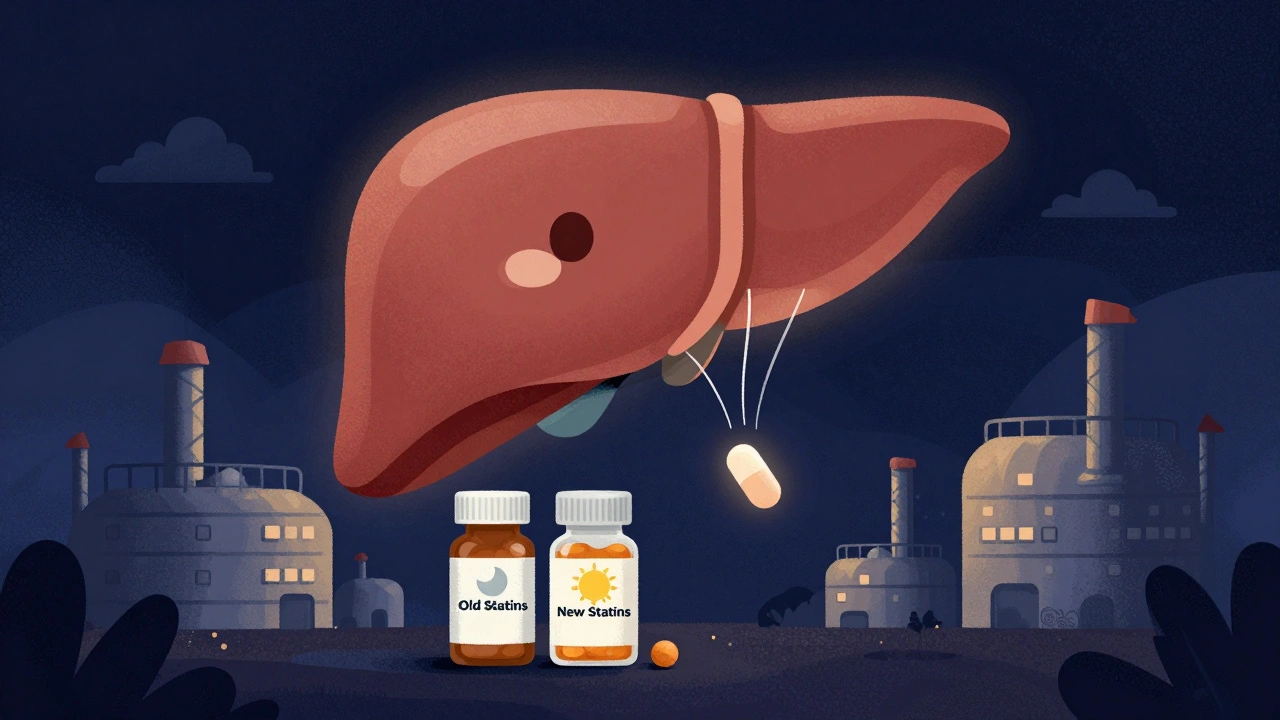
The Real Problem: Forgetting to Take It
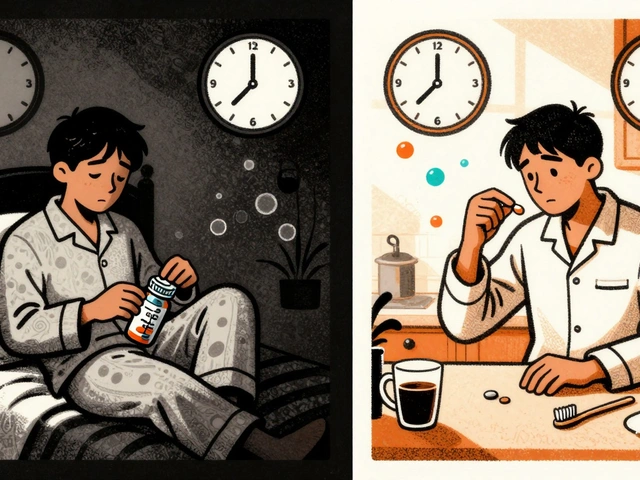
Here’s the most important thing no one talks about: people forget to take their pills. A lot. One study of nearly 12,500 statin users found that those told to take their meds at night missed 2.1 more doses per month than those who took them in the morning. Why? Because nighttime routines are messy. You’re tired. You’re watching TV. You’re already in bed. You forget. Or you’re on a different schedule-shift work, travel, insomnia-and “bedtime” isn’t reliable. I’ve seen it in real life. A patient on simvastatin kept missing doses at night. Her LDL stayed high. Her doctor switched her to morning rosuvastatin. She started taking it every day without fail. Her LDL dropped-better than when she was inconsistent at night. That’s not an exception. In one trial, patients using a smartphone alarm to take their simvastatin in the morning had 92% adherence. Those taking it at night without reminders? Only 76%. And guess what? Their LDL levels were nearly identical.What Should You Do?
If you’re on a long-acting statin (atorvastatin, rosuvastatin, pitavastatin, pravastatin), pick the time that fits your life. Morning is easier for most people. Set an alarm. Link it to brushing your teeth. Take it with breakfast. It doesn’t matter as long as you do it every day. If you’re on a short-acting statin (simvastatin, lovastatin, fluvastatin), evening dosing still has a slight edge-about 8-15% better LDL lowering. But here’s the catch: if you keep forgetting to take it at night, switching to morning with a reminder system might give you better results than perfect timing with poor adherence. Your doctor shouldn’t be pushing you to take it at night if you’re struggling. They should be asking: When can you take this pill every single day?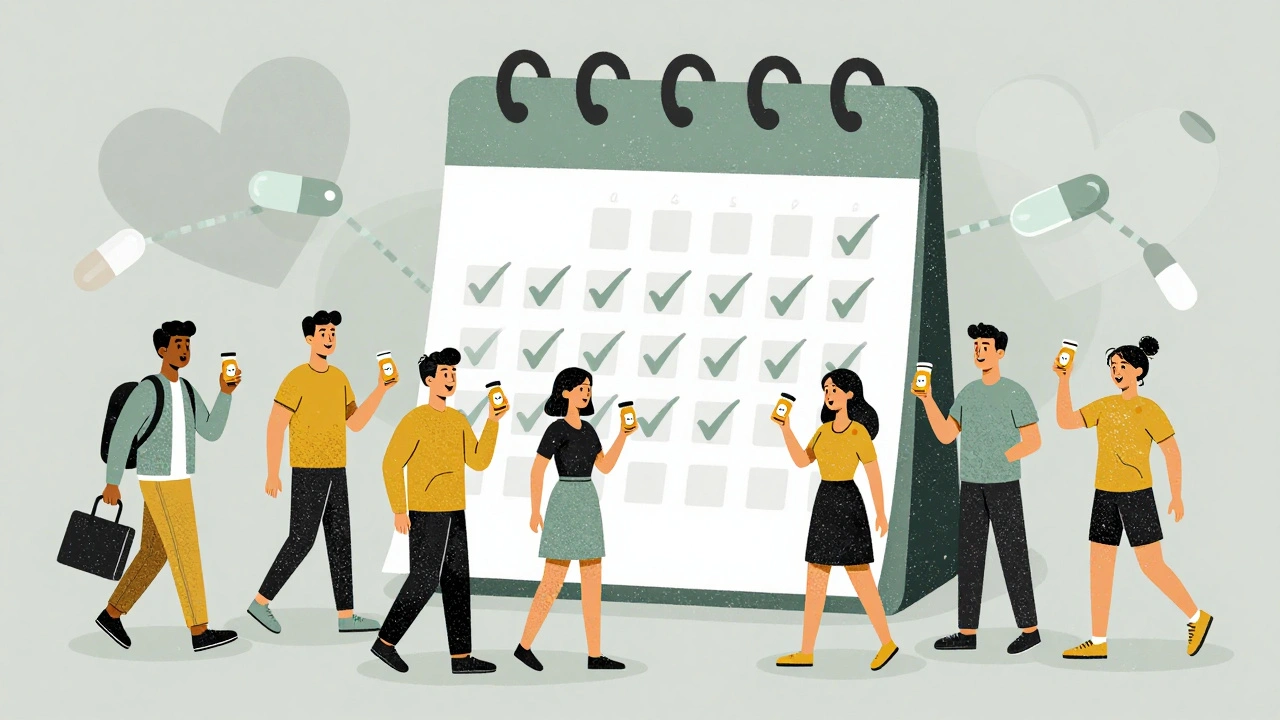
Doug Hawk
December 3, 2025 AT 12:21So if you’re on atorvastatin, it literally doesn’t matter if you take it with coffee or right before bed? I’ve been taking mine at 2am because my doctor said night and I just assumed it was gospel. Guess I can finally sleep in.
Also side note: my muscle pain went away when I dropped from 80mg to 20mg. Not the time. The dose. Duh.
John Morrow
December 4, 2025 AT 14:50It’s fascinating how medical dogma persists long after the underlying pharmacokinetic rationale has been obsoleted by pharmacodynamic advances. The 1980s-era short-half-life statins were indeed circadian-dependent, but modern agents like rosuvastatin exhibit prolonged hepatic retention with AUC extensions exceeding 12 hours-rendering temporal administration irrelevant in the context of cholesterol biosynthesis inhibition. The real clinical variable is adherence, not chronopharmacology. The 2017 meta-analysis you referenced, while robust, fails to account for non-adherence bias in observational cohorts. Yet the AHA and NLA have pragmatically updated guidelines to reflect real-world behavior, not idealized pharmacology. This is a textbook case of translational medicine evolving beyond textbook doctrine.
Kristen Yates
December 5, 2025 AT 04:56I’ve been taking my rosuvastatin with breakfast for three years. Never missed a day. My cholesterol is fine. My doctor never even asked me what time I took it. Maybe we’re overcomplicating this.
Saurabh Tiwari
December 6, 2025 AT 17:08bro this is wild 😮
so if i take my pill after my chai and before i scroll instagram i’m still good?
no more 11pm panic when i forget
also i love that drug companies are making smarter pills now
they finally get it lol 🙌
Michael Campbell
December 6, 2025 AT 21:47Big Pharma wants you to forget the timing so they can sell you more pills. They removed the night requirement because they know you’ll take it less often if you’re told it’s flexible. Wake up. They don’t care if you live or die. Only if you buy.
Victoria Graci
December 8, 2025 AT 13:55It’s almost poetic, isn’t it? We’ve spent decades chasing the perfect moment-the quiet, dark hour when the liver wakes-only to realize the real magic isn’t in the clock, but in the consistency of a hand reaching for a pill, day after day, even when tired, even when distracted, even when life is chaos. The body doesn’t care about circadian rhythms if the ritual is broken. It cares about the rhythm of care. That’s the real prescription.
And maybe, just maybe, that’s the quiet revolution in medicine: not more science, but more humanity.
Carolyn Woodard
December 9, 2025 AT 22:49John Morrow’s comment is technically accurate but misses the forest for the trees. The real issue isn’t whether the pharmacokinetics support morning dosing-it’s whether patients can sustain adherence. The 2021 FDA analysis of 4M prescriptions confirms no difference in adverse events, but the real kicker is the 2.1 missed doses/month in the nighttime cohort. That’s not a statistical anomaly-that’s a behavioral failure. If your doctor still insists on nighttime dosing without asking when you’re actually awake, they’re practicing 1995 medicine in 2024.
Also, I’ve had patients switch from simvastatin to rosuvastatin and suddenly stop missing doses. Not because of LDL numbers. Because they stopped setting alarms at 11pm.
Allan maniero
December 11, 2025 AT 09:08I’ve been prescribing statins for 22 years and I’ve seen this shift firsthand. Back in the day, I’d write ‘take at bedtime’ in big red letters. Now I say, ‘When’s the best time for you to remember it?’ It’s amazing how much simpler life gets when you stop micromanaging pill timing. I had a patient who took his atorvastatin after his evening walk-rain or shine. He said it was his ‘medication ritual.’ I didn’t care what time. I cared that he showed up for himself. That’s what matters. Medicine should fit into life, not the other way around.
Anthony Breakspear
December 11, 2025 AT 14:17Y’all are overthinking this like it’s rocket science. It’s a pill. Take it when you won’t forget. If you’re the kind of person who forgets to brush your teeth at night, don’t make your meds a midnight challenge. Link it to something you already do-coffee, brushing, peeing after breakfast. Boom. Done.
And if your doc still pushes night dosing? Politely tell them you read the studies. They’ll either be impressed or embarrassed. Either way, you win.
Zoe Bray
December 13, 2025 AT 03:19It is imperative to underscore that the clinical efficacy of statin therapy remains contingent upon sustained pharmacological exposure to HMG-CoA reductase inhibitors, irrespective of circadian administration. However, patient-reported adherence metrics, as elucidated in longitudinal cohort analyses, demonstrate statistically significant disparities in compliance patterns contingent upon diurnal dosing schedules. Consequently, the individualized temporal optimization of statin administration, predicated upon chronobiological and behavioral determinants, constitutes a paradigmatic advancement in preventive cardiology. It is recommended that clinicians eschew prescriptive timing directives in favor of patient-centered adherence protocols.
Girish Padia
December 14, 2025 AT 03:53Everyone’s forgetting one thing: the real problem is that people take statins like candy. You don’t need this stuff unless you’ve had a heart attack or your LDL is over 190. Most people are just scared because of fear-mongering ads. Take the pill when you want. But maybe don’t take it at all if you’re healthy.