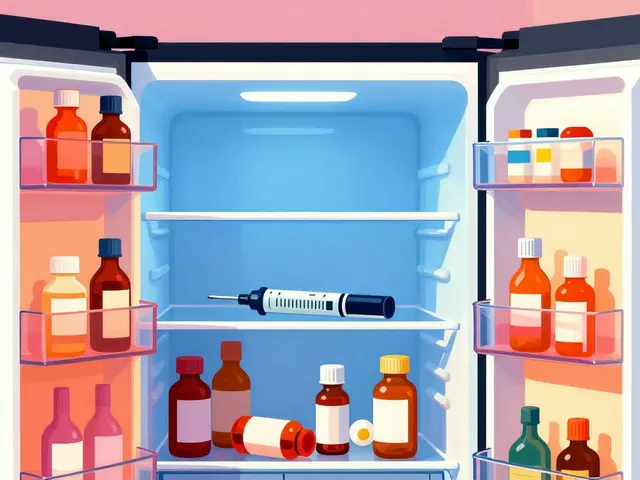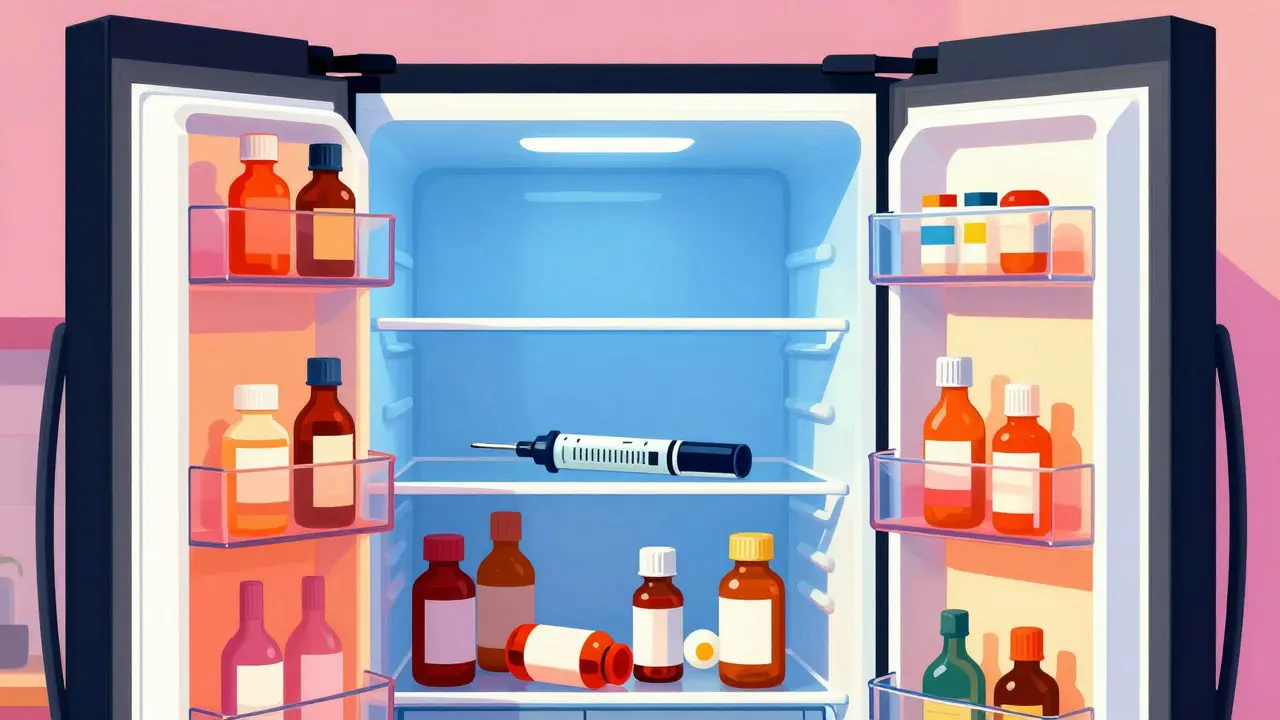
Have you ever opened your fridge and wondered if that vial of medicine is actually safe to use? It’s a question more people should ask. Keeping certain medications cold isn’t just about following instructions on a label; it’s about making sure the drug works when you need it most. If you store these drugs incorrectly, they can lose their potency quickly. In some cases, this leads to treatment failure or even serious health emergencies.
Not every pill needs the cold. Most everyday medications, like painkillers or blood pressure tablets, are fine at room temperature. But a growing number of prescriptions-especially biologics, insulins, and vaccines-require strict temperature control. These drugs are delicate. They contain proteins or complex molecules that break down if they get too hot or freeze solid. Getting this right protects your health and saves you from wasting money on ineffective medication.
What is the correct temperature for storing refrigerated medications?
The standard range for most refrigerated medications is between 2°C and 8°C (36°F to 46°F). This specific window keeps the drug stable without freezing it. Freezing damages many protein-based drugs permanently, while temperatures above 8°C can cause them to degrade rapidly.
Understanding the Cold Chain at Home
When we talk about "refrigeration" in medicine, we aren't talking about the back of your kitchen fridge where leftovers go. The pharmaceutical industry uses a strict standard defined by the U.S. Pharmacopeia (USP) Chapter <1079>. This guideline states that refrigerated drugs must stay between 2°C and 8°C (36°F to 46°F). This range is narrow for a reason. Below 2°C, water inside the solution might freeze, destroying the molecular structure of the drug. Above 8°C, chemical reactions speed up, breaking down the active ingredients.
Biologics are complex medications derived from living organisms, such as bacteria, yeast, or animal cells. These include treatments for diabetes, autoimmune diseases, and cancer. Unlike simple chemical pills, biologics are fragile. Think of them like fresh flowers rather than dried herbs. They wilt if treated roughly. Insulin is the most common example most people know. Unopened insulin pens or vials usually need to be kept in the fridge until you start using them. Once opened, many types can sit at room temperature for a few weeks, but you must check the specific label.
Why does this matter so much? Studies show that medications stored outside their recommended range can lose anywhere from 10% to 90% of their effectiveness within days. That means if you take a dose of degraded insulin, your blood sugar might not drop as expected. For someone with Type 1 diabetes, this isn't an inconvenience; it can lead to diabetic ketoacidosis, a life-threatening condition requiring hospitalization. The Food and Drug Administration (FDA) has documented cases where improper storage led directly to patient harm. Your fridge is part of your treatment plan, not just a convenience.
The Problem with Household Fridges
You might think, "I have a fridge, I’m good." But here’s the catch: household refrigerators are designed for food, not precision science. A study published in the *Journal of the American Pharmacists Association* found that home fridges vary wildly in temperature. The door shelves, where people often stick small bottles for easy access, averaged 11.3°C. That is well above the safe limit of 8°C. Every time you open the door, warm air rushes in. When the compressor kicks off, the temperature drops. These fluctuations stress sensitive drugs.
Where do you put the meds? The middle shelf, towards the back, is usually the safest spot in a regular fridge. Avoid the door entirely. Avoid the top shelf near the vents, which can be too cold. And never, ever put medication in the freezer compartment unless the label explicitly says it can be frozen (which is rare). Ice crystals form inside the vial, shattering the protein structures. Once a biologic freezes, it is ruined. Thawing it doesn't fix it. You have to throw it away.
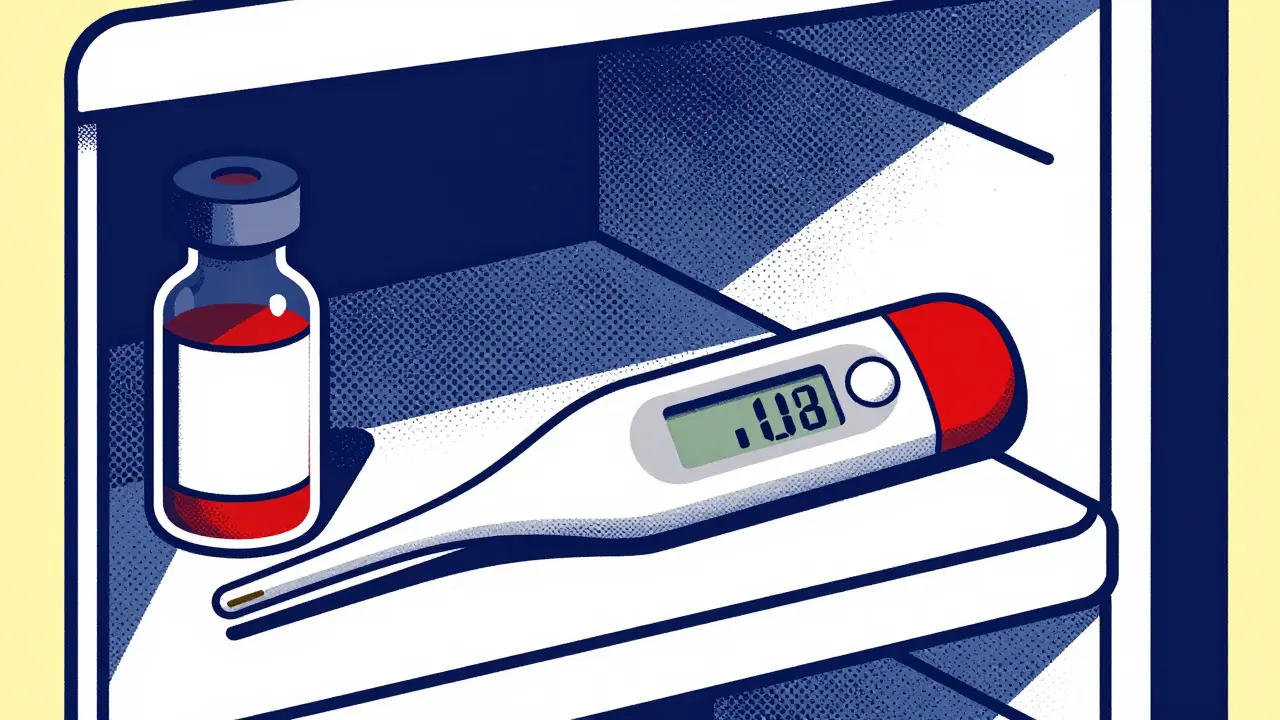
Power outages are another risk. If your electricity goes out for a day during a heatwave, your fridge becomes a box. The temperature will rise steadily. Without monitoring, you won't know if your medication survived. This is why experts recommend using a digital thermometer with a data logger. These devices record the highest and lowest temperatures reached. If the log shows a spike to 15°C, you know that batch of medicine is compromised, even if it looks clear and normal.
| Location | Average Temperature | Suitability for Meds |
|---|---|---|
| Door Shelves | ~11.3°C (52°F) | Poor - Too warm and fluctuates |
| Top Shelf (near vents) | ~1°C - 3°C (34°F - 37°F) | Risky - Can freeze |
| Middle Shelf (back) | ~3.4°C - 5°C (38°F - 41°F) | Good - Most stable zone |
| Crisper Drawer | ~2°C - 4°C (36°F - 39°F) | Fair - Humidity can affect packaging |
Essential Tools for Safe Storage
If you rely on daily refrigerated medication, investing in the right tools pays off. You don't need a laboratory-grade unit, but you do need reliability. Here are three items that make a difference:
- Digital Thermometer with Data Logger: Don't trust the dial on the side of your fridge. Buy a standalone digital probe. Place it next to your medication. Check the min/max readings once a week. Cost: $25-$75.
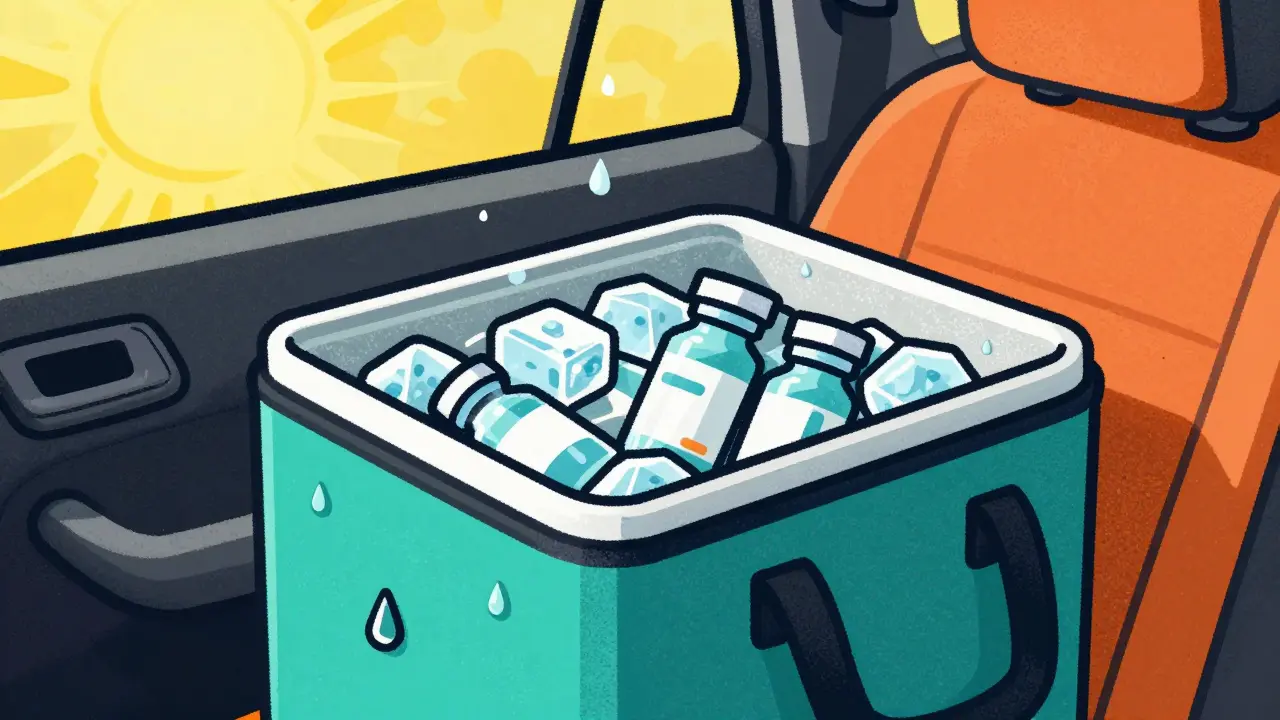
- Insulated Travel Case: Life happens. You travel, you run errands. An insulated bag with phase-change materials (like gel packs) can keep meds at 2°C-8°C for 24-48 hours. Brands like TempAid offer validated cases. Cost: $30-$120.
- Dedicated Mini-Fridge: If you store multiple expensive biologics, consider a small under-counter fridge set specifically for meds. These units maintain tighter temperature controls than large kitchen fridges. Basic models cost $150-$500. Cost: $150-$500.
One pro tip: never put ice packs directly against glass vials. The cold transfer can freeze the liquid inside. Wrap the ice pack in a thin towel or place it in a separate compartment within the cooler. Air circulation matters. Keep the area around your medication clear so cold air can flow evenly.
Traveling with Temperature-Sensitive Drugs
Travel is the biggest challenge for patients on cold-chain medications. Cars heat up fast. On a sunny June day in Brighton, the interior of a parked car can reach 40°C (104°F) in under an hour. Leaving insulin in the glovebox for two hours can ruin it. One user on a diabetes forum reported a reservoir failure after leaving their pump in a car at 85°F, resulting in a dangerous blood sugar spike that took twelve hours to correct.
Always carry your medication with you, never in checked luggage. Airlines pressurize cargo holds, but they don't always control temperature strictly. Use your insulated travel case. Pre-chill the gel packs before you leave, but ensure they aren't frozen solid if the manufacturer warns against direct contact with extreme cold. If you're flying, declare your medical supplies at security. They are allowed through scanners, but it helps to have a doctor's note handy to explain the contents.
What if you forget? Or the power goes out? Have a backup plan. Keep a spare dose of medication that has been stored correctly. If you suspect a dose was exposed to high heat or freezing, do not use it. Contact your pharmacist. They can advise if the specific drug is likely still effective or if you need a replacement. Never guess with potent biologics.
Disposal of Expired or Damaged Medications
Storing meds properly extends their life, but everything expires. Or gets damaged. What do you do with old, unused, or spoiled refrigerated drugs? Flushing them down the toilet is generally discouraged due to environmental impact, unless the label specifically instructs you to do so (usually for highly addictive opioids). Pouring them in the trash risks accidental ingestion by children or pets.
The best option is a drug take-back program. Many pharmacies in the UK and US have collection bins for disposal. You can also mix the medication with an unappealing substance like used coffee grounds or cat litter in a sealed plastic bag before throwing it in the household trash. This makes it less likely to be retrieved. Remove personal information from the prescription labels before disposing of containers. Proper disposal closes the loop on safe medication management, protecting both your health and the community.
Common Mistakes to Avoid
Even well-meaning patients make errors. Here are the top pitfalls:
- Storing in the Door: As mentioned, the door is the warmest part of the fridge. It’s convenient, but it’s unsafe for sensitive drugs.
- Ignoring Expiration Dates: Refrigeration slows degradation, but it doesn't stop it forever. An expired drug may be weaker or produce harmful byproducts.
- Mixing with Strong Odors: While less critical for sealed vials, strong smells from food can sometimes permeate packaging over long periods. Keep meds in their original boxes if possible.
- Assuming All Insulins Are the Same: Some newer insulin formulations are more stable at room temperature. Always read the leaflet for the specific brand you are using. Novo Nordisk, for example, has updated guidelines for some products allowing longer room-temperature storage.
Knowledge is your best tool. Read the package insert. Ask your pharmacist questions. If something looks cloudy, discolored, or contains particles, toss it. Trust your eyes. If in doubt, swap it out. Your health is worth the cost of a new prescription.
Can I freeze my medication if the fridge breaks?
No, you should not freeze most refrigerated medications. Freezing causes irreversible damage to protein-based drugs like insulin and biologics. If your fridge breaks, move the medication to an insulated cooler with cold packs (not ice directly touching the vials) immediately. Contact your pharmacy for advice on whether the medication is still usable.
How long can insulin stay out of the fridge?
Unopened insulin typically lasts until its expiration date if refrigerated. Once opened, most insulin types can be stored at room temperature (below 30°C or 86°F) for 28 to 30 days. However, always check the specific product labeling, as some newer formulations may have different stability profiles.
What should I do if my medication was left in a hot car?
If your medication was exposed to high temperatures (above 30°C/86°F) for more than a few hours, it is likely compromised. Do not use it. Contact your pharmacist or healthcare provider. They may advise you to discard it and prescribe a replacement. Using degraded medication can lead to ineffective treatment.
Do I need a special refrigerator for my meds?
You do not necessarily need a specialized medical fridge, but a standard household fridge must be monitored. Use a digital thermometer to ensure the middle back shelf stays between 2°C and 8°C. If your home fridge fluctuates widely, a dedicated mini-fridge set to a constant cool temperature is a safer investment.
How can I tell if my medication has gone bad?
Look for changes in appearance. Clear liquids should remain clear. Cloudiness, discoloration, clumping, or visible particles indicate degradation. Also, check the expiration date. If you suspect temperature abuse (freezing or overheating), assume the drug is ineffective and replace it.