
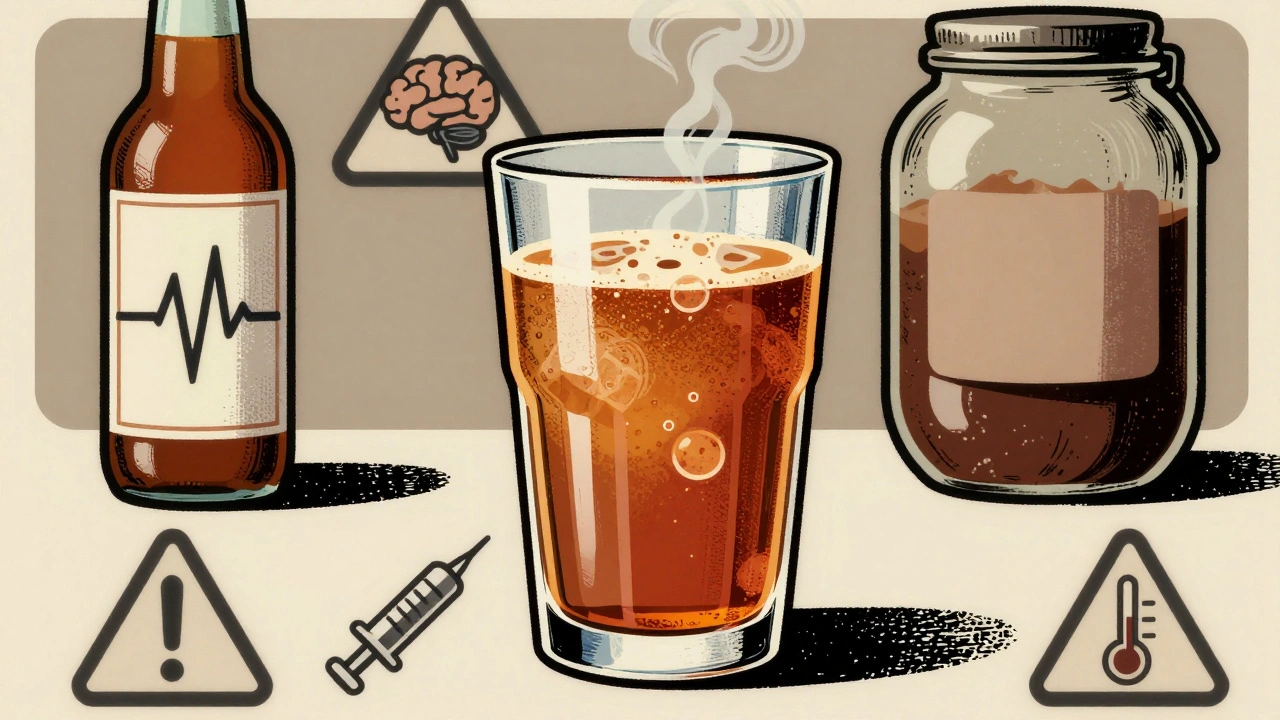
Many people drink kombucha for its probiotics, tangy flavor, and supposed health benefits. But if you’re on medication that reacts badly to alcohol, even a small glass could be risky. You might think kombucha is just tea with bubbles-like sparkling water. It’s not. It’s a fermented drink that naturally produces alcohol, and the amount isn’t always what the label says.
How Much Alcohol Is Actually in Kombucha?
Kombucha is made by fermenting sweet tea with a SCOBY-a living culture of bacteria and yeast. During this process, the yeast eats sugar and turns it into alcohol and carbon dioxide. That’s normal. But how much alcohol ends up in your bottle? It depends.
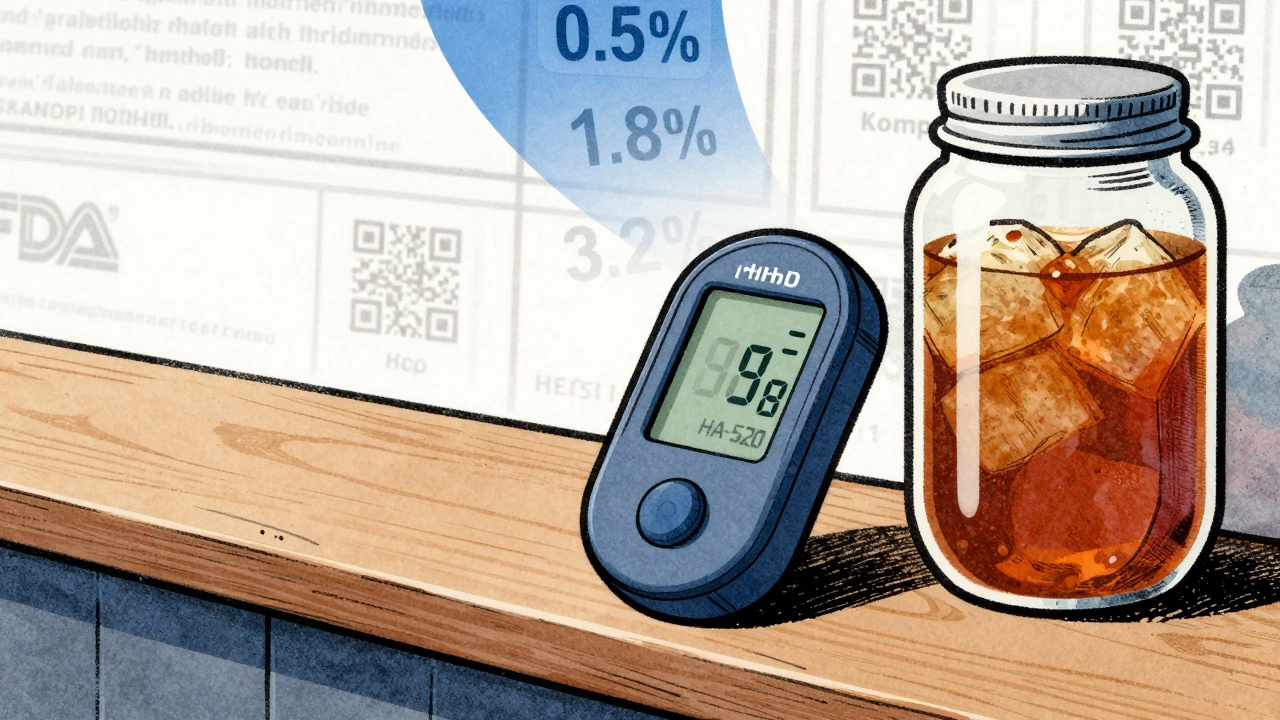
Commercial brands in the U.S. are required by law to keep alcohol below 0.5% ABV (alcohol by volume). That’s the legal limit for non-alcoholic beverages. But even that tiny amount can matter. Some homebrewers report levels between 1% and 2.5% ABV. In rare cases, poorly controlled batches can hit 3.2% ABV-the same as a light beer.
Why the big difference? Temperature, fermentation time, and sugar levels all affect alcohol production. A batch left fermenting for two weeks in a warm kitchen can end up much stronger than one fermented for seven days in a cool basement. Most homebrewers never test their kombucha. Only 15% do, according to Kombucha Brewers International. That means you could be drinking something stronger than you think.
Why This Matters for Medications
Some medications don’t just get less effective when mixed with alcohol-they can cause dangerous reactions. The list includes:
- Metronidazole and tinidazole (antibiotics): These can cause vomiting, rapid heartbeat, flushing, and severe nausea if combined with even small amounts of alcohol.
- SSRIs (like sertraline, fluoxetine): Alcohol can worsen dizziness, drowsiness, and mood swings.
- Diabetes medications (like chlorpropamide, metformin): Alcohol can trigger low blood sugar, sometimes to dangerous levels.
- Benzodiazepines (like diazepam, alprazolam): Even 0.5% ABV can amplify sedation and slow breathing.
- Nitrates (for heart conditions): Can cause sudden, dangerous drops in blood pressure.
A 2023 case report in the Journal of Clinical Pharmacy and Therapeutics described a patient who had violent vomiting after drinking a commercial kombucha while on metronidazole. The kombucha had 1.8% ABV-well above the legal limit. That’s not an isolated case. ConsumerLab’s 2023 survey found 18% of kombucha drinkers reported medication interactions, with antidepressants and antibiotics being the most common triggers.
Commercial vs. Homemade: The Real Risk Difference
Not all kombucha is created equal when it comes to safety.
Major brands like GT’s, Health-Ade, and Brew Dr. test every batch using high-precision lab equipment. They pasteurize or filter their products to lock in alcohol levels below 0.5%. In fact, 92% of commercial producers now test every batch, as required by the Alcohol and Tobacco Tax and Trade Bureau (TTB).
Homebrewers? Not so much. A 2024 Harvard study found 43% of homebrewed kombucha exceeded 0.5% ABV. Twelve percent reached 3.2% ABV-enough to be classified as an alcoholic beverage. And most people don’t know they’re drinking that much.
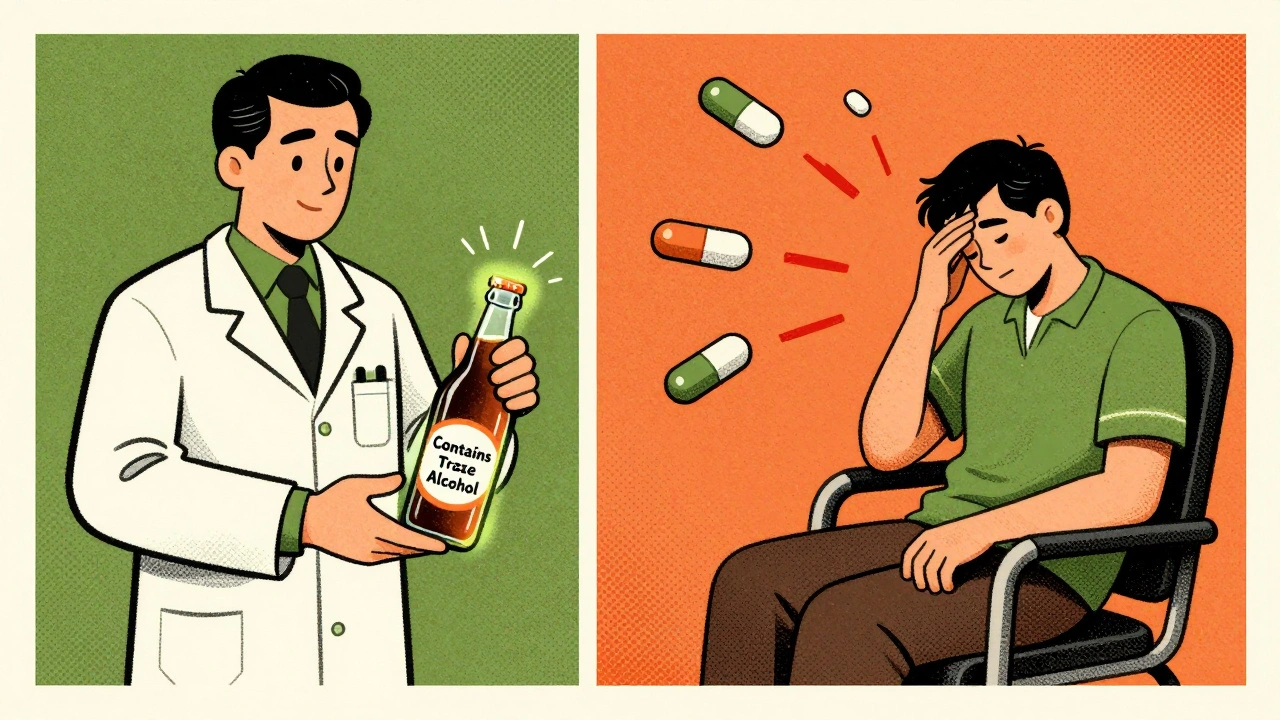
Plus, labels can be misleading. Only 63% of commercial bottles say “Contains Trace Alcohol,” even though the FDA now requires it. If you’re buying from a small local vendor or making it yourself, you’re flying blind.
What the Experts Say
Dr. Andrew Huberman from Stanford warns that even 0.5% ABV can boost the effects of CNS depressants like benzodiazepines. He says it’s not about getting drunk-it’s about how alcohol changes the way your brain and body respond to medication.
Dr. Deanna Minich, a functional medicine expert, points out that drinking one 12-ounce bottle of 0.5% ABV kombucha every day adds up to 1.75 standard drinks per week. That’s more than the recommended limit for people on certain medications.
On the other side, Dr. Darya Rose argues that 0.5% is no different than eating overripe fruit. But major medical groups-including the American Pharmacists Association-disagree. They list kombucha as a “hidden alcohol source” and warn it’s not safe to assume it’s harmless.
Real Stories, Real Risks
Reddit threads and medical forums are full of warnings:
- One user on r/kombucha described violent vomiting after drinking Health-Ade while on metronidazole for a UTI.
- A pharmacist on MedHelp shared that multiple patients reported dizziness and confusion after mixing kombucha with sertraline.
- On Diabetes Daily, someone had a 15-point blood sugar drop after kombucha and metformin-enough to send them to the ER.
These aren’t outliers. They’re symptoms of a widespread blind spot.
What You Should Do
If you take any medication that interacts with alcohol, here’s what to do:
- Check your meds. Look up your prescriptions on the FDA’s database or ask your pharmacist. If alcohol is listed as a warning, treat kombucha the same way.
- Assume homebrew is risky. Unless you’ve tested it with a calibrated alcoholmeter (like the HM Digital HA-520), don’t drink it while on medication.
- Read labels carefully. Look for “Contains Trace Alcohol.” If it’s not there, ask the manufacturer.
- Wait 48 hours. The Cleveland Clinic recommends avoiding kombucha for at least two days before and after taking alcohol-sensitive medications.
- Choose non-fermented alternatives. If you want probiotics without alcohol, try water kefir (with verified low alcohol) or plain yogurt.
Even if you’ve been drinking kombucha for years without issues, that doesn’t mean it’s safe with your current meds. Medications change. Your body changes. The kombucha batch changes.
The Bigger Picture
The kombucha market is booming-worth over $3 billion in 2023. But with growth comes responsibility. In January 2024, the FDA made it mandatory for all commercial kombucha to label alcohol content. Major brands like Health-Ade now use QR codes so you can scan and see the exact alcohol level for your bottle.
Still, awareness lags. A Johns Hopkins survey found 38% of adults over 50-who take four or more medications daily-drink kombucha without knowing the risks. Pharmacists aren’t always trained to ask about it either. Only 32% correctly identify kombucha as a potential alcohol source in a 2023 survey.
This isn’t about scaring people off kombucha. It’s about making sure people have the facts. If you’re healthy and not on meds, kombucha is probably fine. But if you’re managing a chronic condition, that little fizzy drink might not be worth the gamble.
Can I drink kombucha if I’m on antibiotics?
It depends on the antibiotic. Metronidazole and tinidazole can cause severe reactions-even with 0.5% alcohol. Other antibiotics like amoxicillin don’t interact with alcohol, so kombucha is usually safe. But if you’re unsure, wait until your course is done. Better safe than sorry.
Is 0.5% alcohol in kombucha really a problem?
For most people, no. But for those on medications like benzodiazepines, SSRIs, or diabetes drugs, even that small amount can amplify side effects. It’s not about intoxication-it’s about how alcohol affects your body’s chemistry. Think of it like mixing two medicines: even a little can change the outcome.
How can I test my homemade kombucha for alcohol?
You need a tool that measures alcohol directly, not just sugar. A digital alcoholmeter like the HM Digital HA-520 works well. It costs around $100 and gives readings accurate to ±0.1% ABV. Hydrometers alone won’t cut it-they can’t tell the difference between sugar and alcohol. It takes 3-5 batches to get consistent results, so start testing early.
Are all commercial kombuchas safe?
Most are, but not all. Some brands have been recalled in the past for exceeding 0.5% ABV. Always check for the “Contains Trace Alcohol” label. Brands that test every batch (like GT’s and Health-Ade) are your safest bet. Avoid small vendors without clear labeling or testing info.
What should I do if I accidentally drank kombucha with my medication?
If you’re on metronidazole, tinidazole, or nitrates and you feel flushed, nauseous, dizzy, or have a racing heart, stop drinking kombucha and call your doctor or poison control. For other meds, monitor for unusual drowsiness, low blood sugar, or mood changes. Don’t wait for symptoms to get worse.
Is there a kombucha brand with zero alcohol?
No. Fermentation naturally produces alcohol. Even if a brand claims “non-alcoholic,” it still contains trace amounts-usually under 0.5%. If you need zero alcohol, choose a different probiotic drink like water kefir (with verified low alcohol) or plain kefir, or eat fermented vegetables like sauerkraut.
Final Thought
Kombucha isn’t the enemy. But it’s not harmless either. If you’re taking medication that warns about alcohol, treat kombucha like a drink with alcohol-even if it’s just 0.5%. Your body doesn’t care if it came from a bottle or a jar in your kitchen. It reacts the same way. Ask your pharmacist. Read the label. Test your brew. Don’t guess.
James Kerr
December 2, 2025 AT 02:28Just drank some Health-Ade this morning and realized I’m on sertraline. Yikes. Glad I saw this.
Chloe Madison
December 2, 2025 AT 20:51As a pharmacist, I see this way too often. People think 'natural' means 'safe'-but kombucha isn't tea with bubbles. It's a controlled fermentation with unpredictable alcohol levels. If your med says 'avoid alcohol,' treat kombucha like a beer. No exceptions. Always check with your pharmacist. Your liver will thank you.
Katherine Gianelli
December 4, 2025 AT 19:39I used to brew my own kombucha every weekend-loved the flavor, thought it was 'healthy.' Then I started on metformin for prediabetes. One bottle and my blood sugar dropped so hard I had to call my mom to drive me to the ER. I didn’t know kombucha could do that. Now I stick to yogurt and sauerkraut. No more guessing games. If you’re on meds, just skip it. Seriously.
bobby chandra
December 5, 2025 AT 09:09Let’s be real-this isn’t about kombucha. It’s about how the wellness industry sells snake oil with glitter on it. 'Probiotic fizz' my ass. Fermentation = alcohol. Always. And if you’re on benzodiazepines or antibiotics, you’re playing Russian roulette with your nervous system. The fact that 43% of homebrews break the 0.5% limit? That’s not negligence-that’s negligence with a cult following. Stop romanticizing fermented tea. It’s not a superfood. It’s a latent trigger.
Archie singh
December 5, 2025 AT 12:10People who drink kombucha while on meds are either reckless or stupid. 0.5% isn't 'trace'-it's enough to amplify sedation, crash your blood sugar, or turn your heart into a jackhammer. You think you're being 'health-conscious'? You're just another walking side effect waiting to happen. And don't even get me started on homebrewers who think their kitchen is a lab. You're not a scientist. You're a liability.
Makenzie Keely
December 6, 2025 AT 02:26PLEASE-every single person reading this: if you’re on ANY medication that interacts with alcohol, STOP assuming kombucha is ‘safe’ because it’s ‘natural’ or ‘low-alcohol.’ The FDA requires labeling because people keep getting hospitalized. I’ve seen it: patients on metronidazole, drinking ‘organic kombucha,’ vomiting for hours, thinking it’s ‘just a bad reaction.’ It’s not. It’s the alcohol. And if you’re brewing it yourself? You’re not just risking your health-you’re risking your life. Test your batches. Or don’t drink it. Period.
Kidar Saleh
December 7, 2025 AT 09:34As someone who grew up in a family that brewed everything from ginger beer to sourdough, I get the appeal. But this isn’t about tradition-it’s about science. I had a cousin who ended up in ICU after mixing kombucha with tinidazole. He thought it was ‘just tea.’ He didn’t survive. If you’re on meds, don’t risk it. No amount of ‘probiotics’ is worth that. And if you’re a homebrewer? Get a hydrometer. Or stop pretending you know what’s in your bottle.
parth pandya
December 7, 2025 AT 21:55im from india and we have something called kanji its like kombucha but way older and we never had this problem but i think its because we drink it fresh and dont let it ferment too long. maybe we need more awareness here too
vinoth kumar
December 9, 2025 AT 18:36Love that this post exists. I’m on an SSRI and had no idea kombucha could mess with my mood swings. I’ve been drinking it daily for two years. Now I’m switching to water kefir-found a brand that tests every batch and lists the ABV. Small change, big difference. Thanks for the wake-up call.
Vincent Soldja
December 10, 2025 AT 03:16So what? People drink wine with meds all the time. This is overblown.
Francine Phillips
December 10, 2025 AT 19:36My pharmacist told me to avoid it. I didn’t listen. I drank one bottle after my antibiotics. Felt fine. So I kept drinking. Two weeks later, I passed out at work. Turns out the kombucha had 1.9% ABV. I didn’t know. I’m still mad at myself. Don’t be like me.