
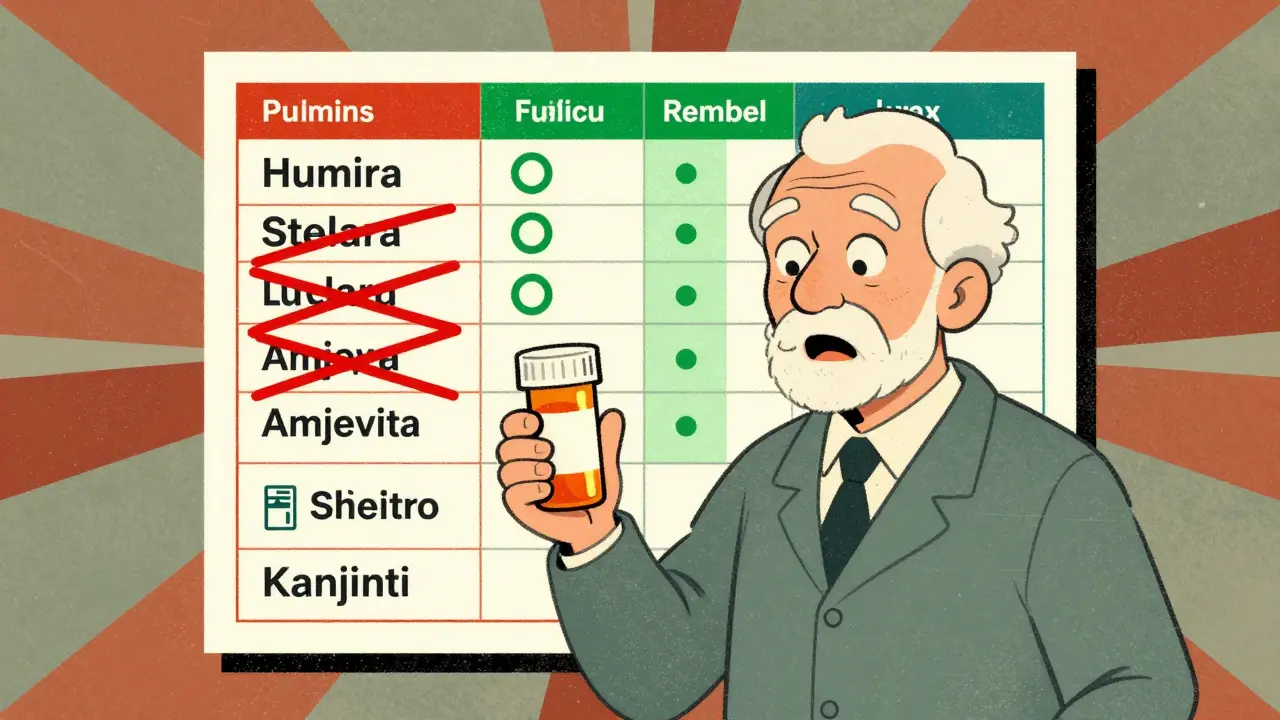
Every January, millions of people on Medicare Part D get a surprise: their medication suddenly costs more-or isn’t covered at all. It’s not a mistake. It’s a formulary update. These are changes made by your insurance plan or pharmacy benefit manager (PBM) that decide which drugs are covered, how much you pay, and sometimes, which drug you have to take instead. In 2025, these changes hit harder than ever before. The Inflation Reduction Act (IRA) of 2022 forced a major overhaul, and the effects are rolling out now. If you’re taking insulin, Humira, Stelara, or any other chronic condition drug, you need to understand what’s changing and how to protect yourself.
What Exactly Is a Formulary Update?
A formulary is just a list of drugs your insurance plan covers. It’s divided into tiers. Tier 1 is usually the cheapest-generic drugs with $1 to $10 copays. Tier 2 includes non-preferred generics and some brand-name drugs, costing around $47. Tier 3 is for non-preferred brands, averaging $113. And Tier 4? That’s specialty drugs-like cancer treatments or biologics-where you might pay 25% of the cost, or a flat $113, whichever is higher. Formulary updates happen every year. But in 2025, they’re not just routine tweaks. They’re a full system reset. Insurers are pushing harder to replace expensive brand-name drugs with generics and biosimilars. Why? Because the IRA capped out-of-pocket drug costs at $2,000 a year for Medicare Part D enrollees. That means insurers can no longer rely on high copays to control spending. Instead, they’re cutting costs by switching you to cheaper alternatives-even if you’ve been stable on your current drug for years.What’s Changing in 2025?
Three big things happened on January 1, 2025:- The coverage gap (also called the “donut hole”) is gone. You now pay 25% of your drug cost from the start until you hit the $2,000 out-of-pocket cap. No more sudden jumps in cost.
- Insurers are removing dozens of brand-name drugs from their formularies. CVS Caremark excluded 16 drugs in 2025, including Herzuma and Ogivri. They replaced them with biosimilars like Kanjinti and Trazimera.
- Generic and biosimilar substitution is now standard practice. Nearly 78% of standalone Part D plans now require you to try a generic or biosimilar before getting a brand-name drug.
Why Are Biosimilars Being Pushed So Hard?
Biosimilars aren’t just cheap copies. They’re FDA-approved versions of complex biologic drugs. They work the same way. The FDA’s updated guidance in May 2024 made it easier for insurers to cover them-even if they’re not labeled “interchangeable.” That’s a big deal. It means PBMs can switch you without your doctor’s approval, as long as the drug is on the formulary. In 2024, 17 new biosimilars were approved. That’s a 34% jump from the year before. Experts predict biosimilars could make up 45% of targeted therapies by 2027. That’s up from 28% in 2024. Insurers are betting big on this. And they’re not just cutting costs-they’re also preparing for the next wave: the Medicare Drug Price Negotiation Program (MDPNP).The 2026 Rule Change You Can’t Ignore
Starting January 1, 2026, all Part D plans must cover 10 specific drugs that the government negotiated down in price. These include Stelara (ustekinumab), Prolia (denosumab), and Xolair (omalizumab). And here’s the catch: if a biosimilar version of any of these drugs is available, your plan can force you to switch to it. That means if you’re on Stelara now, your plan might switch you to a biosimilar like Udenyca or Zirabev-even if you’ve been doing fine. You won’t have a choice unless you file an exception. This is the new reality. The government is forcing drug prices down. Insurers are responding by pushing cheaper alternatives. And you’re the one who has to navigate the shift.
How to Spot a Formulary Change
You won’t get a call. You won’t get a letter the day before. Insurers are required to give you 60 days’ notice before changing your drug’s tier or removing it entirely. But here’s the loophole: if a new generic is approved, they can change your drug with only 30 days’ notice. So what should you do?- Check your plan’s formulary every October and November. Most insurers post their updated lists online.
- Call your pharmacy. Ask: “Is my medication still on the formulary? Is there a generic or biosimilar now?”
- Don’t wait for a letter. If your prescription is suddenly denied at the counter, ask why. It’s probably a formulary change.
What If Your Drug Is Removed?
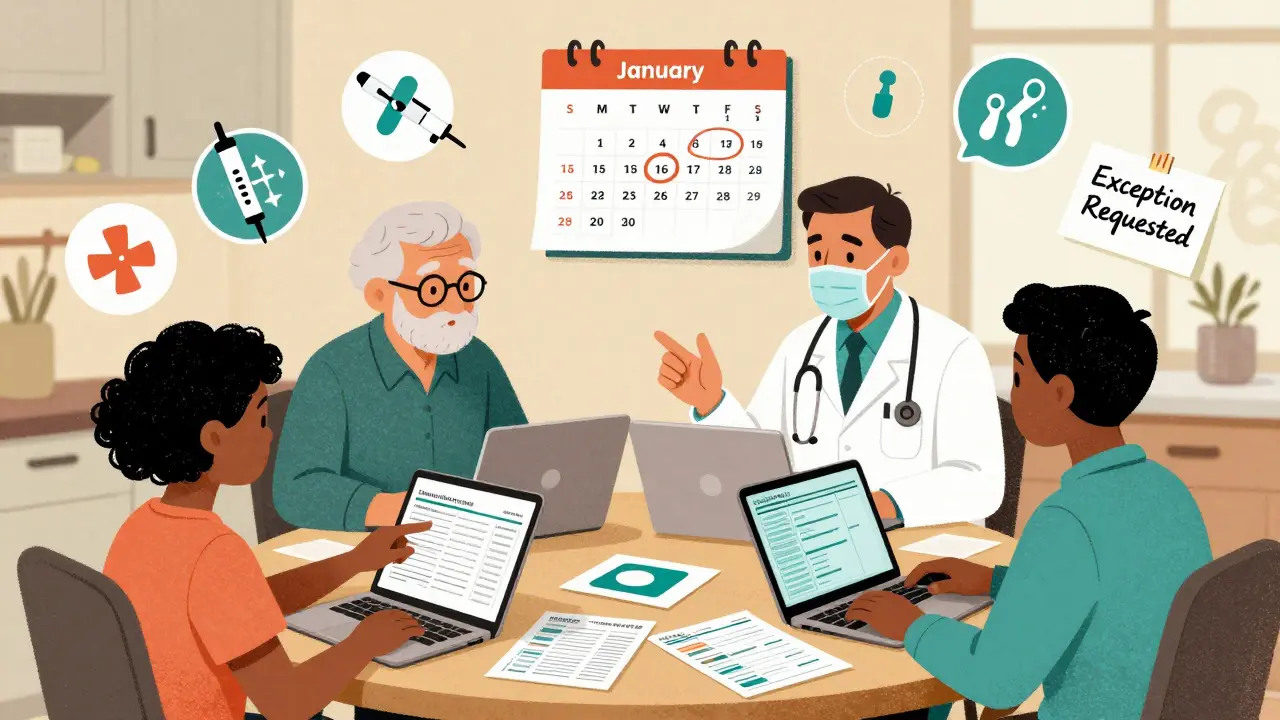
If your drug is no longer covered, you have two options: file an exception or switch. An exception is a formal request asking your plan to cover your drug anyway. You need your doctor to write a letter explaining why the generic won’t work for you. For example: “My patient has had severe allergic reactions to all biosimilar versions of Humira.” The approval rate for tiering exceptions (moving a drug to a lower tier) is 82%. But if your drug is completely removed? Only 47% of exceptions get approved. That’s a big difference. If you’re approved, you’ll get your drug-but only for a limited time. If you’re denied, you’ll have to switch. That’s why many people choose to switch proactively.How to Switch Safely
Switching from a brand-name drug to a generic or biosimilar sounds scary. But for most people, it’s safe-and cheaper. Here’s how to do it right:- Ask your pharmacist: “Is there a generic or biosimilar version of my drug?”
- Ask your doctor: “Have you seen good results with this alternative? Is it safe for my condition?”
- Check patient forums. Look for stories from others who made the switch. Sites like HealthUnlocked and Reddit’s r/Medicare have real experiences.
- Don’t switch cold turkey. Ask your doctor for a 30-day transitional supply if your plan doesn’t offer one.
Who’s Affected the Most?
People with chronic conditions are hit hardest. Diabetes, arthritis, asthma, and autoimmune diseases all rely on long-term meds. In 2024, 42% of Medicare beneficiaries worried about changes to their diabetes drugs. Insulin, metformin, and GLP-1 agonists are all being targeted. Seniors on fixed incomes are especially vulnerable. A $450 monthly savings on a biosimilar sounds great-but if you’re switched to a drug that doesn’t work, you could end up in the ER. That’s why clinical oversight matters. Dr. Karen Ignagni warned that over-aggressive switching could harm vulnerable patients. The key is balance. Biosimilars save money. But they’re not one-size-fits-all. Your doctor should be part of the decision-not just your insurance company.What’s Next? The Bigger Picture
The IRA didn’t just change formularies. It changed the whole business model of Medicare Part D. Insurers used to profit from high-cost brand drugs and rebates. Now, they’re forced to cut costs. That means more exclusions, more generics, more biosimilars. By 2026, 65% of plans will require generic substitution wherever possible. The government will negotiate prices for 20 drugs by 2029. And the FDA is expected to release new guidance on “highly similar” biosimilars in 2025-which could speed up adoption even more. This isn’t a temporary trend. It’s the new normal.What You Should Do Now
January 2026 is coming fast. Here’s your action plan:- Review your 2025 formulary. Do it now.
- Call your pharmacist. Ask about alternatives.
- Talk to your doctor. Don’t assume your drug is safe.
- Keep a list of your meds, doses, and why you take them.
- Know your rights. You can file an exception. You can ask for a transitional supply.
- Don’t wait for a letter. Act before January 1.
What is a formulary update?
A formulary update is when your insurance plan changes which drugs it covers, how much you pay for them, or whether you need prior approval to get them. These updates happen every year, but in 2025, they’re more aggressive due to the Inflation Reduction Act, which caps out-of-pocket drug costs at $2,000 and pushes plans to use generics and biosimilars.
Why are my insulin or arthritis drugs suddenly more expensive?
Your drug may have been moved to a higher tier on your plan’s formulary, or it may have been replaced with a biosimilar. For example, Humalog insulin was moved to a higher tier by UnitedHealthcare, raising copays from $35 to $113. This is common in 2025 as insurers shift away from expensive brand-name drugs to lower-cost alternatives to meet new federal cost rules.
Can I fight a formulary change?
Yes. You can file an exception request with your insurer. Your doctor must provide a letter explaining why the generic or biosimilar won’t work for you. Approval rates are high (82%) for tier changes, but only 47% for completely excluded drugs. You can also request a 30-day transitional supply if your plan offers it.
What’s the difference between a generic and a biosimilar?
Generics are exact copies of simple chemical drugs, like metformin. Biosimilars are highly similar versions of complex biologic drugs, like Humira or Stelara. They’re not identical, but they work the same way and are FDA-approved. Biosimilars are cheaper and are now being pushed by insurers as the preferred option.
When will I be forced to switch to a biosimilar?
Starting January 1, 2026, all Medicare Part D plans must cover 10 government-negotiated drugs, including Stelara and Prolia. If a biosimilar version exists, your plan can require you to switch. You’ll be notified in advance, but you may not have a choice unless you get an exception approved by your doctor.
How do I check if my drug is still covered?
Log into your plan’s website or call your pharmacy. Most insurers publish their updated formularies between October and December. You can also ask your pharmacist directly: “Is my medication still on the formulary?” Don’t wait for a letter-check early.
Are biosimilars safe?
Yes. The FDA requires biosimilars to be as safe and effective as the original biologic drug. Many patients report no difference in results after switching from Humira to Amjevita. However, individual reactions can vary. Always consult your doctor before switching, especially if you have a complex condition.

Amelia Williams
January 25, 2026 AT 04:32Just got my formulary notice today and my Humira got swapped for Amjevita. I was terrified, but after checking Reddit and talking to my rheumatologist, I switched last week. No flare-ups, no weird side effects, and I’m saving $420 a month. If you’re scared to switch, just talk to someone who’s been there. It’s not as scary as they make it sound.
Shelby Marcel
January 26, 2026 AT 17:02i just got denied my stelara and now they want me to take udenyca?? like wtf i didnt even know biosimilars were a thing lmao
Jenna Allison
January 27, 2026 AT 19:34Shelby, you’re not alone. The FDA’s 2024 guidance on biosimilars made it way easier for PBMs to switch patients without doctor approval. You need to file an exception ASAP. Bring your doctor’s note that says you’ve had adverse reactions to prior biosimilars. If you’ve been stable on Stelara for 3+ years, that’s your strongest argument.
Juan Reibelo
January 28, 2026 AT 13:38Wait-so now they can switch me to a biosimilar without my doctor’s say-so? That’s not healthcare, that’s corporate roulette. I’ve been on Humira since 2018. My skin’s clear. My joints don’t scream. Now some algorithm in a Minnesota office decides I’m “cost-efficient”? I’m not a spreadsheet. I’m a person who’s had three hospitalizations because some generic didn’t work. And now? They’re pushing this like it’s a upgrade. It’s not. It’s a gamble with my life.
Viola Li
January 30, 2026 AT 11:14Wow, so the government’s price caps are just shifting the pain from patients to PBMs? That’s not reform-that’s shell game economics. You think $2,000 out-of-pocket caps are helping? Nah. They’re just making insurers more aggressive about switching. The real villain here isn’t the PBM-it’s the system that lets corporations decide who gets what medicine. Wake up.
Patrick Gornik
January 31, 2026 AT 10:41Let’s cut through the noise. The IRA didn’t create this-it exposed it. For two decades, PBMs and pharma played a rigged game: inflate list prices, rebate back to insurers, patients pay the difference. Now that the rebate game’s broken, they’re pivoting to biosimilars. It’s not malice-it’s adaptation. But here’s the real question: why did we let a system exist where a $70,000 drug could be sold for $1,200 in Canada? The problem isn’t the switch-it’s that we ever tolerated the original price tag. Biosimilars aren’t the enemy. Complacency is.
Kat Peterson
February 1, 2026 AT 05:30OMG I JUST GOT A LETTER AND I’M CRYING 😭😭😭 THEY TOOK AWAY MY STELARA AND GAVE ME A “SIMILAR” THAT’S NOT EVEN THE SAME BRAND 😭 I’M NOT A LAB RAT 🤬 I’VE BEEN ON THIS DRUG FOR 8 YEARS AND NOW THEY WANT ME TO TRY A “CHEAPER” VERSION?? I’M SENDING THEM A LETTER WITH A CANDLE 🕯️ AND A PHOTO OF MY DOG WHO I’M NOT LETTING DIE BECAUSE OF INSURANCE
Luke Davidson
February 1, 2026 AT 15:51Hey Kat, I get it. It’s scary. But I switched from Humira to Amjevita last year. Same results. Same quality of life. My co-pay went from $130 to $15. I cried too-until I realized I could finally afford to see my kid’s soccer games without panic. You’re not alone. Reach out to r/Medicare. People are sharing their stories. And yeah, file that exception. But don’t give up. Your voice matters.
venkatesh karumanchi
February 2, 2026 AT 06:33Here in India, we’ve been using biosimilars for over a decade. They’re cheaper, yes-but also rigorously tested. I’ve seen patients on biosimilar infliximab for 5 years with zero issues. The fear comes from lack of info, not science. Talk to your doctor. Ask for data. Don’t let panic make the decision. You’re not a number. But your health can still be protected-with the right info.
blackbelt security
February 3, 2026 AT 23:07Check your plan’s website every October. That’s your firewall. If you wait for a letter, you’re already behind. I’ve been helping seniors in my neighborhood navigate this since January. One woman almost skipped her insulin dose because she didn’t know her formulary changed. Don’t be her. Be proactive. Write it down. Call your pharmacy. Save the number.
Sawyer Vitela
February 5, 2026 AT 18:2182% exception approval rate? That’s a lie. That’s for tier changes. For complete removals? 47%. And 38% of approved exceptions take 10-14 days. That’s two weeks without meds. You think that’s acceptable? It’s not. This is a systemic failure disguised as cost control.
Shanta Blank
February 5, 2026 AT 19:55They’re literally playing Russian roulette with people’s lives. One woman in my support group had a Crohn’s flare after switching to a biosimilar-ended up in the ICU. And now? The insurer says, “Well, you should’ve filed an exception.” But she didn’t know until her prescription got denied at the counter. This isn’t healthcare. It’s corporate cruelty wrapped in a PowerPoint.
Tiffany Wagner
February 7, 2026 AT 08:32Thanks for sharing all this. I just found out my insulin was moved to tier 3. I’m calling my doctor tomorrow. I didn’t know I could ask for a 30-day supply. I’m gonna do that. And I’ll check my plan’s site this weekend. I’m scared but I’m not giving up.