
Statin Type Decision Helper
Your Health Profile
Quick Reference
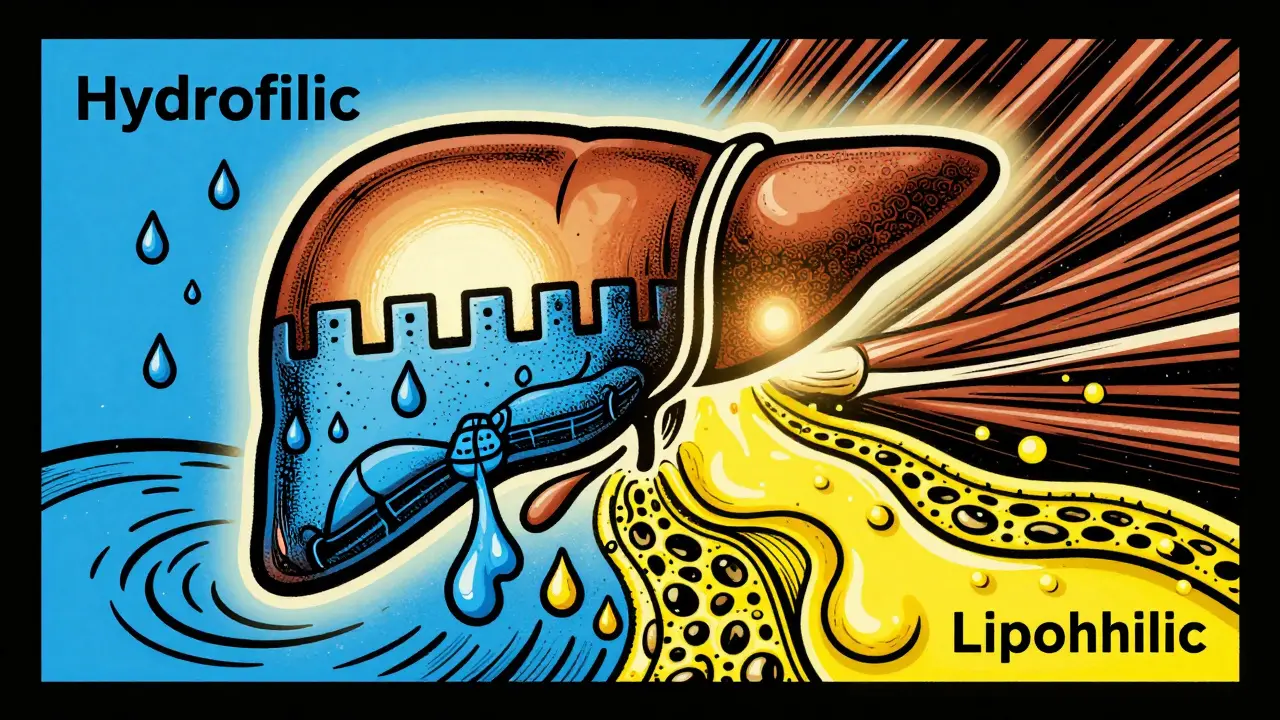
Lipophilic Statins
Atorvastatin SimvastatinFat-soluble, broader tissue penetration, CYP3A4 metabolism
Hydrophilic Statins
Pravastatin RosuvastatinWater-soluble, liver-targeted, minimal CYP involvement
For decades, doctors and pharmacists have relied on a simple rule of thumb when prescribing cholesterol-lowering drugs: if you are worried about muscle pain, choose a hydrophilic statin a water-soluble cholesterol medication that stays primarily in the liver. The logic seemed sound. Lipophilic statins fat-soluble cholesterol medications that can penetrate various body tissues including skeletal muscle, being fat-loving, were thought to seep into muscles more easily, causing damage. Hydrophilic ones, being water-loving, were believed to stay safely tucked away in the liver.
But here is the twist: recent large-scale studies suggest this theory might be outdated. In fact, some hydrophilic statins may carry higher risks for certain side effects than their lipophilic counterparts. With over 39 million Americans taking statins annually, understanding whether your specific pill type matters could change how you manage your heart health and quality of life.
The Chemistry Behind the Classification
To understand why these two groups behave differently, we need to look at basic chemistry. The classification comes down to solubility-how well a substance dissolves in fat versus water.
Lipophilic statins include popular drugs like atorvastatin a widely prescribed high-intensity statin brand name Lipitor (Lipitor), simvastatin a moderate-intensity statin brand name Zocor (Zocor), and lovastatin an early statin medication brand name Mevacor (Mevacor). Because they are fat-soluble, they passively diffuse through cell membranes. This means they don't need special transport systems to enter cells; they just slip right in. Consequently, they reach not only the liver but also skeletal muscle, the brain, and other tissues.
Hydrophilic statins, on the other hand, include pravastatin a mild-to-moderate intensity water-soluble statin brand name Pravachol (Pravachol) and rosuvastatin a potent water-soluble statin brand name Crestor (Crestor). These require active transport via proteins called organic anion-transporting polypeptides (OATPs) to enter liver cells. This makes them more "hepatoselective," meaning they target the liver more precisely.
In theory, this selectivity should protect your muscles. However, theory does not always match real-world outcomes.
The Muscle Pain Myth: What Data Actually Shows
Muscle pain, or myalgia, is the most common complaint among statin users. For years, clinicians blamed lipophilicity. But let's look at the numbers from recent major studies.
A massive 2021 observational study published in the Journal of General Internal Medicine analyzed data from 15 million patients in the UK. The results challenged the conventional wisdom:
- The relative risk of muscle effects for pravastatin (hydrophilic) compared to simvastatin (lipophilic) was 0.86, suggesting pravastatin was actually safer for muscles.
- However, the relative risk for rosuvastatin (hydrophilic) compared to atorvastatin (lipophilic) was 1.17, indicating rosuvastatin had a *higher* risk of muscle issues.
- Simvastatin carried a 1.33 times higher risk compared to atorvastatin.
This creates a confusing picture. It is not simply "water-soluble equals safe." Rosuvastatin, despite being hydrophilic, is a very potent drug. Its strength may contribute to side effects regardless of its solubility profile. Meanwhile, patient forums often reflect the older belief. On Reddit, self-reported data showed 78% of users experienced muscle pain with lipophilic statins versus 42% with hydrophilic ones. While this anecdotal evidence feels intuitive, it lacks the controlled rigor of clinical trials and may suffer from selection bias-people who hate their meds are more likely to post about them.
| Statin Name | Type | Potency | Primary Metabolism | Key Characteristic |
|---|---|---|---|---|
| Atorvastatin (Lipitor) | Lipophilic | High | CYP3A4 | Widely used, strong LDL reduction |
| Simvastatin (Zocor) | Lipophilic | Moderate | CYP3A4 | Higher interaction risk |
| Rosuvastatin (Crestor) | Hydrophilic | Very High | Minimal CYP | Most potent, less CNS penetration |
| Pravastatin (Pravachol) | Hydrophilic | Low/Moderate | Minimal CYP | Fewest drug interactions |
Beyond Muscles: Cognitive and Hearing Risks
If muscle pain isn't the only factor, what else should you consider? Two emerging areas of concern are cognitive function and hearing loss.
Cognitive Effects: Lipophilic statins can cross the blood-brain barrier because they dissolve in the fatty lining of brain cells. Some patients report "brain fog" or memory issues. Hydrophilic statins generally do not cross this barrier as easily. If you are sensitive to neurological side effects, a hydrophilic option like pravastatin might be preferable simply because it stays out of the central nervous system.
Hearing Loss: A surprising 2023 study in Nature Scientific Reports found gender-specific differences in hearing protection. Hydrophilic statins reduced the risk of hearing loss in men (Hazard Ratio 0.40) but paradoxically increased the risk in women (Hazard Ratio 1.81). This highlights that one size does not fit all. Your biology plays a huge role in how you react to these chemicals.
Drug Interactions: The Hidden Danger
Often overlooked is how statins interact with other medications. This is where the chemical structure matters significantly.
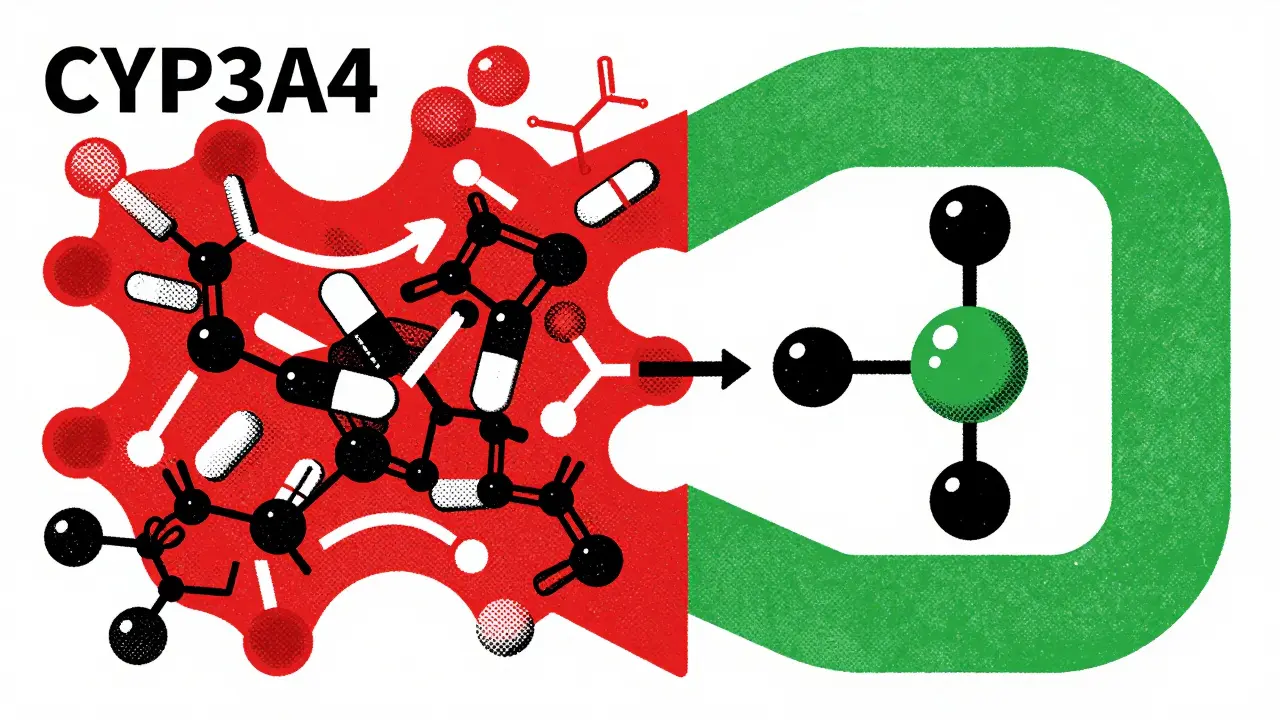
Lipophilic statins like simvastatin and atorvastatin are metabolized by the liver enzyme CYP3A4. This enzyme handles many other drugs, including antibiotics, antifungals, and heart rhythm medications like amiodarone. When multiple drugs compete for this enzyme, levels of the statin can spike in your blood, leading to toxicity.
Hydrophilic statins, particularly pravastatin, bypass much of this CYP metabolism. Pravastatin has less than 10% CYP involvement, compared to 70% for simvastatin. If you take multiple daily medications, a hydrophilic statin is often the safer choice to avoid dangerous interactions, even if the muscle pain theory is flawed.
Who Should Choose Which Type?
Selecting the right statin is not just about solubility. It involves your overall health profile. Here is a practical guide based on current clinical guidelines:
- Choose a Hydrophilic Statin (Pravastatin/Rosuvastatin) if:
- You are taking many other medications (polypharmacy).
- You have kidney impairment (eGFR <60 mL/min/1.73m²); hydrophilic statins showed a 31% greater reduction in major adverse cardiovascular events in this group.
- You experience cognitive side effects with other drugs.
- Consider a Lipophilic Statin (Atorvastatin/Simvastatin) if:
- You need aggressive LDL lowering and tolerate them well.
- You have no significant drug interactions.
- Cost is a primary factor (generic atorvastatin is extremely affordable).
Also, consider your demographics. Women, people over 65, and those with a low body mass index (<25 kg/m²) are statistically more prone to statin-associated muscle symptoms, regardless of the type. If you fall into these categories, starting with a lower dose or a hydrophilic option like pravastatin is a prudent strategy.

Managing Side Effects: Practical Steps
If you are already on a statin and experiencing side effects, don't just quit. Stopping abruptly increases your heart attack and stroke risk. Instead, try these evidence-based adjustments:
- Switch Types: If you are on a lipophilic statin and have muscle pain, ask your doctor about switching to pravastatin or rosuvastatin. About 57% of patients report improvement after such a switch.
- Intermittent Dosing: Taking your statin every other day can reduce side effects while maintaining some benefit. This works best for statins with longer half-lives like atorvastatin and rosuvastatin.
- Coenzyme Q10 Supplementation: Statins block the production of CoQ10, which muscles need for energy. Supplementing with 200mg daily has shown promise in reducing muscle pain for some patients.
- Check Creatine Kinase (CK): If you have severe pain, weakness, or dark urine, see a doctor immediately. They will check your CK levels. Note that mild CK elevation without symptoms rarely requires stopping the drug.
Newer alternatives like bempedoic acid (Nexletol) act upstream of statins and show minimal muscle penetration, offering hope for those who cannot tolerate any statin type.
Final Thoughts on Statin Selection
The distinction between hydrophilic and lipophilic statins is real, but its impact on side effects is more nuanced than old textbooks suggest. While lipophilic statins do penetrate tissues more broadly, hydrophilic statins are not immune to causing muscle pain, especially at high doses. The decision should hinge on your individual risk factors, other medications, and personal tolerance rather than a blanket rule about solubility.
Always discuss changes with your healthcare provider. Your goal is cardiovascular protection, and finding the right balance between efficacy and tolerability is key to long-term success.
Which statin causes the least muscle pain?
There is no single answer that applies to everyone. However, pravastatin (hydrophilic) is often associated with fewer muscle complaints due to its lower potency and lack of CYP metabolism. Conversely, some patients find that switching from lipophilic statins like simvastatin to hydrophilic ones reduces pain, though rosuvastatin (also hydrophilic) can still cause issues due to its high potency. Individual trial and error under medical supervision is often necessary.
Can I take hydrophilic and lipophilic statins together?
Generally, no. Combining different statins increases the risk of severe side effects without providing significant additional benefit. Doctors typically combine a statin with non-statin therapies like ezetimibe or PCSK9 inhibitors if further LDL reduction is needed.
Do hydrophilic statins work as well as lipophilic ones?
Yes, but potency varies. Rosuvastatin is a hydrophilic statin that is highly potent, often achieving greater LDL reduction than many lipophilic options. Pravastatin is less potent. At equivalent intensities, both types provide similar cardiovascular protection. The choice depends on achieving your target LDL level with the fewest side effects.
Why do lipophilic statins have more drug interactions?
Lipophilic statins like simvastatin and atorvastatin are heavily metabolized by the CYP3A4 enzyme in the liver. Many other common drugs use this same pathway. When they compete, it can lead to dangerously high levels of the statin in your blood. Hydrophilic statins like pravastatin bypass this enzyme, making them safer for patients on multiple medications.
Is it safe to stop taking statins if I have muscle pain?
You should never stop taking prescribed statins without consulting your doctor. Sudden cessation increases your risk of heart attack and stroke. Instead, discuss your symptoms. Your doctor may adjust the dose, switch you to a different statin type, or add supplements like CoQ10 to manage the pain while maintaining heart protection.

Justina Ingram
May 18, 2026 AT 14:44omg this is so confusing lol :/ i just take the pill and hope for the best honestly
amit kumar
May 20, 2026 AT 06:05Great read! 🌟 I've been on Lipitor for years and never had issues, but my cousin switched to Crestor because of muscle pain. It's wild how different our bodies react. Thanks for breaking down the chemistry part, it actually makes sense now! 💊✨
Lori Wildrick
May 21, 2026 AT 11:52I appreciate this detailed breakdown. It’s really helpful to understand that it’s not just about water vs fat solubility but also potency and drug interactions. I’m sharing this with my mom who’s been hesitant to switch from her current medication due to fear of side effects.
Emma Olliff
May 22, 2026 AT 06:30The average person cannot possibly grasp the nuance here. You are simplifying complex pharmacokinetics into a Reddit digestible soundbite. It is insulting to assume laypeople can make these decisions based on 'internet advice'. The CYP3A4 pathway is not a toy. Stop spreading misinformation by implying that hydrophilic equals safe. It is reductive and dangerous.
Diana Wiechecka
May 23, 2026 AT 06:35Interesting point about the hearing loss study 👂 I didn't know gender played such a big role there!
Kathryn Byrd
May 24, 2026 AT 16:58I have always wondered why some people complain about brain fog while others don't. The blood-brain barrier explanation clarifies a lot. I prefer pravastatin myself as it seems gentler.
Tanya KLIMCHUK Klimchuk
May 26, 2026 AT 15:33Listen up! If you are taking simvastatin and drinking grapefruit juice or taking antibiotics, you are playing Russian roulette with your liver enzymes. Switch to pravastatin if you are on polypharmacy. Do not ignore the interaction risks just because you want to save money on generics. Your heart health is worth the effort to check your meds list.
Anthony Red
May 27, 2026 AT 04:39Hey everyone, cool discussion here. I'm just a regular guy trying to keep my cholesterol down. I started on atorvastatin and felt fine, but then I got some muscle aches after starting a new antibiotic. My doc switched me to rosuvastatin and boom, no more pain. Good to know why that worked!
Javier Arauz
May 28, 2026 AT 12:05This is typical American healthcare confusion. We spend billions on drugs and still don't know which one works best for whom. The system is broken. Just give us clear answers instead of all this 'it depends' nonsense. Why do we need to be chemists to take a pill?
Kris Wong
May 30, 2026 AT 05:27Big Pharma wants you confused 😈 They classify them as hydrophilic/lipophilic to sell you both. Notice how they push the most expensive ones? Rosuvastatin is high potency because they want you dependent. The 'side effects' are often manufactured to justify switching to newer, untested compounds. Wake up people! 🚫💊
Danny S
June 1, 2026 AT 01:09The data presented here is likely skewed by industry funding. :P The UK study mentioned has methodological flaws that are ignored by mainstream media. You cannot trust observational studies for causality. The real agenda is to keep prescribing statins regardless of individual biochemistry. Question everything.
Jeremiah Cassandra
June 1, 2026 AT 03:32Oh, look at us, debating solubility like we're in organic chemistry class again. 🧪 Spoiler alert: your doctor probably picked the statin based on what's cheapest for insurance, not because they analyzed your OATP transporters. But sure, let's pretend we have control over our molecular destiny. 😂
charles robert
June 1, 2026 AT 09:54The essence of the statin dilemma lies in the duality of man himself. We seek to heal yet we poison ourselves with lipids. Is the muscle pain merely a physical symptom or a manifestation of our spiritual decay? The hydrophilic path offers a clean slate, a return to purity, while the lipophilic drags us into the murky depths of cellular chaos. 🌑💊
Warren Brewer
June 1, 2026 AT 23:32I think the main thing is just to talk to your doctor. If you hurt, tell them. Don't stop taking it on your own though. That's bad for your heart. Simple as that.
Mark Ronson
June 2, 2026 AT 10:22Excellent summary of the clinical guidelines. As a pharmacist, I see many patients struggling with this exact decision. The key takeaway is indeed the CYP3A4 interaction profile for those on multiple meds. Pravastatin is often the unsung hero here due to its safety profile regarding interactions. Great work highlighting the CoQ10 supplementation angle too, though evidence is mixed, it helps some patients feel better.