Imagine the power grid goes down in your area for three days. The heat is rising, and you realize your insulin has been sitting in a warm kitchen cabinet since before the storm hit. Or perhaps a hurricane has washed out the roads to the nearest pharmacy, leaving you with a bottle of antibiotics that expired six months ago. These are not hypothetical scenarios for many people living in disaster-prone zones. They are urgent, high-stakes decisions that determine health outcomes.
Talking about expired medication use during crises requires moving past the simple rule of "throw it away." While routine safety suggests discarding anything past its date, emergency medicine operates on risk-benefit analysis. When the alternative is no treatment at all, an expired pill might be the lesser evil. However, this conversation is nuanced. Not all drugs degrade the same way, and some become dangerous rather than just ineffective. Understanding the science behind shelf life helps you make smarter choices when professional help isn't immediately available.
Understanding Expiration Dates and Stability Data
To have an informed discussion about using old meds, you first need to understand what that date actually means. The U.S. Food and Drug Administration (FDA) established expiration dating requirements in 1979. This date represents the final day a manufacturer guarantees the medication maintains 100% of its labeled potency under specific storage conditions. It is not necessarily the moment the drug becomes toxic or useless.
The most compelling evidence comes from the Shelf Life Extension Program (SLEP), a joint initiative between the Department of Defense and the FDA running since 1985. SLEP tests military stockpiles of sealed medications. Their data shows that 88% of 122 drug products maintained stability well beyond their labeled expiration dates when stored in ideal conditions. For example, solid tablets often retain 90% potency for one to five years after expiration if kept dry and cool.
However, there is a catch. Military storage is controlled. Your home environment is not. During disasters, temperatures can spike above 86°F (30°C), and humidity can soar. Research funded by the National Institutes of Health (NIH) indicates that exposure to these high temperatures for just 48 hours can accelerate chemical breakdown by 15-25%. If you are discussing expired meds with a family member or neighbor, start by asking: "Where was this stored?" A pill in a climate-controlled basement is different from one left in a hot car trunk.
Critical vs. Non-Critical Medications: The Risk Matrix
Not all medications carry the same risk when they expire. To navigate this, experts categorize drugs based on how much their degradation affects patient safety. The American Pharmacists Association (APhA) and the National Academy of Medicine provide frameworks for this distinction.
| Category | Examples | Degradation Pattern | Risk Level |
|---|---|---|---|
| Critical / Life-Sustaining | Insulin, Epinephrine, Nitroglycerin | Insulin loses ~10% potency/month; Epinephrine degrades 2-4%/month. | High. Unacceptable risk for acute emergencies. |
| Essential Non-Critical | Antibiotics (Amoxicillin), Blood Pressure meds | Amoxicillin retains 80% efficacy up to 1 year post-expiration. | Moderate. May require dose adjustment. |
| Non-Essential / Symptomatic | Acetaminophen, Ibuprofen, Aspirin | Acetaminophen retains 95% potency at 4 years post-expiration. | Low. Generally safe for pain relief. |
Critical medications like insulin and epinephrine auto-injectors are volatile. A 2021 stability report from Novo Nordisk showed insulin could lose 40% of its potency within six months of expiration. Using expired insulin during a diabetes crisis can lead to undetected hyperglycemia because the dose seems correct but isn't strong enough. Similarly, expired nitroglycerin sublingual tablets lose 50% of their potency within three months of opening the bottle. In a heart attack scenario, partial potency can be fatal.
In contrast, over-the-counter analgesics are more forgiving. A 2019 study from the University of Utah found that acetaminophen retained 95% of its potency even four years past expiration. If you are discussing pain management during a shortage, these older pills are likely still effective. However, aspirin is different. It hydrolyzes into salicylic acid at a rate of about 10% per year, which can cause gastric irritation. So, while it might still reduce pain, it could upset your stomach.
Environmental Factors and Physical Inspection
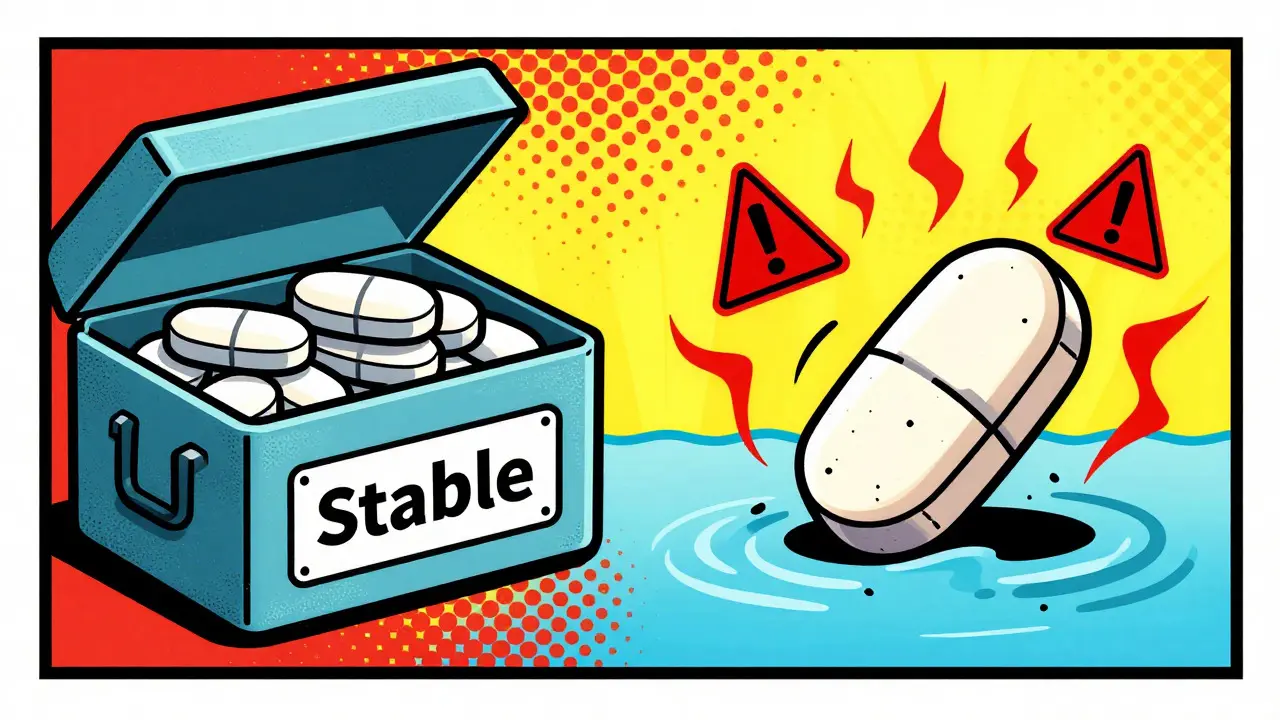
During a disaster, the biggest enemy of medication stability is often the environment, not just time. Floodwaters, extreme heat, and prolonged darkness alter drug chemistry rapidly. The FDA’s 2022 disaster response data revealed that medications exposed to floodwater for just 24 hours show bacterial contamination in 92% of cases. Even if the drug itself hasn't degraded chemically, the water introduces pathogens.
If you are evaluating a stash of old meds, perform a physical inspection first. Look for:
- Discoloration or spots on tablets.
- Crumbled texture or sticking together.
- Changes in liquid clarity (cloudiness or separation).
- An unusual odor.
If any of these signs are present, discard the medication. The United States Pharmacopeia (USP) notes that physical changes indicate degradation in 73% of cases. Furthermore, if the medication was exposed to temperatures above 86°F (30°C) for more than 48 hours, assume accelerated breakdown. In discussions with others, emphasize that "expired" is less important than "damaged." A two-year-old pill in a cool, dry box is safer than a fresh pill soaked in floodwater.
Specific Drug Classes and Degradation Risks
Some medications pose unique risks when they age. One notorious example is tetracycline. The Institute for Safe Medication Practices (ISMP) warns that expired tetracycline can form toxic degradation products that cause Fanconi syndrome, a rare kidney disorder. There have been 17 documented cases in medical literature since 2000. If you find old tetracycline in your cabinet, throw it out. It is not worth the risk.
Antibiotics present a mixed bag. The FDA’s SLEP data suggests amoxicillin maintains 80% efficacy up to one year post-expiration. However, a 2022 study in *Clinical Infectious Diseases* showed that expired ciprofloxacin maintained only 42% efficacy against certain bacteria like Pseudomonas after two years. This variability means that using expired antibiotics for serious infections is risky. You might treat the infection partially, leading to antibiotic resistance. During Hurricane Ida, researchers documented cases where survivors used expired albuterol for asthma attacks. While it provided 50-70% symptom relief within one year of expiration, it was not a guaranteed fix for severe bronchospasm.
Dr. Sandra Kweder, Deputy Director of the FDA's Center for Drug Evaluation and Research, stated in a September 2023 webinar: "In life-threatening situations with no alternatives, using certain expired medications may be preferable to receiving no treatment at all, but this should be a last-resort decision made with medical guidance when possible." This quote encapsulates the core philosophy: use expired meds only when the benefit of treating outweighs the risk of reduced potency.
Practical Steps for Emergency Decision-Making
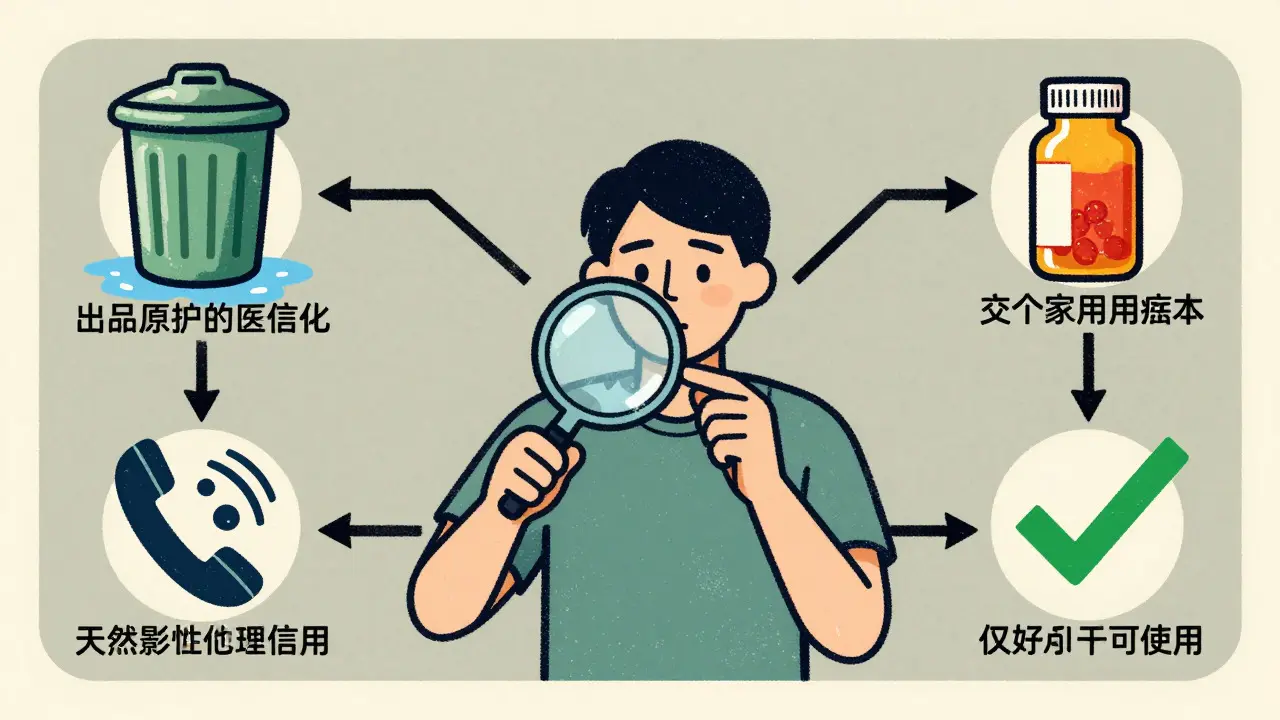
When disaster strikes, panic sets in. Having a clear protocol helps. The FDA’s 2023 "Safe Drug Use After Natural Disasters" guidelines suggest a five-step assessment process. You can share this checklist with your household or community group.
- Verify Physical Condition: Check for color changes, crumbling, or moisture damage. If it looks wrong, toss it.
- Confirm Storage History: Was it exposed to heat (>86°F/30°C) for >48 hours or moisture for >24 hours? If yes, discard it.
- Determine Criticality: Is this a life-sustaining drug (insulin, heart meds) or symptomatic relief (painkillers)? Critical drugs have lower tolerance for expiration.
- Calculate Timeframe: How long past expiration is it? Solid oral meds within 1-2 years are generally safer than liquids or injectables.
- Consult Telehealth: If cell service allows, contact a pharmacist or doctor. In 2022, only 38% of rural disaster zones had reliable access, but it remains the best option.
Additionally, know your local laws. Pharmacists in 48 states can legally provide 72-hour emergency medication supplies without physician approval during declared emergencies. Under the 2022 PREP Act amendments, pharmacists have expanded authority during federally declared disasters. If you are trapped, calling a local pharmacy chain might yield better results than relying on your own expired stockpile.
Preparing for Future Shortages
Discussion about expired medication is also a call to action for better preparation. The FDA tracked 297 active drug shortages as of late 2023, with nearly half involving critical care medications. Relying on a single month's supply is risky. Experts recommend maintaining a rotation system. Buy medications close to their expiration date if possible, or rotate your stock every six months. Store them in a cool, dark, dry place-ideally in airtight containers with desiccant packs to control humidity.
Future developments aim to make this easier. The NIH awarded a $4.7 million grant in 2023 for "Rapid Stability Testing in Disaster Settings," developing field-deployable spectrometry tools that could assess medication potency in minutes. Until then, knowledge is your best tool. By understanding which drugs hold up and which fall apart, you turn a scary situation into a manageable calculation.
Is it safe to take expired ibuprofen?
Generally, yes. Studies show that solid dosage forms like ibuprofen tablets retain significant potency (often over 90%) for several years past their expiration date if stored properly in a cool, dry place. They are considered low-risk for emergency use compared to critical medications like insulin.
What happens if I take expired insulin?
Expired insulin loses potency over time, approximately 10% per month after expiration at room temperature. Taking it may result in inadequate blood sugar control, leading to hyperglycemia. Because the effects are subtle, users might think they are managing their condition when they are not. It is considered high-risk for emergency use.
Can expired antibiotics cause harm?
Most expired antibiotics simply become less effective, which can lead to incomplete treatment and antibiotic resistance. However, specific antibiotics like tetracycline can break down into toxic compounds that cause kidney damage (Fanconi syndrome). Always check the specific drug type before considering use.
How do I store medications to extend their shelf life?
Store medications in a cool, dark, and dry place. Avoid bathrooms and kitchens due to humidity and temperature fluctuations. Use airtight containers with desiccant packets to absorb moisture. Keep original packaging to protect against light. Ideal storage is below 77°F (25°C) with relative humidity under 60%.
Are liquid medications safer to use when expired?
No, liquid medications are generally less stable than solids. Liquid antibiotics, for instance, can lose 30-50% of their potency within six months of expiration. Liquids are more susceptible to bacterial growth and chemical breakdown, making them higher risk for expired use.