
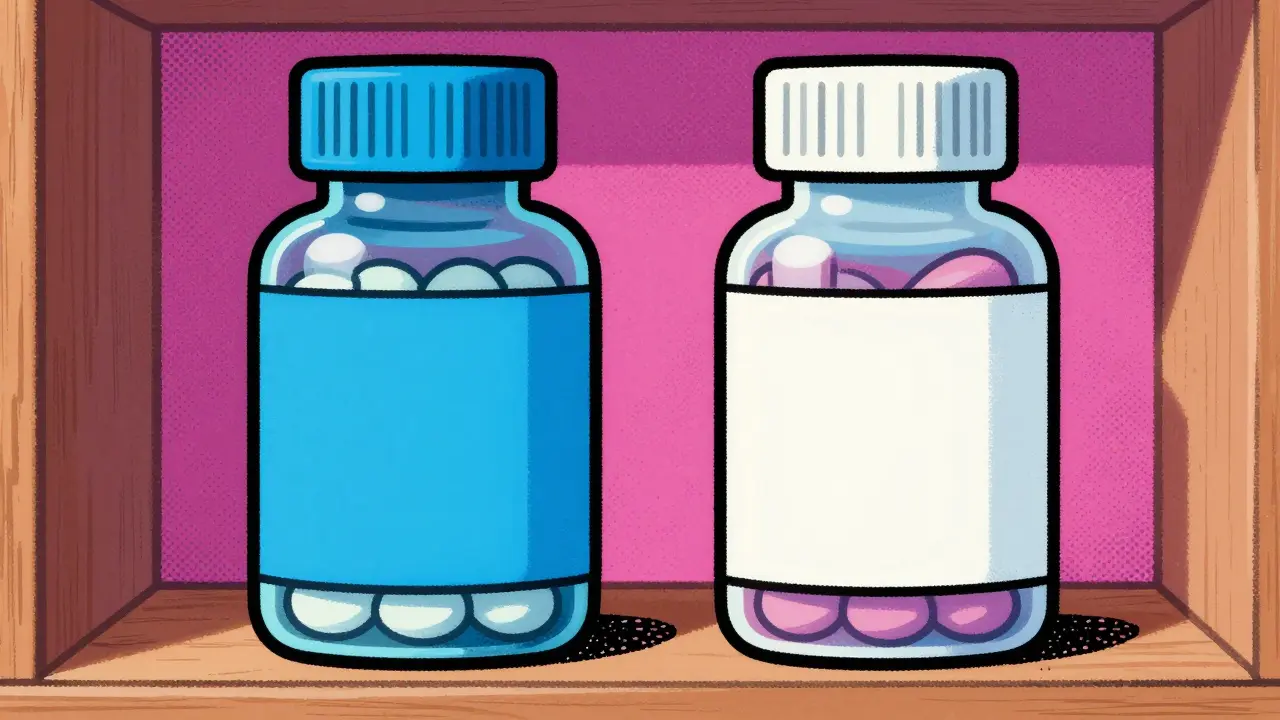
Medication prices can feel like a hidden tax on your health. You walk into the pharmacy expecting relief, only to face a bill that stretches your budget. Understanding the difference between standard generic drugs and authorized generics opens a door to significant savings that many people miss. While most patients know to ask for a generic, few understand how authorized versions fit into the pricing model.
The market has shifted dramatically over recent years. In 2022 alone, the U.S. healthcare system realized nearly $408 billion in savings from generic medicines. That figure continues to climb as competition grows. Yet, despite these macro-level savings, individual out-of-pocket costs often remain stubbornly high due to complex rebate structures. Knowing exactly what to ask your healthcare provider and pharmacist bridges the gap between available discounts and your actual bank account.
Understanding Generic Drug Types
To navigate this landscape, you need clarity on two distinct categories. Many people assume all non-brand options are created equal, but the manufacturing history matters.
Generic drugs are medications approved by regulatory bodies containing the same active ingredients as brand-name products. They enter the market after patent protections expire. Manufacturers submit Abbreviated New Drug Applications (ANDAs) to prove their product works identically to the original. These approvals rely on demonstrating bioequivalence, meaning the drug enters the bloodstream at the same rate and extent as the brand version.
Authorized generics, however, take a different path. These are identical versions of brand-name drugs produced and sold under a generic label by the brand company itself or through a partner. Because they come directly from the original manufacturer, they bypass the traditional competitive marketplace entry. This distinction isn't just legal; it impacts your wallet.
Think of authorized generics as the original recipe rebranded for discount sales. Regular generics are competitors copying that recipe once the patent lapses. Both meet strict therapeutic equivalence standards, ensuring you get the same medical benefit regardless of which version sits in the box.
The Hidden Economics of Medication Pricing
Price lists often lie. When comparing options, you must distinguish between the list price and the net price. List prices appear on invoices, but net prices reflect the actual amount paid after accounting for rebates and negotiations. Authorized generics frequently have lower list prices than brand names because manufacturers want to capture volume before full competition emerges.
| Type | Typical List Price Drop | Patient Copay Potential | Rebate Structure |
|---|---|---|---|
| Brand-Name Drugs | $56.12 Avg Copay | High Tier Placement | Significant Manufacturer Rebates |
| Traditional Generics | Up to 80% Reduction | Low Tier Placement | Aggressive PBM Negotiations |
| Authorized Generics | 50-90% Reduction | Variable by Plan | Simplified Rebate Agreements |
Insurance plans complicate this further. Pharmacy Benefit Managers (PBMs) manage these contracts to secure lower costs for insurers. Sometimes, a plan treats an authorized generic better than a standard generic on its formulary tiers. In other cases, the reverse happens. A study found that while 93% of generic prescriptions had copays under $20, specific plan designs could push these higher. Without asking direct questions, you remain blind to these nuances.

Questions to Ask Your Pharmacist
Avoid vague inquiries. Walking into a consultation with "Is there a cheaper option?" yields generic answers. Instead, target the mechanism of pricing. Here are specific scripts you can use immediately.
First, verify availability. Ask, "Is there a generic version available for this prescription?" If the answer is yes, follow up with, "Is there also an authorized generic option?" This forces the staff to check inventory beyond the standard supplier database. In many instances, pharmacies stock both, but default to whichever contract offers them the highest margin.
Second, address insurance handling. Query, "How does my insurance treat authorized generics versus traditional generics regarding copay tiers?" Some plans place them on different formulary levels. One Reddit user noted their insulin dropped from $350 for the brand to $90 for the authorized generic, but the copay remained $45 because the insurance plan categorized the authorized generic differently than a traditional competitor. Checking this prevents shock at the register.
Third, confirm switching rules. Inquire, "Can I save money by switching between generic types if the price changes monthly?" Market dynamics shift rapidly. A drug might switch availability based on supply chain shortages. Flexibility ensures you don't pay extra when a temporary alternative exists.
Real-World Impact and Evidence
Consider the case of Truvada. Originally a brand-name treatment costing roughly $50 per tablet, the introduction of additional generics saw prices plummet to about $3 per tablet by late 2022. This shift generated over $4 billion in annual savings across the market. While you may not buy antiretrovirals personally, this demonstrates the magnitude of savings possible when competition increases.
However, not all products behave identically. High-priced, large-market products yield substantially more savings upon generic entry compared to niche therapies. For smaller drugs, price reductions might stay between 10% and 20%. A 2022 report highlighted that 110 specific products saw less than a 10% drop in pricing. This suggests asking is critical even for small molecules; sometimes the difference is marginal, but verifying it confirms whether you should wait for a price drop or switch providers now.
Biosimilars represent another frontier. These are biologic equivalent versions to expensive injectables and infusions. Current data shows over 30 approved biosimilar products exist, generating more than $7 billion in savings. If you rely on specialty biologics, ask your prescriber if a biosimilar is on the horizon. Early planning can prevent sudden cost shocks later.
Navigating Rebate Structures and Tiers
The most confusing aspect for patients is why a cheaper pill doesn't mean a lower copay. This stems from how rebates flow through the system. Manufacturers offer rebates to PBMs to secure preferred placement on insurance formularies. If an authorized generic skips certain rebate layers to achieve a lower list price, the insurance company might lose revenue they expect.
Consequently, some plans penalize these choices to protect their own profit margins. A University of Minnesota economist warned that savings don't always reach patients due to these complex rebate structures. You might see a list price drop of 50%, yet your copay stays flat at $50 because your deductible hasn't been met or your plan tier favors the traditional competitor.
To bypass this, use cash payment tools when eligible. Platforms like GoodRx allow you to compare cash prices across different generic types. Sometimes paying out-of-pocket for an authorized generic costs less than your insurance copay for a traditional generic. Always run this calculation if you are near your deductible threshold or have high-deductible health plans.
Common Pitfalls to Avoid
Do not assume automatic substitution. Even if your doctor writes for a brand, laws often allow pharmacists to substitute a generic automatically. However, they won't necessarily swap to an authorized generic over a traditional one without instruction. You must specify a preference if you have identified one that fits your formulary better.
Avoid ignoring supply chain warnings. Shortages are common; reports showed over 300 shortages in one year alone. Sometimes, an authorized generic is the only available option. Don't skip medication. Instead, contact your insurer to adjust the formulary designation temporarily while availability returns.
Finally, monitor expiration dates carefully. Patents do not disappear overnight. Companies employ patent thickets-legal strategies to extend exclusivity-that can delay true generic competition. Authorized generics can emerge during these delays as a bridge strategy. Be aware that if you see an authorized generic suddenly appear, it often signals an upcoming patent cliff, making it a prime time to lock in a lower price before multiple traditional competitors flood the market.
Does an authorized generic work exactly like the brand?
Yes, an authorized generic is chemically identical to the brand-name drug. It comes from the same manufacturer and meets the same safety and efficacy standards set by the FDA. There is no therapeutic difference.
Will my insurance accept an authorized generic?
Most plans will accept them, but coverage varies. Some formularies place them on a different tier than traditional generics, which could affect your copay amount. Always verify your specific benefit plan details with the insurance specialist.
Are traditional generics safer than authorized generics?
No. All FDA-approved generics, whether authorized or traditional, must demonstrate bioequivalence to the brand name. They fall within the same strict regulatory approval framework known as the Hatch-Waxman Act requirements.
Why are authorized generics sometimes pricier for patients?
Pricing depends on contract negotiations between PBMs and pharmacies. While the list price is lower, the rebate agreements might differ, leading insurance companies to pass on higher costs to the patient depending on your deductible status.
How can I find out if an authorized generic exists?
Ask your pharmacist directly to check their inventory system. Online tools comparing cash prices can also reveal if an authorized version is stocked locally alongside the brand-name medication.
Devon Riley
March 27, 2026 AT 03:13It is really amazing how much control we actually have when we walk into that pharmacy counter! 🔹 Knowing the difference between those labels changes everything for your wallet. You never feel powerless again once you understand the rebates. Just imagine keeping hundreds of dollars in your pocket each month instead. It takes a second to ask but saves so much stress later. Healthcare costs are scary enough without the hidden fees lurking. 💊📉 We can all do better at managing our prescriptions together! I always tell my friends to check their formulary tiers too. Sometimes the cash price is way cheaper than the copay surprise. Never hesitate to speak up because your pharmacist wants to help you save. 🌟
kendra 0712
March 27, 2026 AT 21:40I was totally shocked by the rebate structures mentioned here!!! Did anyone else notice how the list price lies completely!!! It drives me crazy that we do not know the net price upfront!!! We should demand transparency from these PBMs immediately!!! My own insurance tried to hide the authorized generic option before!!! Always verify the inventory status first!!! Do not let the default setting ruin your budget!!! 💪💸 #SaveMoney
Rohan Kumar
March 28, 2026 AT 07:15Sure, just ask nicely and the system will magically fix its greed 😏. The pharmaceutical cartels design these plans specifically to confuse us peasants. They release authorized generics only when they want to manipulate market data. Your savings are already taxed away before you even buy the pill. Do not be fooled by the optimistic narrative of choice. 🤡
Sabrina Herciu
March 29, 2026 AT 12:04While the systems are certainly complex, ignoring the options does not help anyone secure relief! The data regarding bioequivalence remains solid across all approved pathways! You can still achieve significant reductions by following the scripts provided! Many patients report success when they bypass the standard tier defaults! It requires effort but the math does work out in your favor eventually! Please consider the verified studies on formulary placement before dismissing the process entirely! I recommend checking GoodRx cash prices alongside your plan coverage details! 🧐📓
Jordan Marx
March 31, 2026 AT 11:22Navigating the intersection of patent cliffs and PBM contracts creates a unique arbitrage opportunity for the savvy consumer. When we analyze the marginal utility of switching between traditional and authorized formulations, the delta becomes apparent. Most formulary designs rely on prior authorization thresholds that ignore the underlying rebate mechanics. Consequently, the administrative burden shifts to the patient who lacks technical proficiency in health economics. Bioequivalence standards mandate identical pharmacokinetic profiles regardless of the manufacturing entity involved. Therefore, the distinction rests purely on the pricing architecture rather than clinical efficacy. Market dynamics suggest that supply chain volatility will continue to dictate availability windows. Authorized versions often serve as a bridge strategy during periods of patent thickets. This interim period allows manufacturers to retain brand recognition while capturing generic volume. Patients must leverage this window before competition saturates the SKU entirely. Supply constraints might force a temporary substitution that benefits the consumer financially. Early planning prevents sudden cost shocks associated with specialty biologics or injectables. Cash payment tools offer an alternative verification mechanism outside the claims adjudication pipeline. Always compare the net cost against your deductible threshold status. Utilizing online aggregators ensures you are seeing the real transaction value. The goal is maximizing purchasing power within the existing regulatory framework. Strategic inquiry yields tangible outcomes in high-deductible scenarios.
tyler lamarre
April 1, 2026 AT 07:03Only someone who reads finance blogs would mistake complexity for actionable advice in this mess.
Debra Brigman
April 2, 2026 AT 01:38The dance of capital and care waltzes through the pharmacy aisle with such deceptive grace! Money hides in the folds of policy where ordinary eyes struggle to peek. True freedom comes from understanding the invisible threads tying your prescription to the ledger. We are all players in this grand economic theater seeking the best seat for our health. 🎭✨
Sophie Hallam
April 3, 2026 AT 11:36Your perspective really highlights the human element behind the statistics and tables. I appreciate how you frame the economic struggle without sounding cynical about the system. Balance is key when discussing things that affect everyone’s wellbeing daily. I hope we all find that middle ground between skepticism and optimism soon. Respectfully adding that support networks matter just as much as the financial tips. Thank you for sharing such a poetic take on such a dry subject!