
Why Your Body Feels Out of Sync
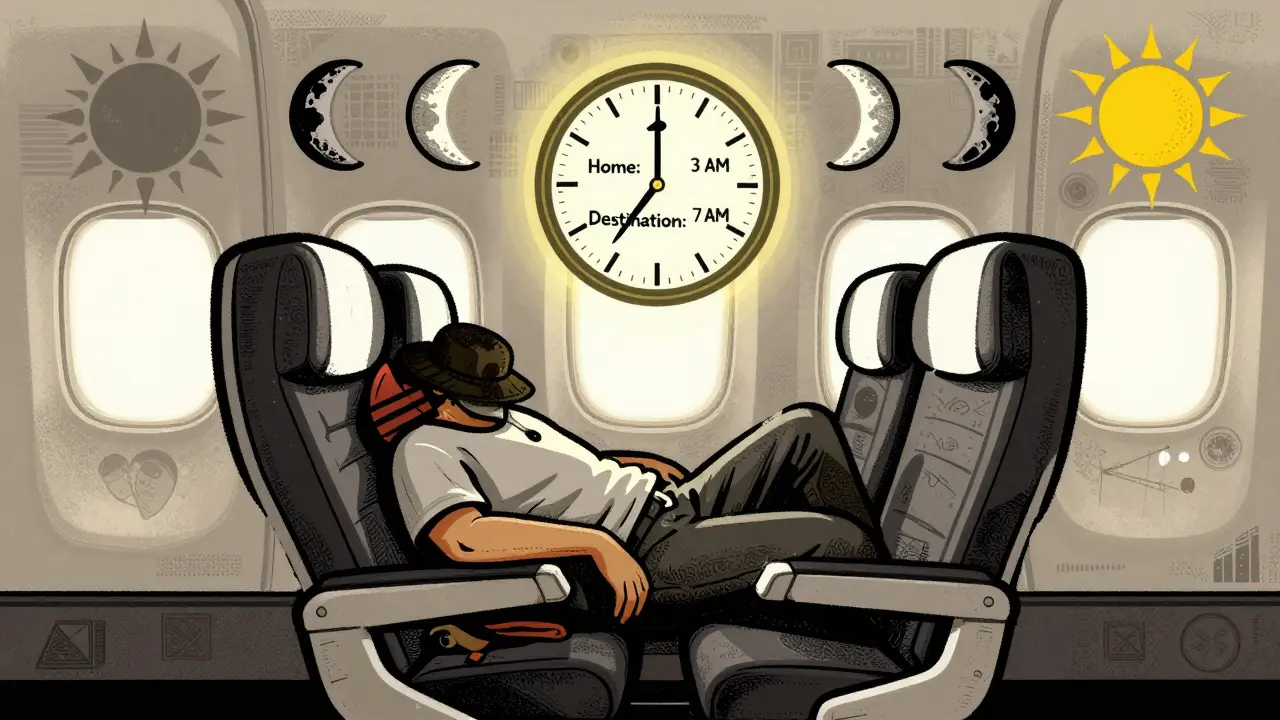
Ever landed in Tokyo after a long flight and couldn’t sleep until 4 a.m., even though you were exhausted? Or do you find yourself wide awake at 3 a.m. every night, no matter how hard you try to fall asleep earlier? You’re not alone. These aren’t just bad habits or stress-they’re signs of your circadian rhythm being out of alignment. Your body runs on a 24-hour internal clock that controls when you feel sleepy, alert, hungry, and even when your body temperature rises or falls. When that clock gets thrown off, it doesn’t just mess with your sleep-it affects your mood, focus, digestion, and long-term health.
Jet Lag: When Time Zones Fight Your Clock
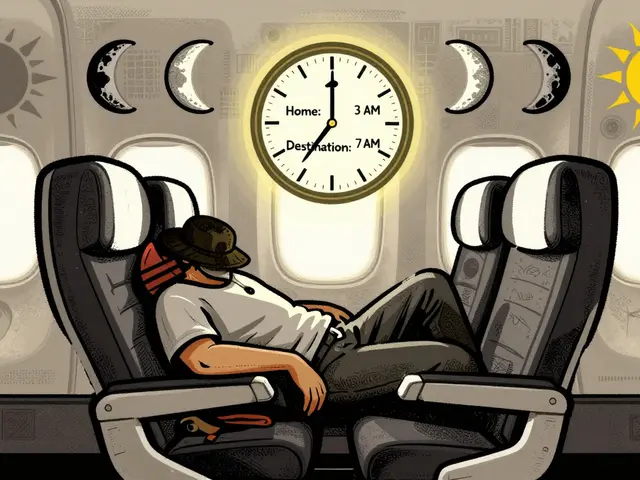
Jet lag happens when you cross two or more time zones quickly. Your body still thinks it’s home time, but the sun, meals, and social cues are telling you it’s a different hour. Traveling east is worse than west because your body naturally wants to stay up later, not go to bed earlier. Crossing five time zones eastward? Expect 5 to 7 days to fully adjust. Each time zone adds about 1.5 days of jet lag when flying east, compared to just 1 day per zone going west.
Why? Your internal clock runs slightly longer than 24 hours-around 24.2 hours. That means it’s easier for your body to delay sleep (stay up later) than to advance it (fall asleep earlier). That’s why eastbound travelers often struggle more. Symptoms include daytime fatigue, trouble concentrating, stomach issues, and even poor decision-making. Studies show cognitive performance can drop by 20-30% during peak jet lag. Business travelers report lower productivity for 3 or more days after long-haul flights.
Here’s what actually works:
- Before you fly: Shift your sleep schedule by 1 hour per day, 3-5 days before departure. If going east, go to bed and wake up earlier. If going west, go to bed and wake up later.
- On the plane: Set your watch to destination time immediately. Try to sleep or stay awake based on that clock.
- After landing: Get bright sunlight in the morning if you’re going east. If going west, get light in the evening. Avoid bright lights at night. Use blackout curtains if needed.
- Stay hydrated. Skip alcohol and heavy meals right after landing.
There’s no magic pill. Melatonin can help, but only if taken at the right time-usually 30 minutes before your target bedtime at your destination. Doses above 1 mg don’t work better and can make you groggy the next day.
Delayed Sleep Phase: The Night Owl Trap
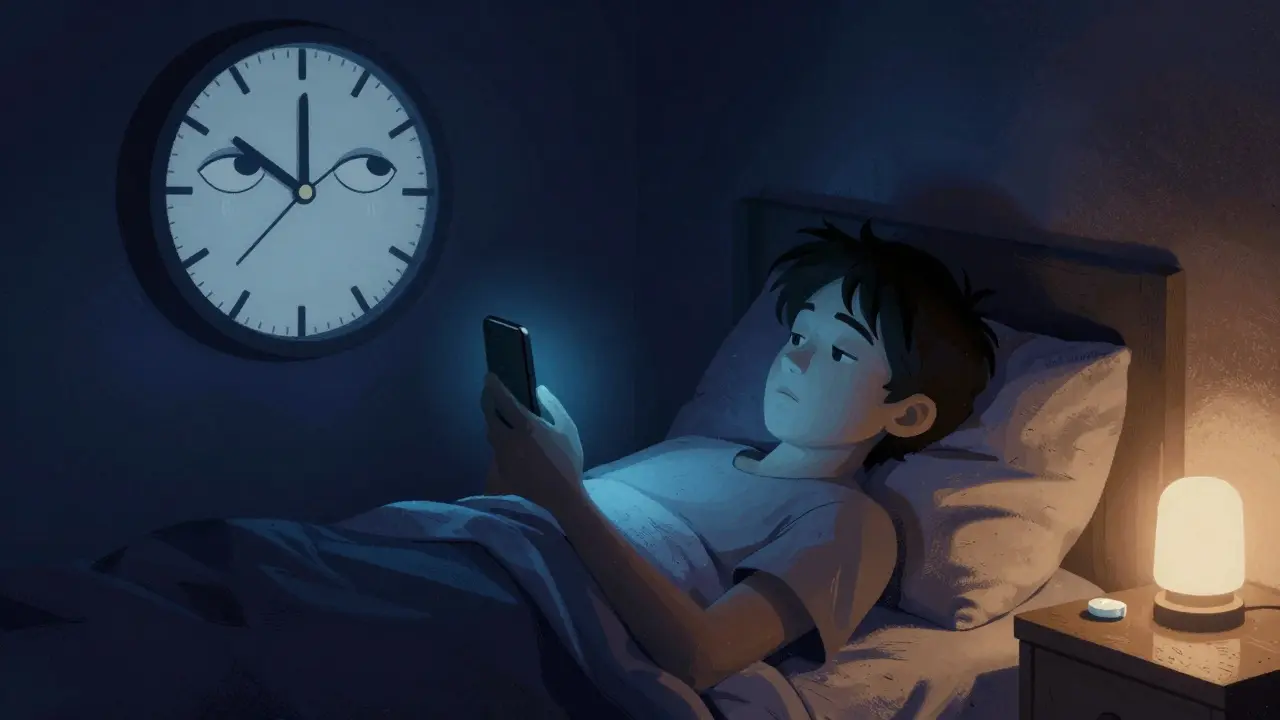
Delayed sleep-wake phase disorder (DSWPD) isn’t just being a night owl. It’s a real, medically recognized condition where your body’s natural sleep time is pushed back by 2 or more hours. People with DSWPD don’t fall asleep until 3-6 a.m. and naturally wake up between 10 a.m. and 1 p.m. When forced to wake up at 7 a.m. for work or school, they’re essentially sleep-deprived every single day.
It’s common in teens and young adults-7 to 16% of this group have it. But it doesn’t just go away with age. Many adults live with it for years, thinking they’re just lazy or unmotivated. The truth? Their biology is different. Research shows people with DSWPD have a melatonin onset that’s about 2 hours later than average. Their internal clock is literally running on a different schedule.
Here’s what it looks like in real life:
- A 22-year-old student fails 8 a.m. classes, even with accommodations.
- A software developer works best between 2-6 a.m. but is forced into a 9-5 job, leading to chronic exhaustion.
- Someone takes modafinil to stay awake during the day, then can’t sleep at night-making the problem worse.
DSWPD isn’t about willpower. It’s biology. And it’s not rare. The National Sleep Foundation estimates 28% of adults show symptoms, but only 4% have been diagnosed. Most are told to just “go to bed earlier,” which doesn’t work.
How to Fix It: Science-Backed Strategies
There’s no overnight fix, but there are proven methods that work if you stick with them.
1. Morning Light Therapy
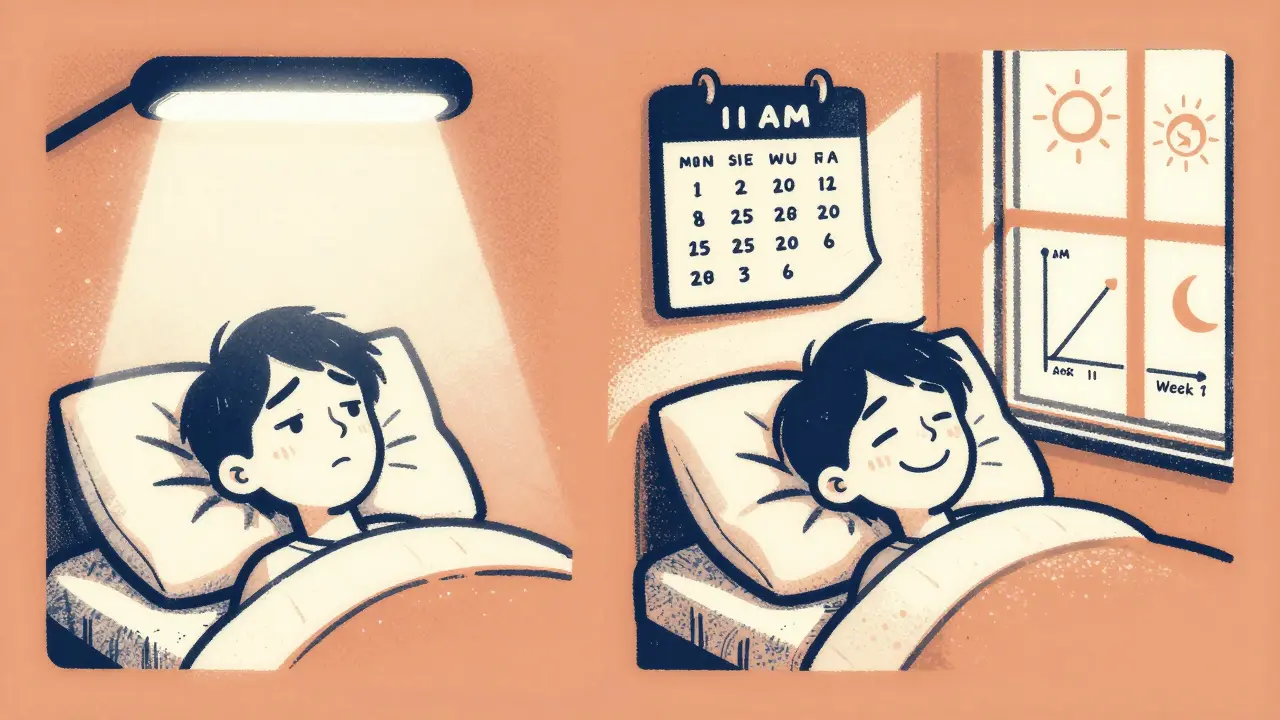
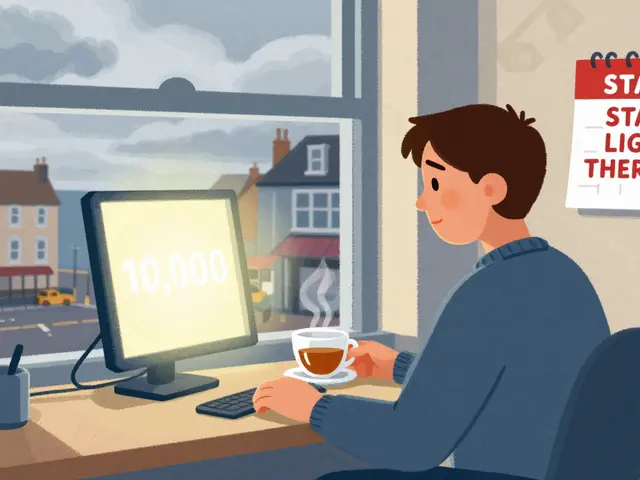
Exposure to bright light (10,000 lux) within 30 minutes of waking up is the most effective treatment. Use a light box for 30-60 minutes. Natural sunlight works too-just sit near a window with no sunglasses. This tells your brain it’s morning and helps shift your clock earlier. Studies show this alone can advance your sleep time by 2-3 hours over 4 weeks.
2. Evening Melatonin
Take 0.5 mg of melatonin 5-7 hours before your desired bedtime. That’s usually around 7-9 p.m. for someone trying to sleep at 11 p.m. Higher doses (like 3 mg or more) don’t help-they just make you drowsy and disrupt your natural rhythm. Most people take too much because they think more is better. It’s not.
3. Consistency Is Everything
No exceptions. Not on weekends. Not on holidays. If you sleep until noon on Saturday, you’re resetting your clock back. The goal is to anchor your rhythm to a fixed wake time, even if you had to force yourself awake. After 4-6 weeks, your body starts to adapt. Adherence rates jump from 58% in week one to nearly 90% by week six.
4. Avoid Blue Light at Night
Phones, laptops, and TVs emit blue light that blocks melatonin. Use night mode settings, wear blue-light-blocking glasses after 8 p.m., or just turn off screens 90 minutes before bed. This isn’t optional-it’s part of the treatment.
What Doesn’t Work
Many people try quick fixes that backfire:
- Alcohol to fall asleep: It may knock you out, but it fragments sleep later in the night.
- Over-the-counter sleep aids: They don’t reset your clock. They just sedate you.
- Going to bed earlier: If your body isn’t ready, you’ll just lie awake frustrated.
- Power naps: Napping after 3 p.m. can delay your sleep even more.
And don’t rely on stimulants like caffeine or modafinil to survive the day. They mask the problem but make it worse long-term. One study found 22% of people with DSWPD who used stimulants ended up with worse insomnia.
Why This Matters Beyond Sleep
Ignoring circadian rhythm disorders isn’t just about feeling tired. Long-term misalignment increases your risk of serious health problems. Data from the UK Biobank shows people with chronic circadian disruption have a 29% higher risk of type 2 diabetes and a 23% higher risk of heart disease. Your metabolism, immune system, and hormone balance all depend on a stable sleep-wake cycle.
Shift workers, frequent travelers, and teens with DSWPD are especially vulnerable. The CDC reports shift workers get up to 4 hours less sleep per day than day workers. That’s not just inconvenient-it’s dangerous.
The Future Is Personalized
Tools are getting smarter. Apps like Timeshifter use algorithms to give you personalized light and sleep schedules based on your flight route or sleep pattern. A 2023 study showed users recovered from jet lag 63% faster than those following generic advice.
Wearable devices that track your body temperature and light exposure are also becoming more accurate. By 2027, 45% of family doctors in Europe are expected to screen for circadian rhythm issues during routine checkups.
The bottom line? Circadian rhythm disorders aren’t something you just have to live with. They’re treatable. But you need the right tools, consistency, and patience-not willpower alone.
When to See a Doctor
See a sleep specialist if:
- Your sleep schedule is consistently delayed by 2+ hours for 3 months or longer.
- You’ve tried adjusting your routine for 6 weeks with no improvement.
- You’re using sleep aids or stimulants regularly to cope.
- Your sleep problems are affecting your work, school, or relationships.
A sleep clinic can measure your melatonin onset (DLMO) with a simple saliva test. That’s the gold standard for diagnosing DSWPD. They can also rule out other conditions like sleep apnea or restless legs syndrome.
Is jet lag the same as delayed sleep phase disorder?
No. Jet lag is temporary and caused by crossing time zones. It usually clears up in a few days to a week. Delayed sleep phase disorder is a chronic condition where your internal clock is permanently shifted later-often by 2 or more hours-and persists for months or years, even without travel. People with DSWPD sleep fine when they follow their natural schedule, but struggle when forced into a typical 9-5 routine.
Can melatonin cure delayed sleep phase disorder?
Melatonin alone doesn’t cure it, but it’s a key part of treatment when used correctly. Taking 0.5 mg about 5-7 hours before your target bedtime helps signal your brain that it’s time to start winding down. Higher doses (like 3 mg or more) are ineffective and can cause grogginess. For best results, combine melatonin with morning light therapy and strict sleep scheduling.
Why is eastbound jet lag worse than westbound?
Your body’s natural internal clock runs slightly longer than 24 hours-about 24.2 hours. That means it’s easier for your body to delay sleep (stay up later) than to advance it (fall asleep earlier). Eastbound travel requires you to go to bed earlier than your body wants, which is harder. Westbound travel lets you stay up later, which your body accepts more easily. This is why eastward travel causes more severe jet lag.
Do I need a sleep study to diagnose delayed sleep phase disorder?
Not always. A doctor can often diagnose DSWPD based on your sleep history and a sleep diary tracked for at least 2 weeks. But for confirmation, they may use a dim light melatonin onset (DLMO) test, which measures when your body starts releasing melatonin. If it’s 2+ hours later than normal, that’s a clear sign of DSWPD. This test is especially useful if your symptoms are severe or if other sleep disorders are suspected.
Can teenagers outgrow delayed sleep phase disorder?
Some do, but not all. DSWPD is very common in teens due to biological changes during puberty that naturally delay sleep timing. For many, it improves in their early 20s. But for about 1 in 3, it continues into adulthood. Early intervention with light therapy and schedule consistency can help speed up the adjustment and reduce the impact on school performance.
Is it okay to sleep in on weekends if I have DSWPD?
No. Sleeping in on weekends is the #1 reason treatment fails. Even one day of sleeping past noon can reset your internal clock back by hours. To fix DSWPD, your wake time must be consistent-every single day, including weekends. It’s the most important rule. If you can’t stick to it, treatment won’t work.

Shawn Peck
January 31, 2026 AT 00:53Stop blaming yourself. Your clock is just wired different.
Sarah Blevins
January 31, 2026 AT 05:03Jason Xin
February 1, 2026 AT 12:09People think supplements are magic. They're not. They're signals. And signals need timing, not volume.
Kathleen Riley
February 1, 2026 AT 19:34One must ask: who benefits from the 9-to-5 paradigm? And why do we pathologize those whose chronotypes resist it?
Beth Cooper
February 2, 2026 AT 03:26Rohit Kumar
February 3, 2026 AT 22:52Carolyn Whitehead
February 4, 2026 AT 11:23Beth Beltway
February 5, 2026 AT 21:23Marc Bains
February 6, 2026 AT 11:42kate jones
February 8, 2026 AT 08:51Kelly Weinhold
February 8, 2026 AT 19:13Kimberly Reker
February 9, 2026 AT 22:35