
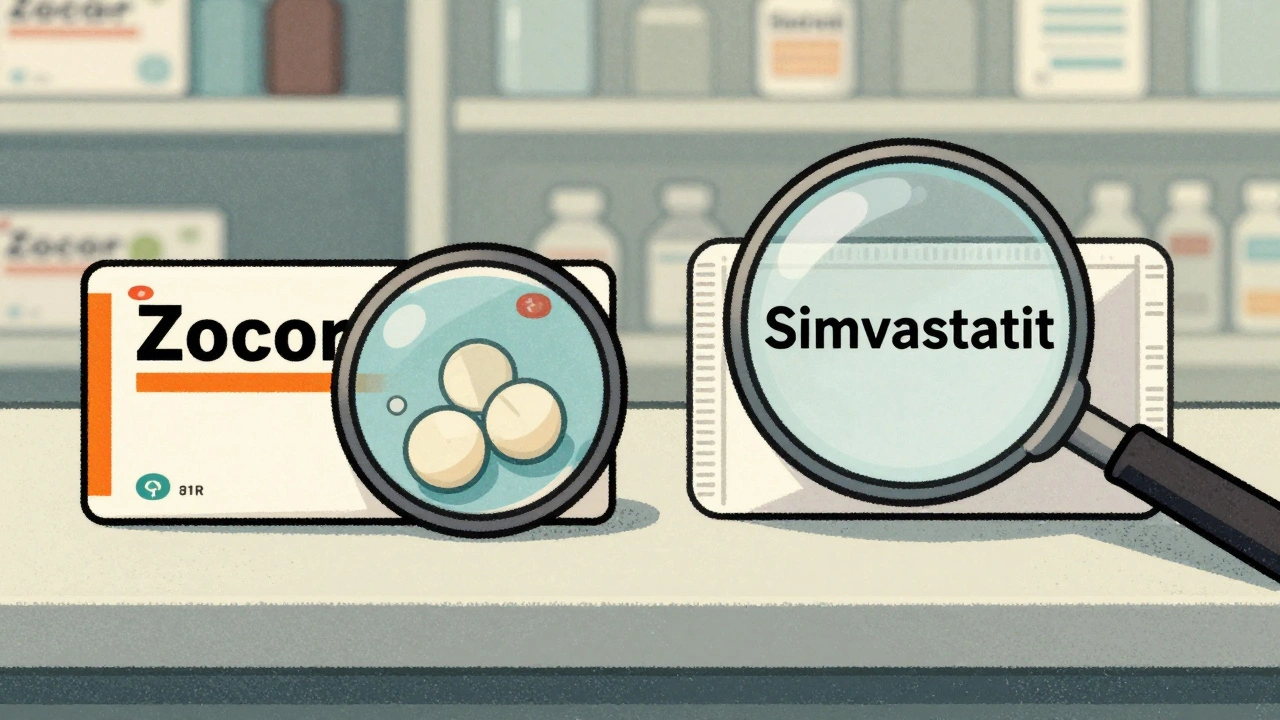
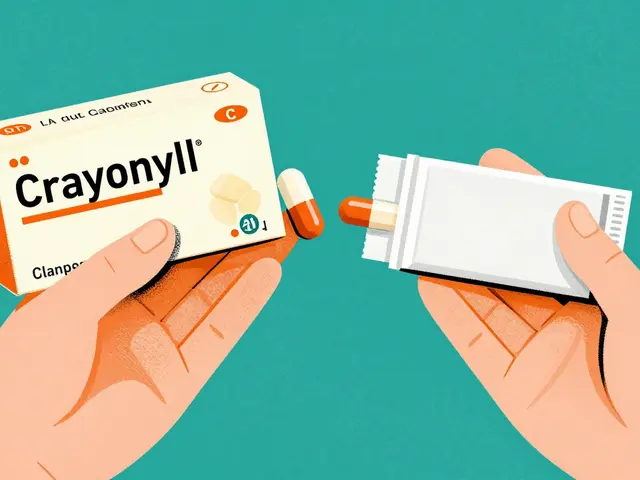
Have you ever picked up a prescription and noticed the pill looks different - maybe a different color or shape - but the name on the bottle is the same? You might have assumed it was a generic version. But what if it’s not a generic at all? What if it’s the exact same pill, made by the same company, just sold under a different label? That’s an authorized generic.
What Exactly Is an Authorized Generic?
An authorized generic is the brand-name drug you know, but without the brand name on the box. It’s made by the same company that produces the original drug, using the exact same ingredients, the same factory, and the same quality controls. The only difference? The label says something like "simvastatin 20 mg" instead of "Zocor 20 mg." The U.S. Food and Drug Administration (FDA) defines it clearly: an authorized generic is a drug approved under the original brand’s New Drug Application (NDA), but sold with different labeling, packaging, or product codes. No new approval is needed. No extra testing. It’s the same drug, just repackaged under a generic-style name. This isn’t a loophole. It’s a legal, regulated part of the pharmaceutical market that’s been around since the early 2000s. Companies like Pfizer (through Greenstone), Procter & Gamble (through Prasco), and others run dedicated divisions just to produce and sell these versions.How Is It Different From a Regular Generic?
Most people think all generics are the same. They’re not. Regular generics - the kind you see at your local pharmacy - are made by different companies. They must prove they’re bioequivalent to the brand-name drug. That means they deliver the same amount of active ingredient into your bloodstream at a similar rate. But they can have different inactive ingredients - fillers, dyes, coatings - which sometimes change how the pill looks or even how it tastes. Authorized generics? No differences at all. Same active ingredient. Same inactive ingredients. Same size. Same shape. Same manufacturing process. The only thing that changes is the label. Here’s a quick breakdown:| Feature | Brand Name | Authorized Generic | Regular Generic |
|---|---|---|---|
| Manufacturer | Original brand company | Original brand company (or subsidiary) | Third-party generic maker |
| Active Ingredient | Identical | Identical | Identical |
| Inactive Ingredients | Brand-specific | Identical to brand | May differ |
| Regulatory Path | New Drug Application (NDA) | Uses brand’s NDA | Abbreviated New Drug Application (ANDA) |
| Appears in FDA Orange Book? | Yes | No | Yes |
| Price | High | Low (similar to generics) | Low |
So if you’re looking for the closest thing to the brand-name drug - without paying the brand price - an authorized generic is it.
Why Do Companies Make Authorized Generics?
It’s not charity. It’s strategy. When a brand-name drug’s patent expires, the first generic company to file an application gets 180 days of exclusivity under the Hatch-Waxman Act. That’s a big financial incentive. But here’s the twist: the brand company can launch its own authorized generic right before or during that 180-day window. Suddenly, the first generic company isn’t alone anymore. It’s competing with the original manufacturer - who knows the product better than anyone. The result? The generic company’s profits shrink. Sometimes, they don’t even launch at all. This is controversial. Critics say it undermines the whole point of the Hatch-Waxman Act - to encourage competition and lower prices. Supporters say it gives patients more choices and keeps prices low from day one. Either way, it’s happening. Over 300 authorized generics are on the U.S. market today. Drugs like Lipitor, Nexium, and Claritin have all had authorized versions released after patent expiry.
What Does This Mean for You as a Patient?
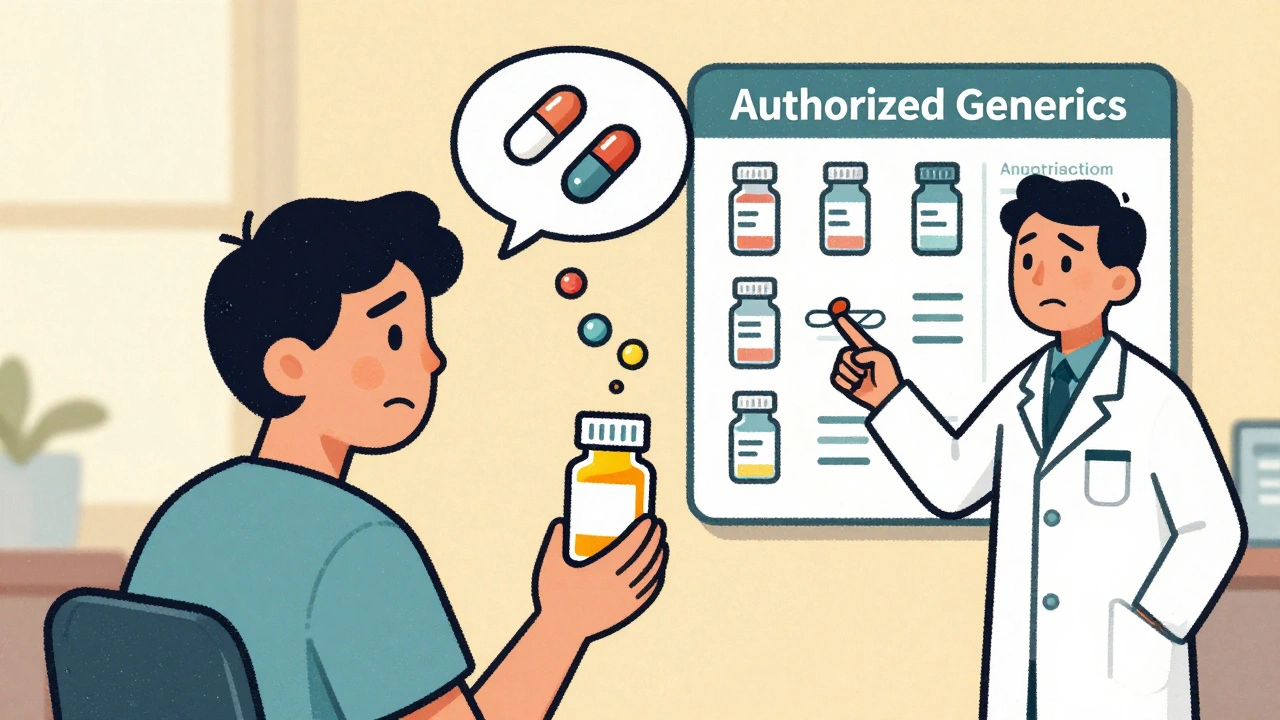
If you’re taking a brand-name drug and your prescription is switched to a generic, ask your pharmacist: Is this an authorized generic? You might get a pill that looks different from what you’re used to. That’s normal. But if it’s an authorized generic, you’re getting the exact same product - just cheaper. Some patients report confusion. They think the new pill is weaker because it looks different. Or they worry it’s not the same. But there’s no difference in effectiveness. The FDA confirms authorized generics are therapeutically equivalent to their brand-name counterparts. The only downside? Pharmacists can’t find authorized generics in the FDA’s Orange Book. That means they have to check a separate FDA list or contact the manufacturer to confirm. So if your pharmacist seems unsure, it’s not because they’re inexperienced - it’s because the system is messy.How to Spot an Authorized Generic
You won’t find them labeled as "authorized generic" on the bottle. But here’s how to figure it out:- Check the label. If it has the same active ingredient as your brand-name drug, but no brand name, it could be an authorized generic.
- Ask your pharmacist: "Is this made by the same company that makes [brand name]?"
- Look up the drug on the FDA’s List of Authorized Generic Drugs. It’s updated regularly and publicly available.
- Compare the pill imprint and color to your old prescription. If it matches exactly, it’s likely an authorized generic.
Some authorized generics even use the same pill imprint as the brand - just with a different color or packaging. That’s intentional. It helps patients recognize they’re getting the same drug.
Is It Safe? Will It Work the Same?
Yes. Absolutely. Because authorized generics are made under the same NDA as the brand, they’re held to the same quality standards. The same batch of drug might go into brand-name packaging one day and authorized generic packaging the next. There’s no evidence that authorized generics are less effective or less safe. In fact, many patients report fewer side effects switching to an authorized generic than to a regular generic - because the inactive ingredients haven’t changed. If you’ve had bad reactions to other generics in the past, an authorized generic might be the solution. It’s the closest thing to staying on the brand without paying the brand price.What’s the Future of Authorized Generics?
As more expensive drugs lose patent protection - especially biologics and specialty medications - authorized generics will likely become even more common. Right now, they’re mostly used for oral tablets and capsules. But companies are exploring them for injectables, inhalers, and even complex drug delivery systems. There’s growing pressure from consumer groups and lawmakers to limit this practice. Some argue it’s anti-competitive. Others say it’s a smart way to keep prices down. For now, the FDA continues to recognize and track authorized generics. They’re not going away.Bottom Line
An authorized generic isn’t a knockoff. It’s the real thing - same drug, same factory, same results - just without the brand name. If you’re paying for a brand-name drug and see a cheaper option, ask if it’s an authorized generic. You might be getting the same medicine for half the price. Don’t assume all generics are the same. And don’t assume a different-looking pill means it’s weaker. Sometimes, the best version of a drug is the one you’ve always taken - just with a new label.Are authorized generics as safe as brand-name drugs?
Yes. Authorized generics are made by the same manufacturer, in the same facility, using the exact same ingredients and processes as the brand-name drug. The FDA considers them therapeutically equivalent. There is no difference in safety or effectiveness.
Why does my pill look different if it’s the same drug?
The difference in appearance - color, shape, or markings - is purely for labeling purposes. It helps distinguish the authorized generic from the brand-name version on pharmacy shelves. The active and inactive ingredients are identical, so the effect on your body is the same.
Can I trust an authorized generic if it’s not in the Orange Book?
Yes. The FDA does not list authorized generics in the Orange Book because they’re approved under the brand’s NDA, not a separate ANDA. Instead, the FDA maintains a separate List of Authorized Generic Drugs. Your pharmacist can check this list or contact the manufacturer to confirm authenticity.
Do authorized generics cost less than regular generics?
Usually, they cost about the same - often significantly less than the brand-name version. Sometimes, they’re even cheaper than regular generics because the manufacturer already has the production infrastructure in place and doesn’t need to invest in new approvals.
Why would a brand company make its own generic?
It’s a business strategy. When a patent expires, the brand company can launch its own version under a generic label to capture market share before competitors enter. This can reduce the financial incentive for other companies to make generics, but it also keeps prices lower for consumers sooner.
Can I request an authorized generic from my doctor?
Yes. You can ask your doctor to write your prescription as "dispense as written" or specify the brand name, then ask your pharmacist if an authorized generic is available. Many insurance plans cover authorized generics at the same rate as regular generics, so there’s usually no extra cost to you.
Jimmy Kärnfeldt
December 10, 2025 AT 13:10So basically, if you're on a brand drug and your pharmacy switches you to something that looks different but the name on the bottle is just the chemical, you might actually be getting the exact same pill you always took. Mind blown. I never thought about it like that. I always assumed generics were just cheaper knockoffs, but this is like getting the same coffee from the same roaster but in a plain cup instead of the branded one.
Ariel Nichole
December 10, 2025 AT 17:04This is such a useful breakdown. I've had friends swear their generics don't work the same, but now I know it's probably the fillers messing with them. Authorized generics are the secret weapon for people who get weird side effects from regular generics. Gonna start asking my pharmacist about this next time.
john damon
December 12, 2025 AT 00:25Wait so the brand company makes its own generic?? 😱 That's like McDonald's selling a burger with no logo and calling it 'beef patty on bun'. Genius or shady? I'm conflicted. 🤔
Taylor Dressler
December 13, 2025 AT 15:30Authorized generics are one of the most under-discussed yet impactful mechanisms in pharmaceutical pricing. The FDA's regulatory framework allows them precisely because they eliminate variability in therapeutic outcomes. Unlike ANDA generics, which must demonstrate bioequivalence through clinical trials, authorized generics are chemically and physically identical to the brand product. This means no unexpected reactions due to excipients, no absorption inconsistencies, and no patient confusion. They represent the closest thing to brand continuity at generic pricing. If you've ever experienced a negative reaction to a generic, this is your solution.
Sylvia Frenzel
December 14, 2025 AT 15:09Of course the big pharma companies are doing this. They don't want competition. They just want to keep the money flowing while pretending they're helping us. This isn't about patients, it's about control. The FDA should ban this practice.
Courtney Blake
December 16, 2025 AT 02:03So let me get this straight - the same company that charges you $500 for a bottle of Lipitor then turns around and sells the exact same pills for $10 under a different label? And you call this 'lower prices'? This isn't capitalism. This is psychological manipulation wrapped in a white pill.
Lisa Stringfellow
December 17, 2025 AT 07:51Everyone's acting like this is some kind of win for consumers. But think about it - if the brand company launches its own generic, the real generic manufacturers can't compete. That means less innovation, fewer players, and eventually higher prices again. This isn't helping us. It's a corporate trap.
Kristi Pope
December 17, 2025 AT 20:44Man I used to freak out when my pills changed color - thought I was getting fake medicine. Then I found out my generic was actually an authorized one and it was the same exact thing. I felt so dumb. But also so relieved. Now I ask my pharmacist every time. They usually look confused but then check the list and say ohhhhhhh. We need more awareness about this.
matthew dendle
December 18, 2025 AT 20:08so u mean to tell me big pharma is just slapping a new label on their own pills and callin it a generic? lol. who got the bright idea? the guy who invented the 'free sample' scam? i mean sure its cheaper but its still the same ripoff. just with a new shirt.
Katherine Liu-Bevan
December 19, 2025 AT 18:56For anyone who's had a bad reaction to a regular generic - especially if you're sensitive to dyes, fillers, or coatings - an authorized generic can be life-changing. I switched from a regular simvastatin generic to the authorized version after experiencing muscle pain and brain fog. Within a week, it was gone. The active ingredient is the same, yes, but the inactive ones? That's where the magic (or misery) happens. Ask for it. It's worth the extra five minutes at the pharmacy.
Aman deep
December 19, 2025 AT 22:30as someone from india where generics are everywhere, this is super interesting. we dont have this system here but i can see how it helps. i think patients should know more about this. my cousin in texas just told me her doctor said she should ask for the 'same pill but cheaper' and she thought he was joking. now she gets it. thanks for this post!
Eddie Bennett
December 21, 2025 AT 15:24Been on a brand med for years. Switched to generic because insurance forced it. Got a pill that made me feel like i swallowed a rock. Switched again to the authorized version - same pill as before, just no brand name. No side effects. No drama. Just… peace. Why isn’t this common knowledge?
Vivian Amadi
December 22, 2025 AT 21:25So you’re telling me pharmacists don’t even know what an authorized generic is? That’s not incompetence, that’s systemic failure. The FDA should be fined for letting this confusion exist. People are getting the wrong meds because no one’s trained to explain this.
Monica Evan
December 22, 2025 AT 23:40my grandma took the authorized version of her blood pressure med and said it felt like the old one again. she’s 78 and doesn’t know what an NDA is but she knows what works. that’s all that matters. i wish more people could just trust their bodies instead of trusting the label.
Aidan Stacey
December 23, 2025 AT 00:14Imagine if this applied to everything. You buy a $1000 iPhone, then Apple releases the same phone for $300 but without the Apple logo. You’d think it was a scam. But it’s not. It’s the same damn phone. Same factory. Same chip. Same glass. Just… quieter. That’s what this is. And honestly? It’s kind of beautiful.