

When it comes to preventing dangerous blood clots, not all blood thinners are created equal. For decades, warfarin was the only game in town. Today, it’s sharing the stage with a newer group of drugs called DOACs - direct oral anticoagulants. And the shift isn’t just trendy; it’s backed by hard data from millions of patients. If you or someone you know is on a blood thinner, understanding the difference between these options - and what happens if things go wrong - could make all the difference.
How Warfarin Works - and Why It’s Hard to Manage
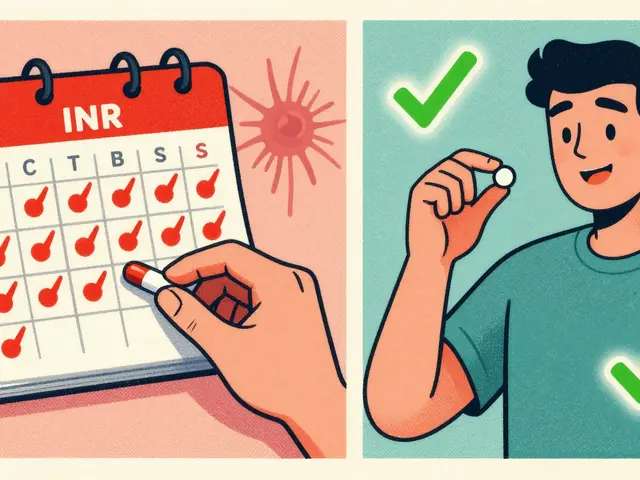
Warfarin has been around since the 1950s. It works by blocking vitamin K, which your body needs to make clotting proteins. Simple enough, right? But here’s the catch: your body’s vitamin K levels change every day based on what you eat. Leafy greens, broccoli, even some supplements can throw your dose off. That’s why people on warfarin need regular blood tests - called INR checks - to make sure their blood isn’t too thin or too thick.
The target INR range is usually 2.0 to 3.0. Go below that, and clots can form. Go above, and you risk bleeding. On average, patients on warfarin get nearly 18 INR tests a year. That’s one every three weeks. Miss a test, eat a big salad, start a new antibiotic - and suddenly, your numbers are out of whack. According to the ORBIT-AF registry, even in well-managed clinics, patients only spend about 68% of their time in the safe range. That’s not great when you’re trying to prevent a stroke or pulmonary embolism.
And it’s not just food. Warfarin interacts with over 300 medications - from common antibiotics to over-the-counter painkillers. Even herbal supplements like St. John’s wort or ginkgo can cause problems. It’s a medication that demands constant attention.
DOACs: The Modern Alternative
Direct oral anticoagulants - or DOACs - changed the game. This group includes dabigatran, rivaroxaban, apixaban, and edoxaban. Unlike warfarin, they don’t mess with vitamin K. Instead, they directly block specific clotting factors: dabigatran targets thrombin, while the others block factor Xa.
The big wins? No routine blood tests. No dietary restrictions. Far fewer drug interactions - only about 40 major ones per DOAC, compared to 300+ for warfarin. They also start working faster - within hours - and leave your system quicker, which matters if you need surgery or have an injury.
Large studies show DOACs are at least as good as warfarin at preventing strokes and clots, and often better. A 2023 JAMA study of nearly 18,500 people with deep vein thrombosis found those on DOACs had a 34% lower risk of another clot. Another meta-analysis of 35 studies showed DOACs cut major bleeding by 17% overall. Apixaban, in particular, stood out - reducing strokes and major bleeds by 25% and 35%, respectively.
And patients notice the difference. A 2023 Mayo Clinic survey found 87% of people on DOACs preferred them over warfarin. Why? Less hassle. Fewer doctor visits. No more counting spinach.
When Warfarin Still Makes Sense
DOACs aren’t perfect for everyone. There are clear cases where warfarin remains the best choice.
- Mechanical heart valves: DOACs are not approved here. Warfarin is still the gold standard because it’s been proven to prevent clots on these artificial valves.
- Severe kidney disease: If your eGFR is below 15 mL/min, most DOACs aren’t safe. Warfarin doesn’t rely on kidney function the same way.
- Antiphospholipid syndrome: This autoimmune condition causes recurrent clots. Warfarin has decades of data showing it works better here than DOACs.
- Cost: Warfarin costs $4 to $30 a month without insurance. DOACs? $300 to $500. For people on fixed incomes, that’s a huge barrier.
Even in kidney disease, newer data is shifting the tide. A 2024 study showed apixaban reduced bleeding by 31% compared to warfarin in patients on dialysis - something doctors once thought was too risky. But guidelines haven’t fully caught up yet.
What Happens When You Bleed? Reversal Agents Explained
One of the biggest fears with any blood thinner is uncontrolled bleeding. What do you do if someone falls, hits their head, or starts bleeding internally?
With warfarin, we’ve had tools for decades. If INR is too high, you give vitamin K (either by mouth or IV). For emergencies, you use prothrombin complex concentrate (PCC) or fresh frozen plasma (FFP). PCC can reverse warfarin’s effects in under 30 minutes. It’s not perfect, but it works.
DOACs used to be a nightmare to reverse. No antidotes. No reliable tests. Now, we have two targeted reversal agents:
- Idarucizumab (Praxbind®): This is the antidote for dabigatran. Given as an IV, it neutralizes the drug within minutes. A 2022 study showed it worked in 98.7% of patients with major bleeding.
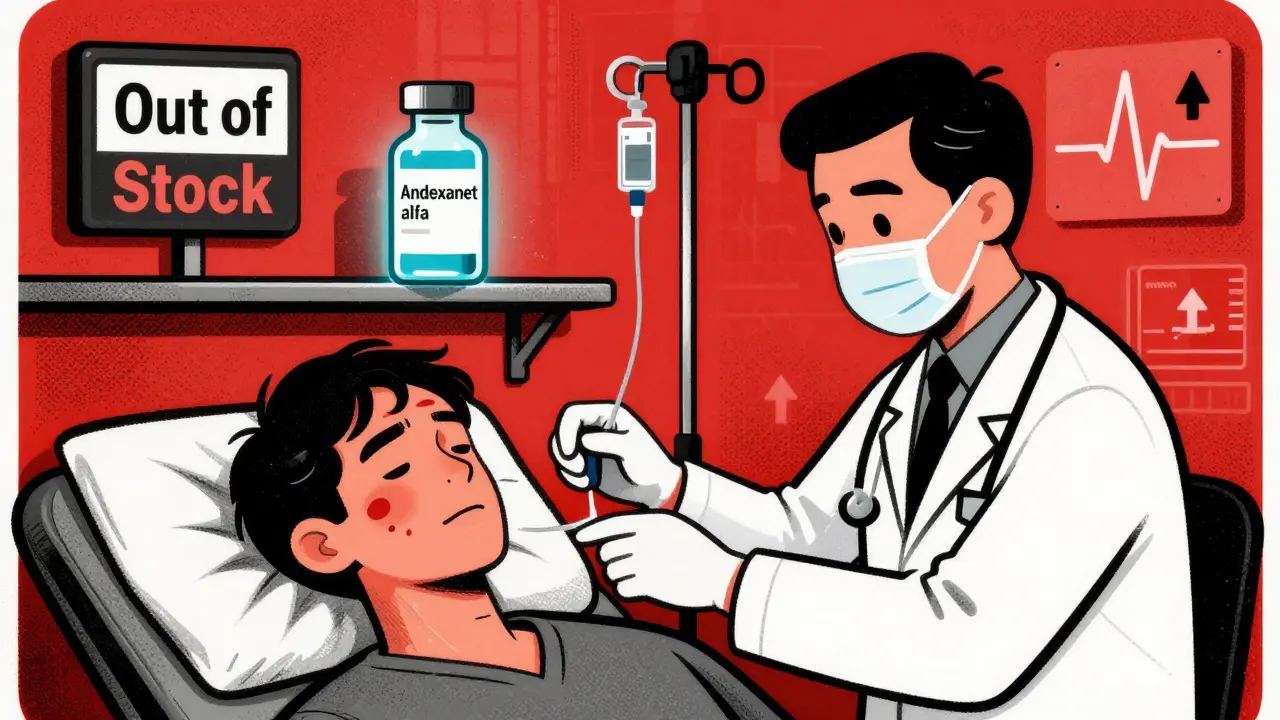
- Andexanet alfa (Andexxa®): This reverses factor Xa inhibitors - rivaroxaban, apixaban, and edoxaban. It’s more complex to use and costs around $17,000 per dose.
Here’s the problem: not every hospital has these drugs on hand. A 2023 survey found only 62% of U.S. hospitals stock idarucizumab. In rural areas, it’s worse. If someone on apixaban has a brain bleed and you don’t have andexanet alfa, you’re stuck using PCC - which works, but not as well.
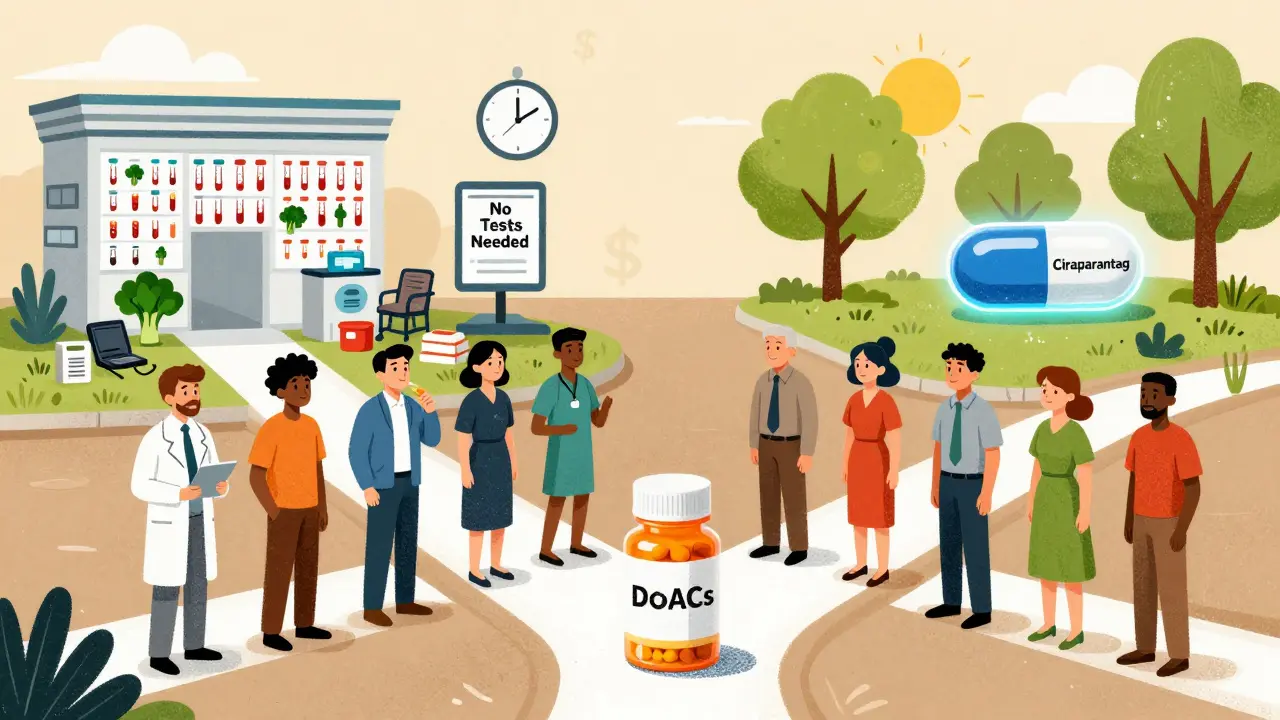
There’s also a new player in the pipeline: ciraparantag. It’s designed to reverse all DOACs and even heparin. It’s in late-stage trials and could be available by 2026. That would be a game-changer.
Cost, Access, and Real-World Challenges
DOACs cost 20 to 30 times more than warfarin. That’s not just a number - it affects whether people take their pills. A 2023 Medicare survey found 34% of beneficiaries skipped doses because of cost. For warfarin, it was 12%. When people don’t take their medication, their risk of stroke goes up - even if the drug is technically better.
Cost-effectiveness studies show DOACs save money long-term by preventing hospitalizations for bleeding and strokes. But that math doesn’t help someone choosing between rent and their prescription.
There’s also confusion among providers. A 2023 INR survey found 47% of community doctors still think DOACs need regular blood tests. That’s outdated. DOACs don’t require monitoring - unless there’s a specific reason like kidney failure, overdose, or major surgery.
Who Gets What? The Current Guidelines
Here’s what the experts say today:
- For atrial fibrillation (no mechanical valve): DOACs are first-line. Warfarin only if cost is a barrier or kidney function is very poor.
- For deep vein thrombosis or pulmonary embolism: DOACs are preferred. The 2023 CHEST guidelines gave this a strong recommendation.
- For cancer-related clots: DOACs like apixaban or rivaroxaban are now recommended over low-molecular-weight heparin (LMWH) - a shift based on 2022 trials showing similar effectiveness with fewer injections.
- For mechanical valves or antiphospholipid syndrome: Stick with warfarin.
There’s also a new twist: lower doses. Apixaban 2.5mg twice daily is now approved for patients over 80, under 60kg, or with high creatinine. Rivaroxaban 10mg daily is now an option for long-term clot prevention - with 33% less bleeding than the standard dose.
The Future: What’s Coming Next?
The next wave of anticoagulants is already in testing. One promising drug, milvexian, blocks factor XIa - a protein involved in clotting but not in normal stopping of bleeding. In a 2023 trial, it cut bleeding risk by 46% compared to apixaban. That’s huge.
Universal reversal agents like ciraparantag could make DOACs even safer. If we can reverse any blood thinner quickly and cheaply, doctors will feel more comfortable prescribing them - even to older, sicker patients.
Meanwhile, the market is shifting fast. DOACs made up 68% of the global anticoagulant market in 2022. By 2028, that’s expected to hit 82%. Warfarin will still be around - but only for the small group of patients who truly need it.
For most people, the choice is clear: DOACs offer better safety, less hassle, and stronger protection. But access, cost, and awareness still stand in the way. If you’re on a blood thinner, ask your doctor: Is this the right one for me? And if you’re on warfarin - are you getting the monitoring you need?
Are DOACs safer than warfarin?
Yes, for most people. DOACs reduce the risk of major bleeding by about 17% and stroke by 22% compared to warfarin, according to large clinical studies. They also carry a much lower risk of dangerous brain bleeds - up to 52% lower. However, they’re not safer for everyone. In people with very poor kidney function or mechanical heart valves, warfarin remains the better choice.
Do I need blood tests if I’m on a DOAC?
No, routine blood tests like INR are not needed for DOACs. They work predictably without monitoring. However, your doctor may check kidney function every year, or order a blood test if you have a major bleed, need emergency surgery, or have very low body weight or severe kidney disease.
What if I miss a dose of my DOAC?
If you miss a dose, take it as soon as you remember - but only if it’s still the same day. If it’s almost time for your next dose, skip the missed one. Never double up. DOACs have short half-lives, so missing one dose doesn’t immediately put you at high risk. But consistently missing doses increases your chance of a clot. Talk to your doctor if you’re struggling to remember your pills.
Can I switch from warfarin to a DOAC?
Yes, many people do. But it must be done carefully under medical supervision. Your doctor will check your INR, make sure it’s in the safe range, and then start the DOAC at the right time. You won’t take both at once. The switch is usually smooth, but timing matters to avoid gaps in protection or overlapping effects.
Why are reversal agents so expensive?
Reversal agents like idarucizumab and andexanet alfa are biologic drugs - complex proteins made in labs using living cells. They’re expensive to develop, produce, and store. Idarucizumab costs about $3,400 per vial, and andexanet alfa runs $17,000 per treatment. Insurance usually covers them in emergencies, but out-of-pocket costs can be high. Hospitals also need to stock them, which adds to the cost.
What to Do Next
If you’re on warfarin, ask your doctor: Is there a DOAC option for me? Are my INR levels stable? Are there any interactions I’m not aware of?
If you’re on a DOAC, make sure you know which one you’re taking and what to do if you miss a dose. Keep a list of your medications and share it with every provider you see - even dentists.
And if cost is a problem, ask about patient assistance programs. Many drugmakers offer discounts or free medication for qualifying patients. Don’t skip doses just because of the price - there are solutions.
The goal isn’t just to take a pill. It’s to stay safe, avoid strokes and clots, and live without fear. Whether it’s warfarin or a DOAC, the right choice is the one that fits your life - and your body.

Carlos Narvaez
December 25, 2025 AT 15:10Rick Kimberly
December 26, 2025 AT 13:07sagar patel
December 26, 2025 AT 13:47Linda B.
December 27, 2025 AT 22:06Bailey Adkison
December 28, 2025 AT 02:44Ben Harris
December 29, 2025 AT 03:22Terry Free
December 30, 2025 AT 12:07Gary Hartung
December 30, 2025 AT 20:51Christopher King
January 1, 2026 AT 10:10Michael Dillon
January 2, 2026 AT 00:18Katherine Blumhardt
January 2, 2026 AT 19:18Lindsay Hensel
January 3, 2026 AT 17:20Oluwatosin Ayodele
January 4, 2026 AT 08:23