

Living with vitiligo isn't just about skin color-it's about how you feel in your own skin. For many, the white patches aren't just a medical condition; they're a daily reminder of standing out in a world that rarely notices difference unless it's uncomfortable. That’s where vitiligo camouflage comes in. Not a cure. Not a replacement for treatment. But a powerful tool to help you feel like yourself again, even if just for the day.
What Vitiligo Camouflage Really Does
Vitiligo happens when melanocytes-the cells that give skin its color-die off. No one knows exactly why, but it’s linked to autoimmune activity. Medical treatments like light therapy or topical steroids can help, but they take months. And even then, results aren’t guaranteed. That’s where camouflage steps in. It doesn’t fix the cause. It fixes the look. And for many, that’s enough.
According to the Indian Journal of Dermatology, 78% of people with vitiligo actively look for cosmetic solutions. Why? Because confidence isn’t optional. Whether it’s wearing a tank top, walking into a job interview, or just swimming at the beach, the right camouflage can mean the difference between hiding and showing up.
Two Main Approaches: Temporary vs. Permanent
There are two clear paths: temporary coverage you apply every day, and permanent pigment that lasts months or years. Neither is better. They serve different needs.
Temporary camouflage includes specialized foundations, creams, and liquids. These aren’t your average drugstore concealers. They’re packed with up to 25% more pigment than regular makeup. Brands like Dermablend and Dermacolour were built for this. They’re designed to last 6 to 14 hours, resist sweat and water, and blend into skin tones that standard cosmetics can’t match.
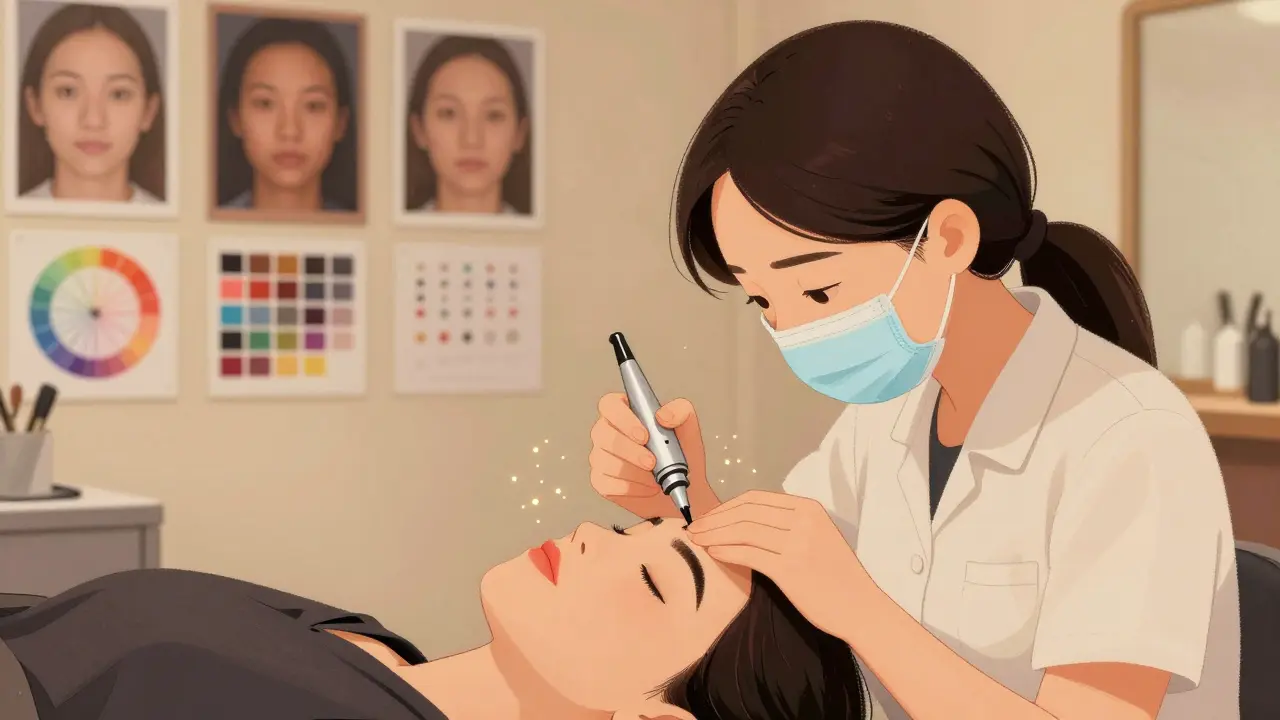
Permanent camouflage is micropigmentation-a tattoo-like technique using inert iron oxides. Unlike regular tattoos, the pigment is implanted just deep enough to stay stable without migrating. The particles are 6 microns in size, which keeps them safe and long-lasting. But this isn’t a quick fix. You need stable vitiligo for at least 12 months before even considering it. Active patches? Don’t do it. You risk uneven results or even darker halos around the treated area.
How Temporary Camouflage Works
Not all camouflage products are the same. There are three main types:
- Water-based: Best for normal or dry skin. Light, breathable, and easy to remove.
- Oil-free: Made with silicones like dimethicone. Ideal for oily skin or hot climates.
- Anhydrous (water-free): Thick, waterproof formulas with waxes and oils. Perfect for lips, eyelids, or anywhere you need all-day hold.
Applying them isn’t like putting on foundation. You need a method. Start with a gentle, pH-balanced cleanser. Pat skin dry. Then, match color under natural light. No indoor lighting. No phone screen. Sunlight is the only true judge of tone. Most people get it wrong the first few times. It takes 3 to 5 tries to learn how to layer and blend.
Water-based formulas set in 90 seconds. Anhydrous ones? You need 3 to 5 minutes. Rushing it leads to patchiness. Experts say 89% of people get it right after personalized training. That’s not magic. That’s practice.
And yes, SPF matters. These products offer SPF 2-3. Not enough for sun protection, but enough to help prevent further contrast between pigmented and depigmented skin. Still, always layer on real sunscreen underneath.

The Reality of Permanent Micropigmentation
Permanent camouflage sounds like the holy grail. No more daily routines. No more worrying about sweat or rain. But it’s not for everyone.
The procedure takes 2 to 3 sessions, spaced 6 to 8 weeks apart. Each session lasts 45 to 90 minutes. The technician uses a fine needle to implant pigment at 15-20 punctures per square centimeter. Too shallow? It fades fast. Too deep? It turns blue or gray. Precision matters.
It works best on stable patches on the face, lips, wrists, elbows, and axillae. Hands and feet? Not so much. Movement and friction cause pigment to fade 40% faster. One study found hand treatments needed 2.3 times more touch-ups than facial ones.
Cost? $300 to $800 per session. That’s not cheap. And it’s not covered by insurance. But for some, it’s worth it. Reddit user u/VitiligoWarrior said micropigmentation around the lips changed their life after 15 years. Meanwhile, u/Sunshine789 had uneven fading on knuckles after 8 months. Results vary. Stability of the condition is everything.
What People Actually Say
Survey data from the Vitiligo Society shows 82% satisfaction with foundation-based products. Dermablend scored 4.6 out of 5 for color matching. But users also report pain points: 31% struggle to remove waterproof formulas without irritation. 27% say the cost-$25 to $45 per product-is unsustainable long-term.
For permanent options, satisfaction is higher on the face (74%) than on hands (48%). That’s because facial skin is less mobile. The body’s movement literally wears away pigment faster.
And here’s something important: 63% of users felt frustrated at first with color matching. But after talking to a certified specialist, that dropped to under 10%. This isn’t DIY territory. Professional help makes all the difference.
Color Matching: The Secret Skill
You can’t just pick a shade that looks right in the store. Skin tone isn’t one color. It has undertones-cool, warm, neutral. Vitiligo patches can look pinkish, grayish, or even yellowish depending on lighting and your natural skin tone underneath.
That’s why color theory matters. A slightly orange-toned product can neutralize a gray patch. A hint of red can counteract a cool, ashy look. Professionals use complementary colors like a painter uses a palette. You don’t need to be an artist. But you do need to learn.
Most brands now offer virtual color matching. L’Oréal’s ModiFace tech is in beta testing and expected to launch in Q2 2024. For now, clinics like NUE Conceal and the Dermopigmentation Center in Marbella offer online consultations with real specialists who guide you through shade selection.
What You Should Know Before Starting
- Camouflage is not a cure. It’s a complement. Keep up with medical treatments.
- Never do micropigmentation if your vitiligo is still spreading. Wait at least 12 months.
- Test products on a small patch first. Some ingredients can irritate sensitive skin.
- Remove waterproof formulas gently. Use oil-based cleansers or micellar water. Harsh scrubbing damages skin.
- Cost adds up. Temporary products can run $1,000 a year. Permanent is a one-time investment but still expensive.
- Training is key. Don’t skip professional application lessons. They save time, money, and frustration.
Where the Market Is Headed
The global cosmetic camouflage market hit $1.27 billion in 2022. Vitiligo-specific products make up about 18% of that. North America leads, but Asia-Pacific is growing fastest. More people are talking about it. More brands are investing.
Future tools? AI-powered apps that scan your skin and recommend the perfect shade. Wearable devices that monitor patch stability. Better pigments that last longer on hands and feet.
But the core truth hasn’t changed: camouflage isn’t about hiding. It’s about reclaiming control. It’s about choosing when and how you show up.

Christopher Wiedenhaupt
February 26, 2026 AT 01:24Vitiligo camouflage is one of those things that sounds niche until you need it. I didn’t realize how much emotional weight goes into finding the right shade until I saw a friend spend three hours matching under natural light. It’s not vanity-it’s dignity.
Professional application makes all the difference. I’ve seen people waste hundreds on products that look like clown makeup because they skipped training. Worth every penny to get it right.
John Smith
February 26, 2026 AT 13:31Shalini Gautam
February 26, 2026 AT 20:38As someone from India where this topic is still whispered about, I’m so glad we’re finally talking openly. My cousin used Dermablend for her wedding-and yes, she looked stunning. No one even noticed it was camouflage. That’s the goal, right? To be seen, not labeled.
Also, the micropigmentation clinics in Mumbai are world-class now. Far better than some places in the US. Should be on everyone’s radar.
Nandini Wagh
February 26, 2026 AT 22:33Holley T
February 27, 2026 AT 02:58I get why people want this, but let’s be real-camouflage is just another way society tells us to shrink ourselves to fit in. Why not just embrace the patches? Why not teach people to stop staring? Why not fix the problem instead of hiding it?
And don’t even get me started on the cost. $1000 a year on makeup? That’s a luxury tax on being different. Meanwhile, real healthcare access for autoimmune conditions? Still a pipe dream.
Ashley Johnson
February 27, 2026 AT 20:05tia novialiswati
February 27, 2026 AT 22:31Brooke Exley
February 28, 2026 AT 13:28Let me tell you something: I used to wear long sleeves in 95-degree heat because I was terrified of stares. Then I found a specialist who taught me how to layer with complementary tones-orange to neutralize gray, a whisper of red to fight the ashy look. It’s like magic.
And the micropigmentation? Life-changing. Not because I’m ashamed-but because I’m tired of explaining. Now I wear tank tops without rehearsing my story. That’s power. Not hiding. Choosing. Owning it.
Alfred Noble
March 1, 2026 AT 01:32