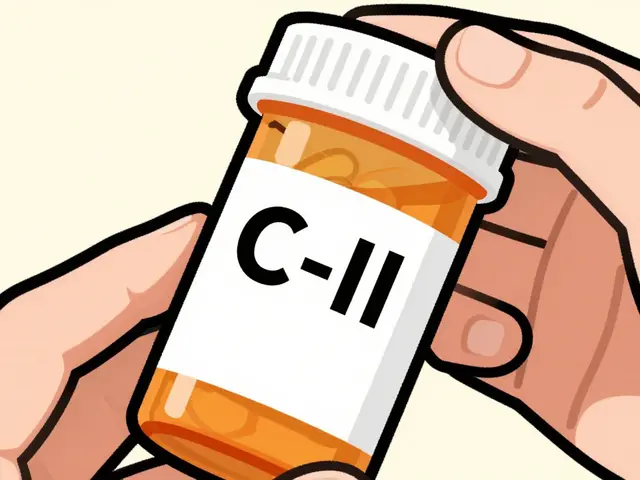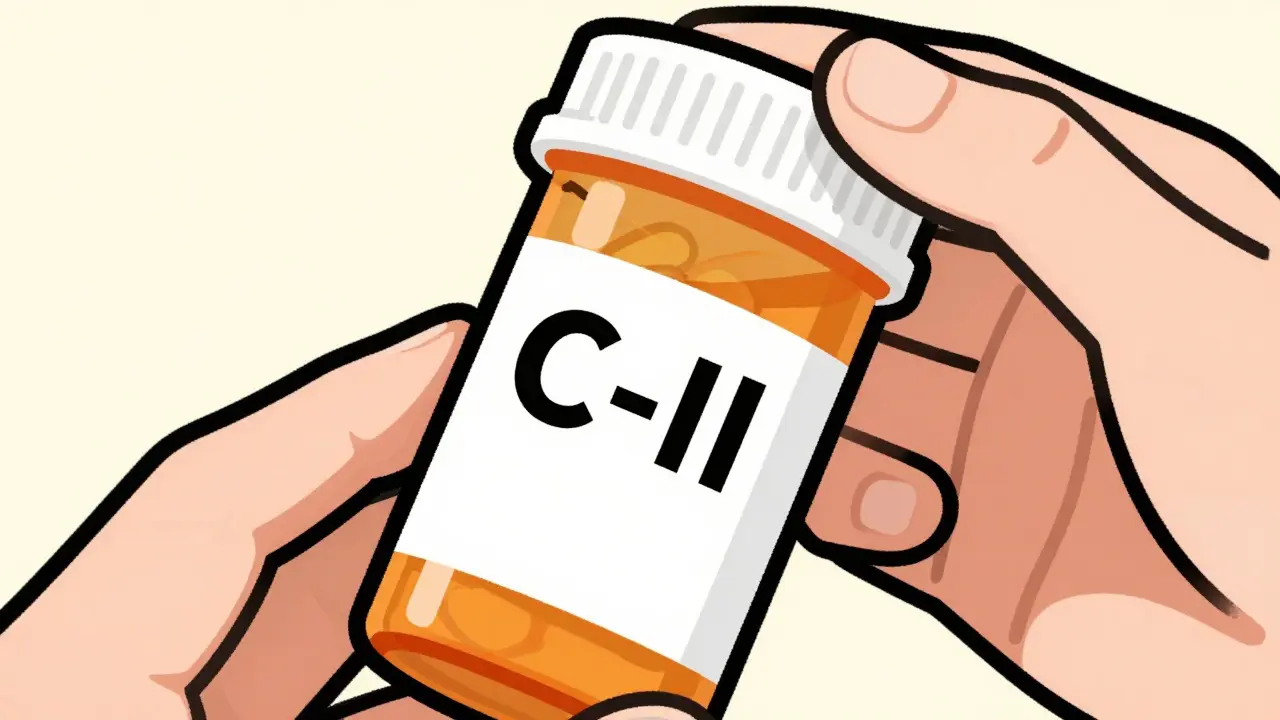
Ever looked at your prescription bottle and wondered why there's a strange code like "C-II" or "C-IV" on the label? Or why your pharmacist tells you that your medication can't be refilled, even if your doctor said you'd need it for a month? These aren't random pharmacy codes. They are markers of a strict federal system designed to keep dangerous medications from being misused while ensuring patients who truly need them can get them.
The labels on these medications are governed by the Controlled Substances Act (CSA), a federal law that classifies drugs based on how likely they are to be abused and whether they have a recognized medical use. By understanding these controlled substance labels and the schedule codes behind them, you can better navigate your healthcare, manage your refills, and understand the risks associated with your treatment.
The Basics of Drug Scheduling
In the United States, the Drug Enforcement Administration (DEA) manages a "closed system" of distribution. This means every person who touches a controlled substance-from the manufacturer to the doctor to the pharmacist-must be registered with the government. This allows authorities to track exactly how many pills of a specific drug enter a community and where they go.
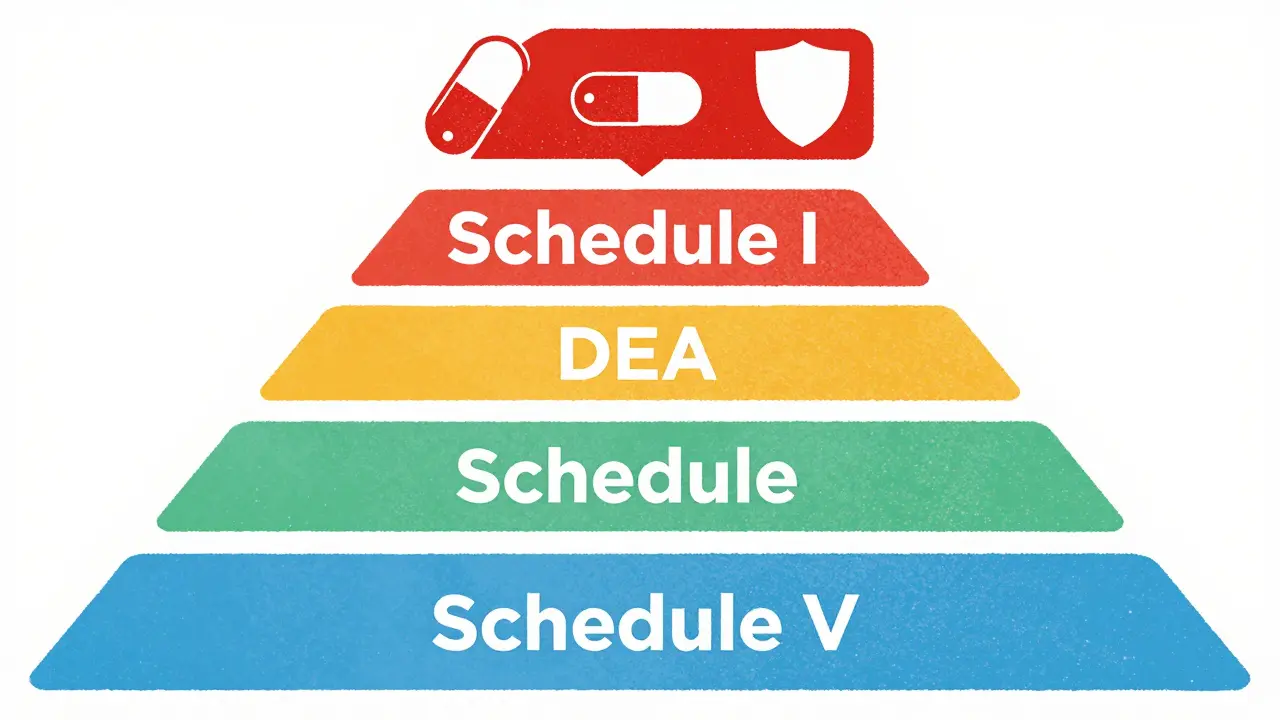
Drugs are placed into one of five "schedules." Think of these as risk levels. Schedule I is the most restrictive (and generally illegal for medical use), while Schedule V is the least restrictive. These decisions are based on scientific evidence, the history of how a drug has been abused, and its potential to cause physical or psychological dependence.
Breaking Down the Five Schedules
When you see a schedule code on your label, it's telling you exactly where your medication fits into the federal risk hierarchy. Here is a breakdown of what those codes actually mean for you as a patient.
| Schedule | Abuse Potential | Medical Use | Examples | Refill Rules |
|---|---|---|---|---|
| Schedule I | Highest | None accepted | Heroin, LSD | Cannot be prescribed |
| Schedule II | High | Accepted | Oxycodone, Fentanyl | No refills allowed |
| Schedule III | Moderate to Low | Accepted | Ketamine, Tylenol w/ Codeine | Max 5 refills / 6 months |
| Schedule IV | Low | Accepted | Xanax, Ambien | Max 5 refills / 6 months |
| Schedule V | Lowest | Accepted | Pregabalin, some cough syrups | Varies by state/pharmacist |
Why Some Medications Change Schedules
You might notice that a drug like codeine doesn't always have the same code. This is because the Food and Drug Administration (FDA) looks at the concentration and combination of the drug, not just the active ingredient. For example, pure codeine is a Schedule II substance because it's powerful and dangerous. However, if that codeine is mixed into a cough syrup with a very small amount of the drug, it might be labeled as Schedule V.
This nuance is why your pharmacist might treat two different "codeine" prescriptions very differently. One might require a hardcopy paper prescription and a strict ID check, while the other is handled more like a standard medication.
What to Expect at the Pharmacy Counter
Depending on the schedule of your medication, your experience at the pharmacy will change. If you are picking up a Schedule II drug, be prepared for a few more hurdles. In many states, these prescriptions must be written on special tamper-resistant paper to prevent forgery. Because refills are legally prohibited for Schedule II substances, you cannot simply call the pharmacy to get another month's supply; your doctor must send a brand new prescription every single time.
For those with Schedule III or IV medications, the process is smoother. You generally have a window of six months to use up to five refills. However, once that time limit hits or the fifth refill is gone, the clock resets and you'll need a new script. If you're using a Schedule V medication, you might find that some are available over-the-counter in certain states, though this is becoming rarer as regulations tighten.
Common Labels and Symbols to Watch For
Beyond the "C-I" through "C-V" codes, you might see other markings on your packaging. The DEA uses a specific system called the Controlled Substance Code Number (CSCN). While you won't see the full code on your bottle, you might see abbreviations like "NARC" (meaning Narcotic) or "CSA SCH" (referring to the act itself) in the pharmacy's internal notes or on the printed label.
It is also common to see a warning sticker on the bottle. These are often required by state law to alert you that the medication may cause drowsiness or has a risk of dependency. Don't ignore these; they are directly tied to the risk profile that put the drug in its specific schedule in the first place.

The Real-World Impact of Scheduling
The scheduling system isn't without its flaws. There is often a tension between federal law and state law. For instance, many states have legalized medical cannabis, yet federally, it remains a Schedule I substance. This creates a confusing legal grey area for patients and providers.
From a practical standpoint, these regulations can add time to your healthcare visit. Doctors spend hours in training just to learn how to handle these drugs, and pharmacies often take longer to process Schedule II orders due to the intense documentation required. If your pharmacist asks for a second ID or asks you to sign a registry, they aren't being difficult-they are following federal mandates to prevent "diversion" (the illegal distribution of prescription drugs).
Can I get a refill for a Schedule II medication?
No. By federal law, Schedule II medications cannot be refilled. Your healthcare provider must issue a new prescription for every single fill. If you run out of medication early, you will need to contact your doctor for a new script; the pharmacy cannot legally "advance" these medications.
Why is my medication labeled as "Controlled" if it's for a legitimate health issue?
"Controlled" doesn't mean the drug isn't safe for you. It means the drug has a potential for misuse or addiction if taken incorrectly. The label is a regulatory tool used by the DEA to monitor the drug's flow and ensure it is used only for the intended medical purpose.
What is the difference between Schedule III and Schedule IV?
The primary difference is the level of abuse potential. Schedule III drugs have a moderate to low potential for dependence, while Schedule IV drugs have a low potential. In terms of refills, both generally allow up to five refills within a six-month period, though specific state laws may vary.
Do I need a special ID to pick up controlled substances?
While not a federal requirement for every single drug, most pharmacies have strict internal policies and state laws that require a valid government-issued photo ID to pick up any medication in Schedules II through V to prevent prescription fraud.
What happens if I lose my controlled substance medication?
Losing a controlled substance is a serious matter. You should report the loss to your doctor and potentially the police (via a non-emergency line) to get a police report. Because of the strict tracking, doctors are often hesitant to replace lost controlled substances without a formal report to avoid suspected misuse.
Next Steps for Patients
If you are starting a new medication that is classified as a controlled substance, take these steps to avoid stress at the pharmacy:
- Check your refill date: If you have a Schedule III or IV drug, mark your calendar for the six-month expiration date.
- Request prescriptions early: Because Schedule II drugs require a new script every time, give your doctor at least a week's notice before you run out.
- Use one pharmacy: Using a single pharmacy helps the pharmacist spot potential drug interactions and makes it easier for them to manage your controlled substance history.
- Ask about generics: Some scheduled drugs have generic versions that are more affordable but carry the same schedule code and restrictions.