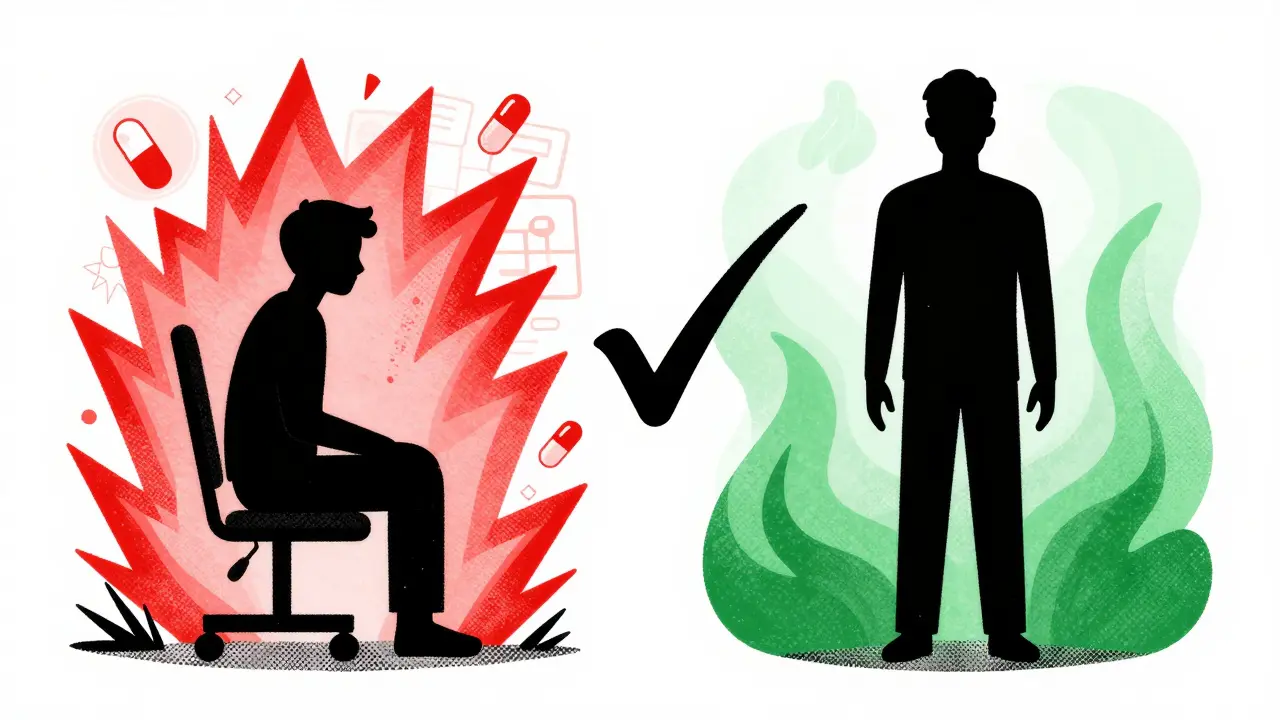
Living with chronic pain that won’t go away is exhausting. You’ve likely tried medications, physical therapy, and maybe even injections, only to find the relief fades or the side effects become too much to handle. For many people in this situation, spinal cord stimulation (SCS) offers a lifeline. It’s not a cure, but for the right person, it can turn constant agony into manageable discomfort, allowing you to walk, work, and sleep again.
But here’s the catch: SCS isn’t for everyone. It involves surgery, expensive equipment, and a learning curve. If you’re considering it, you need to know exactly how it works, who qualifies, and what the real-world risks are. This guide breaks down the science, the selection process, and the practical realities of living with an implanted device.
What Is Spinal Cord Stimulation?
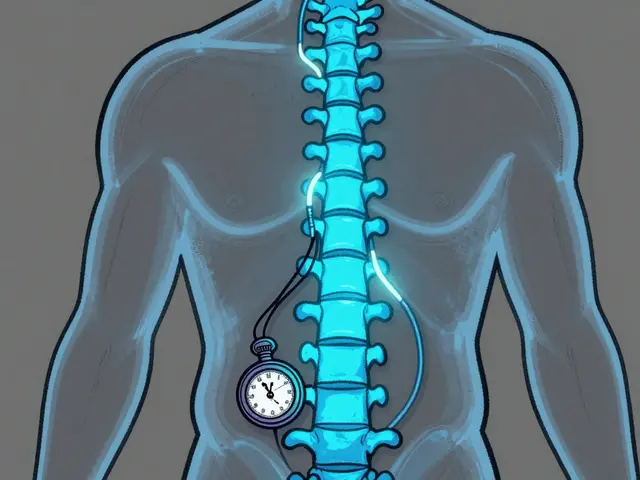
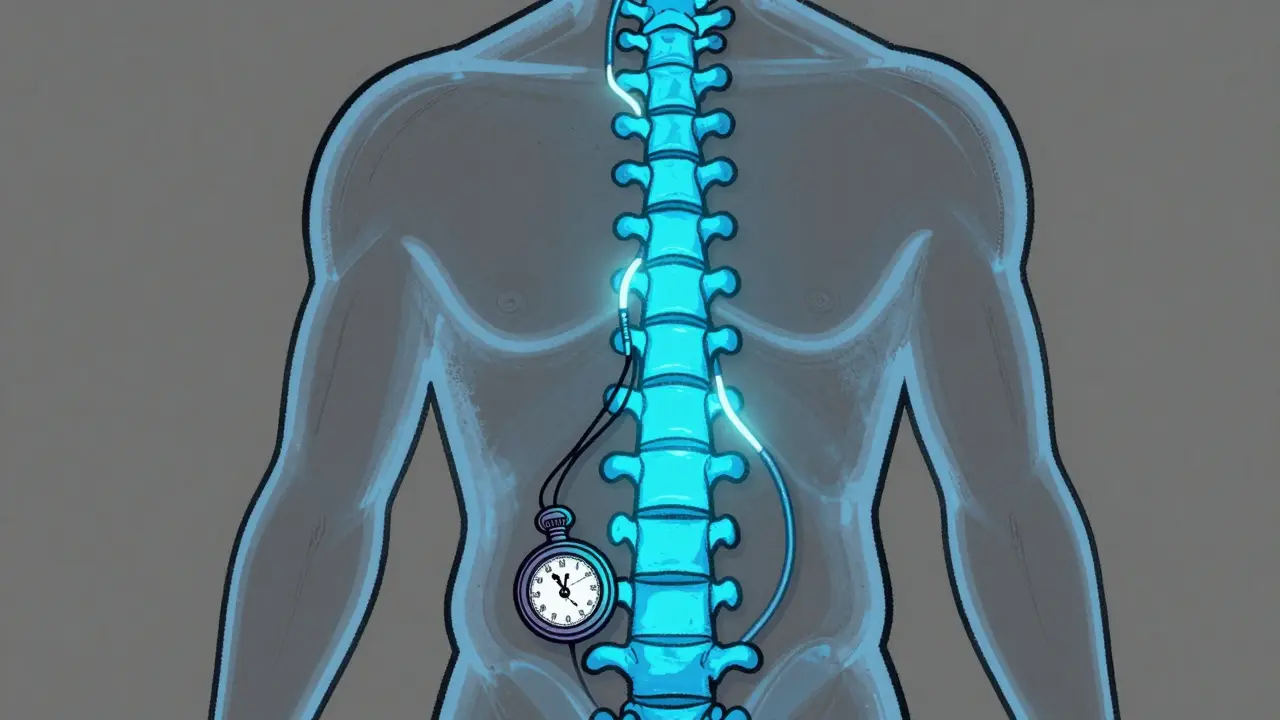
Spinal cord stimulation is a neuromodulation technique that uses pulsed electrical energy delivered via implanted electrodes in the epidural space to manage chronic intractable pain. It was first developed in 1967 by Dr. C. Norman Shealy. Originally, doctors placed electrodes inside the spinal fluid (intrathecal), but today, the standard is placing leads in the epidural space-the area just outside the protective covering of the spinal cord.
Think of it as a pacemaker for your pain signals. Instead of stopping the pain entirely, the device interferes with the signals traveling from your body to your brain. The result? Your brain perceives less pain. According to clinical studies published in *Neuromodulation: Technology at the Neural Interface*, between 56% and 85% of properly selected patients achieve significant success, typically defined as a 50% or greater reduction in pain.
The system has two main parts:
- Leads: Thin wires with electrodes that sit near the spinal cord.
- Implantable Pulse Generator (IPG): A battery-powered device, about the size of a pocket watch, usually placed under the skin in your abdomen or buttock.
Major manufacturers like Boston Scientific, Medtronic, and Abbott dominate this space. Their systems vary in technology, battery life, and compatibility with MRI scans, which matters if you need other imaging tests in the future.
How Does the Technology Work?
Early SCS devices created a tingling sensation called paresthesia. Many patients found this annoying or distracting. Modern technology has moved beyond that. Today’s systems manipulate three electrical parameters: frequency (Hertz), amplitude (milliamps), and pulse width (microseconds).
| Waveform Type | Frequency Range | Patient Sensation | Best For |
|---|---|---|---|
| Tonic (Traditional) | 30-120 Hz | Tingling (Paresthesia) | Patients who prefer feeling the stimulation |
| Burst | 40 bursts/sec (500 Hz spikes) | No tingling; natural rhythm | Complex neuropathic pain |
| High-Frequency (HF10) | 1,000-10,000 Hz | No sensation (Paresthesia-free) | Failed back surgery syndrome |
High-frequency stimulation, operating at 1,000 Hz or higher, is a game-changer for many. It provides pain relief without the tingling sensation. Systems like Boston Scientific’s WaveWriter Alpha™ Prime have shown high rates of paresthesia-free therapy. Additionally, most modern devices use constant current (CC) delivery rather than constant voltage. A 2019 Mayo Clinic study found that 68% of patients preferred CC because it maintained consistent output regardless of impedance changes, leading to more comfortable and effective pain control.
Who Is a Good Candidate?
This is the most critical question. Spinal cord stimulation fails when the wrong patient gets it. Experts emphasize that psychological screening is just as important as anatomical checks. Patients with untreated major depression show significantly lower success rates-up to 35% lower according to data from the *Neuromodulation Journal*.
You might be a good candidate if you meet these criteria:
- Chronic Pain Duration: You have suffered from pain for at least 12 to 24 months.
- Failed Conservative Care: Medications, physical therapy, and injections haven’t provided lasting relief.
- Defined Pain Source: Your pain generator is clear. Common conditions include Failed Back Surgery Syndrome (FBSS), Complex Regional Pain Syndrome (CRPS) types I and II, and intractable low back or leg pain.
- Positive Trial Response: During a temporary test period, you experienced at least 50% pain relief.
Conversely, you are likely not a candidate if you are pregnant, unable to operate the remote control, or considered a poor surgical risk due to other health issues. Also, if your pain is primarily in localized extremities rather than axial back pain, peripheral nerve field stimulation might be a better option, as SCS shows superior efficacy for back pain (78% success rate) but inferior results for isolated limb pain compared to other methods.
The Process: From Trial to Implant
Doctors don’t just jump straight to permanent surgery. The process is designed to ensure you actually get benefit before committing to the hardware.
Phase 1: The Trial Period
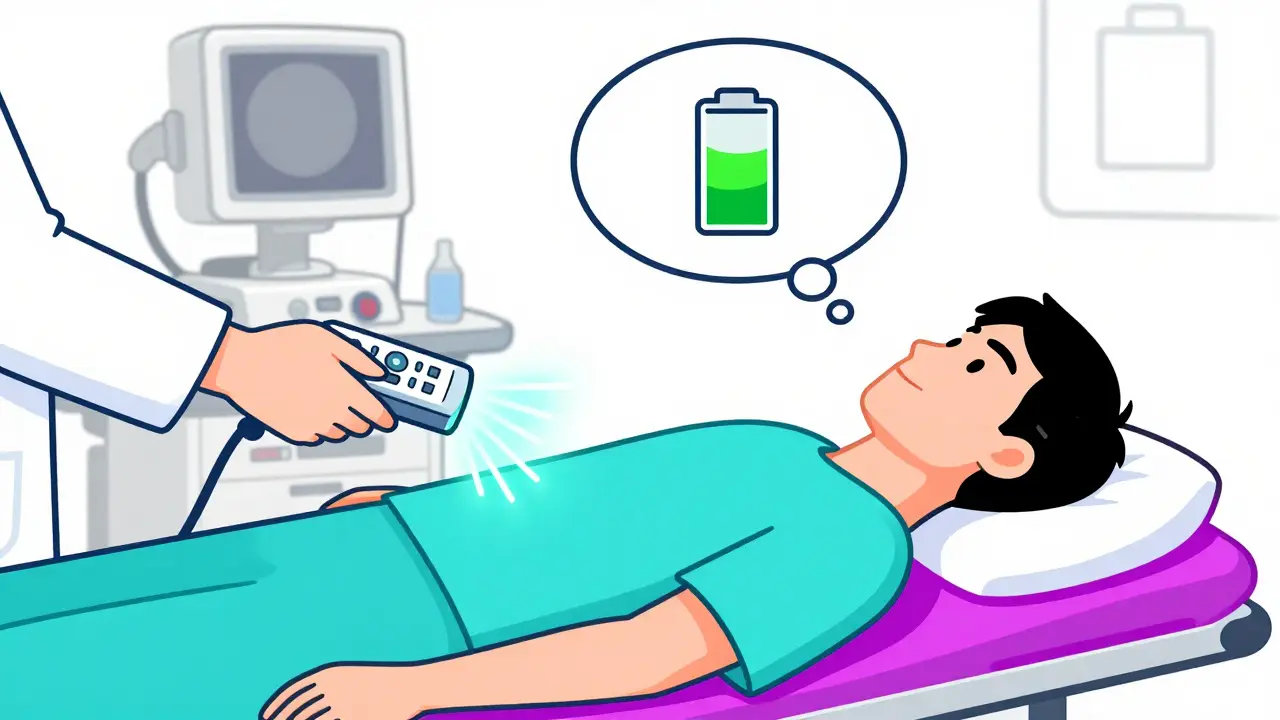
This lasts 5 to 7 days. Under sedation and using fluoroscopic guidance (live X-ray), a doctor places temporary percutaneous leads in your epidural space. These connect to an external pulse generator worn on a belt or attached to your skin. You go home with it.
Your job during the trial is simple: track your pain levels and function. Did you walk further? Sleep better? If you achieve ≥50% pain relief, the trial is considered successful. If not, the leads are removed, and no permanent implant occurs.
Phase 2: Permanent Implantation
If the trial succeeds, you schedule the surgery. It takes 60 to 90 minutes. The surgeon places the permanent leads and tunnels them under the skin to the IPG site, usually in the abdomen or buttock. The incision is small, but it is still surgery.
Afterwards, there’s a learning curve. About 89% of patients require at least one follow-up session with their physician to program the device correctly. You’ll learn to adjust settings based on your activity level and pain patterns.
Risks, Costs, and Real-World Challenges
Let’s talk about the downsides. No medical procedure is perfect, and SCS carries specific risks and costs that you must weigh against the potential benefits.
Surgical Risks: Infection rates range from 3.8% to 7.2%. If an infection occurs, the entire system often needs to be removed until it heals. Lead migration is another common issue, happening in about 15.3% of cases within the first six months. This causes the stimulation pattern to shift, requiring revision surgery to reposition the leads.
Long-Term Maintenance: Batteries die. Depending on the system and usage, you may need replacement surgery every 5 to 9 years. Newer models like the WaveWriter Alpha™ Prime offer up to 24 months of battery life, but long-term users should expect multiple surgeries over a decade.
Financial Burden: The complete system, including implantation, can cost between $25,000 and $45,000 in the U.S. While Medicare covers approved indications like FBSS and CRPS, patients often face out-of-pocket costs ranging from $5,000 to $10,000 for deductibles and co-pays. Private insurance varies wildly, so verify coverage details before proceeding.
Efficacy Over Time: Success isn’t always permanent. A 2022 meta-analysis in *Pain Medicine* noted that while initial relief is strong, only 52% of patients maintain significant pain relief at five years. Some experts argue this drop-off suggests placebo effects diminishing over time, highlighting the need for rigorous patient selection.
Alternatives to Consider
If SCS feels too invasive or risky, what else is there?
- Opioid Therapy: While effective for some, long-term opioid use carries high risks of dependency and side effects. A 2021 *JAMA Network Open* study showed SCS patients had 57% lower opioid utilization at 12 months compared to those on optimized medical management alone.
- TENS Units: Transcutaneous Electrical Nerve Stimulation units are non-invasive and cheap ($50-$200). However, they provide significantly less effective relief for chronic, severe conditions like FBSS.
- Injections: Epidural steroid injections or nerve blocks can provide temporary relief but do not address the underlying neuromodulation need for chronic cases.
Frequently Asked Questions
Does spinal cord stimulation completely stop pain?
No, SCS rarely eliminates pain entirely. Its goal is to reduce pain by at least 50%, making it manageable enough to improve quality of life, sleep, and mobility. Most successful patients report significant relief but still experience some background discomfort.
How long does the battery last in a spinal cord stimulator?
Battery life depends on the model and usage settings. Traditional systems last 5 to 9 years. Newer high-frequency and rechargeable models, such as the WaveWriter Alpha™ Prime, can last up to 24 months or longer depending on daily stimulation hours. Rechargeable options extend life but require daily charging routines.
Can I have an MRI with a spinal cord stimulator?
It depends on the system. Older models are generally not MRI-compatible. Newer systems, like the Precision Montage™ MRI, are "MRI conditional," meaning you can undergo full-body MRI scans at 1.5T or 3.0T strengths if specific safety protocols are followed. Always inform radiologists about your implant before any scan.
What happens if the trial stimulation fails?
If you do not achieve at least 50% pain relief during the 5-7 day trial, the temporary leads are simply removed. There is no permanent implant, and you incur no long-term surgical risks. This step ensures you only commit to surgery if you genuinely benefit from the therapy.
Is spinal cord stimulation covered by insurance?
Medicare covers SCS for specific conditions like failed back surgery syndrome and CRPS. Private insurance varies by plan. While the procedure is often covered, patients frequently face out-of-pocket costs for deductibles, co-pays, and potentially uncovered components. Verify your specific policy details and pre-authorization requirements with your provider before scheduling the trial.