

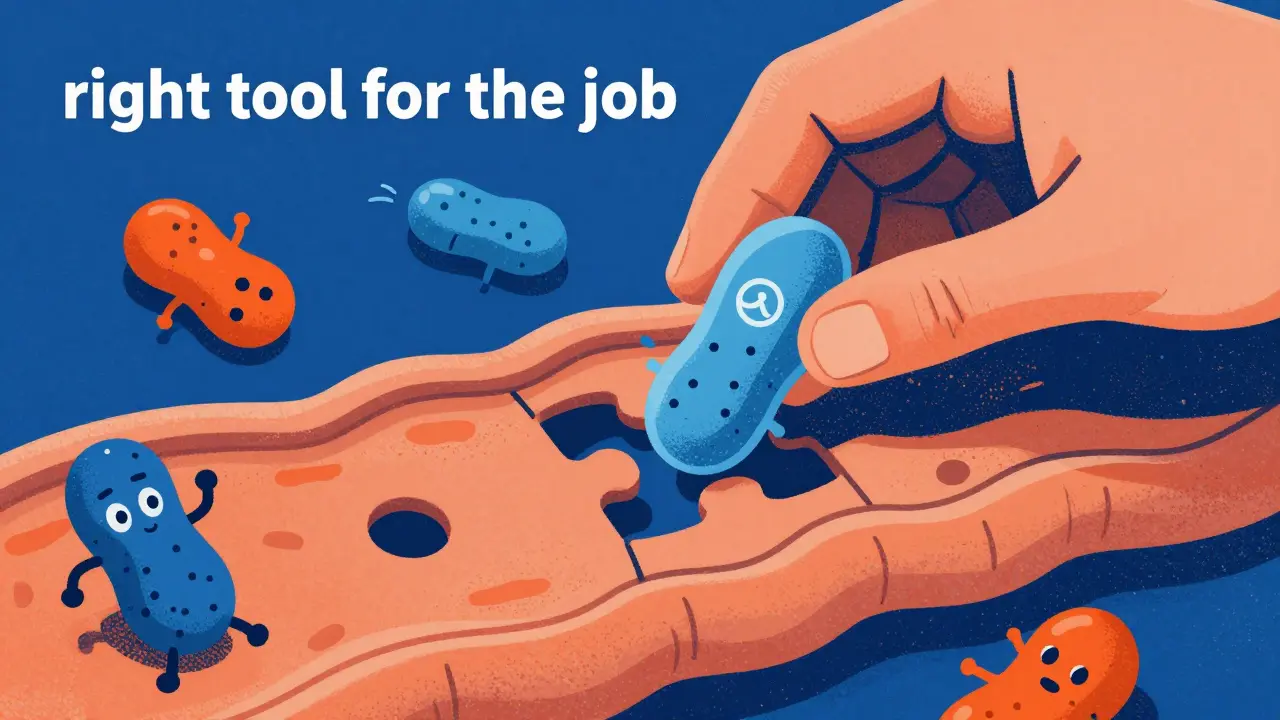
The short answer is that they do work, but not in the way most marketing makes it seem. A probiotic isn't a generic "health pill"; it's a specific tool. Using the wrong strain for your specific issue is like trying to use a screwdriver to hammer in a nail-it's the right category of tool, but the wrong shape for the job.
The Basics of Your Inner Ecosystem
Before picking a supplement, you have to understand what you're trying to change. Inside you, there's a massive community called the gut microbiome is a complex ecosystem of roughly 100 trillion microorganisms, including bacteria, fungi, and viruses, primarily residing in the large intestine. This system doesn't just digest food; it trains your immune system and even influences your mood. While there are over 1,000 different species living there, about 95% of the population belongs to just 40 to 50 species.
When this balance gets thrown off-maybe by a round of heavy antibiotics or a bout of food poisoning-you feel it. This is where Probiotics are live microorganisms that, when administered in adequate amounts, provide a health benefit to the host. Their main job is to crowd out the bad bacteria and help your gut return to its natural state of balance.
Matching the Strain to the Symptom
Here is the most important rule of digestive supplements: strain specificity matters. You can't just look for "Lactobacillus" and hope for the best. Different strains within the same species act like different people from the same family-they have the same last name, but totally different personalities and skills.
For example, if you're dealing with acute infectious diarrhea, especially in children, Lactobacillus rhamnosus GG (also known as LGG) is one of the most backed-up options. Research involving over 12,000 participants showed a 36% reduction in the risk of diarrhea lasting longer than 48 hours. In contrast, some other strains show almost no effect for this specific problem.
If your issue is Antibiotic-Associated Diarrhea (AAD), LGG is again a heavy hitter. Studies suggest that taking doses between 4×10^8 and 12×10^10 CFU for a few weeks can cut the risk of AAD nearly in half, dropping it from about 22% down to 12%.
| Strain | Primary Use Case | Typical Evidence Level |
|---|---|---|
| Lactobacillus rhamnosus GG (LGG) | Infectious & Antibiotic-Associated Diarrhea | High (RCT backed) |
| Saccharomyces boulardii | Acute Diarrhea / Traveler's Diarrhea | High |
| Lactobacillus plantarum DSM 9843 | IBS (Pain and Flatulence) | Moderate |
| S. salivarius / L. delbrueckii | Lactose Tolerance | EFSA Endorsed |
How Probiotics Actually Work
They aren't just "good bugs" that move in and start cleaning. They use several complex mechanisms to fix your gut. First, they produce short-chain fatty acids, which act as fuel for the lining of your colon. Second, they physically block pathogens from sticking to your intestinal walls-basically taking up all the "parking spaces" so the bad bacteria have nowhere to go.
They also talk to your immune system. For instance, Lactobacillus reuteri is known to increase the presence of specific T lymphocytes in the ileal epithelium, which essentially puts your gut's security system on high alert against intruders.
The Reality Check: When They Don't Work
Despite the $50 billion market, probiotics aren't magic. If you have Crohn's Disease, for example, the evidence is pretty slim. A systematic review of 12 trials showed that while some probiotics might help with ulcerative colitis, they don't really move the needle for Crohn's. Similarly, the results for Irritable Bowel Syndrome (IBS) are a mixed bag; some people swear by them, while others feel absolutely no difference.
There's also the "individual baseline" problem. Your microbiome is as unique as your fingerprint. Because everyone starts with a different microbial balance, a strain that works for your friend might do nothing for you. This is why we're seeing a shift toward "precision probiotics" and personalized testing from companies like Viome, though these are still in the early stages of widespread adoption.
How to Take Them (And Avoid Common Pitfalls)
If you've decided to try a supplement, don't just swallow a pill and hope. Timing and quality are everything.
- The Antibiotic Gap: If you're taking probiotics to prevent antibiotic side effects, don't take them at the same time. The antibiotic will just kill the probiotic bacteria immediately. Wait at least 2 hours between the two.
- The Adjustment Period: Expect some gas and bloating for the first 3 to 7 days. This is normal. Your gut is essentially undergoing a "population shift," and the byproduct is often a bit of extra air.
- Check the Label: Look for CFU (Colony-Forming Units). This tells you how many live cells are in the dose. However, be wary-some tests have found that up to 30% of supplements contain far fewer live organisms than they claim.
- Storage Matters: Some strains are fragile and need a fridge. Others, like the yeast-based Saccharomyces boulardii, are shelf-stable. If your bottle says "Refrigerate," don't leave it on the counter, or you're essentially paying for dead bacteria.
Who Should Be Careful?
For most healthy people, probiotics are safe. But they aren't for everyone. If you are severely immunocompromised or very ill, introducing massive amounts of live bacteria into your system can be dangerous. There have been rare but serious cases of bacteremia (bacteria in the blood) in hospital patients. Always talk to a doctor if you have a compromised immune system before starting a high-CFU regimen.
How long does it take to feel a difference?
While some people notice a reduction in bloating within a few days, clinical evidence suggests it typically takes 2 to 8 weeks of consistent use for the microbial balance to shift enough to provide lasting benefits.
Are probiotics better than fermented foods?
Fermented foods like kefir and sauerkraut provide a broad spectrum of bacteria, which is great for general maintenance. However, for a specific medical issue (like AAD), a targeted supplement with a researched strain like LGG is usually more effective because you get a guaranteed, high dose of the specific strain you need.
Can I take probiotics every day forever?
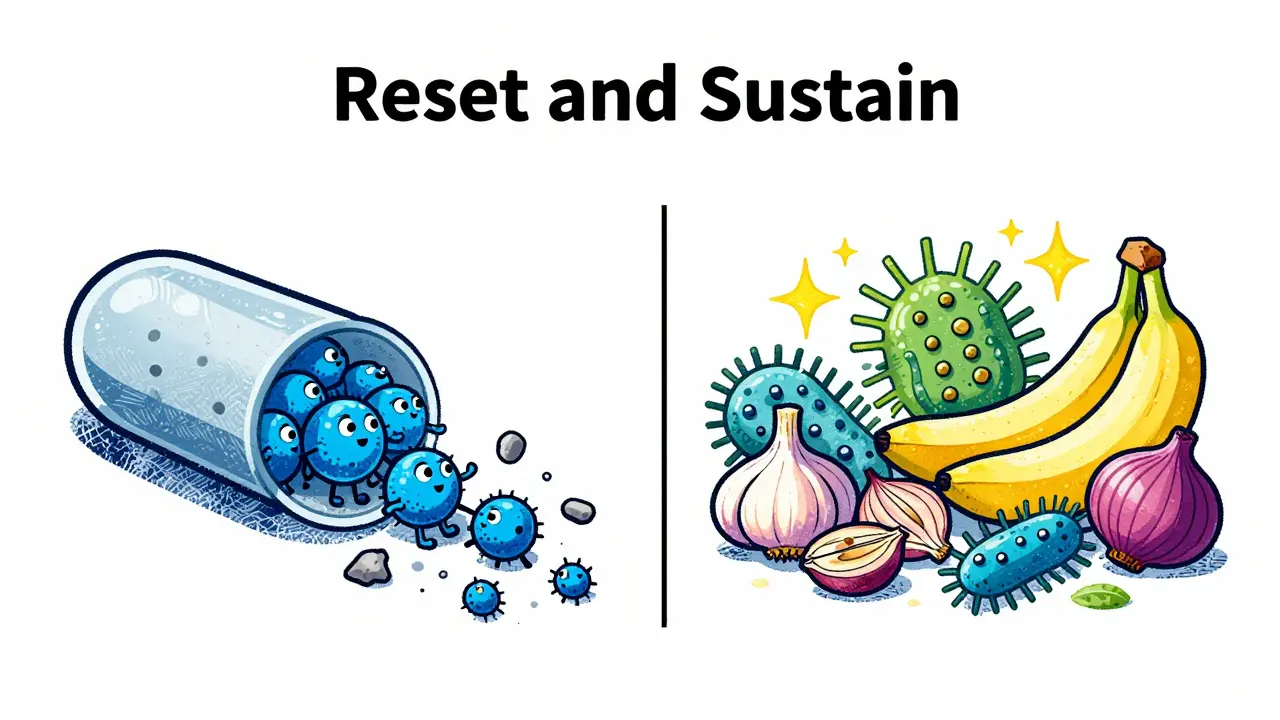
Generally, yes, but it's often more effective to use them as a "reset" tool. Many practitioners suggest using them during and after antibiotic treatment or during a flare-up, then transitioning to a diet rich in prebiotics (fiber) to sustain your own natural bacteria.
What is the difference between a probiotic and a prebiotic?
A probiotic is the live bacteria itself. A prebiotic is essentially "food" for those bacteria-usually non-digestible fibers found in garlic, onions, and bananas. You need prebiotics to help the probiotics survive and thrive in your gut.
How do I know if a probiotic brand is reputable?
Look for third-party certifications like USP or NSF International. These organizations verify that what is on the label is actually in the bottle. Also, check if the brand lists the specific strain (e.g., LGG) rather than just the species (Lactobacillus).
What to do next
If you're struggling with digestive issues, start by tracking your symptoms for a week. If you're currently on antibiotics, start an LGG-based probiotic but remember the 2-hour gap. If you're trying to manage general bloating, try a variety of fermented foods first. If those don't work, move to a targeted supplement and give it at least a month before deciding if it's working for your specific biology.

Rauf Ronald
April 5, 2026 AT 13:14The part about the "antibiotic gap" is honestly the most underrated tip here. So many people just take everything at once and wonder why they aren't feeling any better!
If you're looking to maximize the effect, I'd also suggest looking into prebiotics like chicory root or dandelion greens to really give those new colonies a chance to settle in. Keep at it, everyone!
Brady Davis
April 6, 2026 AT 08:09Oh sure, because paying $50 for a bottle of "fancy bacteria" is exactly how I wanted to spend my weekend. Truly a revolutionary way to throw money into a toilet.
Toby Sirois
April 7, 2026 AT 15:09Most of you don't even get it. You think a pill fixes you? Wrong. Your gut is a mirror of your soul. If you're stressed, no amount of LGG will save you. You need to align your energy first. Simple as that. I've seen a thousand people fail because they trust a label instead of their own spirit.
Vivek Hattangadi
April 9, 2026 AT 06:44I totally agree with the point about strain specificity! It's like how we all have different dietary needs. I've been trying to incorporate more kefir into my morning routine lately and the difference in my energy levels has been wild. Has anyone else tried mixing fermented foods with a specific supplement? I feel like the combo could be a game changer!
Danielle Kelley
April 9, 2026 AT 23:45Wake up people!!! Who is actually verifying these "third party certifications"? You're just trusting another corporation to tell you that the bacteria is "safe." These things are designed to alter your microbiome to make you more compliant. It's all about control. They want us dependent on these pills just to digest a piece of bread. Absolutely disgusting!
Dhriti Chhabra
April 10, 2026 AT 09:09It is truly heartening to see such a detailed explanation of the biological mechanisms involved. Understanding the synergy between prebiotics and probiotics allows one to approach health with a more holistic and informed perspective. I believe a balanced approach to nutrition and supplementation is the most sustainable path toward wellness for all.
GOPESH KUMAR
April 11, 2026 AT 11:52Typical. The author tries to simplify a chaotic biological system into a neat little table. The reality is that the "individual baseline" is the only thing that matters, making the rest of the data practically noise. We are merely walking fermentation vats of varying quality, and pretending that a specific strain of Lactobacillus is a "tool" is just a cute metaphor to sell more capsules. It's all fundamentally arbitrary.
Michael Flückiger
April 12, 2026 AT 19:43I've been using S. boulardii for months and it's been a total lifesaver!!! Seriously!!! Just make sure you keep them in the right place or they're useless!!! So glad this info is out there!!!
charles mcbride
April 13, 2026 AT 10:12It is quite encouraging to learn that the adjustment period is normal. I recall feeling quite uneasy during my first week of supplementation and almost gave up. Knowing that the bloating is just a sign of a population shift is very reassuring. I am confident that if we remain patient and consistent for those 8 weeks, the long-term rewards will be well worth the initial discomfort. Let's stay positive and keep supporting our health!