

If you’ve ever been told your doctor needs to wait for approval before your prescription can be filled, you’ve run into prior authorization. It’s not a glitch in the system-it’s a standard part of how most health insurance plans in the U.S. control costs. But for patients, it can feel like a roadblock. Why does this happen? How long does it take? And what can you do about it?
What Is Prior Authorization?
Prior authorization, sometimes called pre-authorization or pre-certification, is when your health plan requires your doctor to get approval before they can prescribe certain medications. It’s not about saying no-it’s about saying only if. The insurance company checks whether the drug is truly necessary, safe for you, and if there’s a cheaper alternative that works just as well.This isn’t random. Plans use it to manage spending on expensive or high-risk drugs. For example, if a brand-name drug has a generic version that’s just as effective, the plan will usually make you try the generic first. Or if a drug has serious side effects or can interact dangerously with other medications you’re taking, the plan wants proof that it’s the right choice for your situation.
Medicare Part D calls this process a “coverage determination.” That’s because they’re not just approving a drug-they’re deciding if your condition qualifies for coverage under their rules. The goal? To make sure you get the right medication at the right price.
Which Medications Need Prior Authorization?
Not every prescription needs approval. But certain types of drugs almost always do:- Brand-name drugs with generic equivalents - If a cheaper generic exists, insurers will usually require you to try it first.
- High-cost medications - Think cancer treatments, specialty drugs for rheumatoid arthritis, or rare disease therapies. These can cost thousands per month.
- Drugs with strict usage rules - Some meds are only approved for certain conditions. For example, a drug used for psoriasis might not be covered if you’re being treated for eczema.
- Drugs with abuse potential - Opioids, stimulants, and certain sedatives often require extra documentation to prevent misuse.
- Drugs that interact dangerously - If you’re on blood thinners or antidepressants, some new prescriptions will trigger a safety check.
Some plans even limit who can prescribe these drugs. For example, chemotherapy agents may only be approved if prescribed by an oncologist. This isn’t about gatekeeping-it’s about ensuring the person prescribing has the right expertise to monitor the treatment.
How Does the Process Work?
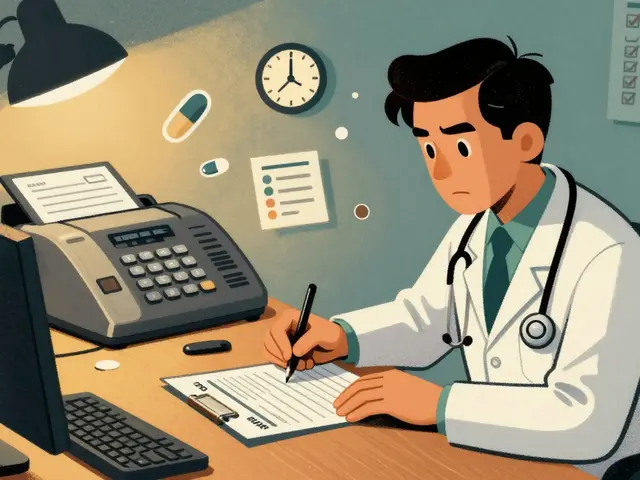
The process starts with your doctor. They don’t just write a prescription and send it to the pharmacy. First, they check your plan’s formulary-the list of drugs your insurance covers. If the drug needs prior authorization, they fill out a request form.This form includes:
- Your diagnosis
- Why this drug is necessary
- Any other medications you’ve tried and why they didn’t work
- Lab results or test reports (if needed)
Your doctor signs it, saying they’re telling the truth about your medical needs. Then they submit it-usually electronically, but sometimes by fax or mail. The insurance company reviews it. They might consult a pharmacist or clinical reviewer to double-check the medical logic.
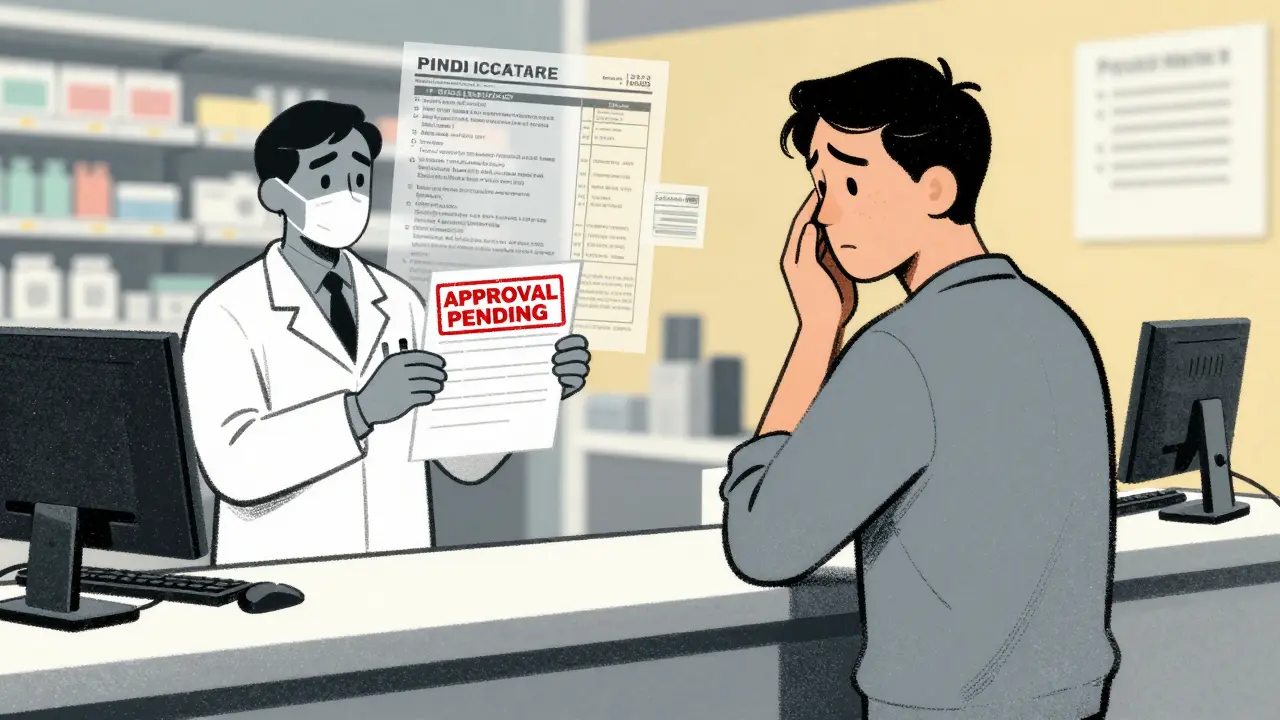
Approval times vary. Some requests are approved in under 24 hours. Others can take up to two weeks, especially if extra documentation is needed. If your condition is urgent-like a flare-up of multiple sclerosis or a severe infection-you or your doctor can request an “urgent review.” That usually gets a decision within 72 hours.
What Happens If It’s Denied?
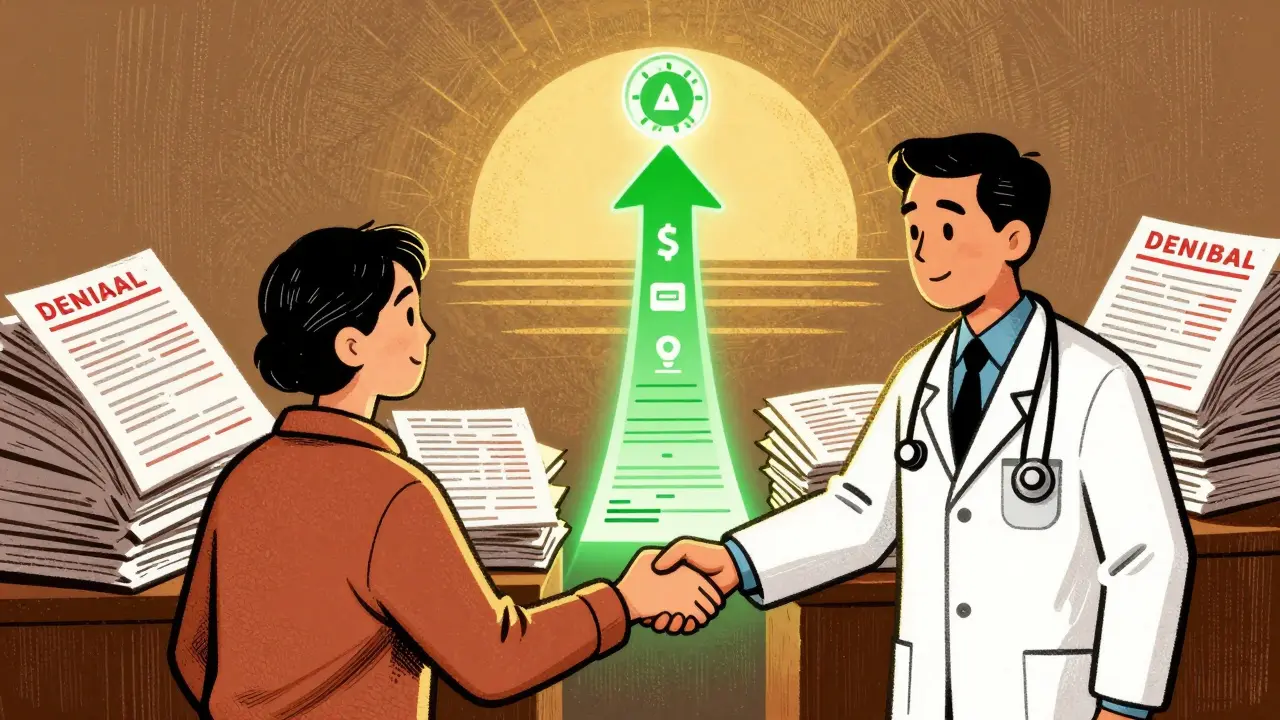
Denials happen. Sometimes it’s because the paperwork is incomplete. Other times, the insurer thinks a different drug would work better.If your request is denied, you’re not stuck. You have options:
- Ask your doctor to appeal - They can submit more evidence, like studies or your treatment history, to challenge the decision.
- Try a different drug - Your doctor might have another option that’s already covered.
- Pay out-of-pocket - If you can’t wait, you can pay for the drug yourself and later ask for reimbursement after approval.
- Request an external review - If the internal appeal fails, you can ask an independent third party to review your case.
Medicare beneficiaries can also call their plan’s customer service number (listed on their ID card) to file a formal complaint. You have the right to know why a drug was denied-and to fight it.
What Can You Do as a Patient?
You’re not just a passive player in this process. You can take action to avoid delays:- Check your formulary before your appointment - Most insurers have a website where you can search for your drug and see if prior authorization is needed. Look for the “Price Check My Rx” tool or “Drug Formulary” section.
- Ask your doctor upfront - When they write a prescription, ask: “Does this need prior authorization?” If it does, make sure they start the request right away.
- Follow up - Don’t assume your doctor’s office handled it. Call them in a few days to confirm the request was sent.
- Use GoodRx or similar tools - Even if your insurance denies coverage, you might find a lower cash price elsewhere.
Remember: you’re responsible for knowing your coverage. If you show up at the pharmacy and they say “We can’t fill this,” you’ll be stuck paying full price-or worse, going without your medication.
When Is Prior Authorization Not Required?
There are exceptions. If you’re having an emergency, your plan must cover the medication you need right away-no paperwork required. This includes urgent treatments like insulin for diabetic ketoacidosis or epinephrine for anaphylaxis.Also, some plans waive prior authorization for short-term prescriptions (like a 30-day supply) or for drugs on their “preferred list.” Medicare Part D also doesn’t require prior authorization for drugs listed on their “exception list” if your doctor provides supporting documentation.
Why Does This System Exist?
It’s easy to hate prior authorization. It feels bureaucratic, slow, and frustrating. But it’s not designed to hurt patients-it’s designed to prevent waste.Without it, insurers might pay for expensive drugs that aren’t necessary. For example, a patient might get a $10,000-per-month cancer drug when a $500 generic would work. Or someone might get a powerful opioid for mild back pain, risking addiction.
Insurance companies use prior authorization to steer care toward safer, more cost-effective options. The American Medical Association admits it’s a cost-control tactic-but they also agree it can help avoid harmful treatments when used correctly.
The real issue? The system is broken in practice. Doctors spend hours on paperwork. Patients wait days for meds. And the rules change constantly between plans.
What’s Changing in 2025?
In recent years, pressure has grown to simplify prior authorization. Some states now require insurers to approve or deny requests within 24 hours for urgent cases. Medicare has started testing automated prior authorization systems that use AI to review simple cases instantly.But for now, the process remains manual, slow, and inconsistent. Until there’s nationwide standardization, you’ll still need to be your own advocate.
Final Thoughts
Prior authorization isn’t going away. But you don’t have to be helpless in the face of it. Know your plan. Ask questions. Follow up. And don’t be afraid to push back if something doesn’t make sense.The system works best when patients and doctors work together to prove medical necessity-not when they’re stuck in paperwork limbo. Your health shouldn’t depend on how fast your doctor’s office can fax a form.
Does prior authorization always mean my drug won’t be covered?
No. Prior authorization just means your insurance needs to review the request before approving coverage. Most requests are approved if the doctor provides enough medical evidence. It’s not a denial-it’s a verification step.
How long does prior authorization usually take?
It can take anywhere from 24 hours to two weeks. Urgent requests are usually decided within 72 hours. If your doctor says it’s urgent, make sure they mark it as such on the form.
Can I get my medication while waiting for approval?
Yes, but you’ll have to pay out-of-pocket upfront. Once the authorization is approved, you can submit a claim to your insurer for reimbursement. Some pharmacies offer payment plans or discounts if you explain your situation.
Why does my doctor have to do all the paperwork?
Because your doctor is the one who knows your medical history and can prove the drug is medically necessary. Insurance companies require clinical justification-not just a prescription. They rely on your doctor’s expertise to make the case.
What if my insurance denies my request?
You can appeal. Your doctor can submit additional medical records, studies, or letters explaining why the drug is essential. You also have the right to request an external review by an independent reviewer if the appeal is denied.
Are there drugs that never need prior authorization?
Yes. Generic drugs, common antibiotics, and medications on your plan’s “preferred list” usually don’t require it. Emergency medications also bypass the process entirely. Always check your plan’s formulary to see which drugs are exempt.
Sally Denham-Vaughan
January 1, 2026 AT 13:10Been there. Got the faxed form. Twice. My doctor’s office sent it in on a Friday and I had to call Monday just to make sure it wasn’t lost. I swear half the time they don’t even check the portal. Just hope the pharmacy doesn’t call you while you’re at work.
Paul Ong
January 1, 2026 AT 17:06Just pay cash for your meds and save the drama. I got my insulin for $25 at Walmart. No forms. No waiting. No one telling me what I can and can’t take. Insurance is a scam.
sharad vyas
January 2, 2026 AT 12:27In India we don’t have this system but I’ve seen friends in the US struggle with it. It feels like the system trusts paperwork more than people. Doctors are overworked and patients are left holding the bag. Maybe we need a better way.
Richard Thomas
January 4, 2026 AT 04:06There’s a deeper issue here. Prior authorization isn’t about cost control-it’s about shifting responsibility. The insurer outsources their clinical judgment to overburdened physicians who already have 20 minutes per patient. The system doesn’t just slow things down-it erodes trust between patient and provider. We’ve turned medical care into an audit process, and nobody wins when the only metric is paperwork compliance.
Austin Mac-Anabraba
January 5, 2026 AT 14:32Let’s be real. This isn’t about efficiency. It’s about profit maximization disguised as clinical prudence. Insurance companies use prior auth to delay, deny, and distract. They know patients will give up. They know doctors won’t fight. And they know the law is too slow to catch them. This is systemic abuse dressed up as policy.
Liam George
January 6, 2026 AT 13:50AI is coming for prior auth and you think that’s progress? Nah. It’s worse. Algorithms don’t understand context. They don’t know if your grandma’s asthma meds are tied to her heart condition. They’ll deny you because your BMI is 28.5 and the algorithm says you’re ‘not obese enough.’ Welcome to the future of healthcare: automated cruelty.
Donna Peplinskie
January 8, 2026 AT 06:02I just want to say thank you to the nurses and admins who handle these requests every day. They’re the real heroes-stuck between angry patients, tired doctors, and soul-crushing insurance portals. I’ve seen them cry over a denied form. They deserve better.
Layla Anna
January 8, 2026 AT 20:25My mom got denied for her biologic last year. We appealed. Took 3 months. She ended up paying $1,200 out of pocket. I still get mad thinking about it. But hey, at least we got approved eventually 😔
Ann Romine
January 9, 2026 AT 06:53Has anyone else noticed that the drugs requiring prior auth are almost always the ones that actually work? The generics? They’re covered like candy. But the one that actually stops your seizures or your pain? Oh no, that needs a 12-page form signed by a wizard.
Todd Nickel
January 10, 2026 AT 13:37It’s interesting how prior authorization disproportionately affects chronic illness patients. Someone with diabetes or MS doesn’t get to pick when their body flares up. But the system expects them to plan their treatment like a quarterly budget meeting. The disconnect between clinical reality and bureaucratic process is staggering. We’re not optimizing care-we’re optimizing spreadsheets.
Matthew Hekmatniaz
January 12, 2026 AT 08:21I work in a clinic. We’ve got a whole binder labeled ‘Prior Auth Hell.’ Every drug on it has a different form, different fax number, different turnaround time. Some require lab results from 6 months ago. Others want a letter from your pastor. It’s not healthcare. It’s a maze designed to exhaust you.
Kristen Russell
January 13, 2026 AT 13:03You’re not powerless. Call your insurer. Ask for the denial reason in writing. Then email your rep. They hate that. And if they don’t respond, go to your state’s insurance commissioner. It works.
Bryan Anderson
January 14, 2026 AT 18:01I appreciate the thorough breakdown. Many patients don’t realize they have appeal rights, and even fewer know how to exercise them. It’s worth noting that some insurers now offer online portals where you can track the status of your request in real time-though the interface is often clunky. Still, it’s progress.
Andy Heinlein
January 14, 2026 AT 23:20Just got approved for my RA med after 10 days. My doc fought for me. I cried. Now I’m gonna go buy a cake and eat it like I earned it. You got this. Don’t give up.