

Imagine waking up one morning and finding that your eyelids are drooping or your voice sounds breathy and weak, only for the symptoms to vanish and reappear randomly throughout the day. This is the frustrating reality of Myasthenia Gravis is a chronic autoimmune neuromuscular disorder where the immune system attacks the communication points between nerves and muscles. Also known as MG, this condition disrupts the neuromuscular junction, leading to muscle weakness that typically worsens with activity and improves with rest. While it was once managed with basic medications, 2026 has brought us into an era of highly targeted biologics that can actually change the course of the disease.
Quick Guide to MG Treatment Options
- Symptomatic Relief: Pyridostigmine helps muscles contract more effectively.
- Immune Suppression: Steroids and agents like Azathioprine reduce the overall autoimmune attack.
- Rapid Intervention: Plasmapheresis and IVIG are used for acute crises to clear antibodies quickly.
- Surgical Fix: Thymectomy removes the thymus gland to potentially induce long-term remission.
- Targeted Biologics: New FcRn and complement inhibitors block specific pathways to stop muscle weakness.
Understanding the Root Cause
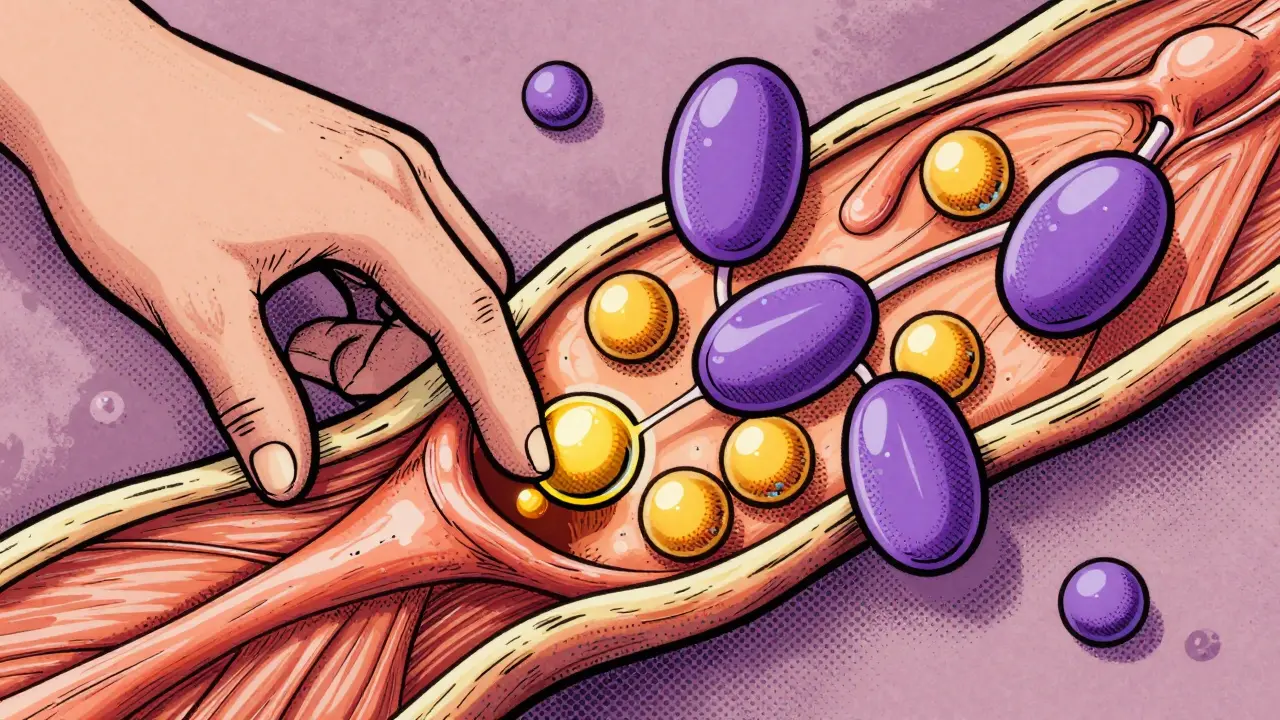
To fix the problem, we first have to understand what's breaking. In a healthy body, nerves release a chemical called acetylcholine to tell muscles to move. In people with MG, the body produces antibodies that block or destroy the receptors for this chemical. Most patients (about 85%) have antibodies against the acetylcholine receptor (AChR), while a smaller group has antibodies against muscle-specific kinase (MuSK). A few remain "seronegative," meaning they have the symptoms but no detectable antibodies in standard tests.
The goal of any Autoimmune Neuromuscular Disorder Treatment is threefold: protecting the connection between the nerve and muscle, clearing the harmful antibodies from the blood, and slowing down the immune system's production of those antibodies. Whether you are aiming for "minimal manifestation" (very mild symptoms) or full pharmacologic remission, the path depends heavily on your specific antibody profile.
Daily Management and Symptomatic Relief
For many, the first line of defense is Pyridostigmine is an acetylcholinesterase inhibitor that prevents the breakdown of acetylcholine, allowing it to stay in the neuromuscular junction longer. Often sold under the brand name Mestinon, this drug doesn't cure MG, but it helps the muscles work better. A typical dose ranges from 60-120mg every 3-6 hours. However, it's not without drawbacks; about 35-45% of users deal with stomach issues like cramping or diarrhea.
Long-Term Immune Modulation
When symptomatic relief isn't enough, doctors turn to medications that dampen the immune response. Prednisone is a corticosteroid used to reduce inflammation and suppress the immune system's attack on receptors. While it works for 70-80% of patients, long-term use can be brutal. We see significant weight gain in 65% of patients and a rise in osteoporosis and diabetes. Because of this, clinicians often add "steroid-sparing" agents.
Common second-line options include:
- Azathioprine: Effective for 60-70% of patients over 12-18 months, though it can cause low white blood cell counts in about 10% of cases.
- Mycophenolate Mofetil: A strong alternative with a 65-75% response rate, though gastrointestinal upset is common.
- Cyclosporine: Boasts a high 90% response rate, but it's often discontinued due to hypertension and hair growth (hirsutism).
The Surgical Route: Thymectomy
The thymus gland, located in the chest, often acts as the "training ground" for the rogue antibodies in MG. Thymectomy is the surgical removal of the thymus gland to reduce the production of AChR antibodies. Data from the landmark MGTX trial showed that removing the thymus in AChR-positive patients led to a 67% reduction in hospitalization risk and allowed many to significantly lower their prednisone dose.
About 35-40% of patients achieve complete stable remission five years after surgery. While robotic and video-assisted techniques are now common to reduce recovery time, the transsternal approach remains the benchmark for long-term success.
| Therapy Type | Example Drug | Onset Speed | Main Benefit | Key Trade-off |
|---|---|---|---|---|
| Complement Inhibitors | Eculizumab | Moderate | Highly effective for AChR+ | Meningococcal vaccine required |
| FcRn Inhibitors | Efgartigimod | Fast (1-2 weeks) | Works across antibody types | High cost / Frequent dosing |
| B-cell Therapy | Rituximab | Slow (8-16 weeks) | Excellent for MuSK-MG | Delayed response time |
The New Wave: Targeted Biologics
The biggest shift in recent years is the move toward biologics. Instead of suppressing the whole immune system, these drugs target specific proteins.
Complement Inhibitors are drugs that block the complement system, a part of the immune system that destroys the neuromuscular junction. Drugs like Eculizumab and Ravulizumab are game-changers for severe AChR-positive cases. Eculizumab has shown an 88% improvement rate in patients, though the cost is staggering, often reaching $500,000 annually.
Then we have FcRn Inhibitors, which act like a vacuum for antibodies. They block the neonatal Fc receptor (FcRn), preventing the recycling of IgG antibodies and forcing the body to clear them faster. Efgartigimod and the newer Rozanolixizumab (available as a subcutaneous injection) work within just one to two weeks. In 2025, the FDA approved Nipocalimab for patients 12 and older, offering a potent monthly IV option that reduces IgG levels by up to 80%.
Rapid Interventions for Crises
When MG causes a "crisis"-where breathing muscles become too weak to function-doctors don't have weeks to wait for pills to work. They use Plasmapheresis, which is a process that filters the blood to physically remove 60-80% of pathogenic antibodies. Alternatively, IVIG (Intravenous Immunoglobulin) provides a dose of healthy antibodies from donors to neutralize the harmful ones. Both are fast, but the benefits are temporary, serving as a bridge to longer-term therapy.
What's Next on the Horizon?
We are moving toward truly personalized medicine. By 2028, most neurologists expect that treatment will be guided by specific biomarkers rather than trial and error. One of the most exciting developments is CAR T-cell therapy. In 2025, early trials showed that targeting B-cell maturation antigens could lead to remission in 60% of refractory cases-people who didn't respond to any other treatment.
Researchers are also testing "agrin mimetics" to physically protect the neuromuscular junction from damage, potentially offering a way to keep muscles strong regardless of the antibody levels in the blood.
How long does it take for MG medications to work?
It depends on the drug. Pyridostigmine works almost immediately for symptom relief. New biologics like FcRn inhibitors typically show results within 1 to 2 weeks. Traditional immunosuppressants like Azathioprine are much slower, often taking 8 to 12 weeks before a noticeable benefit occurs.
Is thymectomy always necessary?
Not always, but it is strongly recommended for AChR-positive patients between 18 and 65 who don't have severe other health issues. It can reduce the need for steroids and increase the chance of long-term remission, but the decision is based on the individual's antibody status and disease severity.
What are the most common side effects of steroids in MG?
Long-term prednisone use is associated with weight gain (65% of patients), osteoporosis (25% after one year), and the development of diabetes (15-20%). This is why doctors try to transition patients to steroid-sparing agents as soon as possible.
What is a 'seronegative' MG patient?
A seronegative patient is someone who has all the clinical symptoms of Myasthenia Gravis but tests negative for the common AChR and MuSK antibodies. Recent studies, like the ADAPT SERON trial, have shown that new biologics like efgartigimod still work effectively for these patients.
Why do some MG patients need a meningococcal vaccine?
Complement inhibitors like eculizumab block a part of the immune system that is essential for fighting certain bacteria, including Neisseria meningitidis. Because this increases the risk of meningitis, the vaccine is a mandatory safety requirement before starting treatment.

David Snyder
April 15, 2026 AT 16:24It's honestly so heartening to see how far the science has come with these targeted biologics. There's a lot of hope for people who felt like they had run out of options with steroids!
rupa das
April 17, 2026 AT 15:43biologics are just overhyped expensive versions of basic immune suppression
Ikram Khan
April 18, 2026 AT 21:09Wow!! The speed of those FcRn inhibitors is just mind-blowing! Imagine going from weakness to feeling better in just a couple of weeks! 🌟 Absolute game changer for the community! 💪
Randy Ryder
April 20, 2026 AT 16:17The mention of the ADAPT SERON trial is critical here. For those of us looking at the pathophysiology, the fact that efgartigimod works for seronegative patients suggests that the IgG-mediated mechanism is more universal than the AChR/MuSK antibody dichotomy implies. We should probably be discussing the specific kinetics of FcRn blockade and how it differs from traditional B-cell depletion via Rituximab in terms of glycemic impact and long-term immune homeostasis.
Scott Lofquist
April 21, 2026 AT 16:26Imagine actually believing the $500k price tag is just 'market value' and not a blatant cash grab by Big Pharma 🙄 Everyone knows they've had these formulas for years and just drip-feed them to keep the prices astronomical. It's morally bankrupt to hold life-altering treatment hostage behind a paywall while pretending to 'innovate' 🤡💸
S.A. Reid
April 21, 2026 AT 23:53I find it quite curious that we are encouraged to trust these 'targeted' biologics so implicitly. One must ponder if these specific proteins are being targeted for our benefit, or if we are merely participants in a vast, longitudinal experiment designed to alter human immunology for reasons the elite refuse to disclose. It is simply too convenient that the solutions always require a subscription-like dosing schedule to ensure total dependency on the corporate medical industrial complex. I shall remain skeptical of any therapy that demands a mandatory vaccine just to participate in the treatment protocol.
Milo Tolley
April 22, 2026 AT 04:33THE ABSOLUTE HORROR OF PREDNISONE!!! The moon-face!!! The systemic metabolic collapse!!! It is a complete and utter nightmare to navigate the iatrogenic effects of long-term corticosteroid administration while fighting a neuromuscular crisis!!! The pharmacological volatility is just... UNREAL!!!
Olivia Lo
April 22, 2026 AT 12:37There is a profound ontological shift when we move from systemic suppression to precision modulation. By targeting the neonatal Fc receptor, we aren't just treating a symptom; we are altering the equilibrium of antibody recycling. It is a delicate balance between clinical efficacy and the preservation of the patient's overall immune integrity. We must approach this not as a battle to be won, but as a systemic harmony to be restored, ensuring that the intervention does not supersede the biological autonomy of the individual. The intersection of biotechnology and patient agency is where the real progress lies, far beyond the mere metrics of antibody titers.