
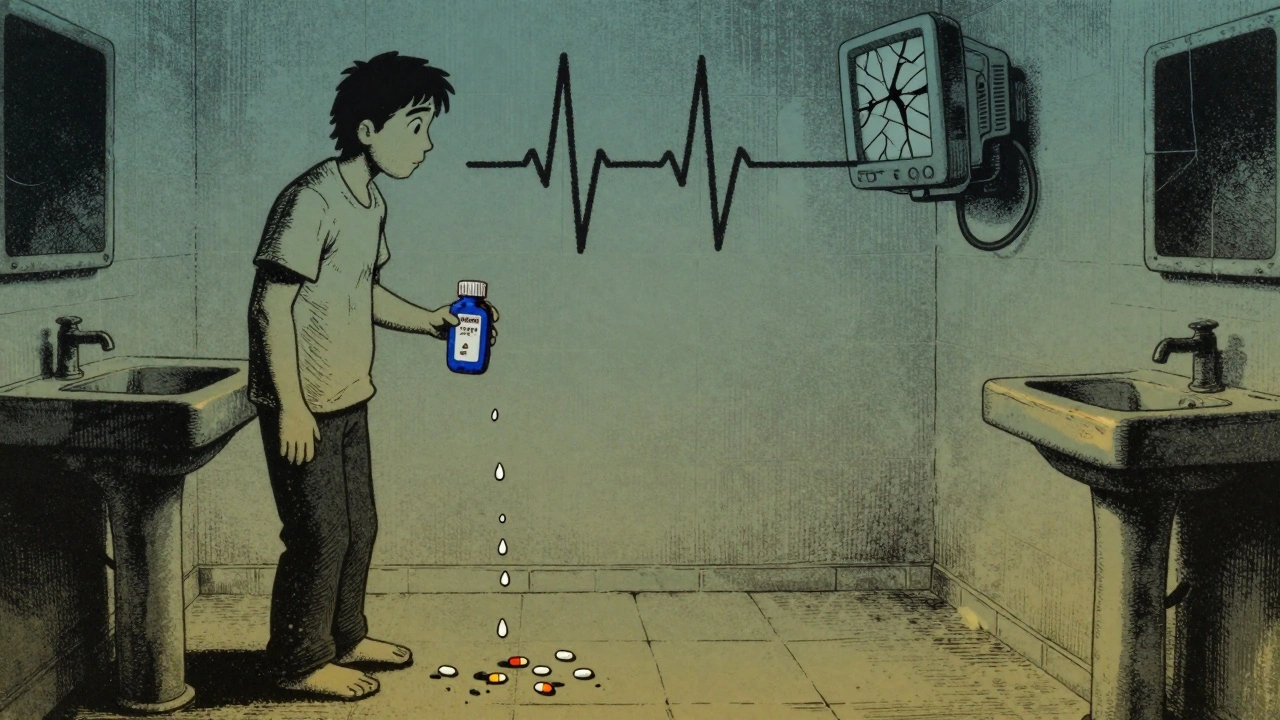
Most people think of loperamide as a simple fix for a bad stomach - a quick trip to the pharmacy, a few pills, and the cramps are gone. But what if that little blue bottle is hiding something far more dangerous? In recent years, loperamide - the active ingredient in Imodium A-D and other over-the-counter antidiarrheals - has become a hidden tool in the hands of people trying to fight opioid withdrawal. And it’s killing them.
What Loperamide Actually Does
Loperamide works by slowing down your gut. It’s an opioid, but not like heroin or oxycodone. At normal doses - 4 mg at first, then 2 mg after each loose stool, max 8 mg a day - it barely touches your brain. That’s because of a built-in safety feature: a protein called P-glycoprotein that pushes loperamide out of your central nervous system. It’s designed to act only in your intestines, where it reduces cramping and diarrhea without making you high.
But when someone takes 50, 100, even 400 mg a day - yes, people are doing this - that safety valve breaks. The system gets overwhelmed. Loperamide slips through, crosses the blood-brain barrier, and starts binding to opioid receptors in the brain. The result? Mild euphoria, sedation, and a temporary relief from opioid withdrawal symptoms like sweating, shaking, and anxiety. For someone trying to quit prescription painkillers or heroin, it looks like a free, legal workaround.
The Hidden Killer: Your Heart
Here’s the brutal truth: loperamide doesn’t just mess with your brain at high doses. It messes with your heart. At abusive levels, it blocks potassium channels in heart cells - specifically the hERG channel. This disrupts the electrical rhythm of your heart, causing your QT interval to stretch. That’s not just a medical term. It’s a countdown.
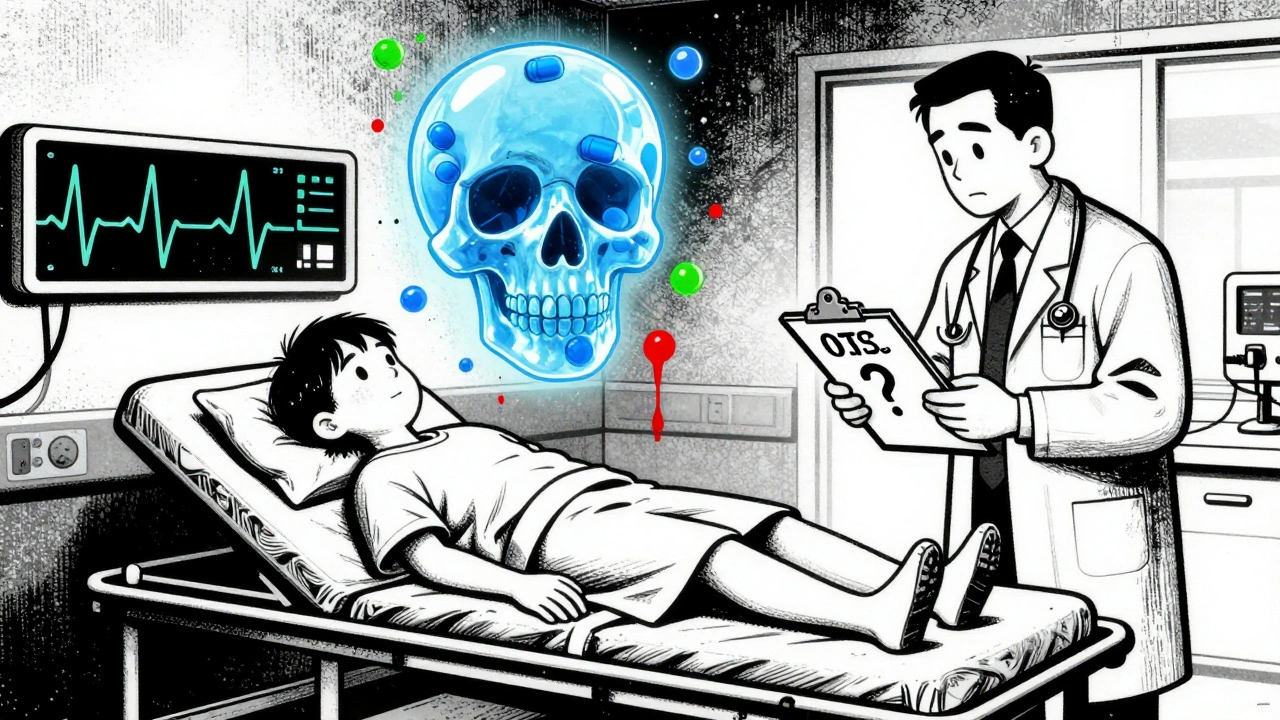
When the QT interval gets too long, your heart can start beating erratically. The most dangerous rhythm? Torsades de Pointes. It’s a type of ventricular tachycardia that can turn into cardiac arrest in seconds. And it doesn’t care if you’re young, fit, or have no history of heart problems. In 2016, the FDA reviewed 48 serious cases of loperamide-induced heart issues. More than half happened after 2010. Seventeen people died between 2011 and 2020. Most were under 40.
One case from MaineHealth tells the story: a 32-year-old man, struggling with opioid addiction, took 80 mg of loperamide daily - 10 times the max safe dose. He ended up in the ER with polymorphic ventricular tachycardia, a prolonged QTc of over 500 ms, and temporary heart failure. He survived. Many don’t.
Why People Turn to It
Loperamide isn’t addictive in the classic sense. You won’t crave it like cocaine. But for people stuck in opioid withdrawal, it’s a lifeline - even if it’s a broken one. Prescription medications like methadone or buprenorphine help manage withdrawal safely. But they require a doctor, a clinic, paperwork. Loperamide? You can buy it next to the gum and candy. No ID needed. No questions asked.
Reddit threads like r/opioidrecovery are full of desperate posts: “Tried 50mg Imodium for withdrawal… wound up in ER with chest pains.” “Took 120 mg over two days. Felt good. Then my heart started racing.” These aren’t outliers. The National Poison Data System recorded over 5,000 loperamide exposures in 2017. Nearly half were intentional misuse. And in 2020, a study found that 15.3% of people with opioid use disorder had used loperamide to self-treat.

Warning Signs You Can’t Ignore
If someone you know is taking more than 8 mg of loperamide a day - even if they say it’s just for “diarrhea” - watch for these red flags:
- Heart palpitations or skipped beats
- Chest pain or pressure, especially when resting
- Dizziness, fainting, or sudden loss of consciousness
- Extreme constipation - like not going for days
- Nausea or vomiting without a stomach bug
- Unexplained collapse or cardiac arrest
Doctors often miss it. Loperamide isn’t on standard drug screens. If someone shows up at the ER with a weird heart rhythm and no history of heart disease, they might get treated for a virus or anxiety. But if you know they’ve been taking Imodium like candy, that changes everything.
What Happens When You Stop - And Why It’s Not Easy
Stopping loperamide after long-term abuse isn’t like quitting caffeine. Withdrawal symptoms can include anxiety, insomnia, muscle aches, and intense cravings. But unlike heroin withdrawal, which is brutal but rarely deadly, loperamide withdrawal can trigger lingering heart rhythm problems for days or even weeks after the last dose. That’s because the drug builds up in your tissues. Even after you stop, it keeps leaking into your bloodstream.
And here’s the worst part: naloxone - the opioid overdose reversal drug - doesn’t work well on loperamide. It might help with the brain effects, but it does nothing for the heart damage. That means even if someone gets revived after a cardiac arrest, the underlying toxicity is still there.
What’s Being Done - And Why It’s Not Enough
The FDA didn’t ban loperamide. They couldn’t. It’s too useful for legitimate diarrhea. Instead, they forced manufacturers to update labels. Now, bottles say: “Do not exceed 8 mg per day.” “Serious heart problems can occur with misuse.” “May cause death.”
Some companies changed packaging. Products with more than 45 mg total now come in single-dose blister packs. That makes it harder to swallow 20 pills at once. Sales dropped 12% between 2016 and 2020. But people just buy more bottles. Or order bulk powder online. Or mix loperamide with drugs like quinidine or cimetidine - which block the very protein meant to protect your brain. That’s like removing the seatbelt from your car and then wondering why you crashed.
Public health agencies like SAMHSA now include loperamide in opioid education materials. But most people still don’t know. A 2020 survey found only 0.2% of Americans admitted to misusing it. That number is likely way higher. People lie to doctors. They hide bottles. They think they’re being smart.
What You Should Do
If you’re using loperamide to manage opioid withdrawal - stop. Talk to a doctor. There are safe, proven treatments. Methadone, buprenorphine, naltrexone - they work. They’re monitored. They don’t kill you.
If you’re worried about someone else - don’t wait for them to hit rock bottom. Ask. Gently. Say: “I noticed you’ve been taking a lot of Imodium. Are you okay?” Don’t judge. Don’t scare them. Just be there. Offer to go with them to a clinic. Bring up SAMHSA’s free helpline: 1-800-662-HELP.
If you’re a healthcare provider - always ask about OTC meds. Especially if someone has unexplained cardiac symptoms. Check their pill bottles. Don’t assume they’re telling the truth. Loperamide abuse is silent. It doesn’t smell like alcohol. It doesn’t leave needle marks. It just sits in a medicine cabinet, waiting.
It’s not a joke. It’s not a myth. It’s happening right now - in living rooms, in cars, in hospital ERs. And every year, more people die because they thought a little blue pill couldn’t hurt them.
Keasha Trawick
December 11, 2025 AT 15:45Loperamide abuse is the silent epidemic no one talks about until someone’s lying on an ER gurney with a QT interval longer than a Netflix binge. The hERG channel blockade? That’s not just a pharmacology footnote-it’s a death sentence disguised as a pharmacy aisle find. People think they’re outsmarting the system, but they’re just programming their heart to fail. And the worst part? No one’s screening for it. Not even the ER docs. It’s like hiding a landmine in a candy jar and calling it ‘safe.’
Jennifer Taylor
December 12, 2025 AT 07:52OMG I KNEW IT. I KNEW IT. I told my cousin NOT to take 120mg of Imodium for ‘withdrawal’ and she said I was being dramatic. Well guess what? She ended up in the hospital with torsades de pointes and they had to shock her TWICE. Now she’s on a pacemaker and blames the ‘pharma conspiracy’ for not warning people. 🤡 The FDA labels are there. People just don’t read them. Or they think they’re ‘special’ and can break biology. Spoiler: you can’t.
Jade Hovet
December 14, 2025 AT 06:35Y’all. I’m so glad someone finally said this. 😭 My brother did this for 8 months. Took 60mg a day. Said it ‘calmed his nerves.’ I didn’t know what was happening until he passed out at the dinner table. We didn’t even know Imodium could do that. 😣 Now he’s in rehab and they’re monitoring his heart for 6 months. Please, if you’re reading this and you’re doing this… just call someone. You don’t have to do it alone. 💙
nithin Kuntumadugu
December 14, 2025 AT 13:38Of course this is happening. Big Pharma lets loperamide stay OTC because it's cheaper than methadone. They want you to self-medicate with a heart killer so you don't demand real treatment. And the FDA? They're paid off. Blame the system, not the addict. Also, 'P-glycoprotein'? That's just a fancy word for 'they didn't care enough to fix it.' 😒
Harriet Wollaston
December 14, 2025 AT 15:57This is so important. I’ve seen people try to ‘tough it out’ during withdrawal and end up in worse shape than before. You don’t have to suffer alone. There are real solutions. I know it feels impossible, but clinics exist. People care. You’re not broken. You’re just in pain. And pain doesn’t need to be solved with a bottle of Imodium. 🤗
Lauren Scrima
December 16, 2025 AT 15:13So… you’re telling me the same drug that stops diarrhea can also stop your HEART? 🤦♀️ And we just… let people buy it next to cough drops? Brilliant. Truly. Next up: OTC morphine with a ‘not for recreational use’ sticker. 😏
sharon soila
December 18, 2025 AT 14:22Every human deserves safety. Every human deserves care. Loperamide misuse is not a moral failure. It is a system failure. We have the tools. We have the knowledge. What we lack is the will to make treatment accessible. Not punitive. Not shaming. Just available. Please. Let’s fix that.
nina nakamura
December 19, 2025 AT 01:58People who do this are just lazy addicts who don’t want to deal with real treatment. They think they’re clever using OTC meds. They’re not. They’re just stupid. And now they’re killing themselves and wasting ER resources. No sympathy. No pity. Just consequences.
Hamza Laassili
December 20, 2025 AT 13:02THIS IS WHY AMERICA IS FALLING APART. You let some junkie buy 400mg of Imodium like it’s gummy bears and then you wonder why our healthcare system is broke? We need to lock up the pharmacies and make it prescription only. And ban Reddit threads that glorify this crap. #MakeAmericaSafeAgain
Constantine Vigderman
December 21, 2025 AT 18:30Hey, if you're reading this and you're using loperamide to cope - I see you. 🙌 I’ve been there. I took 100mg for 3 weeks. Felt like a superhero. Then my heart started doing backflips. I didn’t tell anyone. I thought I could quit cold turkey. I almost didn’t make it. But I did. And now I’m two years clean. Not because I’m strong. Because I finally asked for help. You can too. You’re not alone. 💪❤️
Himmat Singh
December 22, 2025 AT 18:39It is noteworthy that the pharmacokinetic profile of loperamide is fundamentally distinct from that of classical opioids, yet the mechanism of cardiotoxicity is analogous to that of Class III antiarrhythmics. The regulatory response remains insufficiently robust given the epidemiological trajectory. One must question the adequacy of current public health interventions.
kevin moranga
December 24, 2025 AT 13:18I want to say this gently - if you’re reading this and you’re using loperamide to get through withdrawal, you’re not weak. You’re just scared. And scared people do desperate things. But here’s the truth: you don’t have to do it alone. I’ve been there. I took 80mg a day for months. Thought I was being smart. Then I had a panic attack that felt like my heart was trying to crawl out of my chest. I went to a clinic. Got on buprenorphine. It changed everything. You don’t need to suffer. You don’t need to hide. There’s a way out. And I’m rooting for you. Always.
Lara Tobin
December 26, 2025 AT 06:08Thank you for writing this. I didn’t know so many people were doing this. I thought I was the only one. 😢 My mom took 50mg a day for ‘digestion’ - I didn’t realize until she collapsed. Now she’s in therapy and getting monitored. I’m so glad I found this. I feel less alone.