
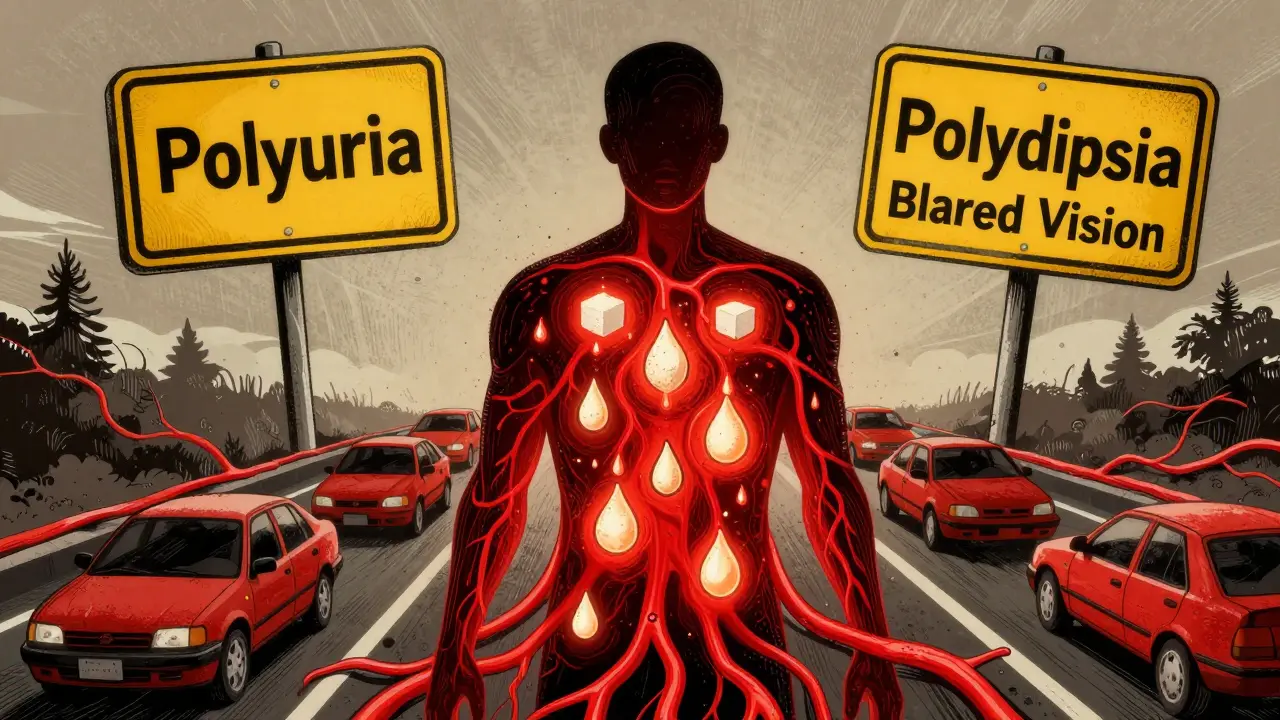
When your blood sugar climbs too high, it doesn’t just make you feel off-it can put your life at risk. Hyperglycemia isn’t just a number on a glucometer. It’s a warning sign that your body is struggling to manage glucose, and if ignored, it can spiral into diabetic ketoacidosis (DKA) or hyperosmolar hyperglycemic state (HHS)-two life-threatening emergencies. You might think, "I’ve had high readings before, it’s no big deal." But here’s the truth: hyperglycemia kills. And too often, it sneaks up on people who don’t recognize the signs until it’s too late.
What Exactly Is Hyperglycemia?
Hyperglycemia means your blood glucose level is above 180 mg/dL. That’s the threshold where your kidneys start spilling sugar into your urine. But numbers alone don’t tell the whole story. In people with type 1 diabetes, it happens because the body doesn’t make enough insulin. In type 2, it’s usually because cells ignore insulin’s signal to take in glucose. Either way, sugar piles up in your bloodstream like traffic on a highway with no exits.It’s not just about diabetes. Stress, illness, certain medications like steroids, or even undiagnosed conditions like Cushing’s syndrome can trigger it. The American Diabetes Association estimates 37.3 million Americans live with diabetes-and nearly all of them will face hyperglycemia at some point. The key isn’t avoiding it entirely. It’s catching it early and knowing what to do next.
Early Signs You Can’t Afford to Ignore
The first signals are subtle, easy to brush off. You’re tired? Must be work. Thirsty? Must be the weather. Urinating more than usual? Probably drank too much coffee. But when these symptoms show up together, they’re not random. They’re your body screaming for help.- Polyuria: You’re going to the bathroom more than 2.5 liters a day. That’s not normal-it’s your body trying to flush out excess sugar.
- Polydipsia: You’re drinking more than 4 liters of fluids daily and still not satisfied. Water isn’t quenching your thirst because your cells are starving for glucose.
- Blurred vision: High sugar pulls fluid out of your lenses, changing their shape. This affects 68% of people with elevated glucose, according to the ADA.
- Fatigue: If your cells can’t use glucose for energy, you’re running on empty. Around 79% of patients report this as their first symptom.
These aren’t "bad days." They’re biological alarms. Many people wait until their blood sugar hits 300 mg/dL before they act. By then, it’s already dangerous.
When It Gets Serious: The Red Flags
If your blood sugar climbs past 250 mg/dL, the game changes. Your body starts breaking down fat for fuel-and that produces toxic ketones. This is where DKA begins. Or, if you have type 2 diabetes, your body may just get dangerously dehydrated without ketones-that’s HHS.Here’s what happens next:
- Headaches and brain fog: 52% of people report headaches. 47% say they can’t focus. Your brain is drowning in sugar.
- Unexplained weight loss: Losing more than 5% of your body weight in three months without trying? That’s your body eating muscle and fat because it can’t use glucose.
- Abdominal pain: Especially in type 1 diabetes. It’s often mistaken for food poisoning or appendicitis.
- Fruity-smelling breath: Like nail polish remover or overripe fruit. That’s acetone, a ketone byproduct.
- Deep, rapid breathing: Called Kussmaul respirations. Your lungs are trying to blow off acid from ketones.
- Confusion, drowsiness, or fainting: This is neurological damage in progress. In HHS, it happens in nearly 100% of cases.
At this stage, you’re not just sick-you’re in a medical emergency. Delaying care increases your risk of coma or death.
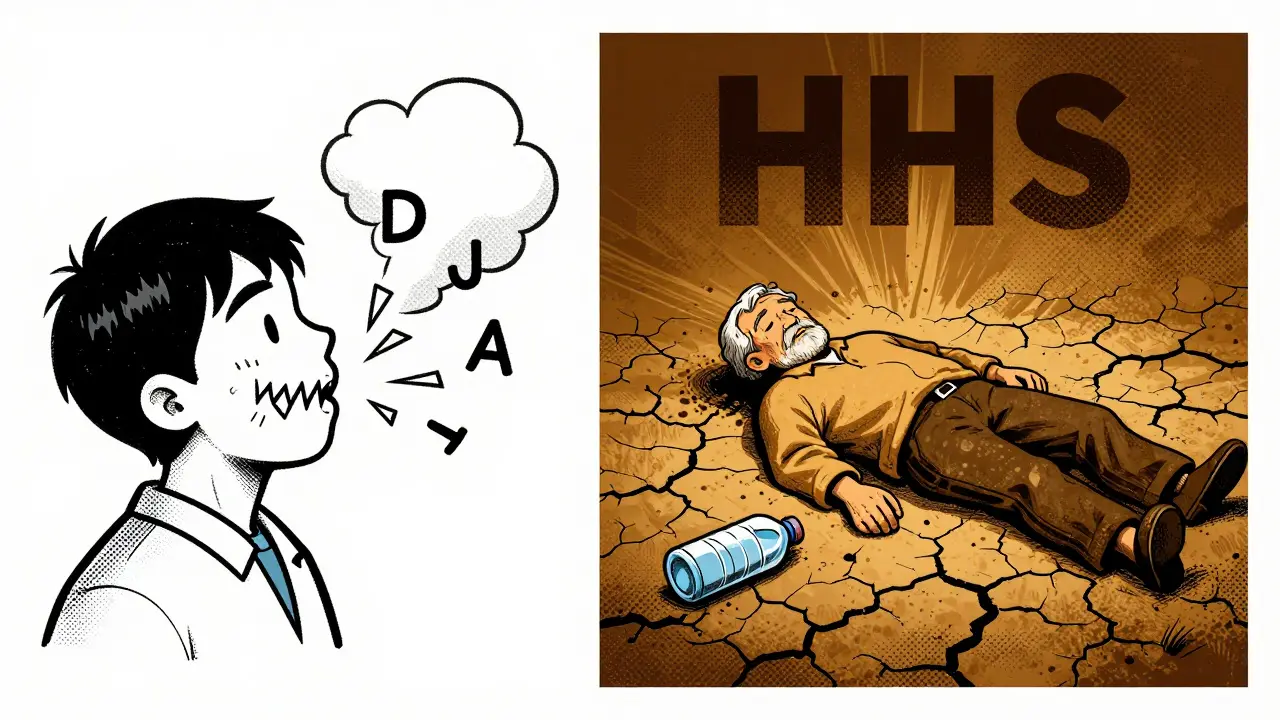
DKA vs. HHS: Two Different Emergencies
Not all high blood sugar is the same. DKA and HHS look similar but behave differently. Mixing them up can cost you time-and your life.| Feature | Diabetic Ketoacidosis (DKA) | Hyperosmolar Hyperglycemic State (HHS) |
|---|---|---|
| Typical patient | Type 1 diabetes, often under 30 | Type 2 diabetes, usually over 65 |
| Blood glucose level | Usually >250 mg/dL | Often >600 mg/dL |
| Ketones | High | Low or absent |
| Dehydration | Moderate | Extreme-fluid loss of 8-12 liters |
| Neurological symptoms | Common but not universal | Always present-can lead to coma |
| Mortality rate | 1-5% | 15-20% |
HHS is deadlier because it creeps up slowly. Elderly patients may be confused for days before anyone realizes they’re in crisis. DKA hits fast-often within 24 hours-and is more common in younger people. Both require hospitalization. Neither can be treated at home.
What to Do When Blood Sugar Spikes
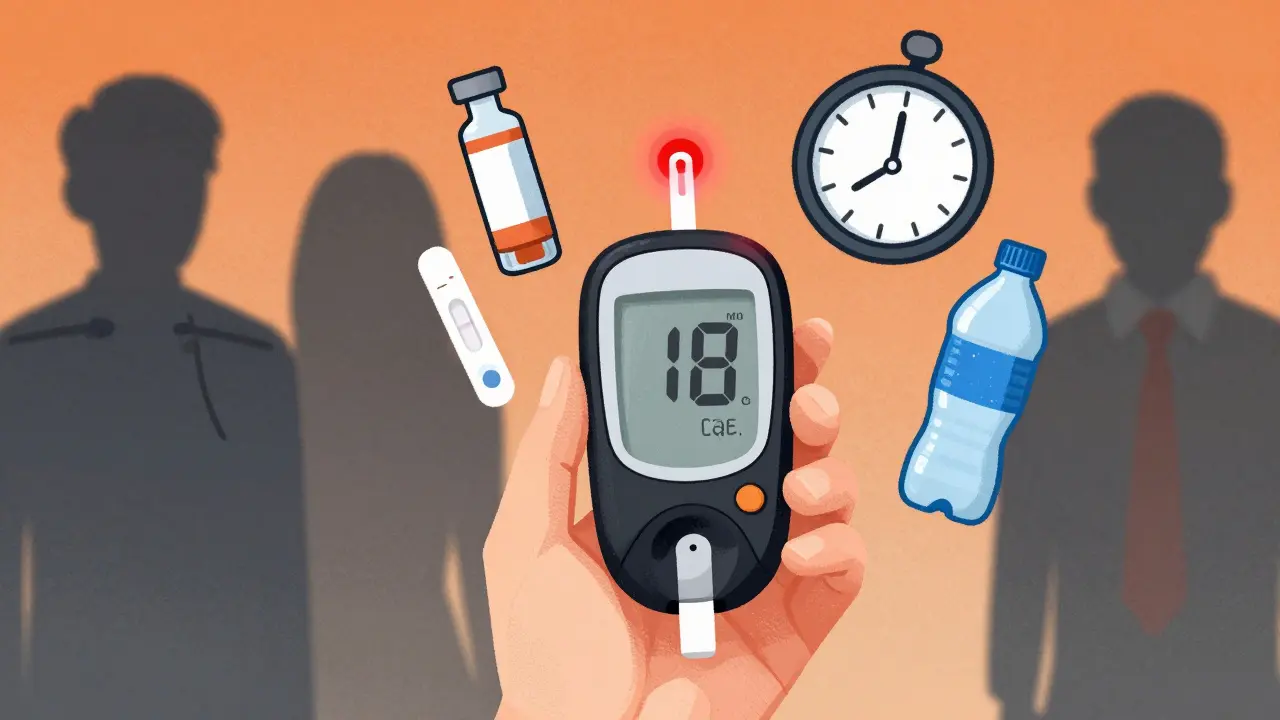
If your reading is above 240 mg/dL, don’t panic-but don’t wait either. Follow this step-by-step plan:- Test for ketones: Use urine strips or a blood ketone meter. If ketones are moderate or high, call your doctor or go to the ER.
- Take your insulin: If you’re on insulin, give your correction dose. Don’t skip it because you’re scared of low blood sugar. The risk of staying high is far greater.
- Drink water: Sip 8-16 ounces of sugar-free fluid every hour. This helps flush out sugar and prevents dehydration.
- Check again in 2-4 hours: If your sugar doesn’t drop or keeps rising, seek help. Don’t wait for symptoms to worsen.
- Call for emergency help if: You’re vomiting, confused, breathing hard, or your blood sugar is above 300 mg/dL with ketones.
Never try to "wait it out." Many patients do this-and end up in the ICU. The CDC found that people who waited more than 12 hours after symptoms started were 3 times more likely to be hospitalized.
Why People Miss the Warning Signs
It’s not laziness. It’s not ignorance. It’s distraction. A 2023 survey of 2,850 diabetic patients found 67% didn’t notice early symptoms until their blood sugar hit 300 mg/dL. Why? They blamed fatigue on work. They thought thirst was from hot weather. They thought blurred vision was just aging.Reddit’s r/diabetes community has hundreds of stories like this: "I felt fine until I passed out in the shower." "I thought my stomach pain was a stomach bug." "I didn’t check my sugar because I was too stressed to care."
Stress, burnout, and diabetes distress are real. They make people avoid checking their numbers. But avoiding the glucometer doesn’t make the problem go away-it makes it worse.
What Can Prevent Hyperglycemia?
Prevention isn’t about perfection. It’s about consistency.- Use a CGM: Continuous glucose monitors reduce hyperglycemia episodes by 57% by alerting you before your sugar spikes. Dexcom’s 2023 data shows response time drops by 74 minutes when you get real-time alerts.
- Know your triggers: Illness (42% of cases), missed insulin (29%), pump malfunctions (18%), and emotional stress (11%) are the top causes. Keep a log. Notice patterns.
- Manage the dawn phenomenon: Many people wake up with high sugar because of a natural hormone surge between 4-8 a.m. This isn’t your fault. It’s your body’s biology. Adjusting your nighttime basal insulin can help.
- Get educated: Programs like the CDC’s Diabetes Self-Management Education cut emergency visits by 42%. You don’t have to figure this out alone.
One big mistake? Insulin stacking. Taking extra insulin too soon after a previous dose can cause a dangerous crash. Always wait at least 3-4 hours before giving another correction dose.
The Bigger Picture: Why This Matters
Hyperglycemia isn’t just a personal health issue-it’s a systemic crisis. In the U.S., it causes 1.2 million hospitalizations every year. Each DKA admission costs $14,200. Each HHS case? $18,500. The total cost of diabetes? $327 billion annually.And it’s not fair. Black patients experience 2.3 times more hyperglycemia emergencies than White patients-not because of behavior, but because of access. Insulin is still too expensive. Monitoring tools are still out of reach for many. The FDA’s new 2024 requirement for predictive alerts on CGMs is a step forward. But technology won’t fix inequality.
The future? AI-driven wearable sensors, personalized feedback loops, and earlier detection. The NIH is investing $150 million in this. But right now, what saves lives is awareness. What saves lives is knowing the symptoms. What saves lives is acting before it’s too late.
What blood sugar level is considered dangerous?
A reading above 240 mg/dL requires action. Above 300 mg/dL is considered severe and increases your risk of DKA or HHS. If your blood sugar exceeds 600 mg/dL, especially with confusion or extreme thirst, treat it as a medical emergency and seek help immediately.
Can you have hyperglycemia without having diabetes?
Yes. Stress from infection, trauma, or surgery can temporarily spike blood sugar. Certain medications like steroids, glucocorticoids, or antipsychotics can also cause it. Conditions like Cushing’s syndrome or pancreatitis can lead to chronic high blood sugar even without type 1 or type 2 diabetes. Always check with a doctor if you’re not diabetic but have recurring high readings.
How long does it take to bring down high blood sugar?
With insulin, blood sugar can start dropping within 15-30 minutes. But it may take 2-4 hours to reach a safe range, especially if you’re dehydrated or have ketones. Drinking water helps speed it up. Never rush the process-over-correcting can cause dangerous lows. Check your levels every 2 hours until stable.
Is it safe to exercise when blood sugar is high?
Only if your blood sugar is below 250 mg/dL and you have no ketones. If your sugar is above 250 mg/dL and ketones are present, exercise can make it worse by pushing your body to break down more fat. This increases ketone production and raises your risk of DKA. Test for ketones first. If they’re moderate or high, rest and hydrate instead.
What should I keep on hand for a hyperglycemia emergency?
Always have: a blood glucose meter and test strips, ketone test strips or meter, fast-acting insulin (if prescribed), a bottle of sugar-free fluids (water, unsweetened tea), and your doctor’s emergency contact. If you use an insulin pump, carry backup pens and needles. Keep a printed copy of your insulin correction plan. Don’t rely on memory during a crisis.
Final Thought: Don’t Wait for a Crisis
You don’t need to be perfect to stay safe. You just need to be aware. Check your blood sugar when you feel off. Test for ketones if it’s high. Drink water. Take your insulin. Call for help if things aren’t improving. Hyperglycemia doesn’t care how busy you are. It doesn’t care if you missed a meal or had a bad night’s sleep. It reacts to your numbers-and your choices.Every time you ignore the warning signs, you’re gambling with your health. But every time you act-early, calmly, and correctly-you’re taking back control. That’s not just good diabetes management. That’s how you stay alive.
Mike Rose
February 1, 2026 AT 06:43Russ Kelemen
February 1, 2026 AT 22:15it’s not about being perfect. it’s about showing up even when you’re tired, scared, or overwhelmed.
hyperglycemia doesn’t care if you had a bad night or forgot your meter. but your body does. and listening to it-that’s the quiet kind of courage that doesn’t make headlines but saves lives.
April Allen
February 2, 2026 AT 15:16Kathleen Riley
February 3, 2026 AT 15:16Sazzy De
February 4, 2026 AT 16:12some days i just dont feel like it
but i drink water
Jodi Olson
February 5, 2026 AT 16:21its not
its biology
its stress
its cost
its systemic failure
and you cant fix it by being more disciplined
Carolyn Whitehead
February 7, 2026 AT 15:06even if you mess up today
tomorrow is another chance to check
drink water
take your dose
and breathe
Beth Beltway
February 7, 2026 AT 18:53kate jones
February 8, 2026 AT 06:56Kimberly Reker
February 8, 2026 AT 19:13they had a glucose meter on the floor
and no one knew what to do
so i called 911
and i’m glad i did
you never know who’s one high reading away from a crisis
check your numbers
even if it’s just for them
Claire Wiltshire
February 9, 2026 AT 22:26Sarah Blevins
February 11, 2026 AT 12:46Diana Dougan
February 13, 2026 AT 05:10