
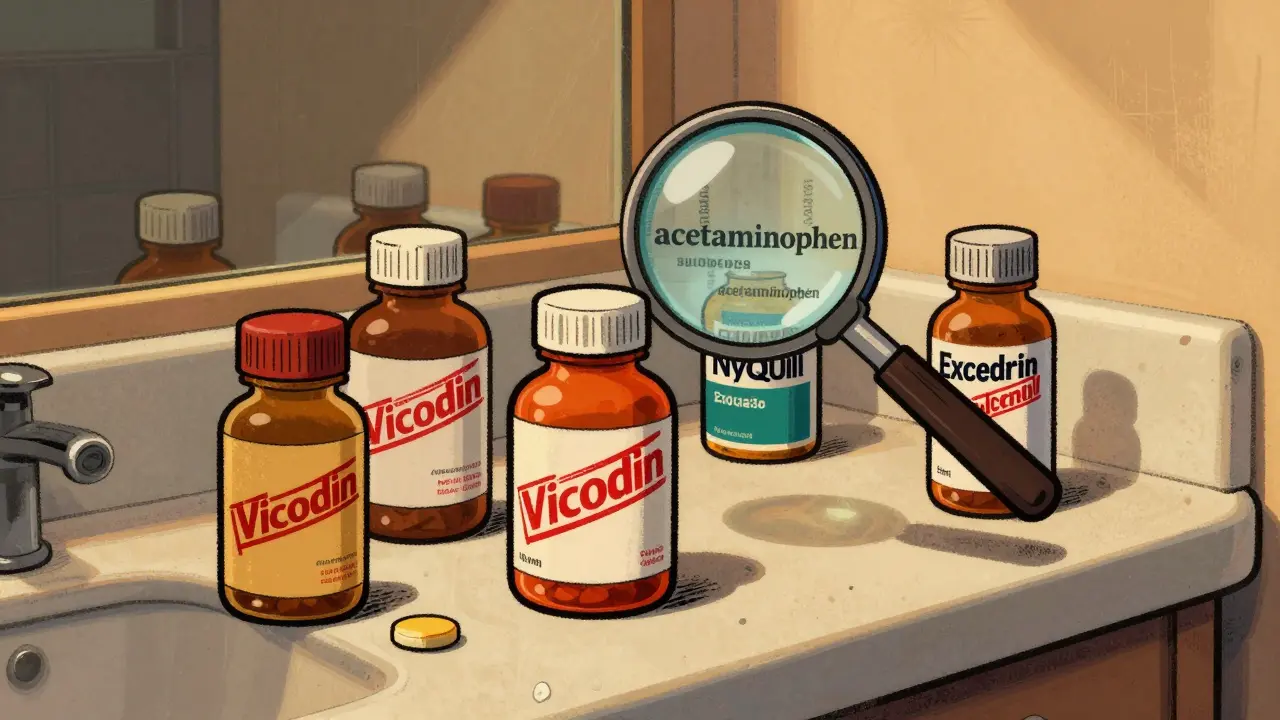
Every year, thousands of people end up in the hospital with severe liver damage-not from alcohol, not from viruses, but from a common painkiller they didn’t realize was in multiple medications. Acetaminophen is in more than 600 over-the-counter and prescription products. It’s in cold medicines, sleep aids, and especially in combination painkillers like Vicodin, Percocet, and Tylenol with codeine. The problem? Most people have no idea they’re taking more than one dose at a time.
Why Combination Products Are Dangerous
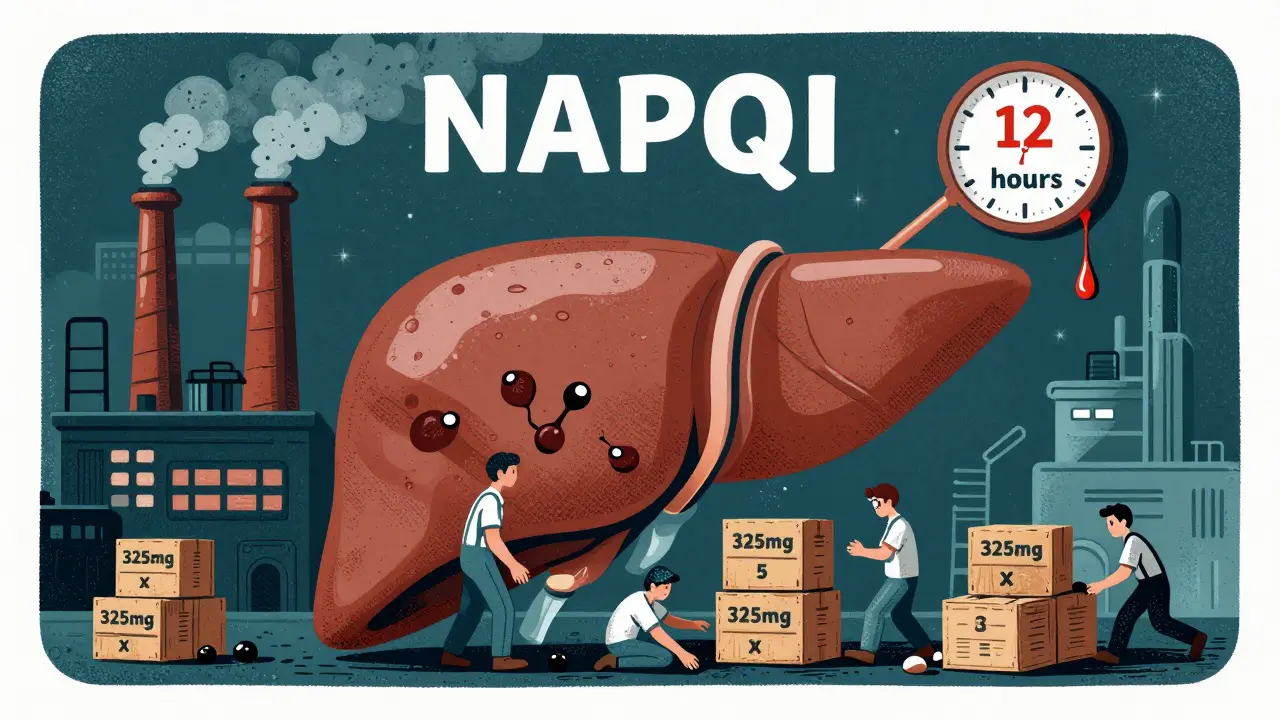
Acetaminophen by itself is safe when taken as directed. But when it’s mixed with opioids like hydrocodone or oxycodone, the risk goes up-not because the opioid is toxic, but because patients don’t know how much acetaminophen they’re getting. A single Vicodin tablet might contain 325 mg of acetaminophen. If you take two for back pain, that’s 650 mg. Then you grab a cold tablet for a runny nose, and it’s another 325 mg. Two hours later, you take a Tylenol for a headache. That’s another 500 mg. Before you know it, you’ve hit 1,500 mg in a few hours-and the safe daily limit is 4,000 mg.But here’s the catch: that 4,000 mg limit isn’t safe for everyone. People who drink alcohol regularly, have malnutrition, or take other liver-metabolizing drugs may start to see damage at just 2,000-3,000 mg. The liver can’t keep up. Acetaminophen breaks down into a toxic byproduct called NAPQI. Normally, your liver uses glutathione to neutralize it. But if you take too much, glutathione runs out. Then NAPQI starts attacking liver cells, causing swelling, cell death, and sometimes complete liver failure.
What the FDA Did to Fix This
In 2011, the FDA stepped in. They found that nearly 40% of unintentional acetaminophen overdoses came from combination products. So they forced manufacturers to cap acetaminophen at 325 mg per tablet or capsule in prescription painkillers. That rule went fully into effect by January 14, 2014. The European Medicines Agency did the same in 2013.It helped-but not enough. A 2019 study in Hepatology showed combination products still caused 27% of all acetaminophen-related liver injuries in the U.S. And 68% of those were accidental. Why? Because people still don’t check labels. They think, “I’m only taking one pill,” not realizing they’re taking three different pills, all with acetaminophen.
How to Protect Yourself
The simplest way to avoid liver injury is to know what’s in every pill you take. Here’s how:- Check every medication label-prescription and OTC-for “acetaminophen,” “APAP,” or “paracetamol.” These are all the same thing.
- Never take more than one product with acetaminophen at a time. That includes cold medicine, sleep aids, and migraine pills.
- Write down your daily total. If you take two Vicodin (325 mg each), one Excedrin (500 mg), and a nighttime cold tablet (325 mg), you’ve hit 1,480 mg. That’s fine for one day-but don’t add more.
- Know your limit. If you drink alcohol, have liver disease, or are underweight, don’t exceed 2,000-3,000 mg per day. Ask your doctor.
- Use the same pharmacy every time. Pharmacists can track what you’re taking and warn you about overlaps.
Some people think, “I only take it when I need it.” But the damage doesn’t always show up right away. One woman in Arkansas took her prescribed oxycodone/acetaminophen for two weeks after surgery. Her liver enzymes were normal at first. By week three, they were through the roof. She didn’t feel sick-until she collapsed. That’s how silent this can be.
What Doctors and Pharmacists Should Do
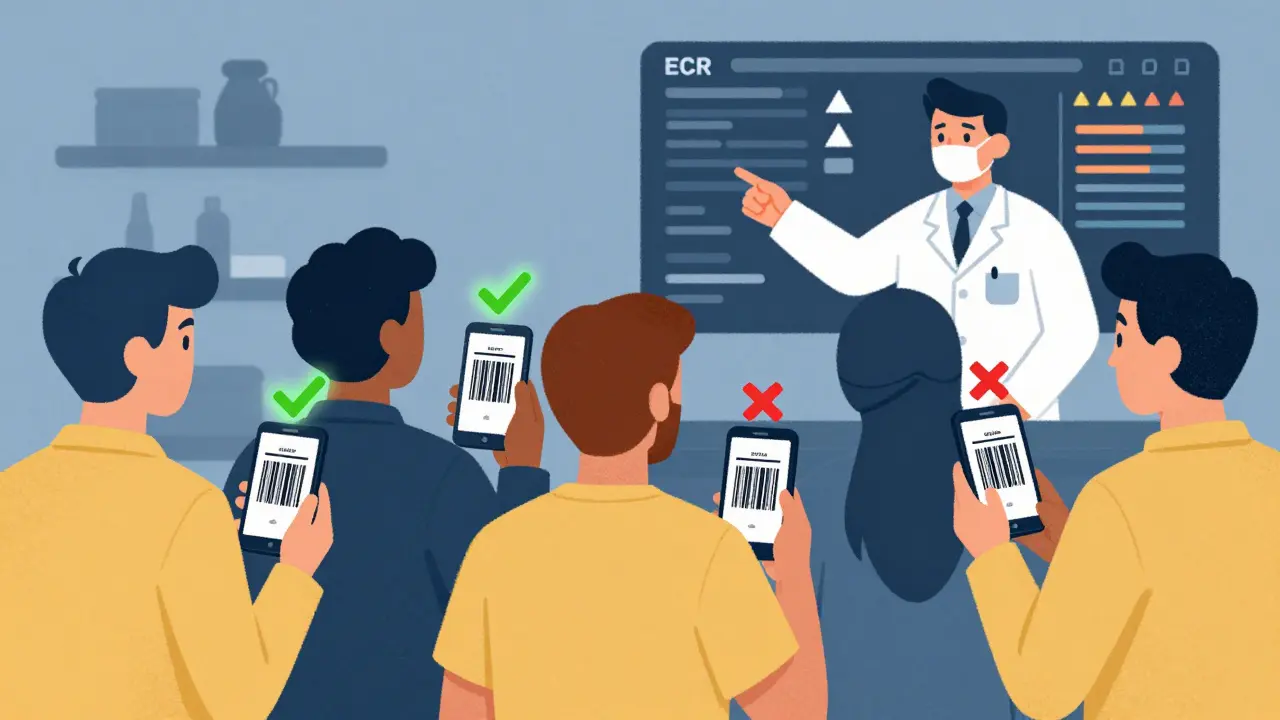
Healthcare providers have a big role. A 2018 study in Annals of Internal Medicine found that when doctors gave patients a clear, written warning about acetaminophen in combination drugs, unintentional overdoses dropped by 53%. That’s huge.Pharmacists are the last line of defense. A 2021 study showed pharmacist-led counseling reduced overdose risk by 41%. But many pharmacies don’t have time for it. The solution? Electronic health records now flag potential acetaminophen overlaps. As of early 2023, 87% of Epic EHR systems automatically warn prescribers if a patient is already on another acetaminophen product.
For Spanish-speaking patients, the risk is 2.3 times higher because of language barriers. The FDA now offers medication guides in 14 languages. If you’re not fluent in English, ask for a translator. Don’t assume the pharmacist will know you don’t understand.
What Happens If You Overdose?
If you suspect you’ve taken too much acetaminophen-no matter how small it seems-get help immediately. Don’t wait for symptoms. Nausea, vomiting, and fatigue often don’t show up until 12-24 hours after ingestion. By then, liver damage may already be advanced.The antidote is N-acetylcysteine (NAC). It works by replacing glutathione and protecting liver mitochondria. The sooner you get it, the better. If you take NAC within 8 hours of overdose, it can reduce liver injury by nearly half. Even after 48 hours, it still helps.
In 2021, the FDA approved a new drug called fomepizole as an add-on treatment. It blocks the enzyme that turns acetaminophen into NAPQI. Studies show it cuts severe liver injury by 32% when given within 12 hours. It’s not a replacement for NAC, but it’s a powerful backup.
A new extended-release NAC tablet, approved in February 2023, lasts 12 hours instead of 4. That means fewer doses, fewer side effects, and better compliance. For people who struggle with the old 72-hour IV protocol, this is a game-changer.
What’s Coming Next
Researchers are exploring ways to make these drugs safer from the inside out. One compound, emodin, found in rhubarb, showed a 57% reduction in liver injury in animal studies by turning on the body’s natural antioxidant defenses. Another idea: adding a protective ingredient like sulforaphane (found in broccoli sprouts) directly into the pill. But experts warn: this could give people a false sense of safety. If you think the pill protects you, you might take more.The best solution still comes down to awareness. A new smartphone app, currently in beta testing, lets you scan the barcode of any medication and instantly see how much acetaminophen you’ve taken that day. It works with over 150 combination products. In trials, it was 89% accurate.
Real Stories, Real Risks
On Reddit, a 2022 thread titled “How many people know their painkiller has acetaminophen?” got over 1,200 comments. Two-thirds admitted they’d taken multiple acetaminophen products without realizing it. One man took hydrocodone/acetaminophen for a back injury, then took NyQuil for a cold. He woke up in the ER with acute liver failure. He didn’t feel sick until it was too late.On Drugs.com, 43% of negative reviews for combination painkillers say: “I didn’t realize I was taking acetaminophen in both my prescription and OTC meds.” One woman took her prescribed painkiller for two weeks, then started taking Advil Cold & Sinus because her nose was stuffy. She didn’t know it had acetaminophen. Her liver enzymes tripled. She spent a week in the hospital.
But there’s hope. Amazon reviews of newer Vicodin packaging say: “The red bold warning on the box made me check my other meds. I avoided an overdose.” That’s what proper labeling does.
Final Takeaway
Acetaminophen isn’t dangerous because it’s bad. It’s dangerous because we treat it like it’s harmless. It’s in everything. And we don’t read the labels. The good news? You don’t need to be a doctor to protect yourself. Just be curious. Ask questions. Check every bottle. Write it down. Talk to your pharmacist.There’s no magic pill that makes you immune. But knowledge? That’s the real antidote.
Can I take acetaminophen if I drink alcohol?
If you drink alcohol regularly, your liver’s ability to process acetaminophen is reduced. The safe daily limit drops to 2,000-3,000 mg, not the standard 4,000 mg. Even one drink a day can increase your risk of liver injury. Avoid acetaminophen entirely if you drink heavily or have liver disease.
Is it safe to take Tylenol with my prescription painkiller?
No. Most prescription painkillers like Vicodin, Percocet, and Lortab already contain acetaminophen. Taking Tylenol on top of that can easily push you over the safe limit. Always check the label for “acetaminophen” or “APAP.” If it’s there, don’t add another source.
What are the early signs of acetaminophen liver damage?
Early signs are often mild and easily ignored: nausea, vomiting, loss of appetite, and tiredness. These can appear 12-24 hours after overdose. By the time jaundice (yellow skin) or abdominal pain shows up, damage is already severe. Don’t wait for symptoms. If you suspect an overdose, go to the ER immediately.
Can I use ibuprofen instead of acetaminophen to avoid liver risk?
Yes, if you’re concerned about liver damage, ibuprofen or naproxen are safer alternatives for pain relief. But they carry their own risks-stomach bleeding, kidney strain, and increased blood pressure. Use them only as directed and avoid long-term use without medical supervision.
Do all combination painkillers now have lower acetaminophen doses?
Prescription combination products made in the U.S. since 2014 are limited to 325 mg of acetaminophen per dose. But over-the-counter products like Tylenol and cold medicines can still contain up to 1,000 mg per tablet. Always check the label, even on OTC products.
Is there a blood test to check for acetaminophen overdose?
Yes. A serum acetaminophen level test is done in emergency rooms. It’s plotted on the Rumack-Matthew nomogram, which tells doctors whether you need NAC. The test is most accurate 4-24 hours after ingestion. If you think you’ve overdosed, don’t delay-get tested even if you feel fine.
Next Steps for Safer Use
- Make a list of all your medications and check each one for acetaminophen.
- Set a daily reminder on your phone to track how much you’ve taken.
- Ask your pharmacist to review your meds during your next visit.
- If you’re on long-term pain medication, ask your doctor about alternatives without acetaminophen.
- Download a medication tracker app that scans barcodes and alerts you to duplicate ingredients.
Preventing liver injury isn’t about avoiding painkillers. It’s about using them wisely. You don’t need to suffer in silence. But you do need to know what’s in your medicine-and who to ask when you’re not sure.
Joni O
January 16, 2026 AT 22:17Just took a second look at my medicine cabinet after reading this. Had Tylenol, NyQuil, and my back pill all sitting there like a toxic trio. 😳 I’m deleting the NyQuil. No more sneaky acetaminophen.
Jake Moore
January 18, 2026 AT 07:43As a pharmacist, I see this every week. People think 'it's just Tylenol' like it's candy. I hand out printed cards with the list of brand names that contain APAP. One guy cried because he didn't know his 'sleep aid' was killing his liver. This isn't hype-it's daily triage.
Zoe Brooks
January 19, 2026 AT 19:38My grandma took Vicodin after hip surgery and added Advil Cold & Flu because she 'just needed to breathe.' Ended up in the ICU. She’s fine now, but she calls acetaminophen 'the silent knife' and refuses to touch anything without checking the label. Learned the hard way, but now she’s the family medic watchdog.
Dayanara Villafuerte
January 20, 2026 AT 08:51Y’all realize the FDA only capped it in prescriptions, right? OTC Tylenol still packs 1000mg per cap. So you’re told 'don’t take more than one'... but then you’re handed a bottle that says 'maximum 8 pills a day.' 8000mg? That’s a death sentence waiting for a hangover. 🤡
Ryan Otto
January 21, 2026 AT 17:04This is a manufactured crisis designed to push patients toward more expensive, patent-protected alternatives. The real agenda? Eliminate generic acetaminophen so Big Pharma can monopolize NAC and fomepizole. The liver has been processing this compound for 70 years. Why now? Who benefits?
Max Sinclair
January 22, 2026 AT 15:40My dad died from liver failure after taking OTC painkillers for his arthritis. He didn’t know his prescription and his cold medicine had the same ingredient. I wish this post had existed back then. Please, if you’re reading this-check the labels. Even if you think you’re being careful.
Praseetha Pn
January 23, 2026 AT 17:08THIS IS A GOVERNMENT CONTROL TACTIC. They want you to be dependent on pharmacists and apps because they’re scared you’ll figure out that acetaminophen is just a cheap, effective drug that doesn’t need 14 languages and QR codes. They’re turning a simple painkiller into a psychological prison. Wake up. The real poison is compliance.
christian Espinola
January 25, 2026 AT 01:27Wow. Someone actually wrote a 2000-word essay on acetaminophen and didn’t mention the fact that it’s a metabolite of ethanol. That’s not a coincidence. The entire narrative is engineered to distract from the real issue: alcohol and pharmaceutical synergy. You’re being sold fear so you’ll stop drinking and start buying NAC.
Chuck Dickson
January 25, 2026 AT 02:19I’m a chronic pain patient. I’ve been on these meds for 8 years. I track every dose in a notebook. I use the same pharmacy. I ask my doctor every refill. I’m not paranoid-I’m responsible. And yes, it’s a pain. But I’m alive. This isn’t about fear. It’s about ownership of your body. You’ve got the power. Use it.
Jodi Harding
January 26, 2026 AT 17:04My liver didn’t care how smart I was. It just stopped working.
Andrew McLarren
January 28, 2026 AT 06:34It is imperative to underscore that the metabolic pathway of acetaminophen, via cytochrome P450 2E1, generates N-acetyl-p-benzoquinone imine (NAPQI), a highly reactive electrophile that depletes hepatic glutathione stores. The resultant oxidative stress triggers mitochondrial permeability transition, leading to hepatocyte necrosis. Therefore, adherence to dosing guidelines is not merely prudent-it is biochemically non-negotiable.
Andrew Short
January 29, 2026 AT 01:39People who don’t read labels deserve what they get. If you can’t handle reading a tiny line of text on a pill bottle, maybe you shouldn’t be allowed to own medication. This isn’t a public health crisis-it’s a personal failure crisis. Stop blaming the system. Start reading.
Jay Clarke
January 29, 2026 AT 04:01So now we’re supposed to scan barcodes, track doses in apps, and ask pharmacists to babysit our medicine cabinet? What’s next? A mandatory quiz before buying Advil? This isn’t safety-it’s infantilization. I’m not a child. I’m not stupid. I just want to feel better without being policed by Big Pharma’s parent portal.
Wendy Claughton
January 30, 2026 AT 21:37I used to think this was overblown… until I saw my mom’s liver enzymes after she took 'just one' extra Tylenol with her sleep aid. She didn’t even feel sick. The ER doc said, 'If you’d waited another 6 hours, you’d have needed a transplant.' I now have a sticky note on my fridge: 'APAP = ALWAYS PAY ATTENTION.' I’ve sent this to 12 family members. Please, just… check your bottles.
Tyler Myers
January 31, 2026 AT 08:32They say 'don’t drink and take Tylenol'-but what if you're a bartender who takes it for back pain? What if you're on SSRIs? What if you're a cancer patient on chemo? This isn't about 'being careful.' It's about the system not designing for real people. They made the rules for perfect users. We’re not perfect. We’re just trying to survive.