
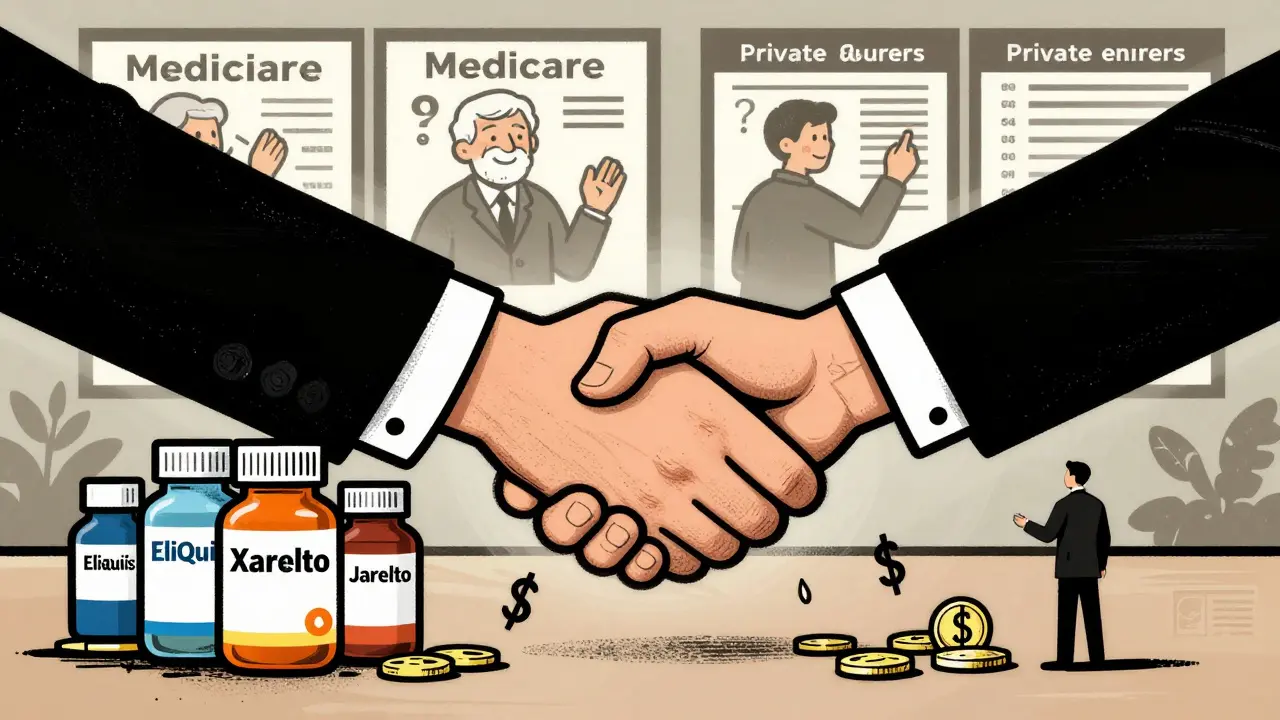
For decades, Medicare couldn’t negotiate drug prices. That changed in 2022 with the Inflation Reduction Act. Now, for the first time, the federal government can sit down with drugmakers and hammer out lower prices for the most expensive medicines. This isn’t just a policy tweak-it’s a full rewrite of how billions in drug spending get handled. And it’s already shaking up how insurers set their discounts.
What Changed With the Inflation Reduction Act?
Before August 2022, Medicare Part D-where most seniors get their prescription drugs-was stuck in a system where private insurers negotiated rebates behind closed doors. The government had no direct say. Drugmakers could set prices however they wanted, as long as they offered a ‘best price’ to insurers. But that didn’t mean lower costs for patients. In 2021, Medicare spent nearly $150 billion on prescription drugs. A lot of that went to just a handful of drugs with no competition. The Inflation Reduction Act flipped that script. It gave Medicare the legal power to pick up to 10 high-cost, single-source drugs each year and negotiate what it calls a ‘Maximum Fair Price’ (MFP). These aren’t just any drugs. They have to be at least 7 years old (or 11 for biologics), and have no generic or biosimilar alternatives. That means drugs like Eliquis, Xarelto, and Jardiance made the first cut. The goal? Cut costs. The Congressional Budget Office estimated this program would save $98.5 billion over ten years. And early results show it’s working. In August 2024, CMS announced the first round of negotiated prices. Discounts ranged from 38% to 79% off what those drugs were selling for before. Eliquis, for example, saw its price drop by nearly 70%.How the Negotiation Process Actually Works
This isn’t a casual chat over coffee. It’s a tightly timed, rule-bound process with deadlines, paperwork, and legal limits. Here’s how it plays out:- Selection: CMS picks 10 drugs each year based on spending, lack of competition, and clinical importance. The first list came out in June 2023.
- Initial Offer: On February 1, 2024, CMS sent each drugmaker an initial price offer. These weren’t random. They were calculated using real-world data: what insurers paid, what other countries charge, and how the drug stacks up against alternatives.
- Counteroffer: Manufacturers had 30 days to respond. Most came back with a higher price. Some pushed back hard.
- Negotiation Meetings: CMS held three formal meetings with each company between March and July 2024. They could adjust their offer upward. Companies could lower their counteroffer.
- Final Price: By August 1, 2024, all 10 deals were locked in. Five were settled during meetings. The other five were finalized through written offers.
What This Means for Insurers and Private Plans
You might think this only affects Medicare. It doesn’t. Private insurers are watching closely-and adjusting. Here’s why: when Medicare cuts a drug’s price, it doesn’t just lower the cost for seniors. It changes the entire market. Drugmakers can’t keep charging high prices to private insurers if Medicare is paying a fraction of that. That’s called the ‘spillover effect.’ The Pharmaceutical Care Management Association estimates private insurers could save $200-250 billion over ten years just from this ripple effect. That means lower premiums, smaller copays, and better formularies for people on employer plans, Medicaid, and even ACA marketplace plans. Insurers are already updating their pricing systems. Pharmacy benefit managers (PBMs) are reworking rebate structures. Some are even using the Medicare MFP as a new benchmark in their own negotiations. If Medicare’s paying $50 for a pill, why should an employer plan pay $150?
Why This Matters for Patients
For seniors, the change is immediate. Starting January 1, 2026, the 10 negotiated drugs will cost significantly less under Medicare Part D. That’s especially important for people stuck in the ‘donut hole’-the coverage gap where out-of-pocket costs spike. But it’s not all good news. Some patients may lose access to their preferred drug. If a drug gets cut from a formulary because it’s too expensive relative to the new MFP, insurers might replace it with a similar-but not identical-alternative. For someone with kidney disease or atrial fibrillation, switching meds can be risky. Also, the savings don’t automatically flow to everyone. Medicare beneficiaries still pay 25% of the negotiated price in the catastrophic phase. That’s still hundreds of dollars a year for some drugs. Advocacy groups are pushing to change that.What’s Next? The Big Expansion
The first 10 drugs are just the beginning. In 2027, CMS will pick 15 more. In 2028, it expands to Medicare Part B-drugs given in doctor’s offices, like cancer infusions and arthritis shots. That’s a bigger chunk of spending. And it’s trickier. Doctors get paid based on the drug’s price. If the price drops, their reimbursement drops too. That’s causing concern among physician groups. By 2029, 20 drugs will be negotiated every year. That means over 100 drugs could be under negotiation by 2030. And it’s not stopping there. The Biden administration is exploring ways to shorten the 7-year waiting period. If they cut it to 5 years, the pool of negotiable drugs could jump by nearly half.
Who’s Fighting Back?
Drugmakers aren’t sitting still. Four of the 10 companies sued to block the program, claiming it was unconstitutional. A federal judge dismissed those lawsuits in August 2024. Appeals are coming. PhRMA, the industry lobby, claims the program will kill innovation, costing $112 billion in R&D over ten years. But the Office of Management and Budget says those numbers are inflated. Real-world data shows most of the negotiated drugs are old, with little recent R&D investment. Meanwhile, the FTC is cracking down on tactics like ‘product hopping’-where companies tweak a drug just to delay generics. That’s helping clear the path for more drugs to become eligible for negotiation.What You Need to Know Right Now
If you’re on Medicare:- By late 2025, your plan will send you a notice about changes to your drug list.
- Check your formulary. If you’re on Eliquis, Xarelto, or Jardiance, your cost could drop by half.
- Ask your pharmacist: ‘Is this drug part of the Medicare negotiation list?’
- Your insurer may lower your copay without telling you. Don’t assume your price stayed the same.
- Compare your plan’s drug list with Medicare’s MFP list. If your drug is on both, expect a discount.
- Track which drugs are added each year. The list grows.
- Push for changes to the catastrophic coverage cap. Savings shouldn’t stop at 25%.
Final Thoughts: A New Normal
This isn’t a temporary fix. It’s the start of a new pricing reality. For the first time, the government is using its buying power to set fair prices-not just for seniors, but for the whole system. The savings are real. The discounts are stacking up. And insurers, pharmacies, and doctors are all adapting. The next time you hear someone say, ‘Drug prices are just too high,’ you’ll know why-and what’s being done about it.Which drugs are included in the first round of Medicare price negotiations?
The first 10 drugs selected for Medicare price negotiation, finalized in August 2024, include Eliquis (apixaban), Jardiance (empagliflozin), Xarelto (rivaroxaban), Farxiga (dapagliflozin), Lyrica (pregabalin), Brilinta (ticagrelor), Entresto (sacubitril/valsartan), Stelara (ustekinumab), Enbrel (etanercept), and Leqembi (lecanemab). These are all high-cost, single-source drugs with no generic or biosimilar alternatives. Negotiated prices for these drugs take effect on January 1, 2026.
How much will Medicare savings actually reduce my out-of-pocket costs?
If you’re in the coverage gap (donut hole), you’ll see the biggest drop. Medicare caps your out-of-pocket costs at 25% of the negotiated price once you reach catastrophic coverage. So if Eliquis drops from $1,000 to $300 per month, your monthly cost falls from $250 to $75. But if you’re already in catastrophic coverage, your savings are limited to the 25% you pay. Advocates are pushing to lower that percentage.
Will my private insurance also lower prices because of Medicare’s negotiations?
Yes, and many already have. Private insurers often use Medicare’s Maximum Fair Price as a benchmark. If Medicare pays $50 for a drug, it’s hard to justify paying $150. This ‘spillover effect’ is expected to save private plans $200-250 billion over ten years, leading to lower premiums and copays for millions.
What happens if my drug gets replaced with a different one?
Insurers may switch you to a similar drug if the original is removed from the formulary. For example, if Jardiance is replaced with another SGLT2 inhibitor, your doctor may need to approve the change. You can request a formulary exception if the alternative isn’t right for you. Always check your plan’s formulary update notices in late 2025.
When will Medicare start negotiating Part B drugs?
Medicare Part B drug negotiations begin in 2028, with the first set of drugs taking effect January 1, 2028. These are drugs administered in doctor’s offices-like cancer treatments, arthritis infusions, and immune therapies. The negotiation process is similar but includes adjustments for provider reimbursement, which could impact how doctors prescribe these drugs.
Can drug companies still charge high prices to non-Medicare patients?
Technically, yes-but it’s becoming harder. Most manufacturers can’t afford to have a two-tier pricing system where Medicare pays $30 and everyone else pays $150. That leads to backlash, lawsuits, and pressure from employers and PBMs. Many companies are now lowering list prices across the board to avoid being seen as price gouging.
Is there a limit to how many drugs can be negotiated each year?
Yes. The law sets annual caps: 10 drugs in 2026, 15 in 2027, 15 in 2028, and 20 drugs every year after that. But only drugs that are at least 7 years old (or 11 for biologics) and have no generic or biosimilar competition qualify. That means the pool of eligible drugs grows slowly-but steadily.
Glendon Cone
December 30, 2025 AT 13:33srishti Jain
December 31, 2025 AT 05:16Kelly Gerrard
January 2, 2026 AT 00:58Aayush Khandelwal
January 3, 2026 AT 06:41Kunal Karakoti
January 4, 2026 AT 02:53Hayley Ash
January 5, 2026 AT 18:03Colin L
January 7, 2026 AT 05:46kelly tracy
January 7, 2026 AT 14:59Henry Ward
January 8, 2026 AT 11:09Shae Chapman
January 10, 2026 AT 02:16Nadia Spira
January 10, 2026 AT 05:46Cheyenne Sims
January 10, 2026 AT 20:21Sandeep Mishra
January 12, 2026 AT 18:16