When you pick up a prescription for a brand-name medication, you often walk out with a generic version instead. This isn’t just the pharmacy trying to save you money-though that is part of it. It’s because of generic substitution laws, which are state-regulated policies that determine when pharmacists can replace prescribed brand-name medications with therapeutically equivalent generic alternatives. These laws vary wildly across the United States. What happens in California might be illegal in Hawaii or mandatory in Texas. Understanding these rules matters if you’re a patient worried about your treatment, a pharmacist navigating complex compliance requirements, or a healthcare provider prescribing narrow therapeutic index drugs.
Key Takeaways
- All 50 states and Washington, DC have drug product selection laws, but they differ significantly in how strict they are.
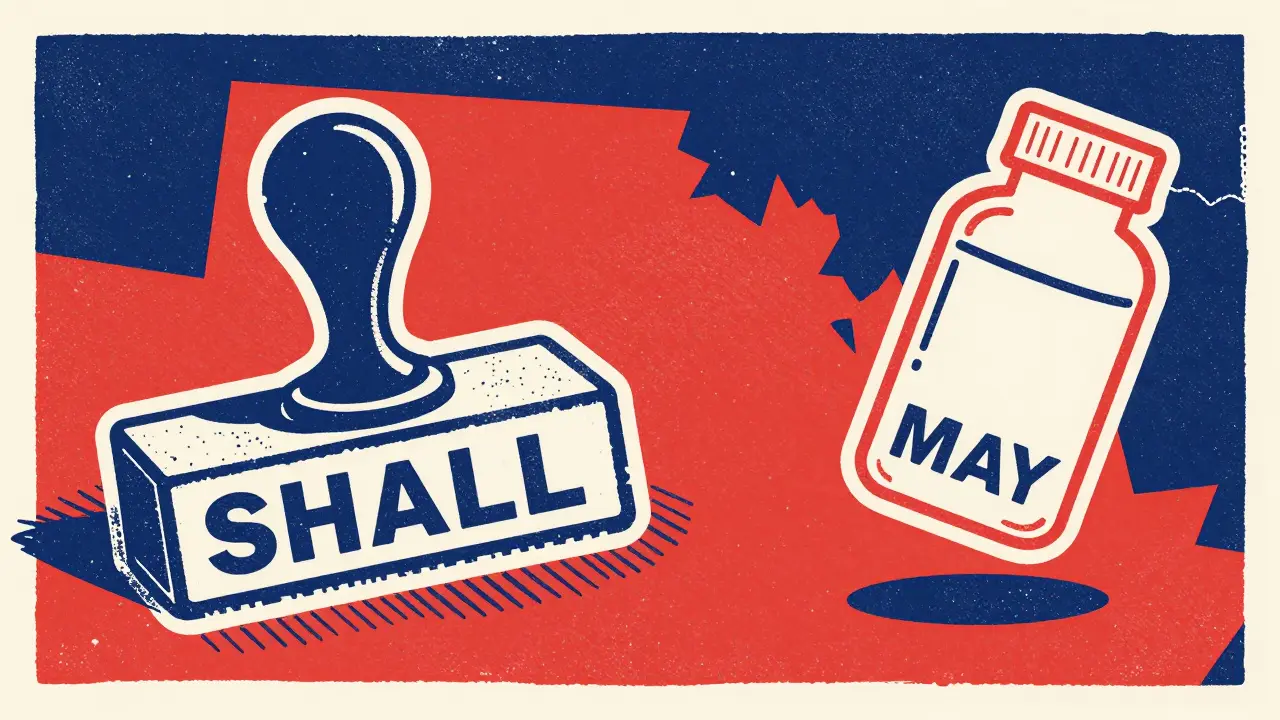
- 19 states mandate ('shall') generic substitution, while 31 permit ('may') it without requiring it.
- Biosimilars (generic versions of biologics) face stricter rules than traditional small-molecule generics in 45 states.
- Patient consent is required before substitution in only 7 states plus DC; most require notification after the fact.
- Mandatory substitution laws are linked to 8-12 percentage points higher generic utilization and $50-$150 annual savings per prescription.
The Origins of Drug Product Selection Laws
Generic substitution didn’t always exist. In the early days of modern pharmaceuticals, states had "anti-substitution" laws that forced pharmacists to dispense exactly the brand name written on the prescription. If your doctor wrote "Prozac," you got Prozac. No exceptions. This kept prices high and limited consumer choice.
That changed in the late 1970s and early 1980s. Louisiana became the first state to pass a modern drug product selection law in October 1980. Texas followed in January 1982, and Indiana joined in mid-1984. According to a 2011 Federal Trade Commission staff report, these early moves were driven by rising drug costs and a desire to promote competition among manufacturers.
Today, every state and Washington, DC has some form of substitution legislation. But don’t assume they all work the same way. A 2020 cross-sectional study published in *JAMA Internal Medicine* found substantial differences in implementation specifics across jurisdictions. Some states push hard for substitution; others leave it largely up to the pharmacist’s discretion.
How States Handle Substitution: Mandatory vs. Permissive
The biggest divide in state laws comes down to one word: "shall" versus "may."
In 19 states-including California, New York, and Texas-pharmacists must substitute a generic equivalent if one is available and therapeutically approved. These are called mandatory substitution states. The goal is clear: maximize cost savings and ensure consistent access to affordable medicines.
In contrast, 31 states and Washington, DC use permissive language. Pharmacists may substitute, but aren’t required to. Four of these jurisdictions-Alaska, Delaware, Maine, and New Hampshire-go a step further by requiring pharmacies to post notices informing patients about their right to request a specific brand.
This distinction isn’t just semantic. Economic analysis from the FTC shows that mandatory substitution states achieve generic utilization rates 8-12 percentage points higher than permissive ones. That translates to real-world savings: consumers in mandatory states save an estimated $50 to $150 per prescription annually compared to those in permissive states.
Patient Consent and Notification Requirements
Who gets to decide whether you get a generic? In most cases, it’s not you-it’s the system. But a handful of states give patients more control.
Seven states-Connecticut, Hawaii, Maine, Maryland, New Hampshire, Vermont, and West Virginia-plus Washington, DC require explicit patient consent before any substitution can occur. You must actively agree to switch from brand to generic. In these places, pharmacists cannot make the call unilaterally.
Most other states take a different approach. Thirty-one states plus DC mandate patient notification after substitution occurs, regardless of packaging. You’ll likely receive a label alert or verbal notice at pickup. But you won’t have veto power beforehand.
A 2022 study in the *American Journal of Managed Care* found that patients in states requiring consent or pre-notification had 12.7% lower generic utilization in the year following new drug approval compared to less restrictive states. The takeaway? More patient involvement doesn’t always mean better outcomes-in this case, it meant fewer people switching to cheaper options.
Liability Protections for Pharmacists
If a pharmacist substitutes a generic and something goes wrong, who’s liable? The answer depends on where you live.
Twenty-four states-including Alabama, Arizona, Illinois, Massachusetts, Missouri, Nebraska, New Mexico, Oregon, and Rhode Island-do not explicitly protect pharmacists from greater liability when performing substitutions. That means if a patient experiences an adverse reaction after receiving a generic, the pharmacist could face legal exposure even though the FDA deemed the products therapeutically equivalent.
In states without liability shields, pharmacists may hesitate to substitute, especially with sensitive medications like warfarin or levothyroxine. The Medicare Rights Center has documented cases where delays in substitution occurred due to fear of litigation-not medical concern, but legal risk.
This creates a paradox: laws designed to increase access to generics end up limiting them because professionals avoid potential lawsuits. Standardizing liability protections could reduce this friction and improve consistency nationwide.
Formulary Structures: Positive vs. Negative Lists
Not all drugs are treated equally under substitution laws. Some states maintain formularies-lists that dictate which generics can or cannot be substituted.
Kentucky uses a "positive formulary" approach for certain high-risk drugs. It maintains a list of narrow therapeutic index (NTI) drugs that cannot be substituted, including digitalis glycosides and antiepileptic drugs. Only specific approved generics appear on the allowed list.
Other states use "negative formularies," listing drugs that are prohibited from substitution. Everything else is fair game. Oklahoma takes an extreme stance: it prohibits substitution entirely unless authorized by both the prescriber and purchaser.
Hawaii stands out for its strict rules around antiepileptic drugs. Substitution requires consent from both the practitioner and the patient-a dual gatekeeping mechanism rare elsewhere. This reflects ongoing concerns about seizure control stability when switching brands.
| State | Substitution Type | Patient Consent Required? | Notification After Substitution? | Special Restrictions |
|---|---|---|---|---|
| California | Mandatory | No | Yes | None specified |
| Texas | Mandatory | No | Yes | None specified |
| New York | Mandatory | No | Yes | None specified |
| Hawaii | Permissive | Yes (for antiepileptics) | Yes | Antiepileptic drugs require prescriber + patient consent |
| Oklahoma | Prohibited | N/A | N/A | No substitution without prescriber/purchaser authority |
| Kentucky | Permissive | No | Yes | Positive formulary for NTI drugs |
Biosimilars vs. Small-Molecule Generics: A Growing Divide
Here’s where things get complicated. Not all “generics” are created equal. Traditional small-molecule drugs (like ibuprofen or metformin) have well-established pathways for proving equivalence. Biologics-large, complex molecules made from living cells-are harder to replicate.
FDA-approved biosimilars must meet rigorous standards to earn “interchangeable” status under section 351(k)(4) of the Public Health Service Act. Yet despite federal approval, state laws treat them differently.
A 2020 *JAMA Internal Medicine* study found that 45 states impose more stringent requirements for interchangeable biologic substitution than for small-molecule generics. Nine states-including Alabama, Arizona, Illinois, Massachusetts, Missouri, Nebraska, New Mexico, Oregon, and Rhode Island-require patient notification for biologics but not for regular generics.
Six states-Florida, Indiana, Massachusetts, New Jersey, Pennsylvania, and Tennessee-mandate generic drug substitution but make biologic substitution merely permissive. Why? Because clinicians worry about immunogenicity risks and subtle differences in manufacturing processes.
As of Q2 2023, biosimilars accounted for only 11.2% of biologic prescriptions (IQVIA data), partly due to these regulatory hurdles. By comparison, generic small-molecule drugs represent over 90% of all prescriptions dispensed nationally (IMS Health 2022).
The gap highlights a tension: we want cost savings, but we also want safety assurance. Until states align their approaches, biosimilar adoption will lag behind traditional generics.

Real-World Challenges for Pharmacists
Imagine running a pharmacy chain near a state border. One customer lives in Ohio, another in Kentucky. Their prescriptions look identical-but the rules governing what you can dispense are completely different.
This is reality for many pharmacists. During a March 2022 Reddit AMA, a Walgreens pharmacist described managing multi-state rules as "a nightmare for workflow efficiency." They constantly check which jurisdiction applies based on patient address, insurance plan, and even delivery location.
The National Community Pharmacists Association surveyed independent pharmacists in 2021 and found that 68% spend 15-30 minutes daily handling substitution-related issues. The burden peaks in states with complex notification timelines or conflicting formulary lists.
Technology helps. Epic Systems launched its "State Substitution Rules Engine" in 2019, automatically applying relevant regulations based on pharmacy location. An internal 2021 audit showed a 37% reduction in substitution errors after implementation. Still, human oversight remains critical-especially for edge cases involving NTI drugs or recent legislative changes.
Economic Impact and Future Trends
Let’s talk numbers. Generic drugs account for 90.7% of all prescriptions filled in the U.S. Average savings per prescription? Around $313 compared to brand-name equivalents (IMS Health 2022). Medicaid programs in 42 states enforce mandatory substitution policies with lower copays for generics. KFF data shows generic utilization averages 89.3% in state Medicaid plans versus 86.1% in commercial insurance-suggesting public programs benefit from clearer, standardized rules.
But variation still costs us dearly. The Congressional Budget Office projects that continued inconsistency in state substitution laws will cost the healthcare system $4.7 billion annually in preventable brand-name drug utilization through 2030-if nothing changes.
There’s movement toward reform. In 2023, 12 state legislatures introduced the "State Harmonization of Generic Substitution Act," aiming to standardize requirements across participating regions. Meanwhile, 27 states are actively reviewing substitution laws, focusing particularly on creating consistent standards for complex generics and biosimilars.
Research supports simplification. A May 2023 *Health Affairs* study found that states which streamlined their substitution laws between 2018-2022 saw generic utilization rise by 6.8 percentage points on average. The biggest gains-11.2 percentage points-came from eliminating patient consent requirements for most drug classes.
What Should Patients Do?
If you’re concerned about getting a generic instead of your preferred brand, here’s what you can do:
- Know your state’s rules. Visit your state board of pharmacy website or consult the NABP interactive substitution law map (updated quarterly).
- Ask questions. When picking up a prescription, ask: "Was this substituted? Is there a reason I’m getting this particular generic?"
- Speak up if needed. If you’ve had reactions to previous generics, tell your pharmacist and doctor. You may qualify for an exception.
- Check your insurance. Many plans incentivize generics with lower copays. Sometimes paying extra for brand isn’t worth it financially.
- Stay informed about biosimilars. If you’re on a biologic injection (e.g., Humira, Enbrel), ask whether a biosimilar alternative exists-and whether your state allows automatic substitution.
You don’t need to memorize every state law. But understanding the basics empowers you to advocate for yourself and make smarter decisions about your care.
Final Thoughts
Generic substitution laws exist to balance three competing priorities: affordability, accessibility, and safety. They’ve succeeded in driving down costs dramatically-saving billions collectively each year. But they’ve also created confusion, inefficiency, and uneven patient experiences.
The path forward lies in harmonization. As states begin adopting similar frameworks-especially around biosimilars and liability protections-we’ll see smoother transitions, fewer errors, and greater trust in the system.
Until then, stay curious. Ask questions. And remember: behind every pill bottle is a web of regulations designed to keep you healthy-and hopefully, within budget.
Can my pharmacist refuse to substitute a generic for a brand-name drug?
In permissive states (31 total), yes-they can choose not to substitute. In mandatory states (19 total), they generally must substitute unless the prescriber explicitly forbids it or the drug appears on a restricted formulary. Always confirm with your local pharmacy.
Do I have the right to insist on receiving the brand-name medication?
Yes, in most states. Your prescriber can mark the prescription "Dispense as Written" (DAW), and you can verbally request the brand. However, your insurance may charge higher copays, and some states limit DAW usage for cost-containment reasons.
Are biosimilars legally interchangeable with reference biologics?
Only if designated "interchangeable" by the FDA under Section 351(k)(4). Even then, 45 states impose additional restrictions beyond those applied to small-molecule generics. Check your state’s specific rules before assuming automatic substitution is allowed.
Why do some states prohibit substitution of antiepileptic drugs?
Antiepileptic drugs fall into the narrow therapeutic index category, meaning small changes in dosage or formulation can trigger seizures. States like Hawaii and Kentucky restrict substitution to maintain stable blood levels and minimize breakthrough seizure risk.
How much money can I save by taking generics instead of brand names?
On average, generics cost $313 less per prescription than brand equivalents (IMS Health 2022). In mandatory substitution states, consumers save an additional $50-$150 annually per prescription compared to permissive states, according to FTC economic modeling.
What should I do if I experience side effects after switching to a generic?
Contact your pharmacist immediately. Report symptoms to your prescribing physician. Document the incident and consider filing a report with the FDA MedWatch program. While generics are therapeutically equivalent, individual responses can vary due to inactive ingredients or manufacturing differences.
Will generic substitution laws become uniform across all states soon?
Progress is underway. Twelve states introduced harmonization bills in 2023, and 27 are actively reviewing reforms. However, full national standardization faces political and logistical challenges. Expect gradual convergence over the next decade rather than immediate overhaul.
Does Medicare cover generic substitutions?
Yes. Medicare Part D strongly encourages generic use through tiered pricing structures. Most plans offer lowest copays for generic drugs. Original Medicare (Parts A & B) covers hospital-administered generics freely. Private supplemental plans follow state-specific substitution rules.
Can online pharmacies bypass state substitution laws?
No. Legitimate online pharmacies must comply with the laws of the state where the patient resides. Virtual platforms like Amazon Pharmacy and Mark Cuban Cost Plus Drugs adhere to local substitution mandates. Beware of offshore sites claiming exemption-they operate outside U.S. regulatory oversight and pose significant safety risks.
How do I find out which state my pharmacy follows?
Your pharmacy operates under the laws of the state where it is physically located-not necessarily where you live. For mail-order services, check the fulfillment center’s address. Use the National Association of Boards of Pharmacy’s interactive map to verify current regulations for any given jurisdiction.