
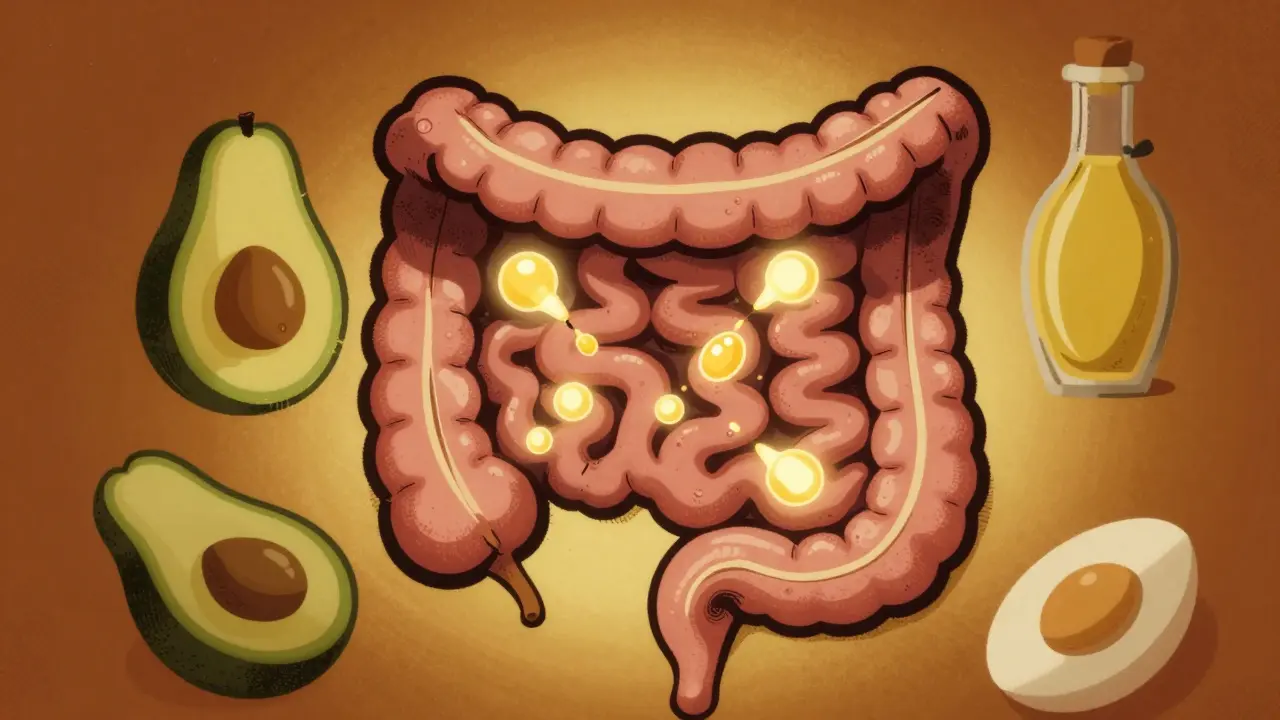
Fatty Meal Calculator for Medication Absorption
How Fatty Foods Help Medications
For lipid-based medications, you need 20-30 grams of dietary fat to ensure optimal absorption. Without sufficient fat, these medications may be ineffective. This calculator helps you determine if your meal meets the requirement.
Calculate Your Meal's Fat Content
Ever wonder why some pills come with instructions to take them with food-especially fatty food? It’s not just to avoid an upset stomach. For certain medications, eating fat isn’t optional-it’s part of how the drug works. Lipid-based medications rely on dietary fat to get into your bloodstream effectively. Without it, they might as well be useless.
Why Fat Matters for Some Drugs
Nearly 70% of new drugs being developed don’t dissolve well in water. These are called poorly water-soluble compounds, and they’re a major headache for drugmakers. If a drug can’t dissolve, your body can’t absorb it. That’s where fat comes in. Fatty foods trigger your body’s natural digestive processes that help dissolve and carry these drugs across the gut wall. When you eat fat, your body releases bile and digestive enzymes. These break down the fat into tiny droplets and mix them with the drug, trapping it in structures called micelles. Think of it like a soap bubble holding onto the drug so it can slip through your intestinal lining. Without this, the drug just sits there, unchanged, and gets flushed out. This isn’t theory-it’s proven. Take cyclosporine, a drug used after organ transplants. The original version, Sandimmune®, had wildly inconsistent absorption. Patients needed multiple doses a day and strict timing with meals. The newer lipid-based version, Neoral®, changed everything. It boosts bioavailability by 20-30% and lets people take it once or twice daily, regardless of what they ate. That’s not a small win-it’s life-changing for transplant patients.How Lipid-Based Formulations Work
Pharmaceutical companies don’t just tell you to eat a burger with your pill. They engineer the pill itself to work with fat. These are called lipid-based drug delivery systems. The most common type is called SEDDS-Self-Emulsifying Drug Delivery Systems. They’re tiny capsules filled with oil, surfactants, and solvents that turn into a milky liquid when they hit your gut. These systems use medium-chain triglycerides (MCTs), like those found in coconut oil. MCTs digest faster than long-chain fats from meat or butter. In just 15-30 minutes, they break down into components that help dissolve the drug and keep it suspended in your gut fluid. That’s three to five times longer than water alone can hold the drug in solution. The magic happens in your small intestine, where bile salt levels peak. That’s when these lipid droplets become super effective at carrying drugs into your blood. Studies show lipid-based versions of drugs like fenofibrate (used for cholesterol) can increase absorption by up to 31%. That means lower doses, fewer side effects, and more consistent results.Food Effect: The Real-World Impact
The term “food effect” sounds technical, but it’s simple: what you eat changes how well your medicine works. For some drugs, taking them on an empty stomach cuts absorption by half. For others, eating fat doubles it. Take itraconazole, an antifungal. The capsule version needs a fatty meal to work at all. Without it, only 20-30% of the drug gets absorbed. The lipid-based oral solution, Sporanox®, bypasses that problem. Even on an empty stomach, it delivers 2.8 times more drug into your blood. That’s why doctors now prefer the liquid form for serious fungal infections. But here’s the catch: not all drugs benefit. Drugs that dissolve easily in water (BCS Class I) don’t need fat. In fact, fat can slow them down by delaying stomach emptying. Same goes for drugs that need acid to dissolve-like some osteoporosis meds (bisphosphonates). Taking those with a fatty meal can make them less effective. Patients on lipid-based drugs often notice the difference. Reddit threads from people managing transplant rejection or high triglycerides say things like, “I don’t have to plan my meals around my pills anymore,” or “The stomach pain from the old version is gone.” That’s not placebo-it’s science.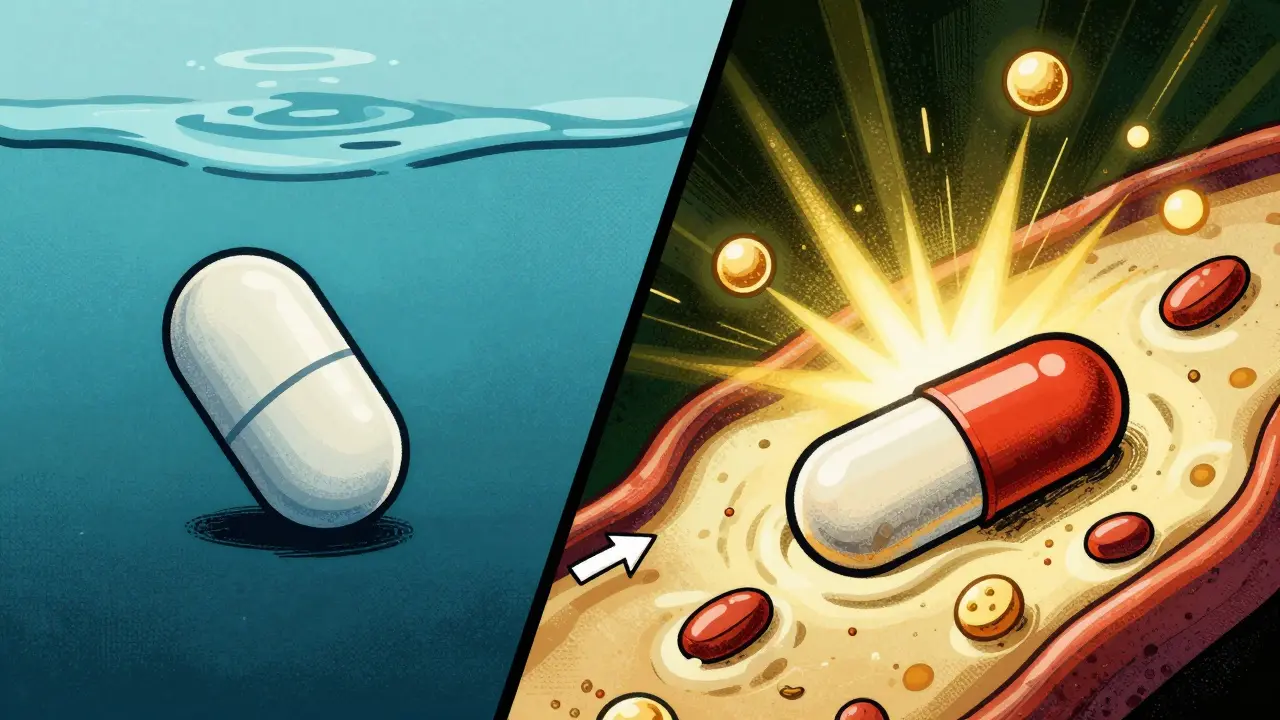
Cost, Convenience, and Trade-Offs
Lipid-based formulations aren’t perfect. They’re more expensive. A 30-day supply of Sporanox® oral solution can cost $1,200. The generic capsule? Around $300. That’s a four-fold difference. Insurance doesn’t always cover the pricier version unless you’ve tried the cheaper one first. They’re also trickier to make. These drugs need special packaging-usually soft gelatin capsules that protect the oil from air and light. The manufacturing process takes 18-24 months to develop, compared to 12-15 for regular pills. That’s why only about 35% of new drugs for poorly soluble compounds now use this tech, up from 15% in 2015. And then there’s variability. If you have a digestive disorder-Crohn’s, celiac, or even long-term antibiotic use-your body might not produce enough bile or enzymes. That can wreck the whole system. Experts warn that lipid-based drugs aren’t one-size-fits-all. What works for one person might fail for another.What’s Next? Smart Capsules and Personalized Dosing
The future of lipid-based delivery is getting smarter. Researchers at MIT recently tested a “smart lipid capsule” that senses pH and enzyme levels in your gut and releases the drug only when conditions are right. It’s still in early testing, but early results show it could eliminate food effect variability entirely. Another breakthrough came in March 2023 with Matinas BioPharma’s LNC platform. Their antifungal drug, amphotericin B, hit 92% bioavailability in trials-compared to just 30% with the old version. That’s a game-changer for patients with life-threatening fungal infections who couldn’t tolerate the toxic side effects of traditional treatments. The FDA and EMA now require drugmakers to test food effects rigorously. That means more labels will clearly say “take with food” or “take on empty stomach.” You’ll see this more often, especially with new cancer, antiviral, and immune drugs.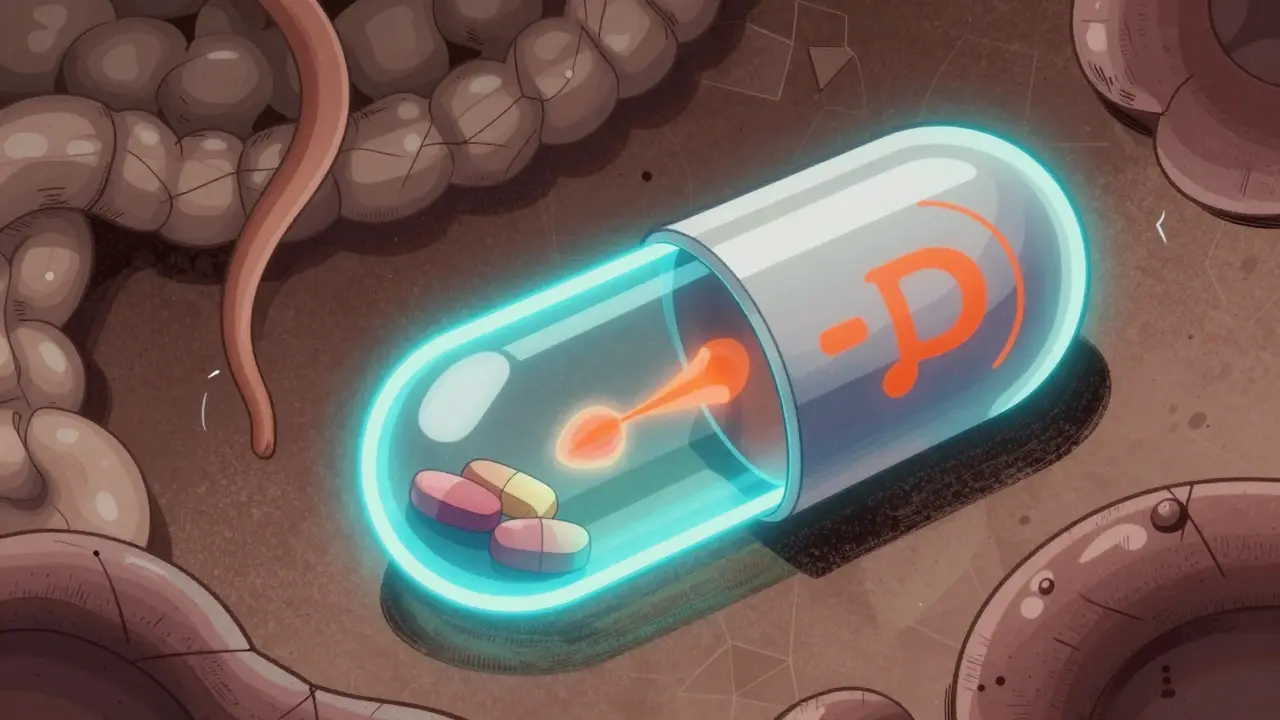
What You Should Do
If you’re on a medication that’s known to have a food effect, don’t guess. Check the label. Ask your pharmacist. Don’t assume “with food” means any snack. For lipid-based drugs, you need actual fat-avocado, nuts, olive oil, eggs, cheese. A banana won’t cut it. If you’re switching from a generic to a lipid-based version, give it time. Your body might respond differently. Track how you feel, your side effects, and whether your symptoms improve. Many patients report fewer stomach issues and more consistent energy levels. And if cost is a barrier, ask about patient assistance programs. Some manufacturers offer discounts or free samples. Generic versions aren’t always inferior-but for lipid-based drugs, they often are.Bottom Line
Fatty foods aren’t just calories-they’re delivery vehicles. For nearly half of all new drugs, fat is the missing piece that turns a weak medicine into a powerful one. Lipid-based formulations turn your body’s natural digestion into a drug-enhancing tool. It’s not magic. It’s pharmacology working with biology, not against it. The next time your doctor says, “Take this with a meal,” don’t just nod. Ask: What kind of meal? And why? You might just be holding the key to better results.Do all medications need to be taken with fatty foods?
No. Only medications designed for lipid-based delivery or those with poor water solubility benefit from fat. Drugs like antibiotics, blood pressure pills, or most pain relievers don’t need it. Always check your prescription label or ask your pharmacist. Taking a drug with fat when it’s not needed can reduce its effectiveness or cause side effects.
What counts as a "fatty meal" for drug absorption?
A meal with at least 20-30 grams of fat is typically enough. Examples include two eggs with cheese, a tablespoon of olive oil on vegetables, a handful of almonds, or a serving of salmon. A slice of pizza or a burger with fries also works. Avoid low-fat snacks like fruit, rice cakes, or yogurt-these won’t trigger the necessary digestive response.
Can I take lipid-based medications with a smoothie or protein shake?
Only if the smoothie contains added fat. A fruit-and-protein-powder shake with no oil, nut butter, or avocado won’t help. But if you add a spoon of peanut butter, flaxseed oil, or full-fat yogurt, it can be effective. The key is triggering bile release, which requires real dietary fat-not just calories or protein.
Why are lipid-based drugs more expensive?
They require complex manufacturing, specialized ingredients like MCTs and surfactants, and protective packaging (usually soft gel capsules). Development takes longer and involves more testing. A lipid-based formulation can cost 25-35% more to produce than a standard tablet. That cost gets passed on, especially if there’s no generic version available yet.
Do lipid-based medications work the same for everyone?
Not always. People with conditions like Crohn’s disease, cystic fibrosis, or gallbladder removal may not produce enough bile to activate the system. Older adults and those on long-term antibiotics can also have reduced fat digestion. If you notice your medication isn’t working as well, talk to your doctor-your body’s ability to process fat might be part of the issue.
Are there natural alternatives to lipid-based drug formulations?
No. While eating fat helps absorption, you can’t replace a lipid-based drug formulation with diet alone. These formulations are precisely engineered to dissolve and carry the drug at the right time and place. Eating avocado with a regular pill won’t turn it into a lipid-based drug. The science is in the formulation-not just the food.
Meenal Khurana
February 3, 2026 AT 14:08Fat isn't just for flavor-it's a delivery system. I never realized my cyclosporine was useless without avocado toast. Now I eat it every morning like a ritual. Game changer.
Janice Williams
February 4, 2026 AT 05:54One must question the pharmaceutical industry's motives. Lipid-based formulations are not scientific breakthroughs-they are profit-driven obfuscations designed to justify exorbitant pricing under the guise of 'innovation.' This is capitalism masquerading as medicine.
Rachel Kipps
February 5, 2026 AT 16:08I read this article and just... felt seen. I’ve been taking my itraconazole with a spoonful of peanut butter for months now and didn’t know why it worked better. My doctor never explained the bile micelles thing. Thanks for making it clear.
caroline hernandez
February 7, 2026 AT 09:16From a pharmacokinetic standpoint, SEDDS represent a paradigm shift in bioavailability optimization. The lipid-mediated enhancement of lymphatic transport circumvents first-pass metabolism, thereby increasing systemic exposure-critical for low-solubility APIs. The clinical correlation with reduced dosing frequency and improved adherence metrics is statistically significant (p<0.01 in multiple RCTs). This isn’t just ‘eating fat’-it’s precision delivery engineering.
Joseph Cooksey
February 9, 2026 AT 06:49Let me tell you something about big pharma. They don’t want you to know that the original versions of these drugs were perfectly fine. They just repackage them with coconut oil and call it ‘advanced’ so they can jack up the price. I’ve been on Neoral for five years. I didn’t need the fancy version. I just needed someone to tell me to eat an egg with it. They didn’t. And now I’m paying $800 a month for what used to cost $40. It’s not science-it’s a scam.
Sherman Lee
February 10, 2026 AT 23:00They’re watching us. Every time you eat fat with your meds, they’re tracking it. The FDA doesn’t care about your health-they care about data collection. Those ‘smart capsules’? They’re microchips disguised as gel caps. You think your body’s digesting fat? Nah. They’re digesting your biometrics. 🕵️♂️
rahulkumar maurya
February 12, 2026 AT 20:33How quaint. You people think this is groundbreaking? The ancient Ayurvedic texts described ghee-enhanced drug delivery over 3,000 years ago. Vaidyas knew that lipids facilitated Rasayana absorption long before your FDA approved a single SEDDS formulation. Now you patent it and charge $1,200. How dare you.
Demetria Morris
February 13, 2026 AT 02:19It’s irresponsible to tell people to eat fatty foods. What about those of us trying to lose weight? Or manage heart disease? This feels like a betrayal. Why can’t they just make the drug work without forcing us to eat greasy food? It’s not fair.
Geri Rogers
February 14, 2026 AT 22:51YESSSS this is so important!! 🙌 I used to take my fenofibrate on an empty stomach and felt like garbage for hours. Once I started adding a tablespoon of almond butter? Magic. No more brain fog. No more nausea. I even started making ‘medication smoothies’ with flaxseed and avocado. Life changed. You’re not alone, friends. 💪🥑
Samuel Bradway
February 15, 2026 AT 11:38Man, I never thought about this. I just took my pills with coffee and a bagel like a zombie. Turns out I was wasting half my dose. Now I eat eggs with everything. My doctor didn’t even mention it. Kinda feels like they’re not doing their job.
Caleb Sutton
February 17, 2026 AT 05:24They’re lying. Lipid-based drugs are a cover-up. The real reason they don’t work on an empty stomach is because the active ingredient is unstable. They’re hiding degradation. This isn’t science-it’s a staged performance to keep you dependent. Don’t trust them.
pradnya paramita
February 17, 2026 AT 10:52From a pharmaceutical formulation perspective, the use of MCTs in SEDDS enhances supersaturation kinetics and inhibits crystallization of poorly soluble APIs in the GI lumen. The critical micelle concentration (CMC) of surfactants like Labrasol® and Cremophor® EL synergizes with endogenous bile salts to stabilize drug-loaded micelles, extending residence time in the duodenum. This is why bioavailability increases 2-3x. It’s not folklore-it’s colloid chemistry.
Jamillah Rodriguez
February 18, 2026 AT 00:37Okay but why does this feel like a diet trend? 🤦♀️ "Take with fat" is the new "keto for your meds." I’m just here waiting for the influencer who sells "medication butter" next.