
Blood Sugar & Ginseng Tracker
Track Your Blood Sugar
Your Reading Summary
Key Safety Guidelines
If you're taking ginseng with diabetes medications:
- Check blood sugar at least twice daily when starting ginseng
- Monitor for symptoms of low blood sugar: shakiness, sweating, dizziness
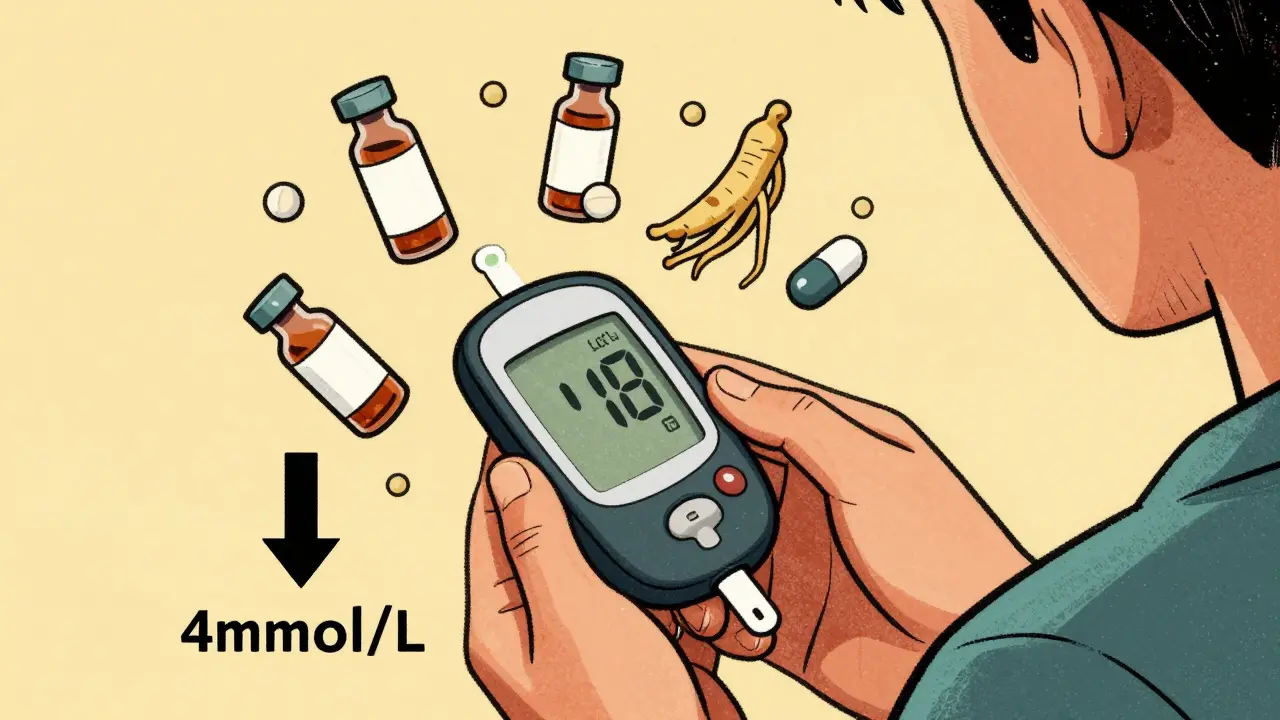
- If your blood sugar drops below 4.0 mmol/L, stop ginseng immediately and contact your doctor
- Never combine ginseng with insulin or sulfonylureas without medical supervision
- Siberian ginseng may raise blood sugar - avoid if you have diabetes
When you're managing type 2 diabetes, every supplement you take matters. Even something as natural as ginseng can change how your medications work - and not always in a good way. If you're taking insulin or oral diabetes drugs like metformin, glipizide, or sitagliptin, adding ginseng without monitoring your blood sugar could lead to dangerous lows. It’s not about avoiding ginseng. It’s about understanding how it behaves in your body, especially when paired with your prescribed meds.
How Ginseng Lowers Blood Sugar
Ginseng - especially Asian ginseng (Panax ginseng) and American ginseng (Panax quinquefolius) - doesn’t just feel like a boost. It actively changes how your body handles glucose. The active compounds, called ginsenosides, do three key things: they help your pancreas release more insulin, improve how your muscle and fat cells take in glucose, and reduce insulin resistance. A 12-week study with 74 type 2 diabetics found that taking 3 grams of American ginseng daily lowered fasting blood sugar by 0.71 mmol/L compared to placebo. That’s not a huge drop, but it’s real. And when you’re already on medication that lowers sugar, even a small extra nudge can push you into hypoglycemia.
Why It’s Risky with Diabetes Drugs
Think of your diabetes meds as a team. Insulin, sulfonylureas, and GLP-1 agonists all work to bring your blood sugar down. Ginseng joins the team - but it’s not on the same playbook. It doesn’t just add to the effect; it can amplify it unpredictably. The Merck Manual (2023) clearly states ginseng interacts with antihyperglycemic medications. WebMD and the Cleveland Clinic both warn that ginseng can lower blood sugar too much. That’s not a guess. It’s based on clinical reports of patients who went from stable glucose levels to fainting or confusion after adding ginseng tea or capsules.
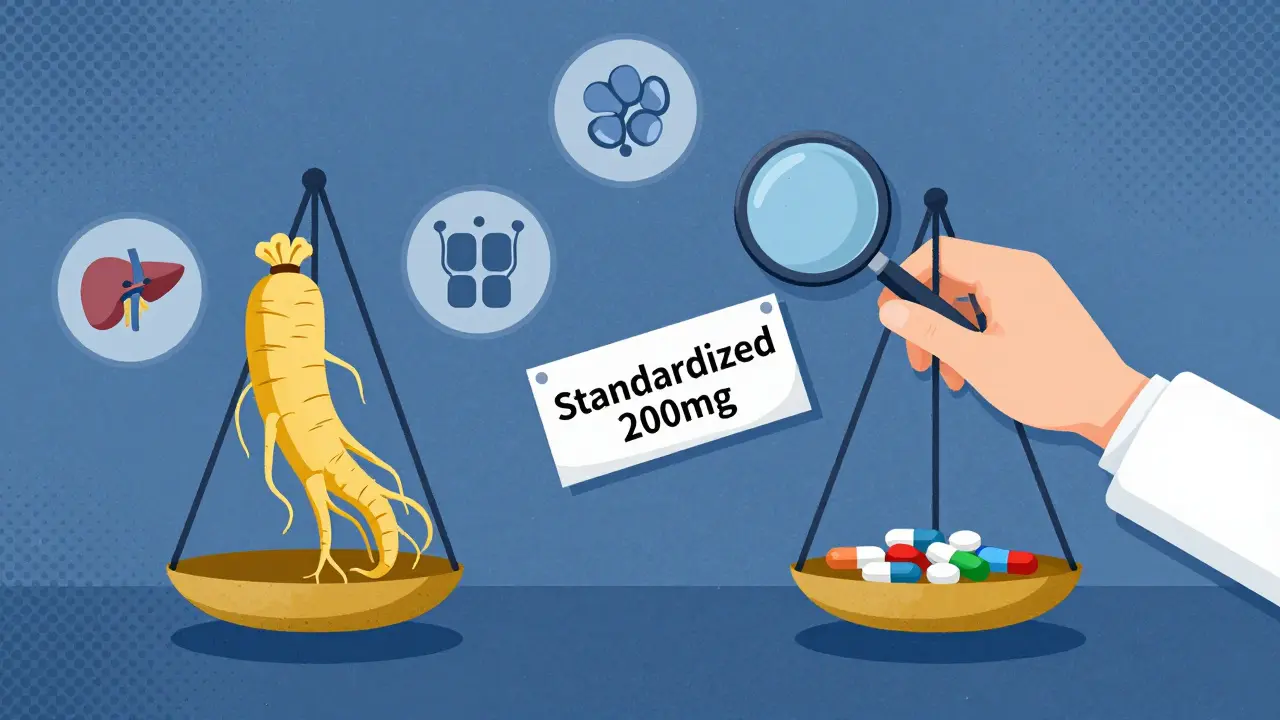
Here’s the problem: ginseng doesn’t have a standard dose. One bottle might say “100 mg standardized extract,” while another says “1,000 mg root powder.” The amount of ginsenosides can vary wildly. And if you’re taking liquid ginseng, some products add sugar or alcohol - which defeats the whole purpose. You can’t assume a supplement is safe just because it’s natural.
What the Studies Say - And Don’t Say
There’s good news: multiple studies show ginseng is generally well-tolerated. In trials, researchers checked liver enzymes (AST, ALT), kidney markers (creatinine), and blood clotting (PT, INR) - and found no major changes. That’s reassuring. But here’s the catch: every study had fewer than 100 people, and none lasted longer than 12 weeks. The American Academy of Family Physicians (2003) called the evidence for ginseng’s diabetes benefits “modest” and “limited.” We know it works a bit. We don’t know if it works safely over years. We don’t know how it interacts with newer drugs like SGLT2 inhibitors or how it affects people with kidney disease. That’s a gap big enough to walk through.
Monitoring Blood Sugar: What You Actually Need to Do
If you’re taking ginseng and diabetes meds together, you need to monitor like you’re in a clinical trial. Not just once a day. Not just before meals. You need to check:
- Before breakfast
- Two hours after meals
- Before bed
- Any time you feel shaky, sweaty, dizzy, or unusually tired
Write it down. Use your phone app or a notebook. Look for patterns. If your sugar drops below 4 mmol/L more than once a week, or if you’re having more lows than usual, stop the ginseng and call your doctor. Don’t wait. Don’t assume it’s “just stress.”
Your doctor may need to adjust your insulin dose or switch you to a different oral medication. That’s not failure - it’s smart management. The same goes if your sugar suddenly becomes harder to control. Ginseng can sometimes have the opposite effect, especially Siberian ginseng (Eleutherococcus senticosus), which WebMD notes can raise blood sugar in some people. Not all ginseng is the same.
What You Should Avoid
- Don’t start ginseng without telling your doctor. Even if you think it’s harmless, your meds might not be.
- Don’t use unregulated products. Supplements aren’t FDA-regulated like drugs. A 2021 FDA alert found one popular ginseng brand contained no ginsenosides at all - just fillers.
- Don’t mix with NSAIDs, aspirin, or blood thinners. Ginseng can increase bleeding risk. If you’re on warfarin or clopidogrel, this combo can be dangerous.
- Don’t rely on ginseng as a replacement. It’s not a substitute for insulin or metformin. It’s a possible helper - at best.
Real-World Scenarios
Here’s what this looks like in practice:
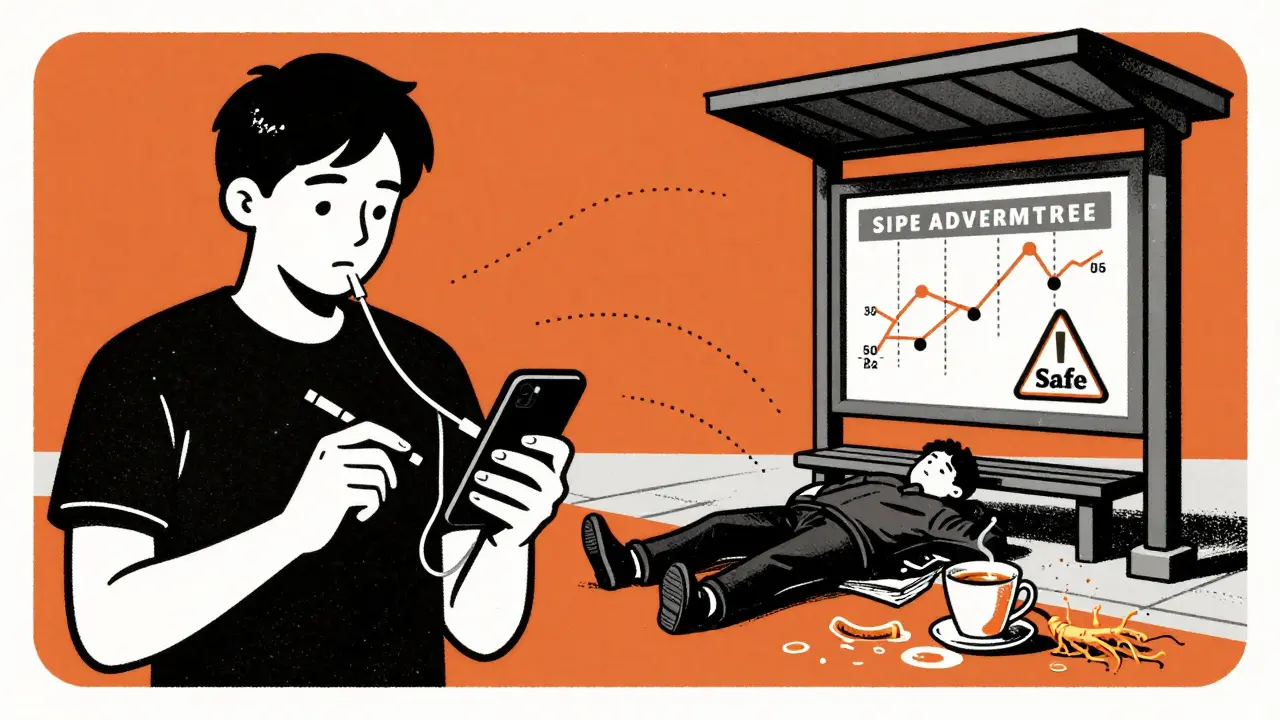
- Case 1: A 62-year-old man in Brighton takes 5 mg of glimepiride daily. He starts drinking ginseng tea (2 g root/day) for “energy.” Two weeks later, he passes out at the bus stop. His sugar was 2.8 mmol/L. He didn’t tell his GP. He now avoids ginseng entirely.
- Case 2: A 58-year-old woman takes metformin and insulin. She tries a 200 mg standardized extract after reading an article. She checks her sugar 4x a day. Her A1c drops from 7.4% to 6.8% over 3 months. Her insulin dose is reduced by 10%. Her doctor approved it.
The difference? Monitoring. Communication. Awareness.
Final Advice
Ginseng isn’t evil. It’s not magic. It’s a powerful herb with measurable effects on blood sugar - and that’s exactly why you need to treat it like a drug. If you’re considering it:
- Get your doctor’s approval first.
- Choose a standardized extract (200 mg daily) from a reputable brand.
- Test your blood sugar more often - at least twice daily for the first 2 weeks.
- Stop immediately if you have lows, headaches, nausea, or trouble sleeping.
- Never use it if you’re pregnant, have high blood pressure, or are on antidepressants (MAOIs).
There’s no shame in asking for help. Thousands of people with diabetes use supplements safely - but only because they track, talk, and adjust. You can too.
Can I take ginseng with metformin?
Yes, but only under medical supervision. Ginseng can enhance metformin’s effect, increasing the risk of low blood sugar. If you take both, check your glucose levels more frequently - especially in the first few weeks. Your doctor may need to lower your metformin dose. Never start ginseng without telling your prescriber.
Does ginseng raise or lower blood sugar?
Most types of true ginseng - Asian and American - lower blood sugar. But Siberian ginseng (Eleutherococcus senticosus) can do the opposite and raise it. Always check the label. If it says “Panax ginseng” or “Panax quinquefolius,” it’s likely to lower sugar. If it says “Siberian” or “Eleutherococcus,” it may not help - and could make control harder.
How much ginseng is safe for diabetics?
Most studies used 100-3,000 mg daily, but the safest starting point is 200 mg of a standardized extract (with 4-7% ginsenosides). That’s roughly equivalent to 1-2 grams of dried root. Higher doses increase risk. Always start low and monitor closely. Avoid products with added sugar, alcohol, or unknown ingredients.
How long does it take for ginseng to affect blood sugar?
Effects can show up within a few days, but most studies saw changes after 2-4 weeks. That’s why you need to monitor early and often. Don’t wait a month to check your levels. Start daily tracking the same day you begin taking ginseng.
Can ginseng cause liver damage?
Rarely, but it can. Some case reports link high-dose ginseng to liver enzyme spikes, especially when combined with other supplements or medications like statins or HIV drugs. If you notice yellow skin, dark urine, or persistent nausea, stop immediately and get tested. Routine liver checks aren’t usually needed unless you’re on multiple meds or have existing liver disease.
Chelsea Cook
February 8, 2026 AT 18:52Andy Cortez
February 10, 2026 AT 16:38Jacob den Hollander
February 11, 2026 AT 20:33Andrew Jackson
February 12, 2026 AT 07:47Joseph Charles Colin
February 13, 2026 AT 18:08Joshua Smith
February 14, 2026 AT 16:29Randy Harkins
February 16, 2026 AT 00:23Elan Ricarte
February 17, 2026 AT 20:38Jonah Mann
February 17, 2026 AT 22:35Tatiana Barbosa
February 18, 2026 AT 11:00Sam Dickison
February 19, 2026 AT 15:45Chelsea Cook
February 20, 2026 AT 15:36