
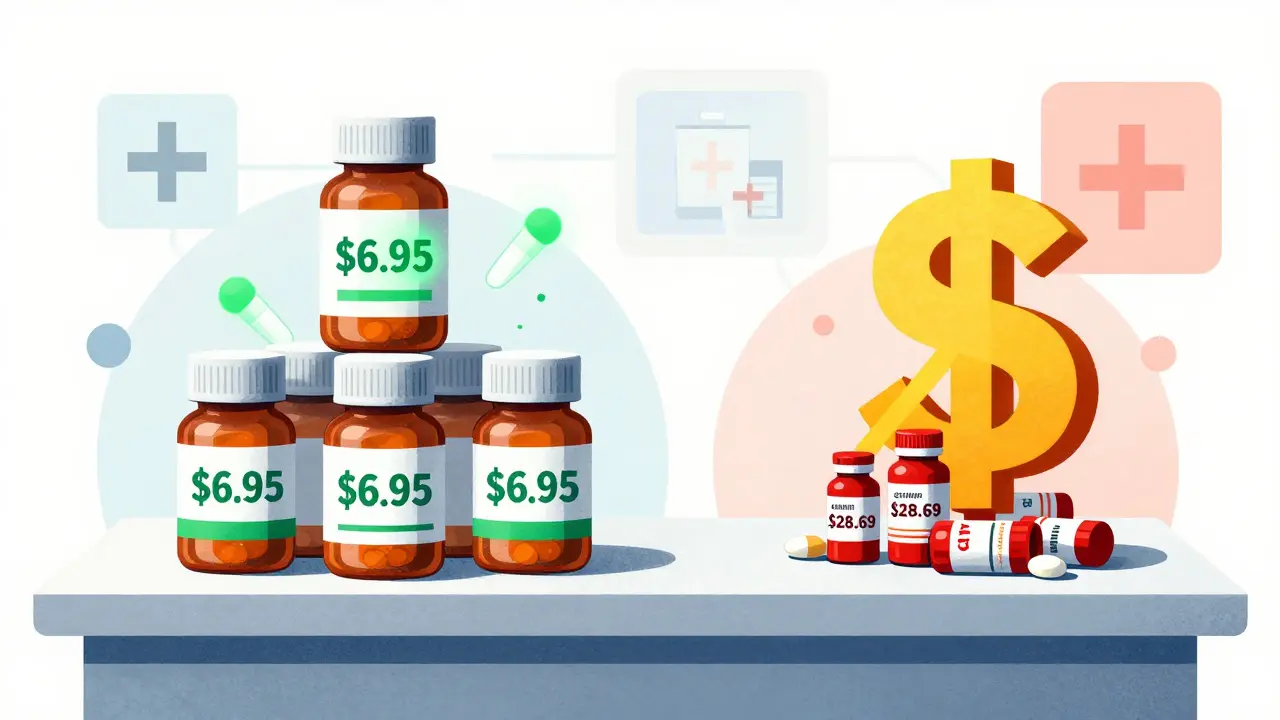
When you pick up a prescription, do you ever stop to wonder why one pill costs $7 and another costs $30-even if they do the exact same thing? The answer isn’t magic. It’s generic drugs. And the numbers behind them are staggering.
In 2024, Americans filled 3.9 billion prescriptions for generic medications. That’s 90% of all prescriptions written. But here’s the twist: those 3.9 billion prescriptions only cost $98 billion. Meanwhile, the other 10%-just 435 million brand-name prescriptions-cost $700 billion. That’s not a typo. The same medicine, in generic form, can be five to ten times cheaper. And for millions of people, that difference isn’t just a number. It’s whether they can afford to take their heart medication, their insulin, or their antidepressant.
How Much Do You Really Save?
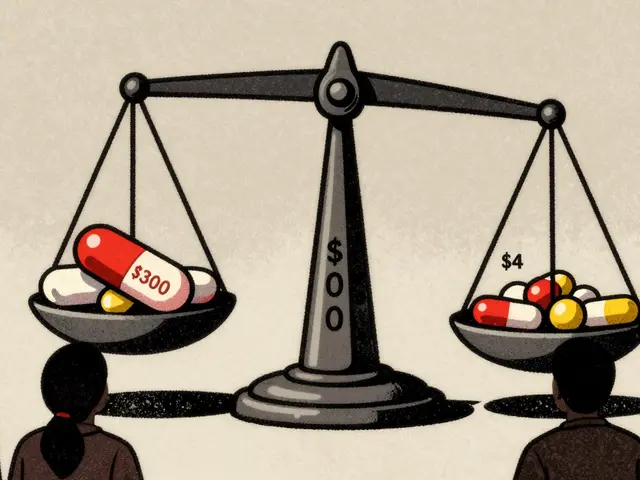
The average out-of-pocket cost for a generic drug in 2024 was $6.95. For a brand-name version of the same drug? $28.69. That’s not a small difference. That’s over $20 per prescription. Multiply that by 3.9 billion prescriptions, and you get a staggering $77 billion in direct savings for patients alone. Add in what insurers and Medicare saved, and the total healthcare system saved over $445 billion in 2023.
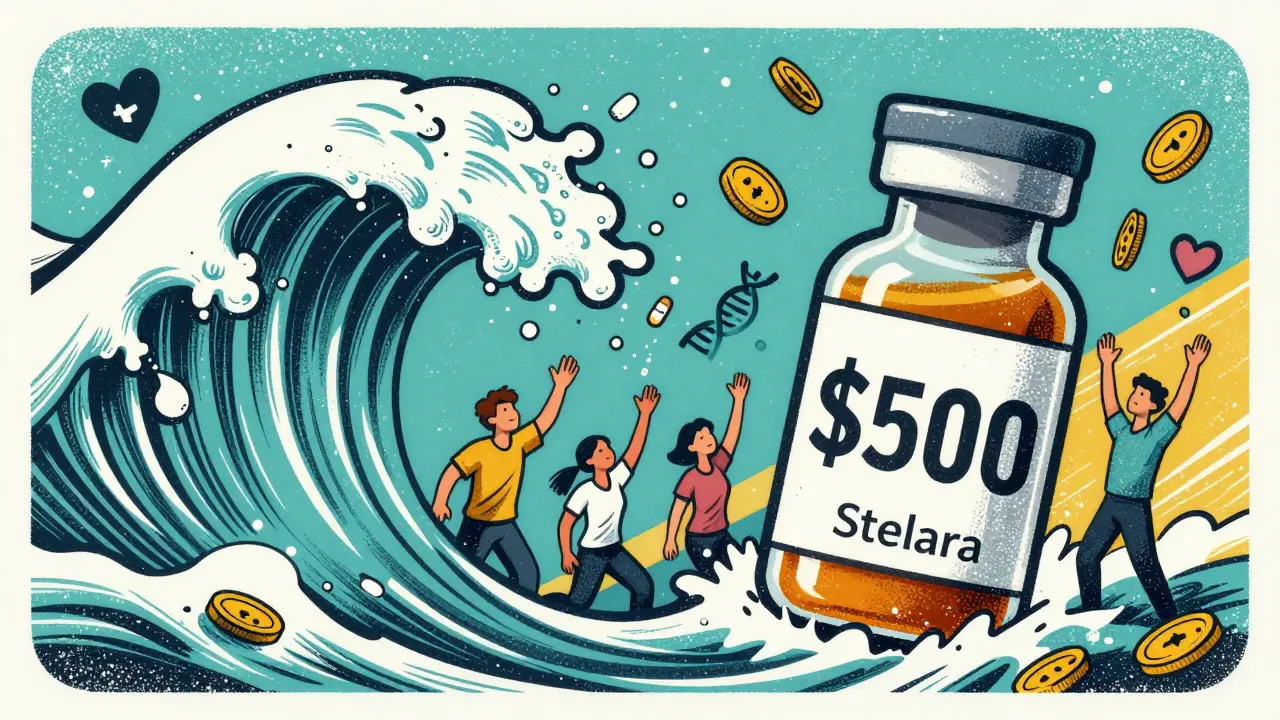
Think about that. In one year, generic drugs cut the cost of prescription drugs by nearly half. That’s more than the entire annual budget of many U.S. states. And it’s not just about pills. Biosimilars-generic versions of complex biologic drugs like those used for cancer, arthritis, and autoimmune diseases-saved $20.2 billion in 2024. One drug, Stelara, had nine biosimilar versions hit the market by mid-2025. The original list price? Over $5,000 per dose. The biosimilars? As low as $500. That’s a 90% drop.
Why Are Generics So Much Cheaper?
It’s not because they’re weaker. It’s because they don’t have to repeat the same expensive research.
When a brand-name company invents a new drug, they spend billions on clinical trials, FDA approval, and marketing. Once the patent expires-usually after 20 years-any other company can make the same drug. They don’t need to prove it works again. They just need to prove it’s bioequivalent: that it delivers the same amount of active ingredient into the bloodstream at the same rate. That’s it. No new trials. No new marketing campaigns. Just a simple, approved formula and a lower price tag.
This system was created by the Hatch-Waxman Act of 1984. It was designed to balance innovation with access. And it worked. Since then, generics have saved the U.S. healthcare system over $3.4 trillion. That’s more than the GDP of most countries.
Generics vs. Brands: The Real Numbers
| Category | Generic Drugs | Brand-Name Drugs |
|---|---|---|
| Percentage of prescriptions filled | 90% | 10% |
| Percentage of total drug spending | 12% | 88% |
| Average out-of-pocket cost per prescription | $6.95 | $28.69 |
| Total annual savings to healthcare system | $445 billion | N/A |
| Prescriptions filled (annual) | 3.9 billion | 435 million |
| Total annual spending | $98 billion | $700 billion |
Here’s the most shocking part: even as more people use generics, the total amount spent on them keeps going down. Since 2019, spending on all generic drugs dropped by $6.4 billion-even though the number of prescriptions rose by 15%. That’s because the price per pill keeps falling. More competition. More manufacturers. Lower prices.
Who’s Getting Left Behind?
It sounds perfect, right? But not everyone benefits equally.
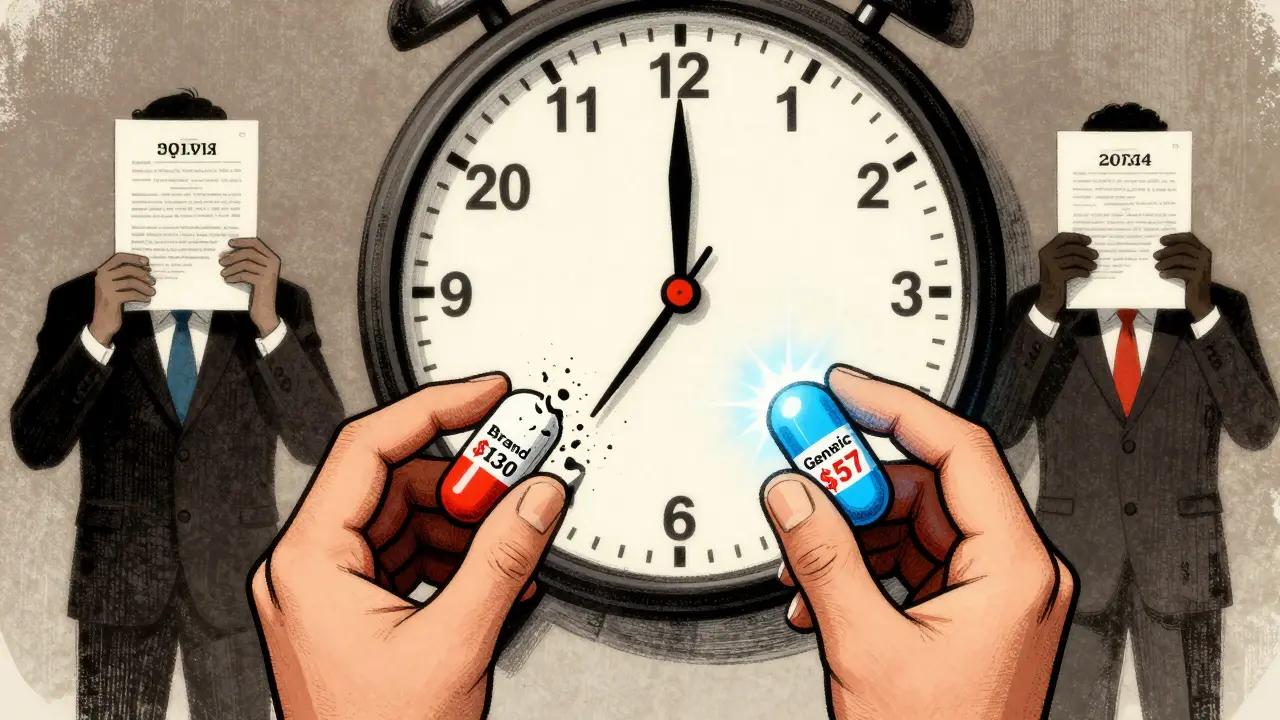
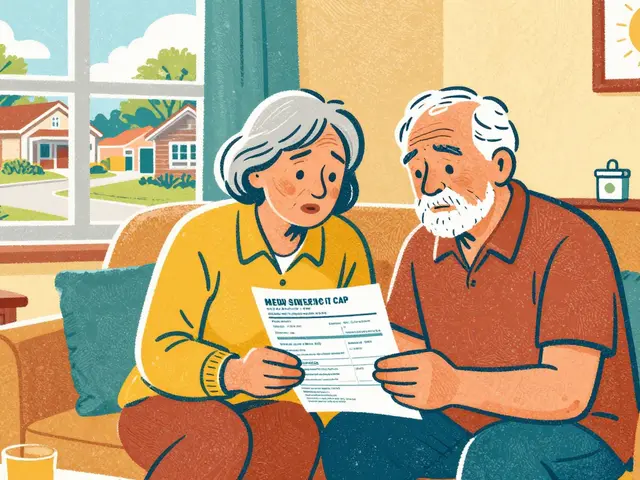
Uninsured patients still pay full list price for brand-name drugs. In 2024, the average cost for an uninsured person on a brand-name prescription was $130.18. That’s more than $1,500 a year for one drug. Meanwhile, the same drug in generic form cost $57.33-still a heavy burden, but half as much. And for some drugs, the gap is even wider.
Patent manipulation is the real enemy. Brand-name companies don’t just wait for their patent to expire. They file dozens of secondary patents-on packaging, dosage forms, delivery methods-to delay generics. One drug, for example, had over 75 patents filed, stretching its monopoly from 2016 all the way to 2034. That’s 18 extra years of high prices.
Another tactic? "Pay-for-delay" deals. Brand companies pay generic makers to stay off the market. In 2024, these deals cost consumers $3 billion directly and added nearly $12 billion to overall drug spending. It’s legal. It’s profitable. And it’s wrong.
The Biosimilar Revolution
Biosimilars are the next frontier. These aren’t your typical pills. They’re complex, living-molecule drugs made from living cells-like insulin, cancer treatments, and rheumatoid arthritis drugs. Until recently, making a copy was nearly impossible. But now, it’s happening.
Since their introduction, biosimilars have saved $56.2 billion in total. In 2024 alone, they saved $20.2 billion. And they’re just getting started. Nine biosimilars for Stelara hit the market in 2025. Before, patients paid $5,000 per dose. Now, they pay $500. That’s not a discount. That’s a revolution.
And it’s not just about money. It’s about access. Before biosimilars, many patients couldn’t afford biologic drugs. Now, they can. Cancer patients. People with Crohn’s. Those with psoriasis. Life-changing drugs are finally within reach.
Why Aren’t More Doctors Prescribing Generics?
Most doctors know generics are safe. But they don’t always prescribe them.
Some patients ask for the brand. Some doctors assume the brand is better. Others don’t know when a patent expires. The FDA updates its "Orange Book"-the official list of approved generics-every month. But most doctors don’t check it.
And pharmacy laws vary by state. In 42 states, pharmacists can automatically substitute a generic unless the doctor says "do not substitute." But in the other eight? They can’t. Even if the patient can’t afford the brand.
Pharmacy benefit managers (PBMs)-the middlemen between insurers and pharmacies-are pushing hard for generics. 87% of commercial health plans now require substitution when available. That’s a win. But it’s not universal.
What’s Next?
The next big wave of savings is coming in late 2025. Three blockbuster drugs-Entresto, Tradjenta, and Opsumit-are losing patent protection. Combined, they brought in $8.6 billion in sales in 2023. Once generics hit, prices could drop 80-90%. That could mean $7 billion in savings in just one year.
The FDA approved 745 generic drugs in 2024-up 12% from 2023. More manufacturers are entering the market. Teva, Viatris, and Sandoz still lead, but dozens of smaller companies are gaining ground. Competition is growing. Prices are falling.
But challenges remain. Biologics are getting more complex. Patent thickets are getting thicker. And some patients still worry about switching. The FDA says less than 1% of generics have any real difference in effectiveness. But stories stick. And fear spreads.
Here’s the bottom line: generics work. They’re safe. They’re effective. And they save lives-not just money.
If you’re on a brand-name drug, ask your pharmacist: "Is there a generic?" If your doctor says no, ask why. If you’re uninsured, ask about patient assistance programs. If you’re on Medicare, check your Part D plan’s formulary. You might be paying way more than you need to.
The system isn’t perfect. But the numbers don’t lie. Generics are the most powerful cost-cutting tool in modern medicine. And you’re entitled to use them.
Are generic drugs as safe and effective as brand-name drugs?
Yes. The FDA requires generic drugs to have the same active ingredient, strength, dosage form, and route of administration as the brand-name version. They must also prove they’re bioequivalent-meaning they work the same way in the body. Less than 1% of generic prescriptions report any meaningful difference in effectiveness, according to FDA adverse event data through Q2 2025.
Why do some people say generics don’t work for them?
Some patients report differences when switching between generic manufacturers, especially with drugs that have a narrow therapeutic index-like warfarin or levothyroxine. But this isn’t because generics are inferior. It’s because different manufacturers use slightly different inactive ingredients (fillers, dyes, coatings), which can affect absorption in rare cases. If you notice a change after switching, talk to your doctor. They can request the same manufacturer or stick with the brand if needed.
Can I ask my pharmacist to switch me to a generic?
In 42 U.S. states, pharmacists can automatically substitute a generic unless the doctor writes "dispense as written" or "do not substitute." In the other eight states, you may need to ask. Always check your prescription label. If it doesn’t say "do not substitute," your pharmacist is allowed to switch you to the generic version-and they often will, because it’s cheaper for you and the insurer.
Do generics cost less because they’re made overseas?
Many generic drugs are manufactured overseas, but so are many brand-name drugs. The difference isn’t where they’re made-it’s what’s required to bring them to market. Brand-name drugs require years of expensive clinical trials. Generics don’t. That’s why they’re cheaper, not because they’re "made in China" or "lower quality." The FDA inspects all manufacturing facilities, whether in the U.S., India, or Germany.
What’s the difference between a generic and a biosimilar?
Generics are copies of traditional chemical drugs-like aspirin or metformin. Biosimilars are copies of biologic drugs, which are made from living cells and are far more complex-like insulin or Humira. Biosimilars aren’t exact copies; they’re "highly similar" with no clinically meaningful differences. They’re harder to make and more expensive than regular generics, but still cost 15-35% less than the original biologic.
Why don’t all pharmacies stock every generic?
Pharmacies stock based on contracts with pharmacy benefit managers (PBMs) and demand. Some generics are made by only one manufacturer and may be in short supply. Others are cheaper to buy in bulk, so pharmacies prioritize them. If your pharmacy doesn’t have the generic, ask them to order it. Most can get it within a day or two.
What You Can Do Right Now
- Check your next prescription: Ask your pharmacist if a generic is available.
- Review your insurance formulary: Look up your drug on your plan’s website. Generics are usually in Tier 1-lowest cost.
- Use mail-order pharmacies: They often have lower copays for generics.
- Ask about patient assistance programs: Many drugmakers offer discounts for low-income patients-even on brand-name drugs.
- Speak up: If your doctor prescribes a brand without checking for a generic, ask why. You have the right to ask for the cheapest effective option.
Generic drugs aren’t a compromise. They’re the smart choice. And with over $445 billion saved last year alone, they’re already changing healthcare-for the better.
Southern Indiana Paleontology Institute
February 23, 2026 AT 07:19generic drugs? yeah right. my buddy took the generic version of his blood pressure med and ended up in the er. they say it’s the same but it ain’t. i’ve seen it happen too many times. they cut corners, use cheap fillers, and then wonder why people get sick. this whole system is rigged for big pharma and big gov. we need to stop this madness.
Anil bhardwaj
February 23, 2026 AT 13:57cool post. i’ve been on generic metformin for years. never had an issue. my grandma switched from brand to generic insulin and her bills dropped from $400 to $40 a month. that’s not magic, that’s just common sense.
lela izzani
February 24, 2026 AT 15:06I’ve worked in a community pharmacy for 18 years, and I can tell you: generics work. The FDA’s bioequivalence standards are strict. Patients who think generics don’t work usually switched between manufacturers, not between brand and generic. The inactive ingredients-like dyes or binders-can affect absorption slightly, especially with narrow-therapeutic-index drugs. But that’s why pharmacists document which generic you’re on. Consistency matters more than the brand name.
Also, biosimilars? Game changer. My uncle with rheumatoid arthritis went from $4,500/month to $500. He’s back to hiking. That’s healthcare.
Joanna Reyes
February 24, 2026 AT 22:54I’ve been reading this whole thing and I just want to say how deeply frustrating it is that we have a system where the cheapest, most effective option is treated like a second-class citizen. We’ve got 90% of prescriptions being generics, yet 88% of the spending is on brands. That’s not a market-it’s a scam. And it’s not even about greed, it’s about inertia. Doctors don’t ask because they’re not trained to ask. Pharmacies don’t push because PBMs incentivize the expensive stuff. Patients don’t know because no one explains it. We’ve built a system that rewards confusion. And now we’re surprised when people can’t afford their meds? This isn’t just about money. It’s about dignity. It’s about whether someone gets to live with their chronic illness without choosing between groceries and their insulin. We need structural change, not just awareness.
Stephen Archbold
February 26, 2026 AT 03:31man this is wild. i had no idea generics saved $445 billion last year. that’s like… the entire budget of ireland for one year. and we’re still letting pharma play these games? pay-for-delay? patent thickets? come on. we’re smarter than this. if a pill works the same, why pay 10x? i’ve been using generic sertraline for 6 years. same effect. same side effects. half the price. why is this even a debate?
Nerina Devi
February 26, 2026 AT 14:10in india, generics are the backbone of healthcare. we don’t have the luxury of brand-name drugs for everyone. my sister took a generic version of her epilepsy drug for 12 years-no issues. the FDA’s standards are global. if a factory ships to the U.S., it’s inspected. it’s not about where it’s made. it’s about regulation. shame we forget that here.
Dinesh Dawn
February 27, 2026 AT 05:57my dad’s on a generic statin. he says he feels better now because he’s not stressed about the cost. that’s the real win. money isn’t everything, but when you’re 72 and living on a fixed income, it’s everything. thanks for putting the numbers out there.
Vanessa Drummond
February 27, 2026 AT 07:32oh please. you think people are dumb enough to believe generics are just as good? i’ve seen the packaging. the pills look different. they taste different. they’re not the same. and don’t even get me started on the “biosimilars” nonsense. they’re not even real drugs. they’re knockoffs. you’re not saving lives-you’re gambling with them.
Nick Hamby
March 1, 2026 AT 01:19There is a profound philosophical tension here between innovation and access. The patent system was designed to incentivize discovery-without it, we would have no new drugs at all. Yet, the moment a drug becomes generic, its value to society multiplies exponentially. The real tragedy is not that generics are cheap-it’s that we have to choose between rewarding innovation and ensuring equity. We have the data. We have the tools. What we lack is political will. The $445 billion saved last year isn’t just a number-it’s a moral ledger. And on that ledger, we are deeply in arrears.
kirti juneja
March 2, 2026 AT 11:52my cousin in rural india got her first biosimilar for psoriasis last year. she went from hiding her skin to wearing tank tops. that’s not medicine-that’s freedom. we don’t need fancy ads or fancy labels. we need pills that work and prices that don’t break you. thank you for saying this out loud.
Spenser Bickett
March 3, 2026 AT 03:44so let me get this straight-you’re telling me the same pill, made in the same factory, by the same company, just without the logo, costs 90% less? wow. what a scam. i bet the FDA is just sitting around laughing. next they’ll tell me water is wet.
Christopher Wiedenhaupt
March 4, 2026 AT 14:31The data presented is accurate and aligns with CDC and CMS reports. The 90% generic utilization rate is well-documented. The savings calculation of $445 billion in 2023 is corroborated by the Institute of Medicine and the Congressional Budget Office. The issue lies not in the science but in implementation. Pharmacists are legally empowered to substitute in 42 states. The remaining eight need policy reform. The solution is not to question generics-it is to enforce substitution laws and educate prescribers.
John Smith
March 6, 2026 AT 08:36generics are fine if you like your pills to taste like chalk and fall apart in your hand. i’d rather pay extra than risk my health on some mystery powder from a factory i’ve never heard of. also who even reads these long posts anyway?
Shalini Gautam
March 7, 2026 AT 17:51in india we call them ‘copy’ drugs. not because they’re fake, but because they copy the formula. and guess what? they save lives every day. we don’t have the luxury of waiting for patents to expire. we need them now. if america can save $445 billion, imagine what we could do with that money in schools, hospitals, clean water. this isn’t just about pills. it’s about justice.