
Ever wondered when a specific brand-name drug will face generic competition? The answer usually lies in one place: the FDA Orange Book is the official registry of approved nonbiologic drugs in the United States, containing critical patent and exclusivity information that determines generic drug market entry timelines. Established under the Drug Price Competition and Patent Term Restoration Act of 1984 (also known as the Hatch-Waxman Act), this resource has been the go-to reference for healthcare professionals, investors, and patients since its first publication in 1985. If you are trying to figure out if a cheaper alternative is coming soon, knowing how to navigate this database is essential.
Quick Summary / Key Takeaways
- The Electronic Orange Book is the primary tool for finding patent expiration dates, accessible via the FDA website.
- Patent expiration dates in the Orange Book include Patent Term Extensions (PTE) but may not reflect early expirations due to unpaid maintenance fees.
- Pediatric exclusivity adds six months to existing patents, often resulting in dual listings that can be confusing.
- Accuracy is high (around 93% for PTE-affected dates), but cross-referencing with USPTO records is recommended for critical decisions.
- Bulk data files are available for download for those needing to analyze large datasets rather than single drugs.
What Is the FDA Orange Book?
To understand where to find these dates, you first need to know what you are looking at. The Orange Book lists all approved small-molecule drugs in the U.S. It does not list biologics (those are in the Purple Book). Each entry includes details about the manufacturer, the active ingredient, and crucially, any patents or regulatory exclusivities that protect the brand from generic competition.
Originally a printed book, it moved to an electronic format in 1999 and launched as a web-based interface in 2008. Today, it is updated daily through the FDA's data files portal. For most users, the web interface is the fastest way to get answers without digging through spreadsheets.
Step-by-Step: Finding a Specific Drug's Patents
Navigating the Electronic Orange Book is straightforward once you know the path. Here is how to find the patent expiration date for a specific medication:
- Go to the FDA's Electronic Orange Book search page.
- Search for the drug using its active ingredient, proprietary name, application number, or applicant.
- Click on the hyperlinked Application Number for the specific product listing you want to investigate.
- On the resulting page, look for the 'View' option at the bottom. This reveals all associated patents and exclusivity information.
- Check the 'Patent Expire Date' field. This date is formatted as MMM DD, YYYY and includes any applicable extensions.
For example, if you look up Brilinta, you might see multiple patent expiration dates ranging from July 15, 2018, to July 9, 2021, alongside an exclusivity expiration date. This range exists because different aspects of the drug (like the formulation vs. the substance) are protected by different patents.

Understanding Patent Expiration Dates and Extensions
The date you see is not always the original patent expiry. It often includes a Patent Term Extension (PTE) granted under 35 U.S.C. 156. These extensions compensate drug makers for time lost during the FDA approval process. So, if a patent technically expired in 2020, the Orange Book might show 2023 because the company successfully claimed a PTE.
There is also a 'Patent Delist Request Flag.' If this is marked 'Y', it means the sponsor requested the patent be removed. However, the patent remains listed to preserve eligibility for 180-day exclusivity for first-time generic applicants who filed a paragraph IV certification. A delisting request is a strong signal that the patent owner no longer considers the patent enforceable or valid.
Common Pitfalls: Why Dates Might Be Misleading
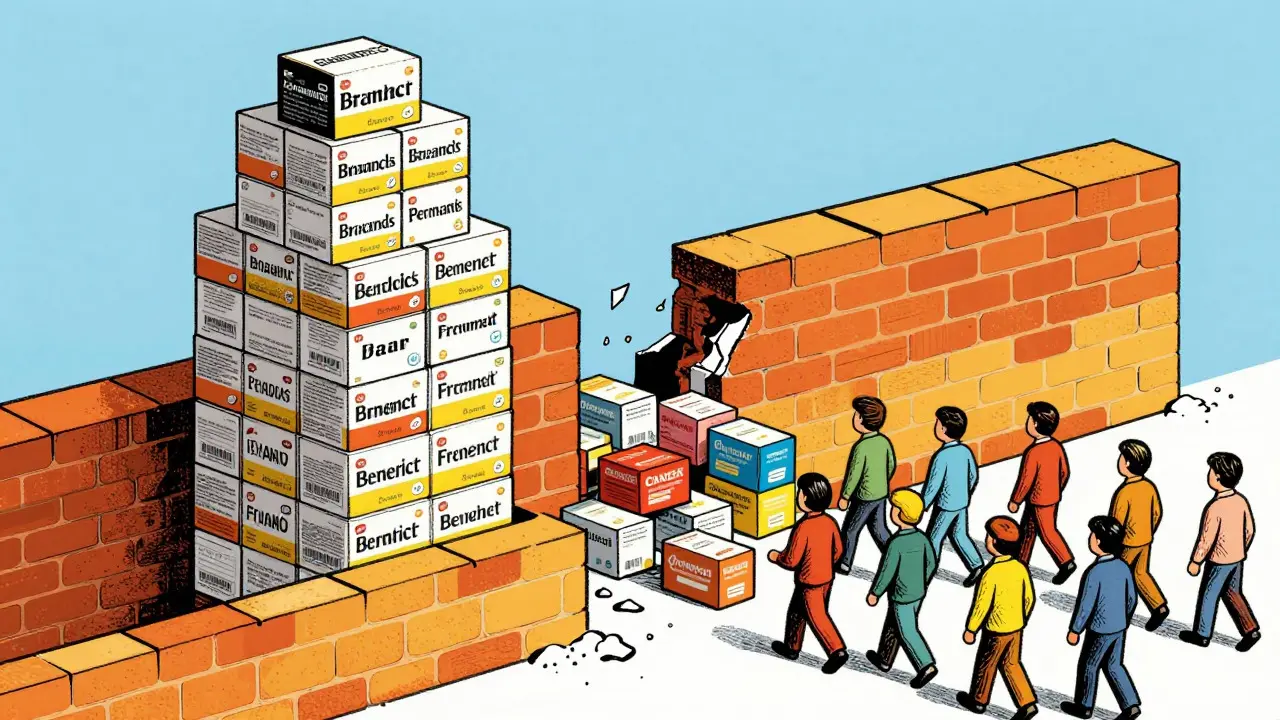
While the Orange Book is authoritative, it is not infallible. A study published in PMC in 2023 analyzed 4,027 patents listed between 1985 and 2016. They found that while 89% of PTE-affected dates matched USPTO records perfectly, there were discrepancies. More importantly, they found that 46% of Orange Book patents had actually expired earlier than listed because companies stopped paying maintenance fees.
The FDA acknowledges this limitation. They remove expired patents and exclusivities from the book, but they do not retroactively update listings for early expirations caused by fee non-payment. This means if you are planning a business launch based solely on the Orange Book date, you should verify the current status with the USPTO Patent Center to ensure the patent is still alive.
The Impact of Pediatric Exclusivity
If a drug receives pediatric exclusivity, it adds six months of protection to all existing patents and exclusivities for that active moiety. This does not create a new patent; instead, it attaches to the existing ones. In the Orange Book, this often looks like the same patent appearing twice: once with the original expiration date and again with a date six months later. If you see duplicate entries, check if pediatric exclusivity was granted. This dual listing can confuse users who think there are two separate patents, when in reality, it is just one patent with an extended protection period.
Accessing Bulk Data for Analysis
If you are not looking for a single drug but want to analyze trends across hundreds of medications, use the Orange Book Data Files. Available for download from the FDA website, these files are updated daily and contain structured columns including Product No, Patent No, Patent Expiration, Drug Substance Flag, and Patent Use Code. Note that the FDA only began collecting submission date data in 2013, so older records may lack this specific attribute. For analysts, these files allow for quick filtering by expiration year, helping to identify which markets are about to open up for generics.
| Method | Best For | Data Freshness | Complexity |
|---|---|---|---|
| Web Interface | Single drug lookup | Daily updates | Low |
| Data Files (CSV) | Market analysis, bulk processing | Daily updates | Medium/High |
| USPTO Cross-Reference | Verifying early expirations | Real-time | High |
Why This Matters for Generic Entry
Industry experts note that accurate interpretation of these dates is critical for forecasting. By 2025, approximately 78% of brand-name drug revenue is expected to face generic competition. Knowing exactly when a patent expires allows generic manufacturers to plan their submissions, which typically take several years. If you are a patient waiting for a price drop, the expiration date in the Orange Book is your best indicator of when that change might happen, provided the patent hasn't already lapsed due to administrative errors.
Does the Orange Book list biologics?
No. The Orange Book covers nonbiologic (small-molecule) drugs. Biologics are tracked in the Purple Book, which serves a similar purpose for biosimilars.
What if a patent is missing from the Orange Book?
It could mean the patent has expired, the company failed to submit it within 30 days of issuance, or it was never considered relevant to the approved drug use. Always check the USPTO directly if you suspect a missing patent.
How accurate are the expiration dates?
Dates affected by Patent Term Extensions are correct in about 93% of cases. However, 46% of patents may have expired earlier than listed due to unpaid maintenance fees, so verification is recommended for high-stakes decisions.
What is a Patent Use Code?
A Patent Use Code is an alphanumeric identifier (starting with 'U-') that describes the specific approved drug use covered by a patent. It helps distinguish between patents covering the drug substance versus the formulation.
Can I download the entire Orange Book?
Yes. The FDA provides downloadable data files that are updated daily. These files contain all patent and exclusivity information in a structured format suitable for spreadsheet analysis.