
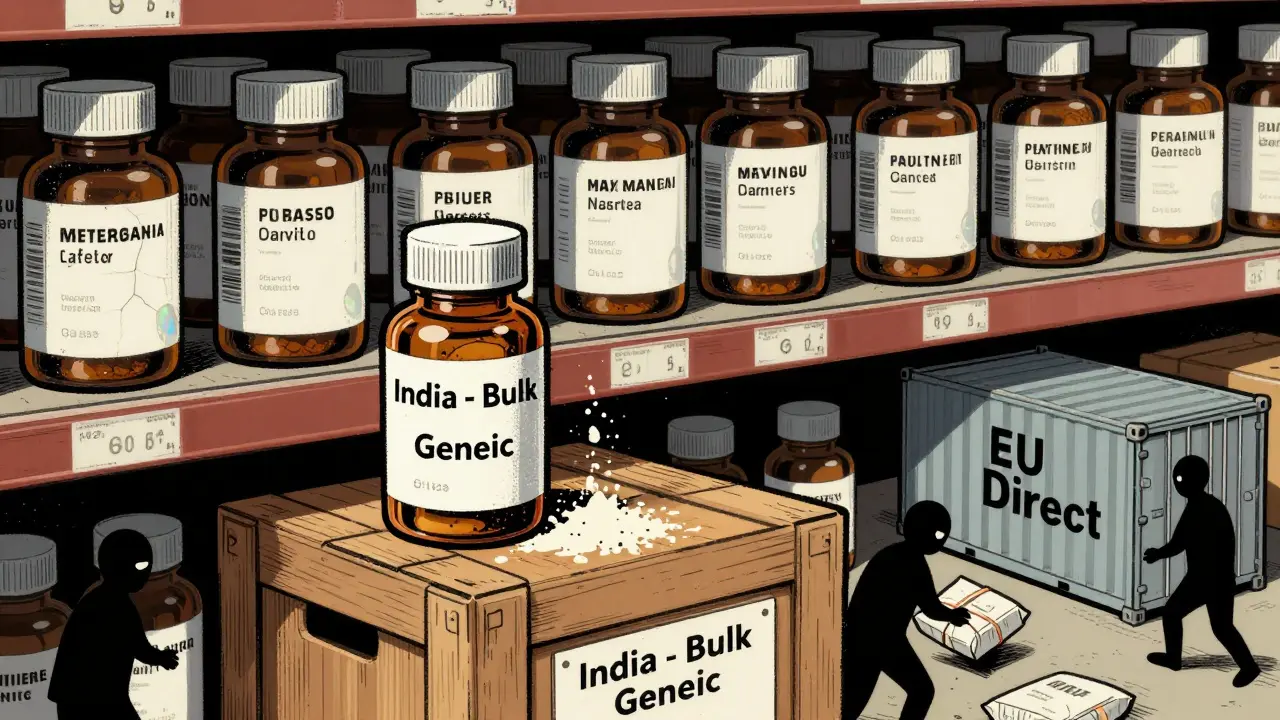
Every year, millions of people take generic drugs because they’re affordable, effective, and widely available. But what if the pill you just swallowed wasn’t made in the factory it claims to be from? What if it had no active ingredient at all-or worse, something toxic mixed in? This isn’t science fiction. It’s happening right now, and the fake generic drug trade is growing faster than ever.
How fake drugs are made
Counterfeit generic drugs don’t come from hidden labs with bubbling beakers and evil scientists. They’re made in ordinary-looking factories, often in countries with weak regulation. Places like parts of Southeast Asia, Eastern Europe, and West Africa are common sources. These facilities use cheap, readily available chemicals to mimic real drugs. Sometimes they use the right active ingredient but in the wrong dose. Other times, they skip it entirely and fill capsules with chalk, talc, or even rat poison. Packaging is where the real trickery happens. Modern counterfeiters use commercial printers, off-the-shelf foil stampers, and even 3D scanners to copy bottle labels, blister packs, and holograms with 95% accuracy. A fake version of a blood pressure pill might look identical to the real one-same color, same size, same logo. Only lab tests can tell the difference. In 2023, Europol seized a shipment of fake cancer drugs with AI-generated holograms that fooled even trained inspectors.How they sneak into the supply chain
Legitimate drug supply chains are long, complex, and full of gaps. A pill might start in a factory in India, get shipped to a distributor in Germany, then sold to a pharmacy in Poland. Each handoff is a chance for fraud. The three biggest entry points are:- Parallel importation: Drugs bought cheaply in one country (say, Bulgaria) are resold in another (like the UK) where prices are higher. Some sellers mix in fake batches to boost profits.
- Grey market distributors: These are unlicensed middlemen who buy bulk drugs from manufacturers or wholesalers, then resell them without authorization. They don’t track where the drugs came from. If a fake batch slips in, it’s invisible until someone gets sick.
- Online pharmacies: Over 95% of online pharmacies selling prescription drugs operate illegally, according to the National Association of Boards of Pharmacy. You can buy fake Lipitor, Viagra, or insulin from a website that looks like a real pharmacy. Many use fake certifications, cloned logos, and even fake doctor consultations to appear legitimate.
Why generics are the main target
Generic drugs make up over 80% of all prescriptions filled in the U.S. and Europe. They’re cheaper, so more people use them. And because they’re not branded, there’s less public attention on their quality. Counterfeiters know this. They focus on high-volume generics: antibiotics, blood pressure meds, diabetes pills, and antimalarials. The global generic drug market hit $438.7 billion in 2022. That’s a huge target. A single fake batch of metformin can be sold for 10x what it cost to make. For a company that spends $500 to produce 10,000 pills, the profit can be $50,000. No wonder the counterfeit pharmaceutical market is worth $200 billion a year, according to the OECD.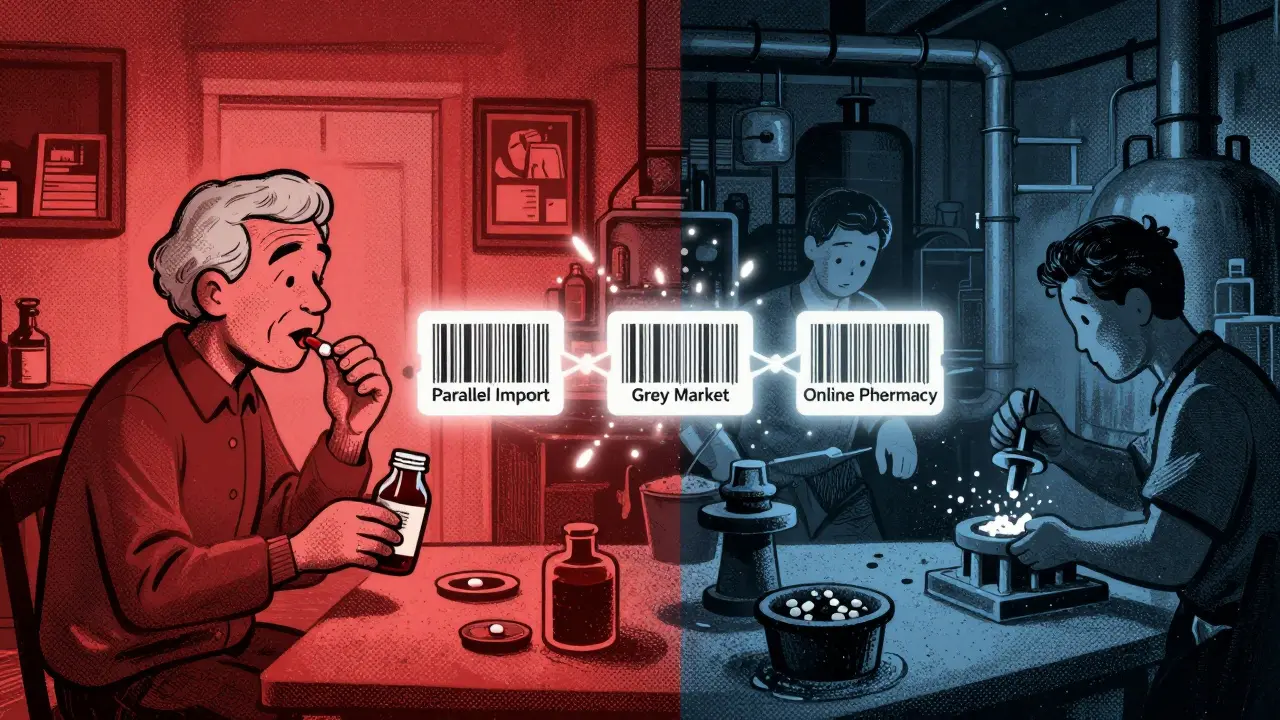
How hard is it to spot a fake?
Very. In a 2022 survey of 1,200 pharmacists across 45 countries, 68% said they’d encountered suspected fake drugs. But 32% admitted they couldn’t tell the difference just by looking. Packaging is too good. Even batch numbers and expiration dates are copied accurately. Patients notice things too. Reddit user u/PharmaWatcher posted about getting counterfeit Lipitor with the wrong tablet scoring and a slightly different color. When tested, it didn’t dissolve properly-meaning it wouldn’t be absorbed by the body. That’s not just ineffective. It’s dangerous. In Africa, doctors report antimalarials with only 10-20% of the needed artemisinin. Patients don’t get better. The disease returns. And because the drug looks real, they take more. That leads to drug resistance-and more deaths.What’s being done to stop it?
Some countries are fighting back. The U.S. passed the Drug Supply Chain Security Act in 2013, requiring every drug package to have a unique identifier by 2023. That means pharmacies can scan a barcode and verify the drug’s journey from factory to shelf. Only 22 of 194 WHO member states have fully working systems like this. The EU’s Falsified Medicines Directive cut counterfeit penetration by 18% since 2023 by requiring tamper-evident seals and digital verification. Companies like MediLedger are testing blockchain systems that track drugs in real time. In trials, they caught 97.3% of supply chain anomalies. But cost is a barrier. Adding a DNA tag or a color-shifting ink to a pill costs 2-5 cents per unit. For a low-income country buying millions of generic antimalarials, that’s millions of dollars extra. Most can’t afford it. Pfizer has stopped over 302 million fake doses since 2004 by working with customs, pharmacies, and law enforcement. But they can’t cover every drug. Only big pharma companies have the resources to run anti-counterfeiting programs.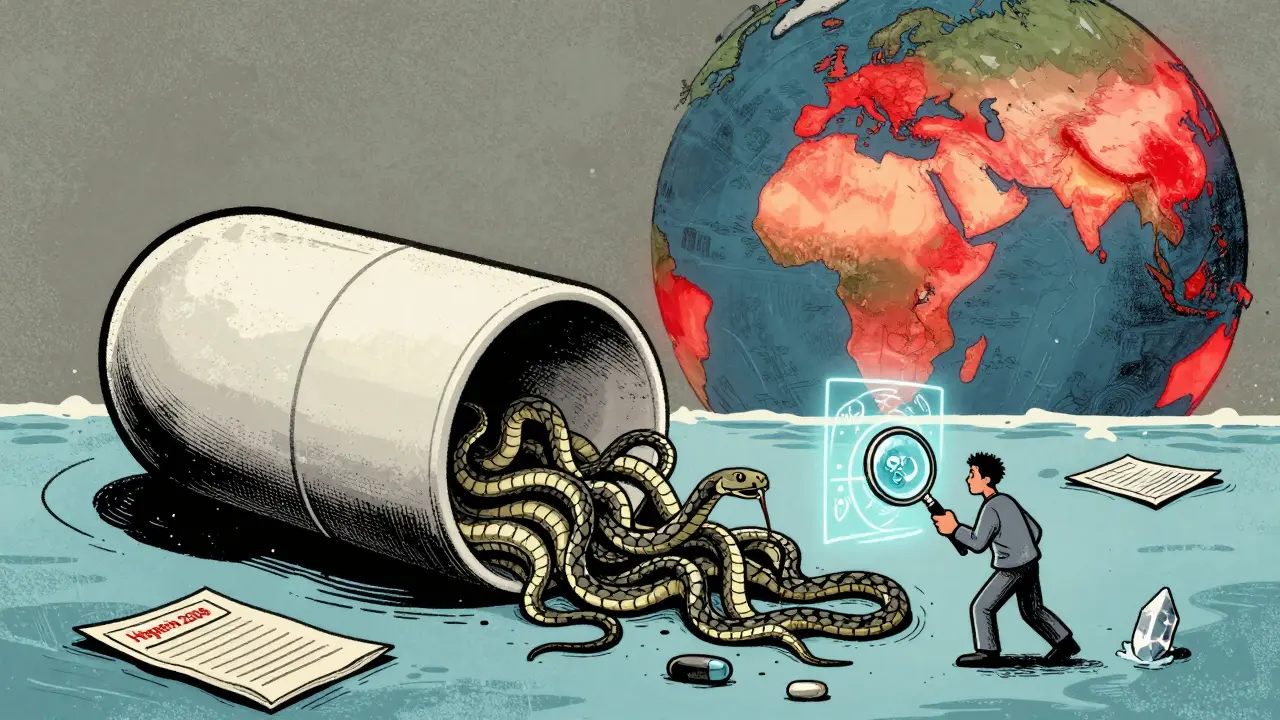
What you can do
If you’re buying medication:- Only use licensed pharmacies. Check if the online pharmacy is verified by the National Association of Boards of Pharmacy (NABP) or your country’s equivalent.
- Compare your pills to pictures on the manufacturer’s website. Look for differences in color, shape, or markings.
- Ask your pharmacist to confirm the source. If they don’t know where the drug came from, be suspicious.
- Report anything odd. If a pill looks wrong, or your condition doesn’t improve, tell your doctor and contact your national drug regulator.
The future is getting worse
AI is making counterfeiting easier. Tools that generate realistic packaging images are now available to anyone. In early 2023, Europol found counterfeit cancer drugs with holograms created by AI-perfectly matching the real thing. Human inspectors couldn’t tell the difference. Without global coordination, the OECD predicts counterfeit drugs could make up 5-7% of all medicines sold by 2030. That’s one in every 20 pills. Most will be generics. Most will be bought by people who can’t afford real ones. The system isn’t broken-it’s being exploited. And until every country enforces the same rules, tracks every pill, and holds every supplier accountable, fake drugs will keep finding their way in.How common are fake generic drugs?
In high-income countries, fake drugs make up about 1% of the supply. But in low- and middle-income countries, that number can jump to 30%. Africa alone accounts for 42% of all substandard and falsified medicines globally, according to IFPMA’s 2023 report. The most common targets are antibiotics, antimalarials, and cardiovascular drugs.
Can you tell if a pill is fake just by looking at it?
Sometimes, but not reliably. Counterfeiters now use advanced printing and packaging tools to copy real products with 95% accuracy. Even batch numbers and holograms can be replicated. In a 2022 survey, 32% of pharmacists admitted they couldn’t distinguish fakes from real drugs without lab testing.
Are online pharmacies safe to buy from?
Almost all of them aren’t. The National Association of Boards of Pharmacy found that 95% of online pharmacies selling prescription drugs operate illegally. Many use fake websites, cloned logos, and false certifications. Only use sites verified by official bodies like NABP or your country’s pharmacy regulator.
Why are generic drugs targeted more than brand-name drugs?
Generics are cheaper, more widely used, and less closely monitored. Since they’re not branded, there’s less public pressure on quality control. Counterfeiters know people will buy them for cost savings-and won’t notice if the pill looks identical. The profit margin is higher because the production cost is so low.
What’s the biggest danger of taking fake drugs?
The biggest danger is not knowing what’s inside. Some fake drugs contain no active ingredient, so your condition gets worse. Others have toxic substances-like the 2008 heparin contamination that killed 149 people. Some even have the wrong active ingredient, which can cause dangerous interactions. And because they’re not regulated, you can’t predict the side effects.
Paul Mason
January 8, 2026 AT 08:40Man, I used to buy my blood pressure meds off some sketchy site because it was half the price. Turned out the pills were just chalk and glitter. I nearly ended up in the ER. Don't be that guy. Buy from a real pharmacy, even if it costs more.
Anastasia Novak
January 10, 2026 AT 04:13Let’s be real - the entire pharmaceutical supply chain is a dumpster fire run by billionaires who’d rather profit than protect. The fact that we’re still using paper trails and barcodes in 2024 is criminal. Blockchain? AI verification? Cute. But none of it matters when the FDA’s budget is smaller than a single CEO’s bonus.
Alex Danner
January 11, 2026 AT 20:21There’s a reason the EU’s Falsified Medicines Directive worked - it forced accountability at every handoff. The U.S. is still playing catch-up because Big Pharma lobbies against transparency. It’s not that we can’t fix this - it’s that we won’t. The system is designed to let fakes slip through. You think it’s about safety? Nah. It’s about profit margins and regulatory capture.
And don’t get me started on how pharmacies don’t even check batch numbers anymore. I asked my local pharmacist where my metformin came from - he looked at me like I’d asked for a unicorn. That’s the problem right there.
Elen Pihlap
January 12, 2026 AT 19:06I just found out my mom’s diabetes meds were fake and I’m crying right now. She’s 72 and she takes them every morning like clockwork. I called the pharmacy and they said ‘it’s probably fine.’ FINE? WHAT DO YOU MEAN FINE?? I’m going to sue someone. Someone has to pay for this.
steve rumsford
January 13, 2026 AT 10:15so i bought some viagra off amazon once and it was just sugar pills. i didnt even notice until i tried to use it and nothing happened. then i read this article and realized i coulda died. or at least been really embarrassed. the world is wild.
Andrew N
January 13, 2026 AT 18:0195% of online pharmacies are illegal? That’s a statistic that sounds impressive until you realize it’s based on a 2019 survey. The actual number is probably closer to 70%. And let’s not forget that many people buy from international pharmacies that are technically legal in their own country. The narrative is oversimplified.
Poppy Newman
January 15, 2026 AT 07:10OMG this is so scary 😱 I just checked my last prescription and the pill looks a little… off? I’m going to take a picture and compare it to the manufacturer’s site right now. Thank you for posting this - I had no idea!
Anthony Capunong
January 16, 2026 AT 23:53Why do we even let foreign countries make our medicine? If this was happening with cars or electronics, we’d ban it overnight. But no - we let China and India dump their toxic junk into our bodies because it’s ‘cheap.’ This is national security. We need tariffs. We need bans. We need American-made pills. End of story.
Ayodeji Williams
January 18, 2026 AT 11:27you guys are panicking over pills but in nigeria we’ve been taking fake drugs since the 90s. we call it ‘market pharmacy’ and we know how to spot it. if the bottle smells like plastic or the tablet crumbles when you touch it - you know. we don’t need blockchain. we need common sense.
Kamlesh Chauhan
January 20, 2026 AT 09:05why are we even talking about this fake drugs thing its like 2024 and people still dont know how to google their meds? just check the manufacturer website or ask your doc. problem solved. why is this even a topic?
Adam Gainski
January 21, 2026 AT 12:30Actually, there’s a lot of good work being done by NGOs in low-income countries. Organizations like the WHO’s Global Surveillance and Monitoring System and Medicines Transparency Alliance are helping local pharmacists test batches with portable spectrometers. It’s not perfect, but it’s working. We just need more funding and less bureaucracy.
And if you’re worried about your meds - your pharmacist is your best ally. Ask them. They’re trained to spot red flags.
Sai Ganesh
January 23, 2026 AT 03:13In India, we make 80% of the world’s generic drugs. And yes, some factories cut corners. But most are world-class. The problem isn’t Indian manufacturing - it’s the middlemen who repackage and resell without oversight. Blaming a whole country for the sins of a few is unfair. We need better traceability, not xenophobia.
Aparna karwande
January 23, 2026 AT 21:20How dare you suggest that America is the only place where safety matters? We in India have been producing life-saving generics for decades - at a fraction of the cost - while Westerners sit in their ivory towers complaining about ‘holograms.’ You want safe medicine? Stop hoarding patents and let the world access affordable drugs. The real villain is corporate greed, not the poor factory worker in Gujarat.
Jessie Ann Lambrecht
January 25, 2026 AT 07:23Don’t panic - but DO act. If you’re buying online, use NABP’s Verified Internet Pharmacy Practice Sites list. It’s free. It’s reliable. And it’s saved thousands of lives. You don’t need to be a scientist to protect yourself. Just be smart. And if you find a suspicious pill - report it. Your call might save someone’s mom, dad, or kid.
Vince Nairn
January 27, 2026 AT 05:34So we’re supposed to trust the FDA and the EU to fix this? Lol. Meanwhile, my cousin in Ohio bought insulin from a ‘pharmacy’ that had a .xyz domain and a guy named ‘Dr. Mike’ who texted her the prescription. She’s alive. Lucky. But the system? It’s a cartoon.