🫁 Drug-Induced Pulmonary Fibrosis Risk Assessor
Step 1: Select Your Primary Concern Medication
Step 2: Adjust Patient Factors
Your Estimated Risk Level
Onset Window
--
Key Symptom to Watch
--
Reversibility Potential
--
Clinical Recommendation
--
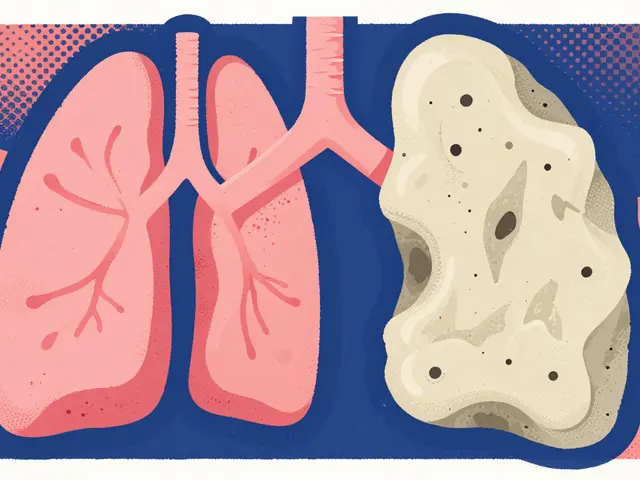
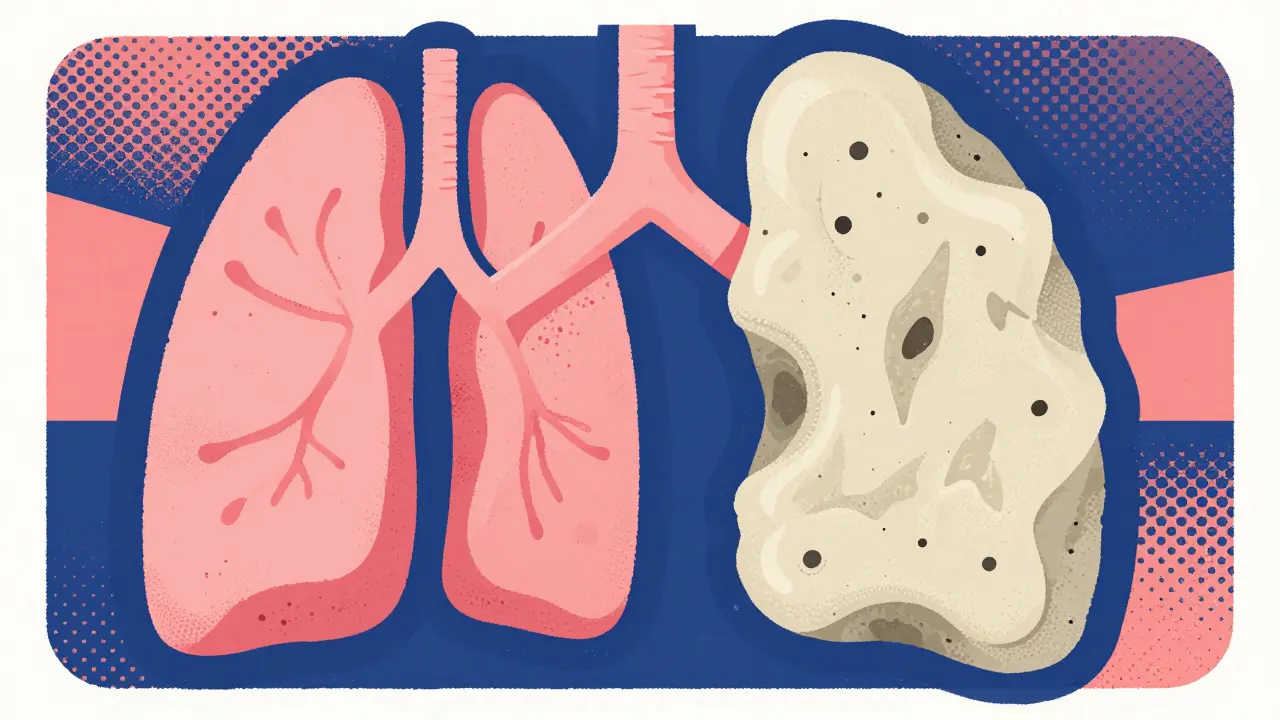
Your lungs are supposed to stay soft and flexible. When they turn stiff and scarred, breathing becomes a struggle. This is what happens in drug-induced pulmonary fibrosis, a serious but often overlooked reaction where certain medications cause permanent damage to the tiny air sacs in your lungs. It’s not just a theoretical risk; for some patients, a routine prescription for heart rhythm or an infection can quietly lead to breathlessness that never fully goes away.
The scary part? You might not know you’re at risk until symptoms show up. And because these drugs are common, many people take them without realizing the potential impact on their respiratory health. If you’ve been prescribed one of these high-risk medications, knowing the warning signs could save your lung function.
Key Takeaways
- Drug-induced pulmonary fibrosis is a rare but serious side effect where medication causes scarring in lung tissue.
- Common culprits include antibiotics like nitrofurantoin, chemotherapy agents like bleomycin, and heart drugs like amiodarone.
- Symptoms often start with a dry cough and shortness of breath, which can be mistaken for aging or other conditions.
- Early detection is critical: stopping the offending drug often reverses the damage, but delays can lead to permanent impairment.
- Risk is higher in older adults and those on long-term therapy, making regular check-ups essential.
What Is Drug-Induced Pulmonary Fibrosis?
Think of your lungs as a sponge. They need to be spongy to let oxygen pass through easily. In pulmonary fibrosis, that sponge gets replaced by tough, rigid scar tissue. When this scarring is caused by a medication, it’s called drug-induced pulmonary fibrosis (DIPF).
This condition falls under the broader umbrella of interstitial lung disease (ILD), which involves inflammation and scarring in the walls between the air sacs. DIPF accounts for roughly 5-10% of all ILD cases, according to data from the Pulmonary Fibrosis Foundation. Unlike some lung diseases, DIPF doesn’t always follow a predictable pattern. It can happen quickly after starting a new med or slowly over years. There’s no single test that says “this is definitely drug-induced.” Doctors have to rule out other causes and look closely at your medication history.
Here’s the good news: if caught early, stopping the drug often helps the lungs heal. But if left untreated, the scarring can become permanent, making every breath harder than the last.
Which Medications Are Most Likely to Cause Lung Scarring?
Not all drugs carry the same risk. Some are well-known for their pulmonary toxicity, while others are surprising additions to the list. Based on pharmacovigilance data from New Zealand’s Medsafe (2014-2024) and clinical studies, here are the top offenders:
| Medication Class | Specific Drugs | Risk Profile | Typical Onset Time |
|---|---|---|---|
| Antibiotics | Nitrofurantoin, Sulfonamides | Moderate-High (especially long-term use) | 6 months to 10 years |
| Chemotherapy | Bleomycin, Cyclophosphamide, Methotrexate | High (dose-dependent) | Weeks to months |
| Cardiac Agents | Amiodarone | Moderate-High (cumulative dose >400g) | 6-12 months |
| Immunosuppressants | Penicillamine, Gold compounds | Moderate | Months to years |
| Cancer Immunotherapies | Checkpoint inhibitors (e.g., pembrolizumab) | Emerging risk | Variable |
Nitrofurantoin is a classic example. It’s been used since 1953 for urinary tract infections and is still widely prescribed for prevention in older adults. Yet, it’s one of the most commonly reported causes of ILD in recent databases. In New Zealand, it accounted for 47 out of 173 reported cases between 2014 and 2024.
Amiodarone, a powerful antiarrhythmic drug, is another major player. While highly effective for controlling heart rhythms, it can accumulate in lung tissue. Patients taking it for more than six months face a 5-7% risk of pulmonary toxicity. The cumulative dose matters: once you exceed 400 grams total, the risk spikes significantly.
Chemotherapy drugs like Bleomycin carry the highest relative risk, with up to 20% of patients experiencing lung issues if they receive high cumulative doses. Methotrexate, often used for rheumatoid arthritis, can cause acute pneumonitis in 3-7% of users, presenting rapidly with fever and cough.
How Do You Know If Your Lungs Are Being Damaged?
Here’s the frustrating truth: there’s no unique symptom that screams “drug-induced fibrosis.” The signs mimic many other conditions, which is why diagnosis is so tricky.
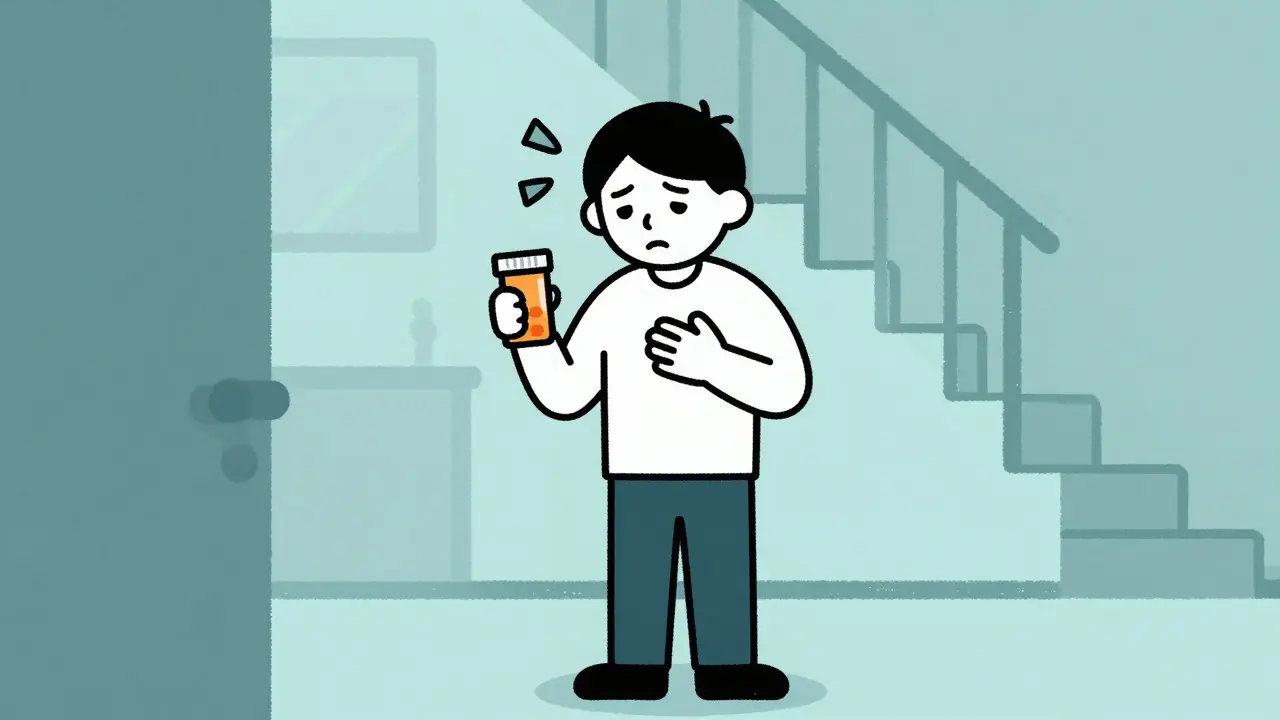
Most patients notice a persistent, dry cough first. It’s not the kind that produces mucus; it’s a tickle that won’t quit. Then comes the breathlessness. At first, it only happens when you climb stairs or walk briskly. Over time, it creeps into daily activities-getting dressed, carrying groceries, even talking. According to Action Pulmonary Fibrosis, 78% of patients report worsening shortness of breath, while 65% suffer from chronic cough. Some also develop low-grade fevers, fatigue, or joint pains.
A key red flag is the timeline. If you start a new medication and develop respiratory symptoms within weeks to months, tell your doctor immediately. Don’t assume it’s just aging or a mild cold. Early symptoms are subtle, but they don’t go away on their own. In fact, patient support groups report an average diagnostic delay of 8.2 weeks from symptom onset to correct identification, largely because symptoms are initially attributed to other causes.
Why Does This Happen? The Science Behind the Scarring
You might wonder why a drug meant to fight infection or cancer ends up damaging your lungs. The mechanism isn’t fully understood, but researchers believe it involves direct injury to lung cells and an overactive immune response.
When certain drugs or their metabolites enter the bloodstream, they can deposit in lung tissue. This triggers oxidative stress-a type of cellular damage that leads to inflammation. In response, the body sends repair cells to the area, which lay down collagen. Normally, this is how wounds heal. But in the lungs, excess collagen forms scar tissue that stiffens the organ. Over time, the healthy, elastic lung tissue is replaced by rigid fibrotic patches.
Individual susceptibility plays a huge role. As noted by the Pulmonary Fibrosis Foundation, “it is not known why some people who use these drugs develop pulmonary fibrosis, while most do not.” Genetic factors, age, and pre-existing lung conditions can all influence risk. Older adults are particularly vulnerable, possibly due to reduced lung reserve and slower clearance of drug metabolites.
Diagnosis: Ruling Out the Other Stuff
Getting a diagnosis for DIPF is less about finding a specific marker and more about elimination. There are no distinct radiographic or pathologic patterns unique to drug-induced ILD, as highlighted in the PMC article “Drug Induced Interstitial Lung Disease” (2012). So, how do doctors figure it out?
First, they’ll take a detailed medication history. Every drug, supplement, and herb you’ve taken in the past year matters. Next, they’ll perform imaging tests, usually a high-resolution CT scan of the chest. This can show ground-glass opacities or honeycombing patterns typical of fibrosis, but again, these aren’t exclusive to DIPF.
Lung function tests, including spirometry and diffusion capacity (DLCO), help measure how well your lungs exchange gases. A drop in DLCO is a strong indicator of interstitial disease. In some cases, a bronchoscopy with biopsy may be needed to confirm the type of inflammation and rule out infections or autoimmune diseases.
The final step is exclusion. Your doctor will ensure you don’t have connective tissue disorders, environmental exposures (like asbestos or bird droppings), or other causes of ILD. Only when all other possibilities are ruled out does the diagnosis lean toward drug-induced etiology.
Treatment: Stop the Drug, Start Healing
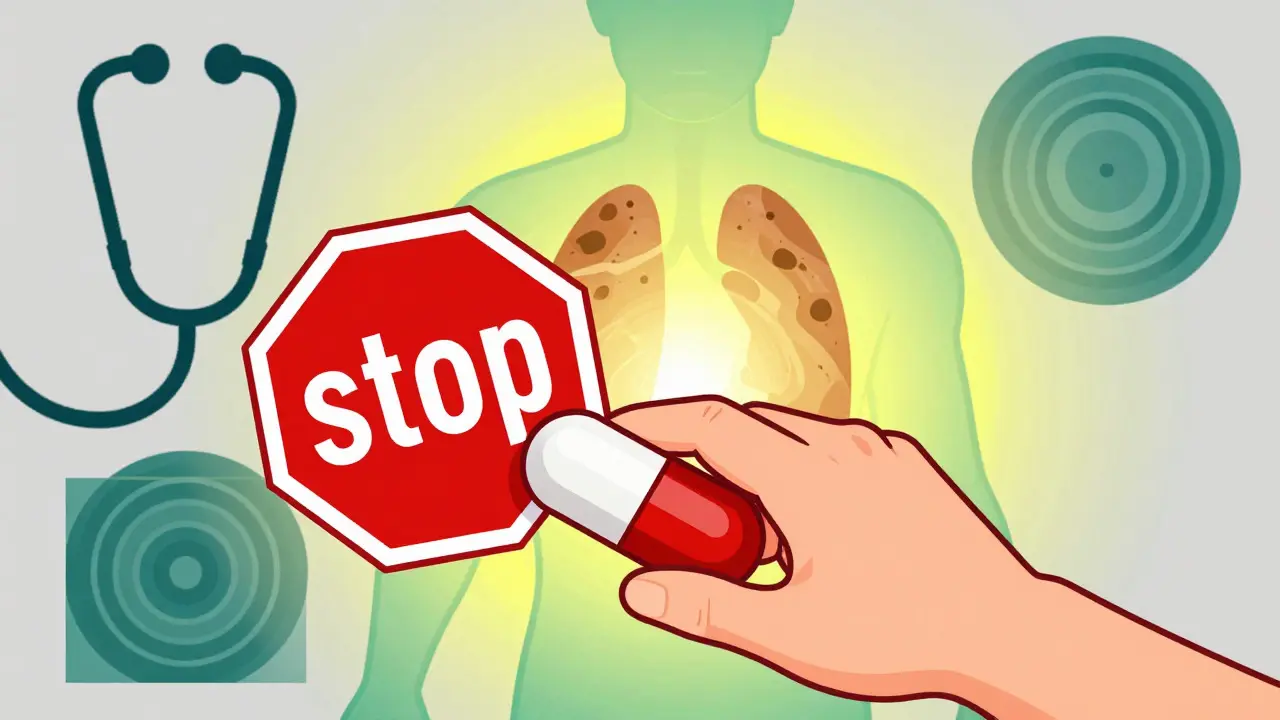
If DIPF is suspected, the first and most critical step is stopping the offending medication. This isn’t always easy, especially if the drug is life-saving (like amiodarone for a dangerous heart rhythm). But continuing it risks further lung damage.
In many cases, simply stopping the drug is enough. Studies show that 89% of patients improve within three months of discontinuation. However, if symptoms are severe or progressive, doctors may prescribe high-dose corticosteroids, such as prednisone (0.5-1 mg/kg/day). These powerful anti-inflammatories help calm the immune response and reduce swelling. The tapering process takes 3-6 months to avoid rebound effects.
Oxygen therapy is recommended if your blood oxygen saturation drops below 88% at rest. This helps keep your organs supplied with adequate oxygen while your lungs heal. Regular monitoring by a pulmonologist is essential, with spirometry and DLCO tests every 3-6 months to track recovery.
Prognosis depends heavily on timing. If diagnosed quickly, 75-85% of patients make a good recovery. But if the scarring has progressed too far, 15-25% may experience permanent lung function impairment. In severe cases, mortality rates can reach 10-20%, particularly with amiodarone-induced fibrosis.
Prevention: What You Can Do Right Now
Prevention starts with awareness. If you’re on a high-risk medication, talk to your doctor about the potential pulmonary side effects. Ask if baseline lung function testing is appropriate before starting treatment. For long-term therapies like nitrofurantoin or amiodarone, consider periodic screening, especially if you’re over 60 or have other risk factors.
Don’t ignore new respiratory symptoms. A dry cough that lasts more than two weeks, combined with unexplained fatigue or breathlessness, warrants a medical evaluation. Bring a full list of your medications to every appointment. Even over-the-counter supplements can interact with your prescriptions and contribute to lung stress.
Finally, stay informed. Regulatory agencies like Medsafe are increasingly highlighting these risks. In December 2024, they issued a specific alert reminding prescribers to counsel patients on ILD risks. Staying updated on drug safety communications can empower you to advocate for your own health.
Frequently Asked Questions
Can drug-induced pulmonary fibrosis be reversed?
Yes, if caught early. Stopping the causative drug often leads to significant improvement, with 89% of patients showing better lung function within three months. However, if scarring is advanced, some degree of permanent impairment may remain.
Which medications are most commonly linked to lung scarring?
The most frequently reported drugs include nitrofurantoin, methotrexate, and amiodarone. Chemotherapy agents like bleomycin also carry a high risk, particularly at higher cumulative doses.
How soon after starting a medication can symptoms appear?
It varies by drug. Bleomycin can cause issues within weeks, while nitrofurantoin-related fibrosis may take 6 months to 10 years to manifest. Amiodarone typically shows effects after 6-12 months of use.
Is there a genetic test to predict who will get DIPF?
Not yet. Research is ongoing to identify genetic markers of susceptibility, but currently, diagnosis relies on clinical presentation and exclusion of other causes rather than predictive testing.
Should I stop my medication if I suspect DIPF?
Don’t stop abruptly without consulting your doctor, especially for critical meds like heart rhythm control. But do seek prompt medical attention if you develop cough, chest pain, or shortness of breath. Your healthcare provider will guide the safest way to discontinue or switch therapy.