
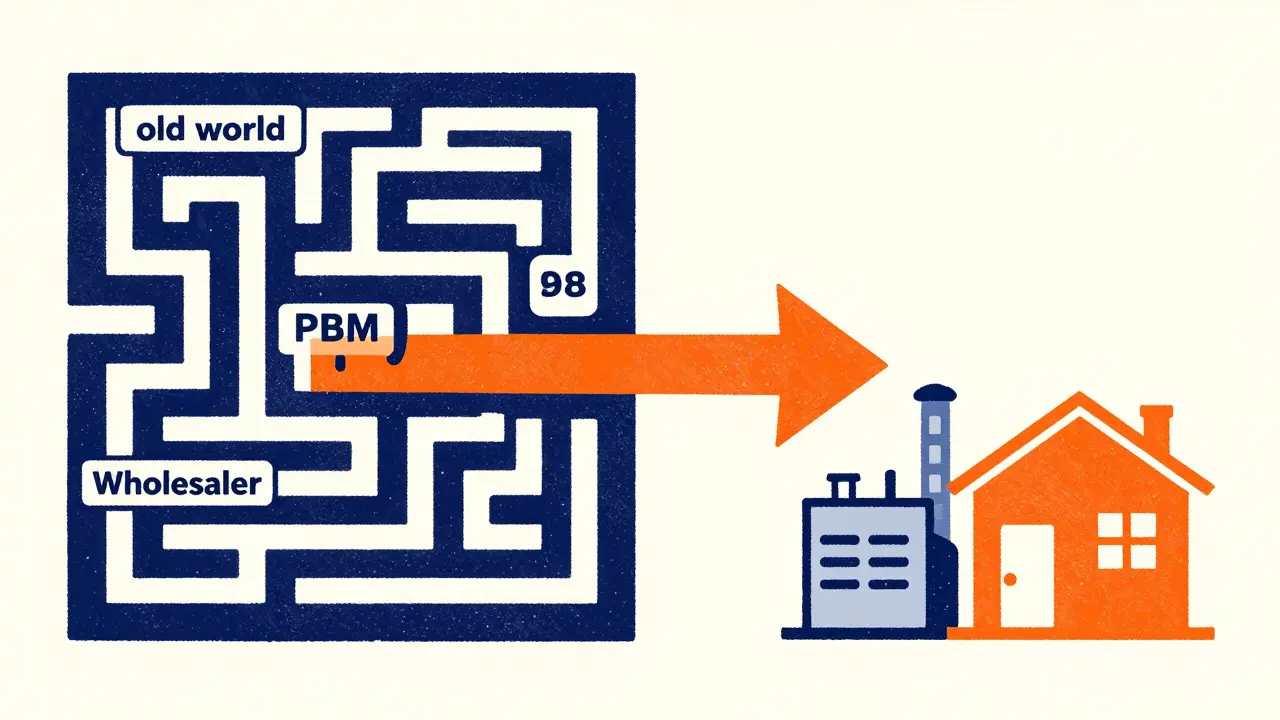
Imagine paying $200 for a prescription at your local drugstore, only to find out the actual cost of the drug is a fraction of that. For years, this "black box" of pricing has been the norm. But a massive shift is happening. We are seeing the rise of direct-to-consumer generic pharmacies is a business model where medication is sold directly from the manufacturer or a specialized digital platform to the patient, skipping the traditional middlemen. This isn't just about convenience; it's a full-scale rebellion against the traditional pharmacy supply chain.
For most of us, getting meds meant a trip to the pharmacy and a hope that our insurance covered it. Now, companies are cutting out the intermediaries-specifically the Pharmacy Benefit Managers (PBMs)-to offer transparent, cash-pay pricing. This movement gained serious momentum after the May 2025 executive order on "Most-Favored-Nation Prescription Drug Pricing," which pushed manufacturers to match lower international prices and expand these direct programs. If you've ever wondered why your meds cost so much, the answer usually lies in the "gross-to-net" spread, where middlemen take huge rebates while patients still pay high retail prices.
How the Direct-to-Consumer Model Actually Works
In the old world, the journey of a pill looked like this: Manufacturer $\rightarrow$ Wholesaler $\rightarrow$ PBM $\rightarrow$ Retail Pharmacy $\rightarrow$ Patient. Every one of those arrows represents a markup or a hidden fee. The DTC Pharmacy model effectively deletes the middle of that chain. By selling directly, companies can potentially slash supply chain costs by 15-25%.
But it's not just a website with a "Buy Now" button. The most advanced versions of these platforms, like LillyDirect or PfizerForAll, integrate five critical elements into one workflow: remote diagnosis, telehealth, online distribution, disease management, and insurance tech. This integration is a game-changer for patients. According to data from Galen Growth, these integrated platforms can reduce the "time-to-therapy"-the gap between diagnosis and the first dose-by an average of 3.7 days.
| Feature | Traditional Retail | DTC Generic Model |
|---|---|---|
| Middlemen | Wholesalers, PBMs, Retailers | Minimal to none |
| Pricing | Opaque, rebate-driven | Transparent, cash-pay |
| Patient Data | Held by PBMs/Retailers | Directly held by Manufacturer |
| Delivery | In-person pickup | Home delivery/Subscription |
| Generic Savings | Varies by insurance | Often 30-50% lower than retail |
The Tech Stack Behind the Digital Pharmacy
You can't run a pharmacy on a basic Shopify store. These platforms require a heavy-duty technical architecture to stay legal and safe. At the core is Cloud Computing, which allows these services to scale and handle massive amounts of sensitive health data in real-time. Then there's the integration layer. By 2025, API-based integrations became the gold standard, allowing these platforms to talk directly to Electronic Health Records (EHRs) like Epic or Cerner.
Artificial Intelligence is also playing a huge role. It's not just about chatbots; AI is used for predictive insights to catch health risks early and to power medication reminder systems that keep patients on track. To make this work, the systems have to be compatible with modern mobile OS versions (iOS 14+ and Android 10+) and use WebRTC for high-quality telehealth calls. All of this must happen under the strict umbrella of HIPAA compliance to ensure your medical history doesn't end up on the dark web.
Who is Winning the Generic War?
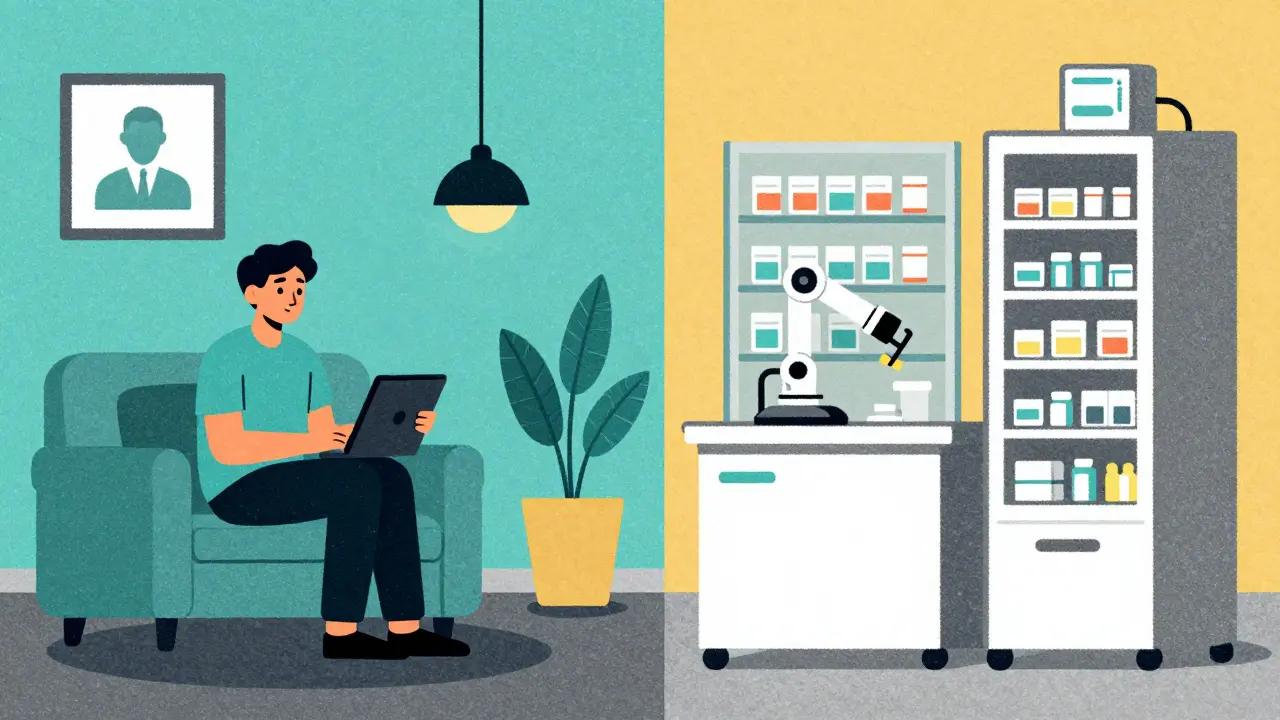
The market is currently split into two camps. On one side, you have the "Pure Play" telehealth giants. Companies like Ro, Hims & Hers, and Honeybee Health focus heavily on generics. They've mastered the art of cash-based delivery. For instance, Ro processed about 2.1 million prescription orders in the first quarter of 2025 alone. These players often offer deep discounts-sometimes 30-50% off generic prices-because they don't carry the overhead of a physical storefront.
On the other side, you have the "Big Pharma" entrants. Eli Lilly, Pfizer, and Novo Nordisk are launching their own DTC arms. While they might offer smaller discounts (around 10-15% for brand names), their real goal is data. For decades, pharmaceutical companies had no idea who their patients actually were because PBMs held all the data. Now, they can see exactly how people use their drugs, which demographics are struggling with adherence, and where the gaps in care are.
The Risks: Safety vs. Savings
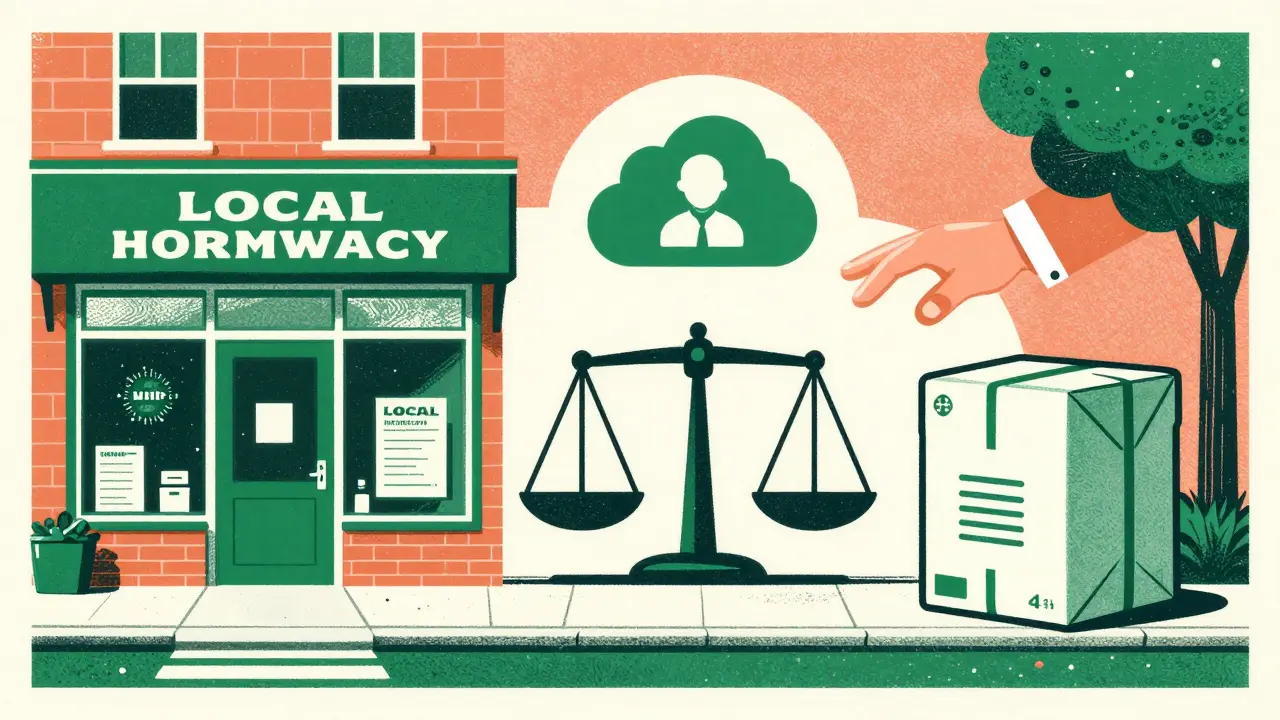
It sounds like a win-win, but there's a catch. The biggest concern is the removal of the local pharmacist. Your neighborhood pharmacist is often the last line of defense against a dangerous drug interaction. When you shift to a fully digital model, that human check is diminished. In late 2025, reports surfaced of 17 cases where potential drug interactions were missed because a pharmacist wasn't involved in the final review process.
Then there's the regulatory nightmare. To operate a legal DTC pharmacy in the U.S., a company needs licenses in all 50 states and D.C. This isn't a quick process-it typically takes 14 to 18 months and costs roughly $2.3 million in legal fees. This creates a high barrier to entry, meaning only well-funded companies can compete, which could ironically lead to a different kind of monopoly.
Patient Perspectives: Does it Actually Help?
If you look at user feedback, the sentiment is mixed. Many people love the price transparency. One user on Reddit reported saving over $400 a year on blood pressure medication by switching to a DTC provider. A survey by Drug Channels found that 73% of chronic patients reported better adherence when using these services because the refills just show up at their door.
However, the "digital friction" is real. Some patients complain about delivery delays-waiting five days for a package when a Walgreens is two blocks away-and the struggle to integrate insurance. While 61% of positive reviews praise the clear pricing, nearly 30% of negative feedback centers on poor customer service response times, often exceeding 48 hours.
What This Means for the Future of Healthcare
We are moving toward a hybrid world. Most pharmaceutical executives don't believe DTC will completely kill the retail pharmacy. Instead, they see a future where you get your acute medications (like antibiotics for a sinus infection) at a local store, but your lifelong maintenance meds (like insulin or antidepressants) come via a direct subscription from the manufacturer.
The real tension remains between the manufacturers and the "Big Three" PBMs (CVS Caremark, Express Scripts, and OptumRx). These PBMs still control 78% of prescription claims, but their grip is slipping as patients realize they can find cheaper, faster options online. As more companies like Roche join the fray, the pressure on the traditional rebate system will only increase. If the rebate system ever truly collapses, the entire valuation model of the U.S. healthcare system will have to be rewritten.
Are DTC generic pharmacies legal in the US?
Yes, but they are highly regulated. To operate legally, a DTC pharmacy must obtain individual licenses from the pharmacy boards of every state in which they ship medication. This process is rigorous and requires compliance with both state laws and federal FDA regulations regarding the handling and shipping of drugs.
Will my insurance cover medications from a DTC pharmacy?
It depends. Many DTC models focus on "cash-pay" pathways to bypass insurance complexity and offer transparent pricing. However, some platforms are integrating insurance verification databases to allow for traditional claims. Always check if the specific platform is "in-network" with your provider before ordering.
Is it safe to skip the pharmacist consultation?
There are risks. Traditional pharmacists provide a critical safety check for drug-drug interactions. While DTC platforms often provide 24/7 pharmacist consultation lines, the lack of a face-to-face review can lead to missed errors. It's recommended to maintain a comprehensive list of all medications and supplements and share them with your telehealth provider.
Why are generics cheaper through DTC platforms than at retail stores?
DTC platforms eliminate several layers of the supply chain, such as wholesalers and retail pharmacy overhead. By removing the PBM rebate system and selling directly to the consumer, they can pass those savings (often 30-50%) down to the patient.
What is a PBM and why are they being bypassed?
Pharmacy Benefit Managers (PBMs) act as intermediaries between insurers, pharmacies, and manufacturers. They negotiate rebates on drugs, but manufacturers claim these rebates aren't always passed to patients, creating an artificial inflation of drug prices. DTC models bypass PBMs to create a more direct, transparent pricing structure.

william wang
April 18, 2026 AT 13:45The shift toward cash-pay models is definitely interesting for those of us with high-deductible plans. It simplifies the whole process when you don't have to fight with an insurance company just to get a basic generic. It'll be curious to see how the PBMs react to this loss of leverage over time.
Maggie Graziano
April 18, 2026 AT 17:12they just want your dna data for the hive mind
Nell O'Leary
April 19, 2026 AT 12:42Totally agree on the disruption of the vertical supply chain! 🚀 The optimization of the time-to-therapy metric is a huge KPI win for patient outcomes. Reducing the frictional cost of the PBM rebate loop is exactly what the market needs for better scalability :)
Nathan Berlin
April 19, 2026 AT 12:50US healthcare is a joke 🤡 we do it better in India anyway 🇮🇳 why pay for a middleman when the system is just broken base level
Colleen Tankard
April 20, 2026 AT 05:41Just glad the meds show up at the door now ✨ so much easier than waiting in line at a pharmacy for an hour 🌸
Sophia Rice
April 22, 2026 AT 01:19i tried this last month and it was great though the box took a bit longer to arrive then i thoght but still way cheeper!!
Theresa Griffin MEP
April 22, 2026 AT 06:18Price transparency is mandatory. The current system is unacceptable. We must demand accountability from manufacturers.
Nikki Grote
April 24, 2026 AT 05:41From a clinical perspective, the risk of bypassing the community pharmacist is the most critical point here. We're talking about the loss of a real-time pharmacological audit. While the API-driven EHR integration helps, it doesn't replace the nuanced judgment of a human who knows the patient's full history and can spot a contraindication that an algorithm might miss. We need a better hybrid framework to ensure patient safety isn't sacrificed for a lower price point.
Anmol Garg
April 25, 2026 AT 04:21It's a bit sad to see the local pharmacy fade away, isn't it? There's something human about that interaction that a website just can't replicate. But I guess we have to evolve with the times if it means people can actually afford their medicine. Balance is everything.
ira fitriani
April 25, 2026 AT 10:12OMGGGYES!! 🌟 The convenience is literally life-changing!! I cannot believe we waited this long for this!! My health journey just got so much easier and I am HERE FOR IT!! 💖✨🙌
Jon lee
April 26, 2026 AT 19:14It's great to see more accessible options for everyone. For those who are new to this, just remember to keep a manual list of your meds to share with the telehealth doctors to be safe. We're all in this together to get healthier!