
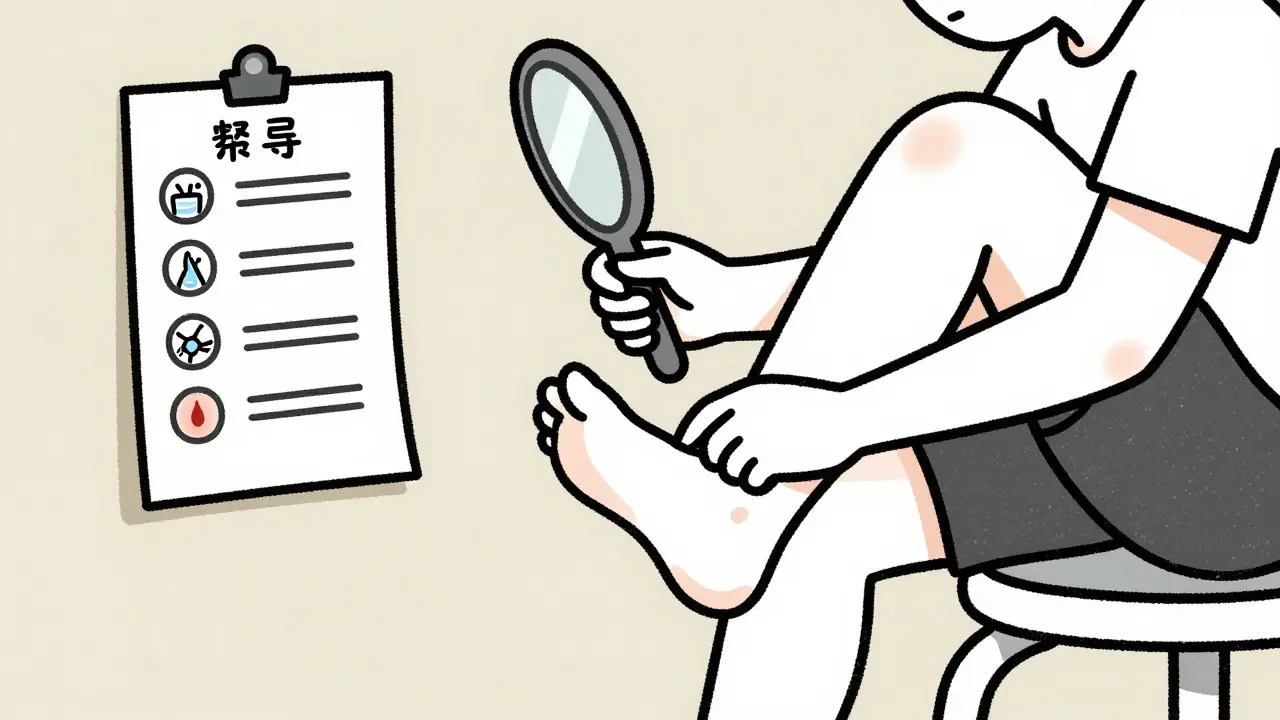
Every year, more than 82,000 people in the U.S. lose a foot or leg to diabetes-related amputation. Most of these cases are preventable. The real problem isn’t the disease itself-it’s the quiet, unnoticed damage that builds up over time. A small blister, a cut under the big toe, a red spot that fades by morning. These aren’t just minor annoyances. For someone with diabetes, they can become life-altering wounds if missed. The good news? You don’t need fancy tools or expensive gadgets to stop this. You need consistency. You need a simple daily routine. And you need to know exactly what to look for.
Why Diabetic Foot Ulcers Are So Dangerous
Diabetes doesn’t just raise blood sugar. It slowly damages nerves and blood vessels, especially in the feet. This is called diabetic neuropathy. When nerves are damaged, you can’t feel pain, heat, or pressure like you used to. A stone in your shoe? You won’t know. A blister forming? You won’t feel it. A cut that gets infected? It might not hurt until it’s too late. About 1 in 4 people with diabetes will develop a foot ulcer in their lifetime. These aren’t just slow-healing sores. They’re entry points for infection. Once bacteria get in, they can spread fast-especially if circulation is poor. The result? Hospital stays, antibiotics, surgery, and sometimes amputation. The CDC reports that diabetes is the leading cause of non-traumatic lower-limb amputations in the U.S. The good part? Most ulcers don’t appear out of nowhere. They grow from small, ignored injuries. That’s why daily foot inspection isn’t optional. It’s your first and most powerful defense.The Daily Foot Inspection Checklist
This isn’t a suggestion. It’s a medical protocol backed by the International Working Group on the Diabetic Foot (IWGDF) and the CDC. Do this every single day, same time, same way. Here’s how:- Wash your feet in lukewarm water-between 90°F and 95°F. Test the water with your elbow or a thermometer. Never use hot water. Diabetic nerves can’t tell the difference between warm and scalding.
- Use mild soap. Harsh soaps dry out skin and make cracks worse. Rinse thoroughly.
- Dry completely. Pay special attention to the spaces between your toes. Moisture there invites fungal infections, which can lead to cracks and ulcers.
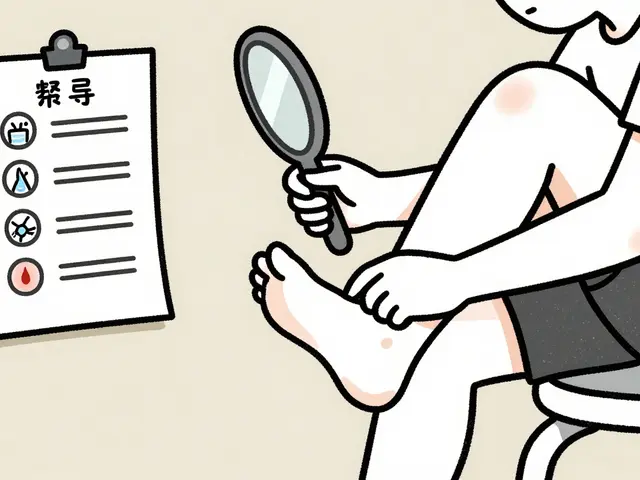
- Inspect every inch. Use a handheld mirror or ask someone to help. Look at the soles, heels, between toes, and under toenails. Don’t skip anything. Most ulcers start on the bottom of the foot, especially under the ball of the foot or big toe.
- Look for these warning signs:
- Blisters larger than a pea (≥3mm)
- Cuts or scrapes deeper than a scratch (≥1mm)
- Redness bigger than a quarter (≥1cm)
- Swelling that makes your foot feel tight or shoes feel tighter than usual
- Warmth in one spot-especially if one foot feels warmer than the other
- Discoloration: black, purple, or dark red spots
- Ingrown toenails or thick, yellow nails (signs of fungal infection)
- Apply moisturizer to dry skin-on tops and bottoms of feet. Never between toes. Moisturizing prevents cracks. But damp skin between toes invites fungus.
- Trim toenails straight across. Cut them so they’re just a millimeter or two above the skin fold. Don’t round the corners. Don’t cut too short. Use clippers designed for toenails, not fingernails.
Do this at the same time every day. Experts recommend between 10 a.m. and 2 p.m., when your body temperature is most stable. That helps you spot real swelling or warmth-not just normal daily changes.
Footwear: Your Hidden Shield
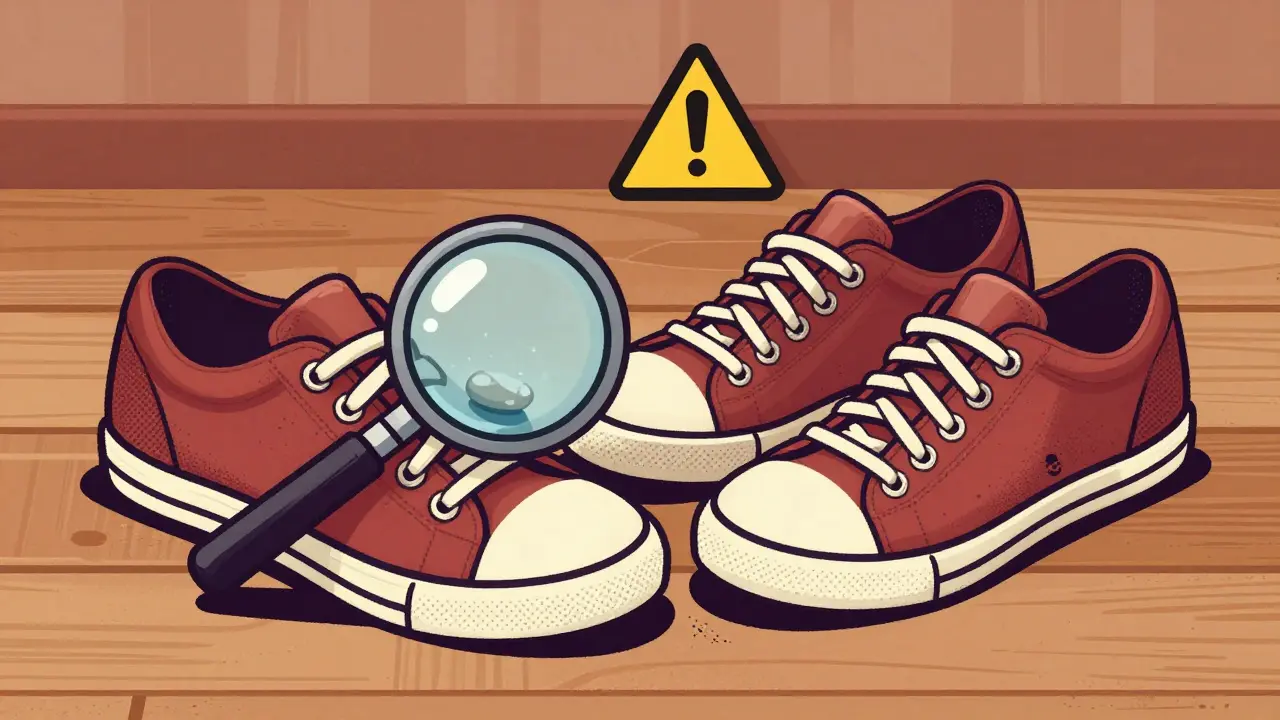
You wouldn’t walk barefoot on gravel. But if you have diabetic neuropathy, you’re doing that every day-indoors, in slippers, in flip-flops. And that’s dangerous. The IWGDF says 87% of forefoot ulcers in people with diabetes come from poorly fitting shoes. That’s not a coincidence. It’s a direct result of pressure points. Here’s what your shoes must do:- Have enough room. There should be at least half an inch (12.7mm) between your longest toe and the front of the shoe. Your toes should be able to wiggle without pressure.
- Be wide enough. Your toes should spread naturally. If your foot feels squeezed, the shoe is too narrow.
- Have a firm heel counter. The back of the shoe should hold your heel steady. A loose heel causes rubbing and blisters.
- Never walk barefoot. Not even in the house. A 2022 CDC study found that walking barefoot for just five minutes a day increases ulcer risk by more than 11 times.
For people with moderate or high risk (history of ulcers, foot deformities, or amputation), therapeutic shoes are not optional. These aren’t regular orthopedic shoes. They’re custom-made or specially designed to reduce pressure on high-risk areas. Insurance often covers them if your doctor prescribes them.
And yes-this applies in summer too. People trade shoes for sandals when it’s hot. Bad move. Sandals offer zero protection. Pressure mapping studies show they increase ulcer risk by more than four times compared to closed shoes.
Who’s at Highest Risk?
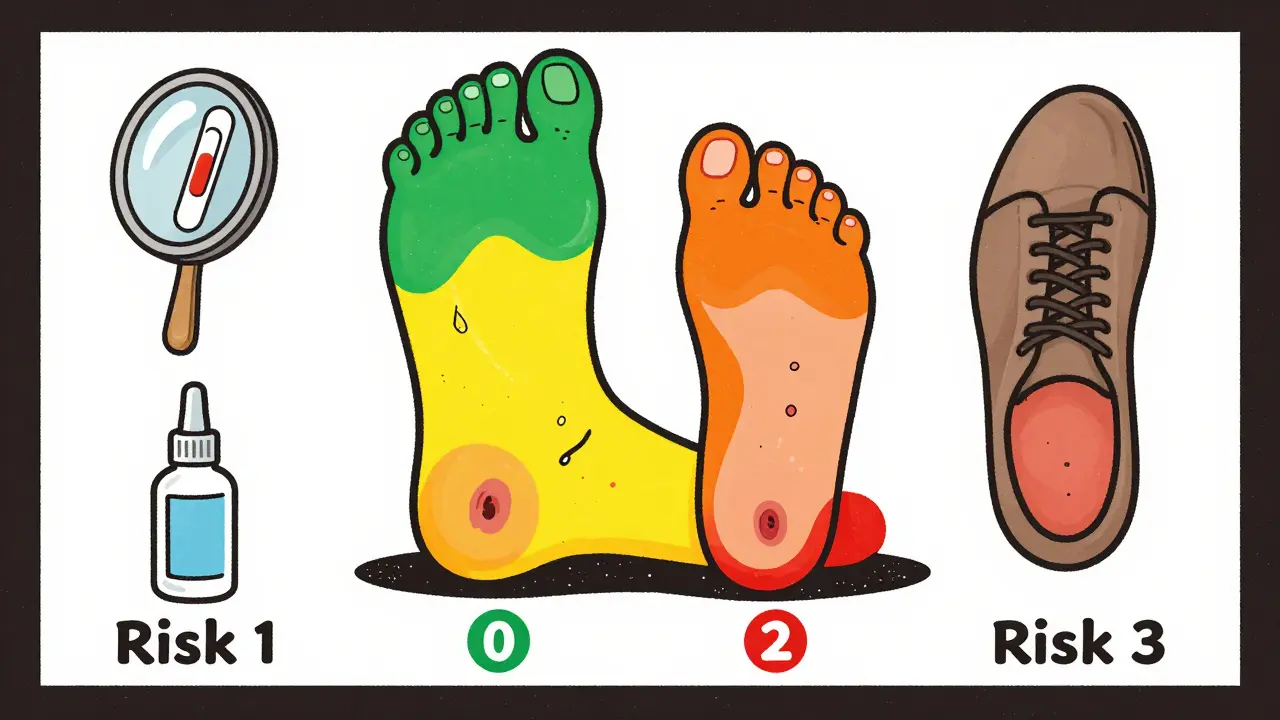
Not everyone with diabetes needs the same level of care. Risk is divided into four levels:- Risk 0: No nerve damage, no history of ulcers. Annual foot exam is enough.
- Risk 1: Nerve damage but no foot deformities or past ulcers. Check feet every 6 months with a professional. Daily inspection still required.
- Risk 2: Nerve damage + foot deformity (like bunions, hammertoes, or collapsed arches). Check feet every 3 months with a professional. Daily inspection is critical.
- Risk 3: History of foot ulcer or amputation. You need a foot check every month. This is high-risk territory. Missing a single inspection can cost you your foot.
How do you know your risk level? Ask your doctor for a 10-gram monofilament test. It’s simple. They touch your foot with a thin nylon thread. If you can’t feel it, you have nerve damage. That’s Risk 1 or higher.
What Not to Do
There are myths out there that can hurt you:- Don’t use heating pads or hot water bottles. You can’t feel how hot they are. Burns happen fast.
- Don’t cut calluses yourself. Use a pumice stone gently after a bath. Never use razors, scissors, or chemical callus removers. They cause cuts.
- Don’t ignore redness or swelling. Even if it doesn’t hurt. That’s your body’s warning signal.
- Don’t assume antibiotics will fix it. The IDSA says antibiotics should never be used to prevent infection in uninfected ulcers. They don’t help healing-and they increase antibiotic resistance.
- Don’t do unsupervised foot exercises. Some people think stretching helps. But a 2022 study found unsupervised ankle exercises increased ulcer risk by 22%.
Barriers to Success-and How to Overcome Them
Most people want to do the right thing. But life gets in the way.- Can’t see your feet well? Use a mirror. Ask a family member to help. Some smartphone apps now use AI to analyze foot photos and flag potential problems. They’re not perfect, but they help.
- Arthritis makes it hard to trim nails? See a podiatrist every 6-8 weeks. Many insurance plans cover this for people with diabetes.
- Can’t afford therapeutic shoes? Ask your doctor for a prescription. Medicare and many private insurers cover them if you qualify. Medicaid coverage varies by state, but 47 states now require it as of January 2024.
- Forgot to check today? Set a daily alarm. Link it to something you already do-like brushing your teeth or drinking your morning coffee.
Adherence is the biggest hurdle. Only 42% of people with diabetes do daily foot checks consistently. Vision problems, nerve damage, and low income make it harder. But even small improvements matter. If you check your feet 5 days a week instead of 2, your risk drops significantly.
What’s New in Foot Care
Technology is helping-but it’s not a replacement for daily inspection. Some people use smart socks or insoles that measure foot temperature. A difference of more than 4°F between feet can predict an ulcer 4-7 days before it appears. These tools are accurate, but expensive. Most cost over $200 upfront, plus monthly fees. They’re great for high-risk patients with access to insurance-but not a must-have for everyone. The real breakthrough? Integrated care. When your primary care doctor, podiatrist, diabetes educator, and orthotist all talk to each other and coordinate care within two weeks, ulcer rates drop by over 35%. That’s the future. But it starts with you checking your feet every day.Your Foot Is Your Lifeline
Diabetes doesn’t have to cost you your feet. But it demands attention. Daily. No exceptions. A blister today can become an infection tomorrow. An infection can become an amputation next month. You don’t need to be perfect. You just need to be consistent. Wash. Dry. Inspect. Moisturize. Trim. Wear proper shoes. No barefoot walking. That’s it. No magic pills. No expensive devices. Just discipline. And if you do this every day, you’re already ahead of most people with diabetes.Your feet carry you. Protect them like the lifeline they are.
Can diabetic foot ulcers heal on their own?
No. Diabetic foot ulcers rarely heal without medical care. Even small ulcers need professional treatment because poor circulation and nerve damage slow healing and increase infection risk. Delaying care can lead to deeper tissue damage, bone infection, or amputation. Always see a podiatrist or diabetes specialist if you notice a sore that doesn’t improve in 2-3 days.
How often should I see a podiatrist if I have diabetes?
It depends on your risk level. If you have no nerve damage or history of ulcers (Risk 0), see a podiatrist once a year. If you have nerve damage (Risk 1), go every 6 months. If you have foot deformities or a past ulcer (Risk 2 or 3), you need to go every 1-3 months. High-risk patients should never go longer than 3 months without a professional exam.
Is it safe to soak my feet in Epsom salt or vinegar?
No. Soaking feet in Epsom salt, vinegar, or any solution increases the risk of skin breakdown and infection. Diabetic skin is more fragile. Soaks can dry out the skin or create tiny cracks that bacteria enter. Stick to plain lukewarm water and mild soap. Avoid soaking altogether unless your doctor specifically recommends it.
Can I use over-the-counter corn or callus removers?
Never. Over-the-counter corn and callus removers contain strong acids that can burn your skin. If you have nerve damage, you won’t feel the burn until it’s too late. These products are responsible for thousands of diabetic foot injuries each year. Use a pumice stone gently after bathing instead, or ask your podiatrist to remove calluses safely.
Why can’t I just wear my regular sneakers if they feel comfortable?
Comfort doesn’t equal safety. Regular sneakers often have narrow toe boxes, stiff soles, or poor heel support that create hidden pressure points. Even if they don’t hurt, they can cause ulcers over time. People with neuropathy don’t feel the pressure building up. Only therapeutic footwear, tested for pressure reduction, can prevent this. If you’re at Risk 2 or 3, your shoes should be prescribed and fitted by a specialist.
Does exercise help prevent foot ulcers?
Yes-but only if it’s safe. Walking, swimming, and cycling are great for circulation. But high-impact activities like running or jumping can increase pressure on vulnerable feet. If you have neuropathy or foot deformities, get a gait analysis first. Unsupervised ankle exercises have been shown to increase ulcer risk by 22%. Always talk to your doctor before starting a new exercise routine.
What should I do if I find a small cut on my foot?
Clean it gently with water and mild soap. Pat it dry. Apply antibiotic ointment and cover with a sterile bandage. Check it daily for signs of infection: increasing redness, swelling, warmth, or pus. If it hasn’t started healing in 2-3 days, or if you notice any signs of infection, call your doctor immediately. Don’t wait for it to hurt.
Can I use a foot scrubber or electric foot file?
No. Electric foot files and aggressive scrubbers can easily cut or abrade the skin. People with diabetic neuropathy can’t feel the pressure or heat. Even light use can cause deep wounds that go unnoticed. Stick to gentle manual exfoliation with a pumice stone after a bath, and avoid using any device that removes skin aggressively.
Sidra Khan
December 21, 2025 AT 14:43Joe Jeter
December 22, 2025 AT 12:46Lu Jelonek
December 22, 2025 AT 13:52Ademola Madehin
December 24, 2025 AT 07:03siddharth tiwari
December 24, 2025 AT 20:13suhani mathur
December 26, 2025 AT 01:43Diana Alime
December 27, 2025 AT 00:46Adarsh Dubey
December 28, 2025 AT 11:14Bartholomew Henry Allen
December 28, 2025 AT 12:52Jeffrey Frye
December 30, 2025 AT 10:48Andrea Di Candia
December 31, 2025 AT 23:49bharath vinay
January 1, 2026 AT 06:15Dan Gaytan
January 2, 2026 AT 15:45Usha Sundar
January 4, 2026 AT 05:45claire davies
January 5, 2026 AT 14:22