
When you’re dealing with sneezing, itchy eyes, or a runny nose from allergies, you want relief - not a nap. That’s why so many people wonder: cetirizine or levocetirizine? Both are popular over-the-counter antihistamines, but one might leave you feeling clearer-headed than the other. If you’ve ever taken Zyrtec and felt sluggish by midday, or if you’ve tried Xyzal and wondered if it’s really better, this breakdown will show you exactly how they differ - especially when it comes to drowsiness and side effects.
What’s the Real Difference Between Cetirizine and Levocetirizine?
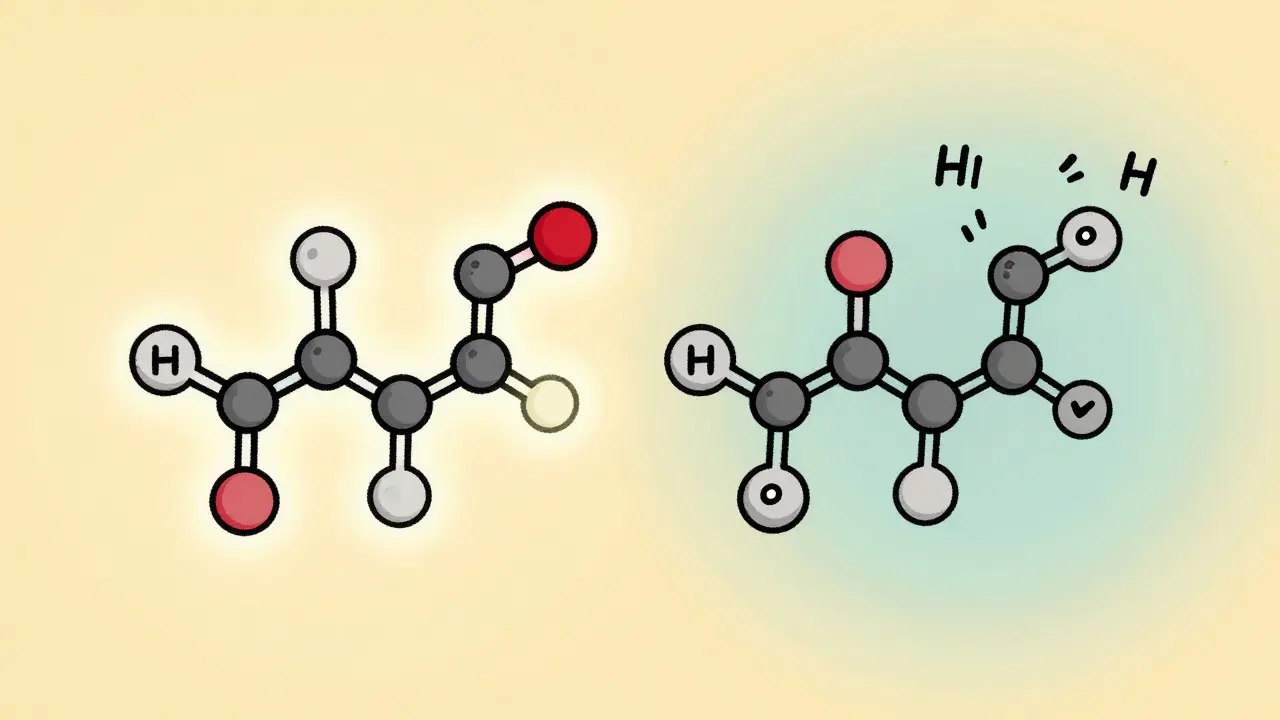
You might think they’re just two versions of the same drug. They’re not. Cetirizine is a racemic mixture - meaning it’s made of two mirror-image molecules: one active, one mostly inactive. Think of it like two bananas stuck together at the stem. One banana (levocetirizine) does the work. The other (dextrocetirizine) doesn’t help with allergies at all.
Levocetirizine is just that one active banana - purified and isolated. That’s why it’s called a third-generation antihistamine. It’s not just a newer version; it’s a more targeted one. Because it’s pure, your body doesn’t have to process the inactive part. That’s where the side effect differences start.
How Much Drowsiness Are We Talking About?
Both drugs are labeled as "non-sedating," but that’s not the whole story. In clinical studies, people taking cetirizine reported drowsiness about 14% of the time. With levocetirizine, it’s closer to 8%. That might not sound like much, but if you’re driving, working, or caring for kids, even 6% fewer people feeling sleepy matters.
A 2008 study published in PubMed looked at 18 healthy adults and measured how well each drug blocked histamine reactions. They found that 2.5 mg of levocetirizine worked just as well as 5 mg of cetirizine. But here’s the kicker: the group taking cetirizine had higher reports of fatigue and reduced alertness. Another study in children with year-round allergies found cetirizine slightly more effective - but also more likely to cause tiredness.
Real-world feedback backs this up. On Drugs.com, users who switched from Zyrtec to Xyzal commonly wrote: "I used to crash after lunch," or "I didn’t realize how slow I was until I wasn’t sleepy anymore." One Reddit user said, "I thought I was just bad at my job. Turns out, it was Zyrtec."
Side Effects Beyond Drowsiness
Both drugs share similar side effects - dry mouth, headache, sore throat. But because levocetirizine is more targeted, it’s less likely to affect other receptors in your brain. That’s why some people notice fewer issues with concentration or memory when they switch.
Cetirizine has a slightly stronger warning on its label about drowsiness. That’s not just bureaucracy - it’s based on data. The FDA’s own reporting system shows more adverse event reports for "drowsiness" and "fatigue" with cetirizine than with levocetirizine.
Still, neither drug is risk-free. If you’re sensitive to antihistamines, even levocetirizine can make you feel off. Some people report mild nausea or dry eyes. But overall, levocetirizine has a cleaner profile.

Does One Work Better?
For most people, the answer is: they’re about equal. Both block histamine effectively. But some users swear one works better for their specific symptoms.
For example, if your main issue is nasal congestion, some find cetirizine gives them a bit more relief. Others say levocetirizine clears their sinuses faster. Why? Because everyone’s body reacts differently. Your liver processes these drugs slightly differently based on your genes. That’s why one person feels great on Zyrtec, while their coworker can’t stand it.
There’s no universal winner. But if you’ve tried cetirizine and felt foggy, levocetirizine is worth a shot - especially since you can take half the dose.
Dosing: Why Levocetirizine is Half the Strength
You’ll notice levocetirizine comes in 2.5 mg and 5 mg tablets. Cetirizine is 5 mg and 10 mg. That’s not a mistake. Because levocetirizine is pure active ingredient, you need less of it to get the same effect.
2.5 mg of levocetirizine = 5 mg of cetirizine in terms of allergy relief. So if you’re switching from 10 mg of Zyrtec, you’d go to 5 mg of Xyzal. It’s not about strength - it’s about efficiency.
One big advantage? Fewer pills. You’re getting the same results with less drug in your system. That’s why some doctors prefer it for older adults or people with kidney issues - less burden overall.
Cost and Availability
Here’s where it gets practical. Cetirizine is cheaper. A 30-count pack of 10 mg tablets costs around $13. Levocetirizine 5 mg? About $14.50. That’s not a huge gap - but if you’re paying out of pocket and don’t have drowsiness issues, why pay extra?
But if you’re someone who can’t afford to feel tired at work, that extra dollar or two might be worth it. Insurance often covers both equally. And since both are OTC, you don’t need a prescription.
Market data shows cetirizine still leads in sales - about 28% of the OTC antihistamine market. Levocetirizine sits at 15%. But among working adults, adoption is rising. One 2022 survey found 58% of adults who prioritize alertness chose levocetirizine over cetirizine.
Who Should Switch?
Here’s a simple guide:
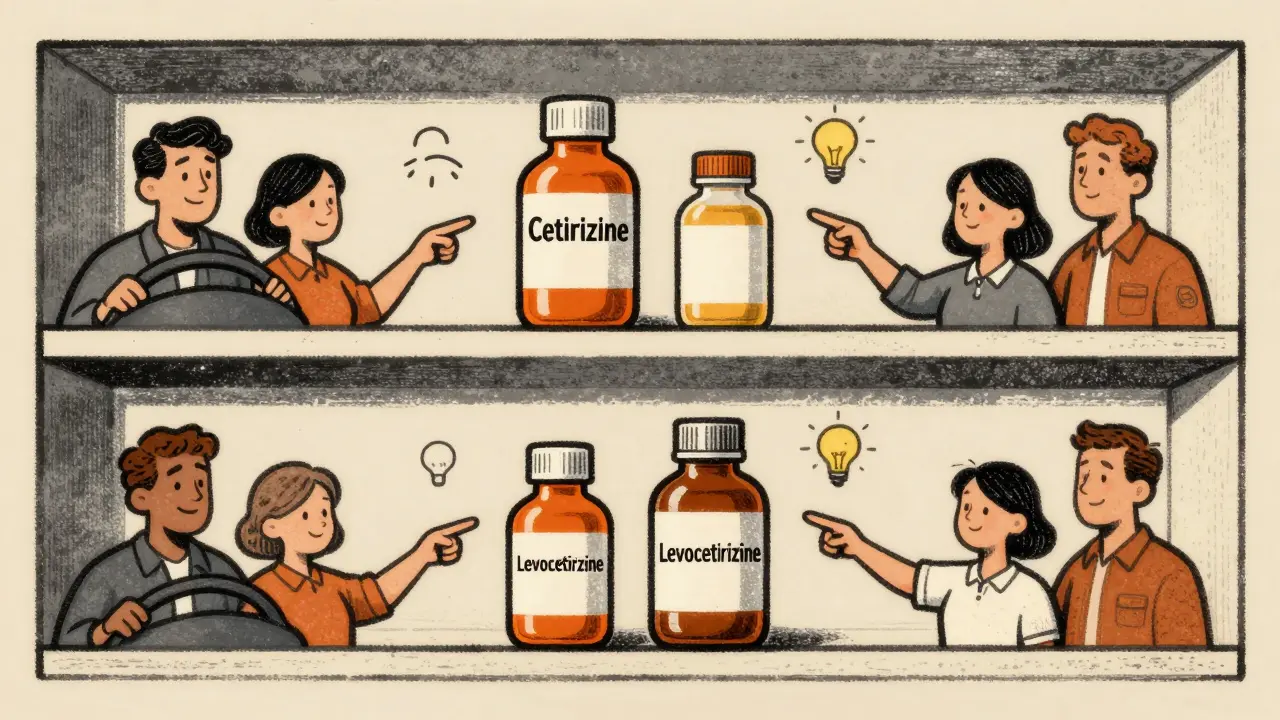
- If you take cetirizine and feel drowsy - even a little - try levocetirizine at half the dose.
- If you have a job that requires focus (driving, surgery, operating machinery), levocetirizine is the safer bet.
- If you’re on a tight budget and don’t feel sleepy on Zyrtec, stick with it.
- If you’re a parent giving it to a child, cetirizine is still more commonly used - but levocetirizine is approved for kids as young as 6 months.
- If you’ve tried both and still can’t decide? Try each one for two weeks. Track your energy levels. That’s the only way to know what works for you.
What Experts Say
Dr. Michael Foggs, president of the American College of Allergy, says: "For patients who get drowsy on cetirizine, switching to levocetirizine often gives them back their focus without losing symptom control."
But not all experts agree. Dr. Robert Naclerio points out that the difference is small. "Both are safe. Most people won’t notice a difference. Don’t overpay for a marginal gain."
The truth? It depends on you. For some, the shift is life-changing. For others, it’s barely noticeable. That’s why personalized care matters more than marketing.
What’s New?
There’s growing interest in combining levocetirizine with montelukast (a nasal anti-inflammatory) for people with stubborn allergies. Early results show better control of congestion and nighttime symptoms.
Researchers are also looking at how your genes affect how you respond to each drug. In the next five years, we may see tests that tell you whether you’re more likely to feel drowsy on cetirizine - before you even take it.
For now, though, the choice is simple: if drowsiness is a problem, try levocetirizine. If not, stick with the cheaper option. Both work. One just lets you stay awake while it does.
Is levocetirizine really less sedating than cetirizine?
Yes, clinical studies and user reports consistently show levocetirizine causes less drowsiness. About 8% of users report sedation with levocetirizine, compared to 14% with cetirizine. This is because levocetirizine is the pure active form, while cetirizine includes an inactive component that may contribute to side effects.
Can I take levocetirizine instead of cetirizine at the same dose?
No. Levocetirizine is more potent. A 2.5 mg dose of levocetirizine equals a 5 mg dose of cetirizine. Taking the same milligram amount could lead to overmedication. Always follow the recommended dosing: 2.5-5 mg for levocetirizine, 5-10 mg for cetirizine.
Which one is better for children?
Both are approved for children as young as 6 months. Cetirizine is more commonly prescribed due to lower cost and wider familiarity. But if a child experiences drowsiness or behavioral changes on cetirizine, switching to levocetirizine at half the dose often helps without losing effectiveness.
Do I need a prescription for levocetirizine?
No. Both cetirizine and levocetirizine are available over-the-counter in the U.S. You can find them on pharmacy shelves without a prescription.
Can I switch back and forth between them?
Yes, but don’t do it randomly. If you’re switching, give each drug at least 7-10 days to see how your body responds. Don’t mix them on the same day. If one works better with fewer side effects, stick with it.
Are there long-term risks with either drug?
Both are considered safe for long-term use. The FDA has approved them for daily use over months or years. There’s no evidence of organ damage or dependency. The main concern is ongoing drowsiness in sensitive individuals - which is why choosing the right one matters.
If you’re unsure which one suits you best, talk to your pharmacist. They can help you compare options based on your health, lifestyle, and budget. There’s no rush. Try one. If it doesn’t work, try the other. You’re not stuck with the first one you pick.


Agnes Miller
February 16, 2026 AT 04:50I switched from Zyrtec to Xyzal last winter after my boss said I looked like a zombie in meetings. Honestly? I didn’t think it’d make that much difference. But I stopped nodding off during conference calls. No more afternoon crashes. Just quiet, clear-headed allergy relief. I still take the 2.5 mg. No complaints.
PS: I’m not a doctor. Just someone who used to hate lunchtime.
Geoff Forbes
February 16, 2026 AT 15:07Let’s be real-cetirizine is for people who don’t care about efficiency. If you’re still taking 10mg of Zyrtec because it’s ‘cheaper,’ you’re basically paying for drowsiness as a feature. Levocetirizine isn’t ‘premium’-it’s just science. Stop romanticizing the inactive enantiomer.
Also, why are we still using ‘generic’ as a virtue? It’s 2025.
Kancharla Pavan
February 18, 2026 AT 06:54Who even cares about this drowsiness nonsense? In India, we take antihistamines like candy. If you can’t function after one pill, maybe your lifestyle is the problem-not the drug. You Americans are too soft. We work 12-hour days with pollen in our lungs and still don’t complain. You call this a ‘choice’? It’s a privilege. Your body is weak because you sit all day and eat processed food. Try a real job. Then come back with your ‘levocetirizine’ nonsense.
Also, 8% drowsiness? That’s still 8% too many people nodding off. You’re all just lazy. End of story.
PRITAM BIJAPUR
February 19, 2026 AT 22:39There’s something deeply poetic about this whole debate, isn’t it? We’re not just comparing molecules-we’re comparing states of being. Cetirizine: the quiet surrender to fatigue. Levocetirizine: the quiet rebellion against the weight of modern life.
One is a compromise. The other, a declaration.
And yet-we forget that both are just tools. The real question isn’t which drug keeps you awake. It’s: why are we so exhausted in the first place? Why does our society demand alertness while offering us allergens, screens, and 6 hours of sleep? Maybe the answer isn’t in the pill… but in the system.
Still. I take levocetirizine. And I’m grateful for it. 🙏
-P.S. If you’re reading this and feel tired… breathe. You’re not broken. The world is just loud.
Dennis Santarinala
February 21, 2026 AT 09:59Just wanted to say-this whole thread is so chill. Like, really. I’ve been on Zyrtec for 5 years. Never had a problem. But I tried Xyzal last year because my kid was sleepy on it, and wow-what a difference. No crash. No guilt. Just… normal.
Also, I love how the comments here are so balanced. No drama. Just facts and personal stuff. That’s rare. Keep it real, everyone. 🙌
Tony Shuman
February 21, 2026 AT 16:55Oh great. Another ‘Western superiority’ post. You people think your fancy ‘levocetirizine’ is some breakthrough? We’ve been using natural remedies for centuries. Turmeric. Neem. Honey. Why are you so obsessed with chemical purity? Because your culture worships pills over plants.
And don’t even get me started on ‘FDA-approved.’ That’s just corporate lobbying dressed up as science. I’ve been on raw honey for allergies for 12 years. No drowsiness. No cost. Just… nature.
Also, why are you paying $14.50 for a pill? That’s theft.
Logan Hawker
February 22, 2026 AT 22:51Okay, but let’s be honest-this whole ‘levocetirizine is better’ narrative is just Big Pharma’s way of extending patent life. They took a perfectly good, cheap drug, split it in half, slapped a new name on it, and called it ‘third-generation.’
It’s not innovation. It’s rebranding.
And yes, I’ve tried both. I didn’t notice a difference. But I did notice my wallet crying. So I went back to cetirizine. And now I nap. So what? I’m not paying $15 to feel like I’m ‘optimized.’
Also, ‘non-sedating’? Ha. That’s just marketing-speak for ‘slightly less sedating than the other one.’
James Lloyd
February 23, 2026 AT 23:32For anyone considering the switch: if you’ve been on cetirizine for years and feel fine, don’t change. But if you’ve ever said, ‘I think I’m just tired all the time’-and you’re not sleep-deprived, stressed, or depressed-then try levocetirizine. It’s not magic. But for a lot of people, it’s the missing piece.
I work in IT. Used to crash at 2 p.m. every day. Took Xyzal. Now I’m the one who remembers to refill the coffee machine. That’s not hype. That’s pharmacology.
Also: 2.5 mg. Not 5. Start low. Your liver will thank you.
Digital Raju Yadav
February 25, 2026 AT 16:53This is why India is going to dominate the future. We don’t waste money on ‘purified’ versions of drugs. We use what works. Cetirizine is cheap. Effective. Available everywhere. Why would you pay extra for a molecule that’s 6% less likely to make you sleepy? You’re not a lab rat. You’re a human. Embrace the drowsiness. It’s part of life.
Also, Americans spend more on pills than food. That’s not health. That’s delusion.
Brenda K. Wolfgram Moore
February 26, 2026 AT 19:13My sister is a pharmacist. She says if you’re sensitive to meds, levocetirizine is the way to go. But if you’re fine? Save your cash. I’ve taken both. The difference? I noticed the shift when I started teaching kids. No more ‘why is Mrs. Moore so slow today?’ moments.
It’s not about being better. It’s about being present.
Linda Franchock
February 28, 2026 AT 06:48Wait-you’re all taking this seriously? Like, the difference between 8% and 14% drowsiness? That’s a 6-point swing. That’s not science. That’s a Tuesday.
I’ve taken both. I took one and fell asleep on the couch. Took the other. Fell asleep on the couch. Then I took a nap. Then I ate a sandwich. Then I fell asleep again.
Maybe the real answer is: stop having allergies. Or move to Antarctica.
Just saying.
Philip Blankenship
March 1, 2026 AT 02:41I’ve been on cetirizine for 7 years. Never had a problem. Then I started working from home. Suddenly, I was falling asleep during Zoom calls. Not because I was tired-because the drug was making me sluggish.
Switched to levocetirizine. 2.5 mg. Same dose. Same results. But now I can actually watch my own videos without nodding off. I even finished a book last month. Who knew?
It’s not about money. It’s about being able to show up as yourself. And sometimes, that’s worth a couple of bucks.
Also-hi. I’m Philip. I’m the guy who used to be the zombie. Now I’m just… here.
Thanks for the article. And thanks, internet, for not being weird about it.
Agnes Miller
March 1, 2026 AT 19:26Philip, I feel you. I used to think I was just bad at Zoom. Turns out, I was just drugged. Now I’m the one who remembers to unmute. Small wins.