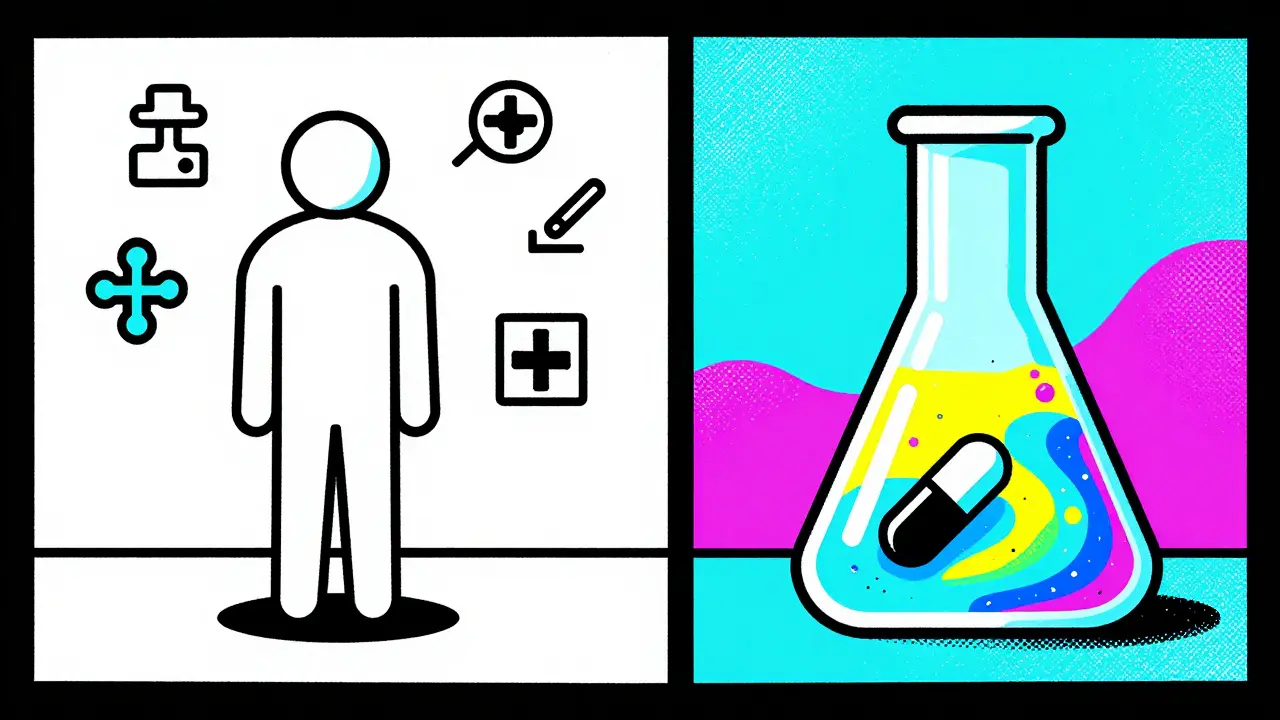
Imagine spending half a million dollars and eight months on a clinical trial, only to find out you didn't need it. For many generic drug manufacturers, this is the reality they avoid by using bioequivalence waivers, commonly known as biowaivers. This regulatory mechanism allows the U.S. Food and Drug Administration (FDA) to approve generic drugs without requiring traditional human studies.
If you are developing a generic medication, understanding when the FDA skips in vivo bioavailability studies can save your company millions of dollars and get your product to patients faster. But how does the FDA decide that a lab test is enough? And what specific scientific criteria must your drug meet?
What Is a Bioequivalence Waiver?
A biowaiver is a formal decision by the FDA to waive the requirement for submitting evidence obtained from living subjects (humans or animals) to demonstrate bioequivalence. Instead, sponsors rely on in vitro data, primarily dissolution testing, to prove that their generic product performs just like the brand-name reference listed drug (RLD).
The legal foundation for this process sits in Title 21 of the Code of Federal Regulations (CFR), specifically 21 CFR 320.22. This regulation states that the FDA shall waive the requirement for in vivo evidence if specific criteria are met. The core principle here is efficiency and patient safety: if a drug dissolves completely and rapidly in a beaker under controlled conditions, it will almost certainly behave the same way in the human body. Therefore, exposing healthy volunteers to unnecessary blood draws and monitoring becomes redundant.
This approach applies mainly to immediate-release solid oral dosage forms-think standard tablets and capsules that dissolve quickly in the stomach. It does not typically apply to complex formulations like extended-release patches, inhalers, or injectables, where absorption mechanics are far more unpredictable.
The Science Behind the Waiver: BCS Classification
The FDA doesn't guess which drugs qualify for waivers. They use a rigorous scientific framework called the Biopharmaceutics Classification System (BCS). Developed in the late 1980s and refined over decades, BCS categorizes drug substances based on two key properties:
- Solubility: How easily the drug dissolves in water across a range of pH levels (simulating the stomach and intestines).
- Permeability: How well the drug passes through the intestinal wall into the bloodstream.
Based on these factors, drugs fall into four classes:
| BCS Class | Solubility | Permeability | Biowaiver Status |
|---|---|---|---|
| Class I | High | High | Eligible (Most Common) |
| Class II | Low | High | Generally Not Eligible |
| Class III | High | Low | Conditionally Eligible |
| Class IV | Low | Low | Not Eligible |
BCS Class I drugs are the gold standard for biowaivers. Because they dissolve instantly and absorb easily, the rate-limiting step for their absorption is simply how fast they dissolve in the stomach. If your generic tablet dissolves at the same speed as the brand name, it will deliver the same amount of drug to the blood. No human study needed.
BCS Class III drugs are trickier. They dissolve easily but don't pass through the gut wall well. Here, the FDA requires stricter proof. You must show that your formulation uses identical excipients (inactive ingredients) in the same proportions as the reference drug. Why? Because excipients can affect permeability. If you change the filler or binder, you might alter how the drug moves through the intestine, even if it dissolves perfectly. Recent FDA guidance has expanded eligibility for Class III drugs, but the bar is higher.
Class II and IV drugs generally cannot get biowaivers because their absorption is limited by solubility. Small changes in manufacturing can drastically change how much drug gets absorbed, making in vitro tests insufficient predictors of human performance.
When Does the FDA Grant a Biowaiver?
Even if your drug is BCS Class I, you aren't automatically granted a waiver. You must submit an Abbreviated New Drug Application (ANDA) with robust data. The FDA looks for three main pillars of evidence:
- Dissolution Profile Similarity: Your generic product must dissolve similarly to the reference drug. The FDA uses a mathematical metric called the f2 similarity factor. An f2 value of 50 or higher indicates similar dissolution profiles. Testing is done in multiple media (pH 1.2, 4.5, and 6.8 buffers) to simulate different parts of the gastrointestinal tract.
- Excipient Comparison: For Class I drugs, minor differences in inactive ingredients are usually acceptable. However, for Class III drugs, the types and amounts of excipients must match the reference product exactly. Significant deviations require justification or disqualify the waiver request.
- Non-Narrow Therapeutic Index (NTI): Drugs with a narrow therapeutic index-where a small change in dose can cause toxicity or treatment failure-are generally excluded. Think warfarin or levothyroxine. The margin for error is too slim to rely solely on lab tests. Exceptions exist for certain antiepileptics, but these are rare and heavily scrutinized.
The FDA’s Center for Drug Evaluation and Research (CDER) finalized its current guidance on this topic in December 2017. This document clarifies that in vitro data is preferred when it is "the most accurate, sensitive, and reproducible" method available. In other words, if the lab test gives a clearer answer than a messy human trial, the FDA wants the lab test.
Cost and Time Savings: The Business Case
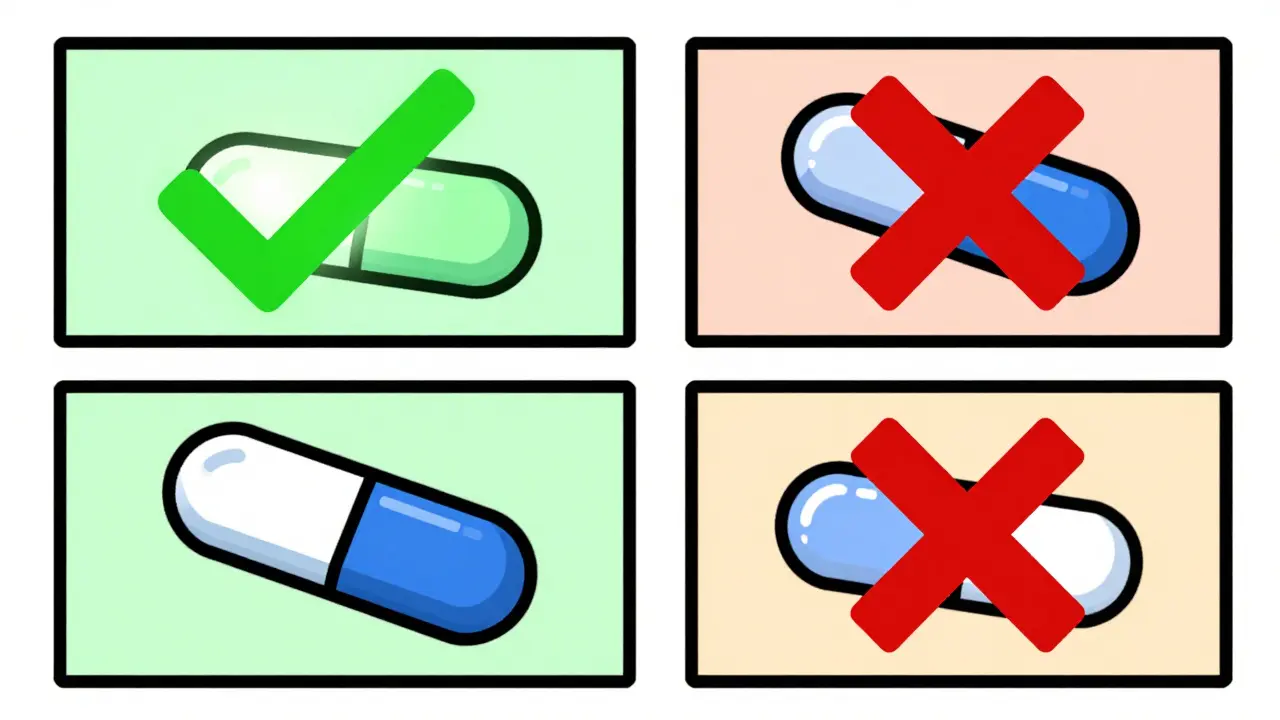
Why do companies fight so hard for biowaivers? The economics are undeniable. A typical in vivo bioequivalence study costs between $250,000 and $500,000. That covers site fees, participant compensation, clinical monitoring, and laboratory analysis. On top of that, these studies take 6 to 12 months to plan, execute, and analyze.
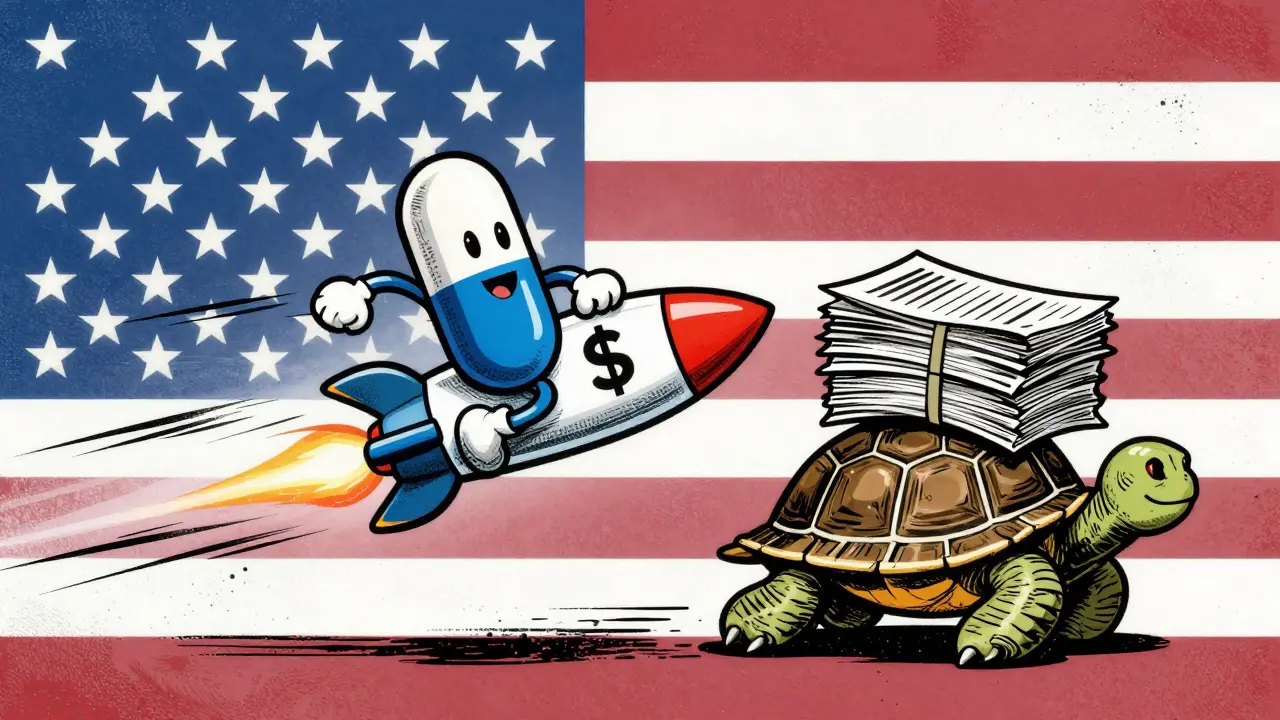
In contrast, a biowaiver submission relies on dissolution testing, which can be completed in weeks. The cost is a fraction of a clinical trial-often under $50,000 including regulatory writing and consultation. For a generic manufacturer launching multiple products, these savings add up quickly. Industry analysts estimate that widespread use of biowaivers accelerates generic drug approvals by an average of 7.3 months per product.
This speed matters. Generic drugs lower healthcare costs for everyone. By removing unnecessary barriers, biowaivers help bring affordable alternatives to market sooner. According to IQVIA market analysis, this acceleration translates to approximately $1.2 billion in earlier market access annually across the generic pharmaceutical sector.
Common Pitfalls and Rejection Reasons
Getting a biowaiver approved isn't automatic. Many applications fail due to poor preparation. Here are the most common reasons the FDA rejects biowaiver requests:
- Inadequate Dissolution Method Discrimination: Your dissolution test must be able to detect differences between formulations. If your method shows that every possible version of the drug dissolves identically, the FDA won't trust it. You need to prove your method is sensitive enough to catch bad batches.
- Incorrect BCS Classification: Misclassifying a drug as Class I when it’s actually Class II is a fatal error. Ensure your solubility and permeability data are robust and derived from reliable sources.
- Excipient Mismatches in Class III Drugs: Trying to use cheaper or different fillers for a Class III drug without proving they have no impact on permeability will lead to rejection.
- Lack of Pre-Submission Consultation: The FDA encourages early dialogue through the Pre-ANDA program. Data shows that applicants who meet with FDA reviewers before submitting have a 22% higher approval rate for biowaiver requests.
Dr. Jennifer Dressman, a leading expert in biopharmaceutics, has noted that while the BCS framework is powerful, it can be restrictive. Some Class II drugs with advanced formulation technologies might deserve consideration, but current regulations don't allow it yet. Until then, stick to the rules.
Future Trends: Expanding Biowaiver Opportunities
The landscape of bioequivalence waivers is evolving. The FDA’s strategic plan for 2023-2027 aims to expand scientifically justified biowaiver opportunities by 25%. Key developments include:
- ICH M9 Implementation: The International Council for Harmonisation (ICH) guideline M9 provides a global standard for BCS-based biowaivers. Adopted in the U.S. in 2021, it harmonizes requirements across regions, making it easier for multinational companies to file globally.
- Pilot Programs for NTI Drugs: The FDA is piloting programs to evaluate biowaivers for select narrow therapeutic index drugs. While risky, this could open doors for safer, simpler approval pathways for critical medications.
- Advanced In Vitro Models: New technologies like physiologically based pharmacokinetic (PBPK) modeling are being integrated into waiver assessments. These computer simulations predict how drugs behave in humans based on physical properties, potentially expanding eligibility beyond simple dissolution tests.
However, challenges remain. Complex generic products-like modified-release formulations or locally acting drugs-still lack clear biowaiver pathways. The FDA’s Complex Generic Drug Products Committee reported in May 2023 that current frameworks are inadequate for 85% of complex generics. Innovation in this space is slow but steady.
Practical Steps for Applicants
If you’re considering a biowaiver for your next generic product, follow this checklist:
- Verify BCS Class: Confirm your drug substance is Class I or eligible Class III. Use published literature or conduct your own solubility/permeability studies if data is scarce.
- Develop a Discriminatory Dissolution Method: Work with experienced formulation scientists to create a test that detects meaningful differences. Validate it thoroughly.
- Compare Excipients: Match the reference product’s inactive ingredients as closely as possible, especially for Class III drugs.
- Request a Pre-ANDA Meeting: Discuss your strategy with FDA reviewers early. Their feedback can save months of rework.
- Submit Robust Data: Include comparative dissolution profiles in pH 1.2, 4.5, and 6.8 buffers. Calculate f2 values and provide statistical justification.
Remember, a biowaiver isn’t a shortcut-it’s a scientifically rigorous alternative. Done right, it saves money, time, and human resources. Done wrong, it delays your approval and wastes capital.
Can any generic drug get a bioequivalence waiver?
No. Biowaivers are primarily available for immediate-release solid oral dosage forms (tablets and capsules) that are classified as BCS Class I (high solubility, high permeability) or certain BCS Class III drugs. Complex products like extended-release formulations, injectables, or narrow therapeutic index drugs generally cannot receive biowaivers.
How much money can a biowaiver save?
A biowaiver can save between $200,000 and $450,000 per product compared to conducting an in vivo bioequivalence study. Additionally, it reduces development time by 6 to 12 months, allowing faster market entry and revenue generation.
What is the f2 similarity factor?
The f2 similarity factor is a mathematical equation used to compare dissolution profiles of two products. An f2 value of 50 or higher indicates that the dissolution rates are similar enough to support a biowaiver. Values below 50 suggest significant differences, requiring further investigation or in vivo studies.
Why are Class III drugs harder to get waived?
Class III drugs have high solubility but low permeability. Since absorption is limited by how well the drug crosses the intestinal wall, changes in inactive ingredients (excipients) can significantly affect bioavailability. Therefore, the FDA requires exact matching of excipients and additional justification for Class III biowaivers.
Should I request a pre-submission meeting with the FDA?
Yes. Data shows that applicants who engage in Pre-ANDA meetings have a 22% higher approval rate for biowaiver requests. Early feedback helps identify potential issues with dissolution methods or BCS classification before you invest in full-scale testing.